🔄 Updated 21 Jun 2026
Pai is a small town in a valley that's perfect for slow travel. The main spots aren't far from the center, and you can cover almost all of them in a single day on a motorbike loop. The key to a 2-day plan is don't cram it too full, because the charm of Pai is sitting in a cafe and chilling, not racing to check in everywhere all day. This plan has you exploring the nature around town at an easy pace on day one, then waking up early on day two to head up a viewpoint and chase the sea of fog before the trip home.
First, about getting up to Pai: Highway 1095 from Chiang Mai runs 135 kilometers and has 762 curves, famous for genuinely making people carsick. If you get carsick easily, bring motion-sickness pills. Minivans (Prempracha / Aya) cost around 190–200 THB per person and take 3–3.5 hours. If you plan to ride a motorbike yourself, the road is very winding, so you need to be confident on a bike and check your brakes carefully.
Where should you stay?
Staying in central Pai near the Walking Street (Chaisongkhram–Rangsiyanon roads) is the best value, because you can walk out to eat and enjoy the nightlife, and it's a short ride to the viewpoints in the morning. If you want quiet rice-field views, a riverside resort on the edge of town works too, but you'll need your own transport. See the options we picked in the Top 10 places to stay in Pai at the end of this article.
Day 1 — Nature around town, hot springs and the Walking Street
Let's say you arrive in Pai around midday on day one (a morning minivan from Chiang Mai leaves around 08:00 and reaches Pai about 11:00–11:30). Drop your bags at your accommodation, rent a motorbike (~150–250 THB/day), and start looping the nearby spots at an easy pace.
Historic bridge + waterfall + hot springs + Walking Street
Day-one tip
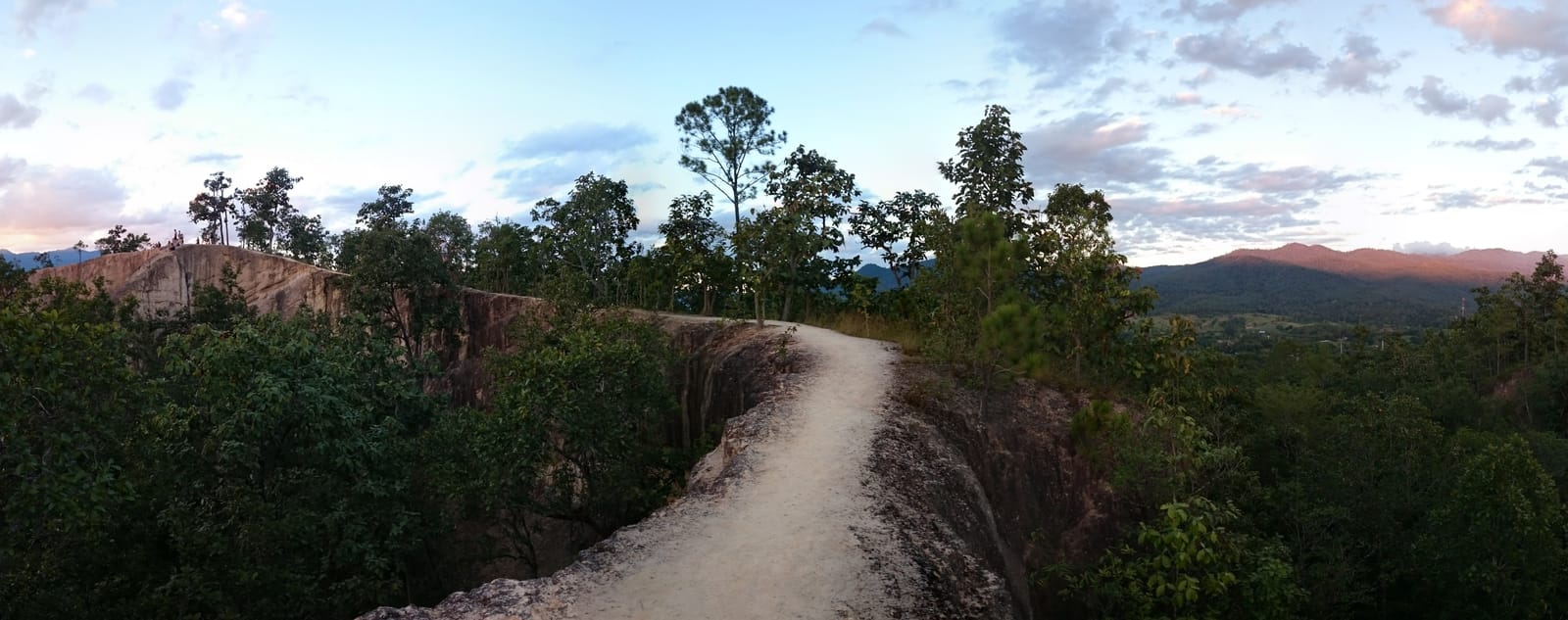
If you want to fit Pai Canyon into day one as well, it's best at sunset (~17:30–18:30). You can swap the order and hit the canyon before heading back into town. But if you're tired from the ride up to Pai, save the canyon for the second morning or your next trip — no need to force it.
Book the activities in your Pai trip ahead
Booking online ahead on Klook or GetYourGuide is usually cheaper than the gate and skips the queue. Pick only the experiences you actually want — prices and availability are shown live on each site.
Day 2 — Yun Lai sea of fog, Santichon village and cafes
The highlight of day two is waking up before dawn and heading up a viewpoint to chase the sea of fog. Pai's sea of fog depends on the weather — there's no guarantee any given morning will have thick fog, but the late-rainy-to-early-cool season (Nov–Jan) gives you the best odds. Leave your accommodation before the sky brightens so you catch the sunrise.
Sea of fog at dawn + Santichon + a farewell cafe
Tips for chasing the sea of fog
The sea of fog really does come down to the weather. If the night before is clear and very cold, the next morning often has a good chance of thick fog. If Yun Lai is crowded, viewpoints like Kad Phi Suea or hillside cafes around town can give you the sea of fog too. Be prepared for some mornings when the fog doesn't come — that's just part of traveling in Pai.
Rough budget per person (2 days, 1 night)
This is estimated for two people traveling together, taking the minivan round trip, staying in mid-range accommodation, and renting a motorbike to get around. Real numbers shift up or down depending on your accommodation and the season.
- Chiang Mai–Pai minivan, round trip — ~380–400 THB (190–200 THB each way)
- 1 night's accommodation — mid-range ~500–1,200 THB/person (split between two)
- Motorbike rental + fuel — ~200–350 THB (split in two if you ride together)
- 4–5 meals — ~400–700 THB (including the Walking Street and cafes)
- Entry fees: hot springs + Yun Lai + parking — ~100–150 THB for Thais
- Souvenirs + emergency buffer — ~200–400 THB
Save even more
If two of you share one motorbike, the rental and fuel split a lot cheaper. There are hostels and guesthouses in town for just a few hundred baht a night. Hot-spring entry is much cheaper for Thais than for foreigners, so bring your ID card.
When to visit Pai, and what to know
- Nov–Jan — the cool season: cold air and the best odds of catching the sea of fog, but crowded and pricier accommodation, so book ahead.
- Mar–Apr — northern Thailand often has burning-season haze in this period, with high PM2.5 levels and poor visibility. Not great for sea-of-fog photos, so check the air quality before deciding to go.
- Jun–Oct — the rainy season: lush and green, lovely waterfalls, fewer people and lower prices, but the mountain roads are slippery, so take extra care on a motorbike and pack a rain jacket.
- Highway 1095 has 762 curves, so bring motion-sickness pills if you're prone to it. Riding a motorbike on the winding mountain roads takes confidence, and always wear a helmet.
If you have one more day, stretching this into a 3-day, 2-night plan makes things much more relaxed. You can add Land Split, Kong Lan, Wat Phra That Mae Yen, or more of the outlying nature spots at a fuller pace, without rushing to fit everything into 2 days.
Find a well-located place to stay in Pai — walk to the Walking Street and reach the viewpoints easily
See the Top 10 places to stay in Pai →