Home Destinations Pai 🧭 Plan Your Trip 🔎 Search About
HomeThailandPaiPai in 3 Days, 2 Nights Waterfalls, Santichon, Bamboo Bridge, Big Buddha
🏞️ Pai Travel Plan

Pai in 3 Days, 2 Nights
Waterfalls, Santichon, Bamboo Bridge, Big Buddha

Pai isn't a town to rush. With 3 days and 2 nights you get just enough time to cover the main sights — a waterfall, the Yunnanese-Chinese village of Santichon, the bamboo bridge across the rice fields, and the Big Buddha up on the hill — while still leaving room to sit at a riverside cafe and wander the walking street in the evening. This plan is built from actually driving around town, with real times, entry fees, and an honest heads-up about the spots worth watching out for.

🛵 Self-drive trip🌫️ Morning sea of mist🧘 Slow, unhurried pace
Pai in 3 Days, 2 Nights Waterfalls, Santichon, Bamboo Bridge, Big Buddha

🔄 Updated 21 Jun 2026

Pai sits about 135 km from Chiang Mai, but the drive takes 3–4 hours because it's a mountain road — Highway 1095, with 762 curves in total. If you get carsick easily, pack medicine ahead of time. If you'd rather not drive yourself, Prempracha minivans leave Chiang Mai's Arcade station every hour from morning to evening, with one rest stop halfway. This 3-day 2-night plan assumes you reach Pai in the early afternoon on day one, spend a full day sightseeing on day two, then head back late morning on day three.

One thing to know before you plan: the sea of mist and the mountain views depend entirely on the actual weather. Some mornings the mist rolls in thick and beautiful, other mornings it's clear with no mist at all. The mist is best from November to February. March and April are the crop-burning season in the north, when haze often blocks the views and affects your breathing — avoid those months if you can.

The 3-Day 2-Night Plan at a Glance

  • Day 1 — Arrive in Pai in the afternoon, drop your bags, relax at a riverside cafe, climb to the Big Buddha at Wat Phra That Mae Yen for sunset, then walk the night market.
  • Day 2 — A full nature day: start with the Yun Lai sea of mist at dawn, then Santichon village, Pam Bok Waterfall, the Boon Ko Ku So bamboo bridge, and finish with the hot springs or Pai Canyon in the evening.
  • Day 3 — An easy breakfast, a stop at the Tha Pai Memorial Bridge, pick up some souvenirs, then head home.
🎟️

Book the activities in your Pai trip ahead

Booking online ahead on Klook or GetYourGuide is usually cheaper than the gate and skips the queue. Pick only the experiences you actually want — prices and availability are shown live on each site.

🎟️ See all Pai tours & activities (Klook)

Day 1 — Arrive in Pai, Big Buddha at Sunset, Walking Street

Day 1

Arrive at an easy pace, catch the town at dusk

13:00
Arrive in Pai, check inMost places to stay are in town or along the Pai River. Booking a riverside spot gets you that cool, calm atmosphere in the morning.
14:30
Relax at a riverside cafe after the journeyThe riverside area has plenty of cafes and restaurants — a good place to shake off the carsickness before heading out.
16:30
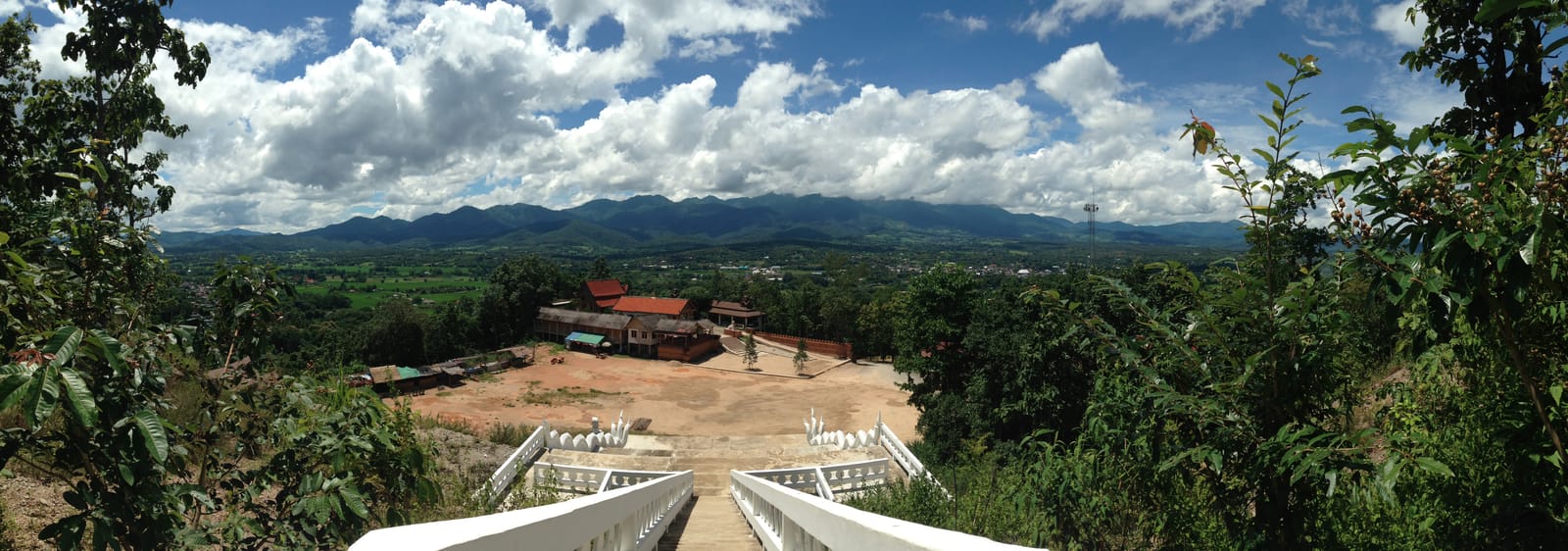
Climb to the Big Buddha, Wat Phra That Mae YenPhra Buddha Lokutara Mahamuni is a large white Buddha on the hill. It's about 350 steps up, with a view over the whole Pai valley. Go in the late afternoon to catch the sunset. Free entry.
18:30
Pai Walking StreetOpen every evening, busiest in the cool season, with street food, handmade goods and laid-back bars. You can have dinner right here.

About where to stay

During Pai's high season (Nov–Feb) it gets crowded and riverside rooms fill up fast, so book ahead. The rainy season and burning season are quieter and cheaper, but you trade that off against the weather. See accommodation options at the link at the end of this article.

Day 2 — Sea of Mist, Santichon, Waterfall, Bamboo Bridge

This is the main day of the trip. The sights are spread around town within a radius of no more than 12 km, which makes it easy to do as a loop by motorbike or car. But many of the roads around Pai are narrow, winding mountain roads, so if you're not confident on a motorbike, go slow and take extra care on the downhill stretches.

Day 2

A full nature day, starting early for the mist

05:30
Head up to Yun Lai viewpoint for the sea of mistIt's above Santichon village, about 6 km from town, with a 20 THB entry fee. The mist usually thickens around 7–8 a.m., but it depends on the actual weather — some days it stays clear. There's a spot to sip warm tea while you wait for the morning light.
08:00
Santichon Yunnanese-Chinese villageA village of Yunnanese-Chinese migrants, with earthen houses, swings, Chinese costumes to rent for photos, and shops selling tea, mantou buns and Yunnan-style braised pork. A good spot for breakfast after Yun Lai.
10:30
Pam Bok WaterfallA waterfall tucked into a narrow rock gorge, a short walk in from the parking area, with a 100 THB entry fee. There's more water in the rainy season and early cool season, less at the end of the dry season. You can swim depending on the time of year.
12:00
Lunch break along the way to the bamboo bridgeThere are several cafes and restaurants with rice-field views along the road. Pick one where you can actually see the fields.
13:30
Boon Ko Ku So bamboo bridgeA merit-made bamboo bridge stretching about 800 meters across the rice fields, built by villagers so monks could walk it on their alms rounds. Entry is 30 THB. The fields are greenest from the rainy season into the early cool season — if there's water standing in the paddies, it looks especially good.
16:00
Pick your finish: Tha Pai Hot Springs or Pai CanyonAt Tha Pai Hot Springs you can soak your feet and unwind — 50 THB for Thais, 300 THB for foreigners. Pai Canyon is for those who like walking the narrow earthen ridges at sunset — watch the cliff edges carefully, there are no railings.

Driving around Pai safely

Fill up before you leave town — fuel stations in the area are limited. If you rent a motorbike, check the brakes and tires before you take it, always wear a helmet, and don't ride at night on the mountain roads because there's barely any street lighting.

Day 3 — Easy Breakfast, Memorial Bridge, Then Home

Day 3

Catch what's left before you leave town

08:00
Breakfast or brunch in townPai has plenty of brunch cafes — settle in for an easy meal before you set off.
09:30
Tha Pai Memorial BridgeA steel bridge from World War II, right along the highway out of town. A quick photo stop. Free entry.
10:30
Pick up souvenirs, pack your bagsPopular souvenirs include highland coffee, tea, and handmade goods from the walking street.
11:30
Set off back to Chiang MaiAllow 3–4 hours on the 762-curve road. Take carsickness medicine before you leave if you need it. You'll reach Chiang Mai in the afternoon.

Entry Fees and a Rough Budget

  • Yun Lai 20 THB · Santichon free to enter the village (the viewpoint is charged separately)
  • Pam Bok Waterfall 100 THB · Boon Ko Ku So bamboo bridge 30 THB
  • Tha Pai Hot Springs 50 THB for Thais / 300 THB for foreigners
  • Big Buddha at Wat Phra That Mae Yen and the Memorial Bridge are free
  • Motorbike rental around 150–250 THB/day plus fuel · Minivan to and from Chiang Mai around 150–200 THB each way

Prices are estimates

Entry and rental fees can go up depending on the season and whoever runs each spot, so keep some small cash on hand — many places only take cash.

When to Go

The best window is November to February: cool weather, frequent sea of mist, and rice fields still green from the early cool season — though it's high season, so it's crowded and rooms cost more. March and April bring haze from crop-burning in the north; the mountain views are usually murky and it affects your breathing, so avoid those months. The rainy season (Jun–Oct) has lush green fields, full waterfalls, fewer people and lower prices — but watch out for slick roads and wet mountain stretches.

Want a well-located place in Pai to use as a base

See our 10 recommended Pai stays →

FAQ

Is 3 days and 2 nights enough to see Pai's main sights?

It's comfortably enough without rushing. Day one is for travel plus the Big Buddha and walking street in the evening. Day two is a full day covering the Yun Lai sea of mist, Santichon, Pam Bok Waterfall and the bamboo bridge. Day three catches whatever's left before you head home. If you want a truly slow trip, you could stretch it to 4 days.

Is the road up to Pai really that curvy, and what do I do if I get carsick easily?

Highway 1095 from Chiang Mai has 762 curves in total, and people who get carsick easily really do feel it. Take carsickness medicine about half an hour before you set off, sit in the front seat if you can, look far out of the vehicle, and sip water regularly. The minivan makes one rest stop halfway so you can get out and stretch.

Can I get around Pai on a motorbike myself, and is it dangerous?

In town and the surrounding area, a motorbike is convenient and gets you to all the sights. But the mountain roads around Pai are narrow and winding, and some downhill stretches are steep. If you're not confident, go slow, check the brakes and tires before taking the bike, wear a helmet, and avoid riding at night because of the poor lighting.

Am I guaranteed to see the sea of mist in Pai?

No — it depends on the weather that day. The mist appears most often and looks best from November to February. At Yun Lai it usually thickens around 7–8 a.m., but some days it stays clear with no mist, and that's perfectly normal.

Can I visit Pai in March or April?

You can, but accept that it's the crop-burning season in the north. Haze often blocks the mountain views and affects breathing. Anyone sensitive to dust or with respiratory issues should avoid it. If you want clear views and a defined sea of mist, the cool season is the better choice.

Copyright & Image Takedown Policy

Thailandaddict is created to review and share travel experiences. Where an image is sourced from elsewhere, we credit the source. If you are the copyright owner and prefer that your image not appear on this site, please contact us and we will gladly remove the image or correct the information.