🔄 Updated 21 Jun 2026
Pai is a small district in Mae Hong Son province, sitting in a valley about 130 km from Chiang Mai. The charm of Pai is the slower pace of life — wake up early for the sea of mist, sit at a cafe by the fields in the afternoon, then walk the night market in the evening eating good food. On a first visit you don't need to rush and tick off every spot. Pai suits a low-pressure trip more than a packed one. Pick four or five places you genuinely want to see, then take your time soaking up the atmosphere.
First thing to know — how to get to Pai, and are the 762 curves really that bad?
Pai no longer has a commercial airport, so nearly everyone reaches Pai via Chiang Mai along Highway 1095, famous for its 762 curves. It's roughly 130 km but takes about 3 hours because the road winds uphill the entire way. To be straight with you: if you get carsick easily, prepare for it, because the curves really are plentiful and relentless.
- Chiang Mai–Pai minivans (Aya Service / Prempracha) — the most popular option for travelers. Fares run about 150–200 THB per person, with several departures from Chiang Mai starting around 06:30 through to the evening. The drivers know the route and drive fast, so if you get carsick easily, ask for a seat near the front.
- Driving / renting a car yourself — the most freedom, and you can stop for photos at the viewpoints along the way, but you need to be a confident driver and not drowsy, because the 762 curves are more tiring than you'd expect. The driver tends to feel less queasy than the passengers.
- Renting a motorbike to ride up yourself — some people do it, but we don't recommend it for first-timers. The mountain road is winding, with trucks and minivans coming the other way the whole time, and it gets slippery in the rain. Unless you're genuinely comfortable on mountain roads, it's too risky.
- Public bus / songthaew — available but slower with fewer departures, which is why most people choose the minivan instead.
Beating carsickness on the 762 curves
If you know you get carsick easily, take motion-sickness medicine about half an hour before you set off. Choose a seat in the front or middle of the vehicle, look far into the distance, and don't look down at your phone. Eat enough to be comfortable but not stuffed before boarding. Plenty of people who never get carsick get queasy on this route, so it's better to be prepared.
Book the activities in your Pai trip ahead
Booking online ahead on Klook or GetYourGuide is usually cheaper than the gate and skips the queue. Pick only the experiences you actually want — prices and availability are shown live on each site.
Best time to visit Pai — sea of mist and weather
Pai sells the valley atmosphere and the sea of mist, but understand first that the mist isn't there every day. It depends on the weather, humidity, and temperature — some mornings the sky is clear with no mist at all. Your best odds for a beautiful mist are in the cool season, when the air is cold and humid. And the thing we have to be honest about: in the dry season Pai gets the same haze problems as the rest of northern Thailand.
- November–February (cool season) — the best window for first-timers. Cool weather, high odds of catching the sea of mist in the early morning, clear skies, sharp mountain views. This is the real high season, so it's crowded and accommodation fills up fast, especially around New Year — book ahead.
- June–October (rainy / green season) — green rice fields, full and beautiful waterfalls, fewer people, cheaper rooms. The rain usually comes in spells rather than all day, but the mountain roads get slippery so take care. It's a season many people overlook, but it's genuinely beautiful.
- March–April (dry / burning season) — the window to avoid if you can, because of the haze from agricultural burning across the north. PM2.5 levels are high, the mountain views turn murky, and it's not suitable for anyone with dust allergies or young kids.
Check before you go
If you have to travel in the dry season (Mar–Apr), check the daily dust levels on the IQAir or AirVisual app before you set off. On days when the dust is heavy, switch your plan to sitting at cafes or walking the market instead of heading up to a viewpoint where you won't be able to see anything.
How to get around Pai without your own car
The town of Pai itself is very small — you can easily walk the night market and the shops in town. But attractions like the waterfalls, viewpoints, and hilltop temples are outside town and need wheels. First-timers who didn't drive up themselves tend to use these options.
- Renting a motorbike in Pai town — about 150–250 THB per day. It's the most popular option because it's nimble and the sights aren't far apart. But to be straight: some roads up to the viewpoints are steep and winding, so if you're not a confident rider, be careful. Always wear a helmet, and avoid riding at night or in the rain.
- Chartering a songthaew/minivan for a half- or full-day — good for people who don't want to drive, especially groups. The price depends on the number of stops and the distance; ask your accommodation or a tour shop in town. It works out better split among several people.
- Half- or full-day join-in tours — tour shops in Pai town have packages that cover the popular spots in a single day. Good for solo travelers or couples wanting to save money without driving themselves.
- Walking around town — if you stay in the town center, the walking street, restaurants, cafes, and the bridge over the Pai River are all within walking distance of each other.
Where to stay for a first visit
Pai town center (near the walking street)
The heart of a first trip. Walk straight to the walking street, restaurants, cafes, and motorbike rental shops. Lively at night, ideal for people without a car who want easy access to everything.
By the Pai River / outskirts
Resorts and stays with rice-field and mountain views, quiet and calm — wake up to a lovely view. Good for people who want a proper rest, but you'll need a car or motorbike to get into town.
Near the viewpoints / up the hill
Stays in the Mae Yen or Santichon area, easy to reach the sea of mist early in the morning, with great views. But it's fairly far from town, so you need wheels and need to be comfortable on mountain roads.
For a first visit, if you're unsure, we recommend staying in town near the walking street, because you can walk out for the night market on your own, find food easily, and rent a motorbike to head out to the spots outside town during the day. If you're focused on resting and shooting views, choose a riverside or outskirts stay instead.
Want to see the places people actually rate highly in Pai — both in town and with field views?
See Top 10 Pai stays →Pai attractions first-timers shouldn't miss
Pai's attractions are spread around the town. We've picked only the spots that give first-timers the real Pai atmosphere, ordered by how "must-do" they are for a short trip. Most of these can be done in 1–2 days if you have a motorbike.
Pai Walking Street
The heart of Pai at night, running down the middle of town, packed with local food, snacks, desserts, clothes, crafts, and souvenirs. Prices are friendly, the vibe is chill, and there are lots of international travelers. Open every evening into the night — on a first visit you have to come walk it.
Yun Lai sea of mist (Santichon viewpoint)
Pai's most popular sea-of-mist viewpoint, about 1.6 km above Santichon village. Wake up early to sip warm tea, eat mantou buns, and wait for the first light and the mist in the valley. If the sky cooperates, it's lovely. Entry is around 20 THB.
Pai Canyon (Kong Lan)
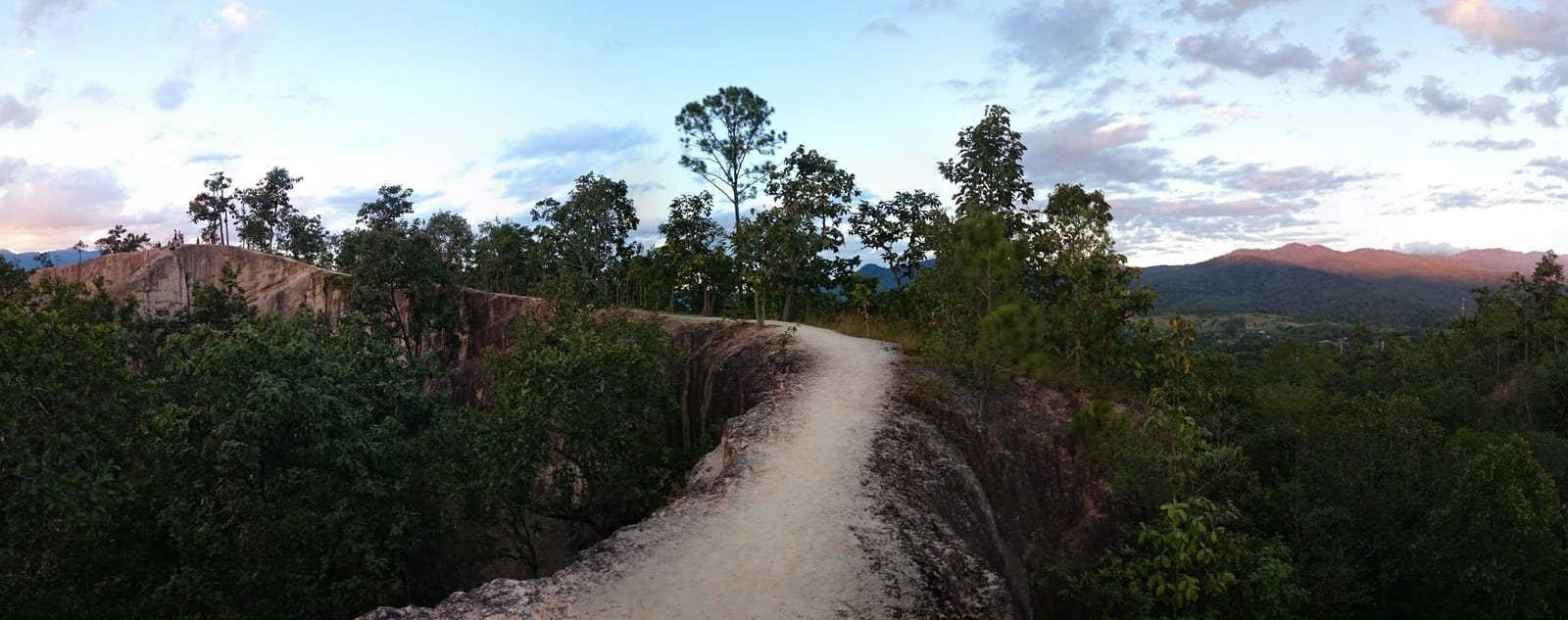
Narrow earthen ridges carved by nature, where you walk the spines for valley views in every direction. It's Pai's famous sunset spot. Free to enter, but some stretches of the path are narrow with drop-offs on both sides, so walk carefully and wear shoes with good grip.
Pai Historical Bridge (bridge over the Pai River)
An old steel bridge from World War II, a landmark photo spot for Pai. It sits on the Pai–Mae Hong Son road, an easy quick photo stop, with cafes and souvenir shops nearby.
Wat Phra That Mae Yen (White Buddha)
A hilltop temple on the east side of town, about 2 km from the district center, with a large white Buddha on the peak. Climb the steps to pay respects and take in the whole town of Pai across the valley. Beautiful both by day and at sunset.
Tha Pai Hot Springs
Natural hot springs in the forest, east of town. The hot water comes from underground — in some spots you can boil eggs. There are foot-soaking pools and mineral-water resorts nearby, good for a relaxing soak in the morning or afternoon. There's a national park entry fee.
Mo Paeng / Pam Bok waterfalls
Popular waterfalls near town. Mo Paeng is a multi-tier waterfall you can swim in, entry around 20 THB. Pam Bok is about 8 km from town with a short walk in. In the rainy season the water is full and beautiful; in the dry season it runs low.
Santichon Village (Yunnan Chinese cultural village)
A village of Yunnanese Chinese immigrants, with Chinese-style earthen houses, tea shops, swings, and photo arches. You can dress in Chinese costume and stroll around. It's right on the way up to the Yun Lai viewpoint, so you can pair them in one morning. There's a village entry fee.
Doi Kiew Lom
A sea-of-mist viewpoint on the Pai–Pang Mapha route, about 1,431 m above sea level, with wide mist-filled valley views. There's a cafe and camping spots, good for people wanting to extend the trip toward Pang Mapha / Mae Hong Son.
Rice-field cafes around Pai
One of Pai's charms is the cafes set in the rice fields with mountain views, scattered around town. Sit and sip coffee taking in the view all afternoon. Many have photo corners and seating out in the fields — perfect to slot into your day so the trip doesn't get too tiring.
About the sea of mist
The sea of mist is a matter of luck and weather. Waking up before dawn, heading to the viewpoint, and finding no mist is completely normal — it isn't there every morning. The best odds are in the cool season when the air is cold and humid after rain the night before. Keep your expectations open, but even without mist, the mountain views in the early morning are still beautiful.
Food first-timers shouldn't miss in Pai
- Pai Walking Street food — in the evening the walking street is one big food court, with northern local dishes, street food, desserts, and Western menus from little shops. Graze your way down it and call it dinner.
- Northern Thai / Tai Yai food — Pai has northern and Tai Yai restaurants. Try khao soi, nam ngiao, or local fermented-bean dishes — bold, home-style flavors.
- Coffee cafes and brunch — Pai has loads of cafes, both in town and by the fields, and many do tasty brunch and bakery items, perfect for a late breakfast before heading out.
- Bars and live music — at night Pai has small bars with live music and an easy vibe, good for a chill way to end the day.
A relaxed 3-day Pai itinerary for first-timers
This plan is built so first-timers get the full set — sea of mist, viewpoints, temple, waterfall, cafes, and the market — with travel time up and down to Pai already factored in, so you're not running all day. Adjust the timing to your own style. It assumes you have a motorbike or a vehicle for getting around Pai.
Arrive in Pai + explore town + walking street
Sea of mist + viewpoints + waterfall
Catch the last landmarks + cafe + head down from Pai
How many days for Pai?
For a first visit, 3 days and 2 nights is about right, because the first and last days lose half a day to travel up and down to Pai, leaving roughly a day and a half of full sightseeing. If you want to really chill or extend onto the Mae Hong Son loop, bump it up to 4 days or more.
Little things first-timers tend to forget
- Pack motion-sickness medicine — the 762 curves hit both on the way up and down, so prepare for both legs. Even people who never get carsick can on this route.
- Nights are colder than you'd think — Pai sits in a valley, and in the cool season the nights and pre-dawn hours are genuinely cold. Bring a warm jacket, especially if you're heading to a viewpoint.
- Carry cash — market stalls, the walking street, and many small shops take cash, even though plenty now have QR payment.
- Ride carefully on mountain roads — some roads to the viewpoints and waterfalls are steep and winding. Wear a helmet, avoid riding at night or in the rain, and if you're not used to mountain roads, charter a vehicle instead.
- Book ahead in the cool season — Nov–Feb and the New Year period are high season; in-town stays fill up fast and prices rise.
- Keep an open mind about the sea of mist — it isn't there every morning, it depends on the weather, and if you miss it there's still the mountain view to enjoy.
Want a full Pai guide covering everything — attractions, food, and where to stay?
See the Pai travel guide →