🔄 Updated 21 Jun 2026
Pam Bok Waterfall sits about 9–10 kilometres south of Pai town, along the same route as Pai's southern sights. It's a roughly 20-minute drive or scooter ride from the town centre to the car park. The falls are hidden inside a high rock canyon, the water dropping in tiers into a pool at the bottom. That pool is what most people come for — on days with plenty of water, you can wade in and swim.
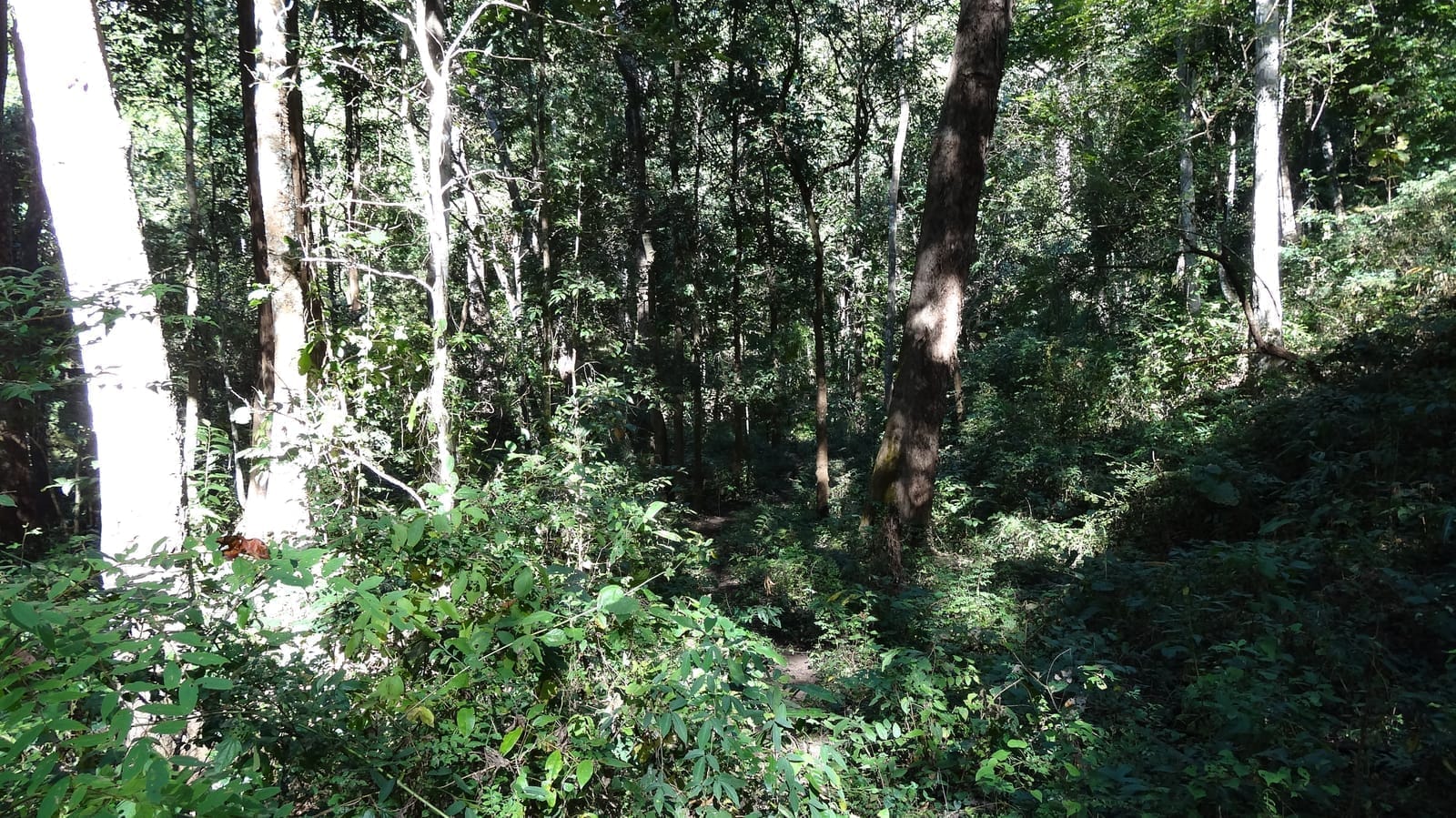
Pam Bok's appeal isn't size or force, it's the atmosphere. High rock walls hug both sides into a narrow canyon, light filters through the trees in patches, the water is cold and the air stays cool and shaded. It's better as a midday cool-off than a dramatic photo waterfall. Most visitors fold it into one loop with Pai Canyon and the Bamboo Bridge nearby.
Why people come to Pam Bok Waterfall
If you ranked Pai's waterfalls, Pam Bok isn't the biggest or the most spectacular. Where it wins is how easy it is to get to and reach — no long trek through the forest. These are the main reasons people stop by.
- A clear pool you can swim in — there's a pool in the rock canyon at the base of the falls, and on days with plenty of water you really can wade in and cool off. The water is cold and refreshing.
- Very easy to reach — from the car park it's under a 10-minute walk along a path beside the stream. No forest trekking or scrambling, so it suits all ages.
- Shaded inside the canyon — high rock walls and tree cover keep it cooler and shadier than outside, so it's a good escape from the midday sun.
- Quieter than other falls — it's calmer and more peaceful than many spots around Pai, good for anyone who likes a low-key, uncrowded vibe.
- On the southern sightseeing route — easy to combine with Pai Canyon, the Bamboo Bridge or Land Split in a single loop.
Want more out of Pai? Book tours & activities
Booking online ahead on Klook or GetYourGuide is usually cheaper than the gate and skips the queue. Pick only the experiences you actually want — prices and availability are shown live on each site.
Swimming at Pam Bok, and staying safe
The pool at the base of the falls is deep enough to wade and swim in on days with plenty of water. Some people climb up onto the rocks at the side and jump in, but this is where you need to be careful, because the water level and depth change with the season.
- Check the depth before you jump — the pool isn't the same depth every day or every season. Always get in and check the depth first before jumping, and never dive head-first.
- Slippery rocks, watch your step — the rocks around the pool are wet and mossy and easy to slip on. Wear shoes with grip and move slowly, especially when climbing up the rocks.
- Fast, murky water in the rainy season — after heavy rain the water can run fast and murky. If it's flowing hard or looks very cloudy, don't get in — wait for it to clear and settle.
- Keep a close eye on kids — some parts of the pool are deep and the rock floor is slippery, so don't let children swim on their own.
Swimming tip
Bring your own clothes you don't mind getting wet, plus a towel — there's no proper changing room at the falls, and the water in the canyon is colder than you'd think. If you come in the cool season, when it's already chilly out, the water will feel even colder. A lot of people just dip their feet or take photos rather than getting fully in.
When there's lots of water and when there's barely any, honestly
This is the part to read before you decide to go, because Pam Bok's water level depends heavily on the season. Show up at the wrong time and you might find only a thin trickle, not the strong-flowing waterfall you see in the photos.
- Most water, roughly July–November — the rainy season and the tail end of it. The pool is full, the flow looks great and you can swim properly. This is when Pam Bok is at its best.
- Cool season, roughly December–January — there's still a fair amount of water and the weather is pleasant, but the water in the canyon is very cold, so getting in can be chilly.
- Dry season, roughly February–May — the water drops a lot. Some years it's down to a thin trickle or nearly dry. If you come now, don't expect a strong-flowing waterfall.
What to know about the haze
Around March–April, northern Thailand including Pai often gets haze from agricultural burning — the air turns hazy and air quality drops. During this stretch the waterfall is not only low on water, the whole atmosphere feels less fresh than other times of year. If you're sensitive to dust or have allergies, avoid this window or bring a mask.
How to get to Pam Bok Waterfall, and what's the entry fee
From Pai town, drive south on Highway 1095 then turn off onto the side road following the signs for "Pam Bok Waterfall". The total distance is about 9–10 kilometres. The last stretch is a narrow road into the canyon, with a car park at the entrance. From the car park it's under a 10-minute walk along the path beside the stream to the falls.
- Scooter — the most popular option for visitors in Pai. Rent one in town for around 150–200 THB a day and ride it yourself. This route is mostly easy riding, but Pai's mountain roads are winding, so if you're not used to it, ride slowly and watch for oncoming traffic.
- Private car / rental car — you can drive all the way to the car park. The road narrows where it enters the canyon, so take it slow.
- Songthaew / chartered ride — if you'd rather not drive, you can charter a songthaew from town. Agree on the price before you get in; these usually cover several southern sights in one loop.
On the entry fee, straight up
Pam Bok Waterfall is inside a park area, with a fee booth at the car park. The entry fee is roughly 200 THB per person (the rate may change, so bring cash). At some times or on some days there may or may not be a staff member collecting it, so it's best to carry cash just in case. This fee usually covers entry for the whole day.
On the road up to Pai, honestly
The road from Chiang Mai up to Pai is Highway 1095, famous for its 762 curves and winding the whole way. If you get car-sick easily, bring motion-sickness medicine. As for riding a scooter yourself on a twisty mountain road like this, you really need to be confident in your riding. Beginners are better off taking the minivan up, then renting a scooter to play around Pai town, where the roads are flatter.
Where to go next near Pam Bok
Pam Bok is in Pai's southern sightseeing zone, so it's easy to combine with nearby spots in one loop without having to drive back into town.
Bamboo Bridge
A long bamboo bridge stretching across the rice fields, about 2 kilometres from Pam Bok. Worth a walk and some photos before or after the waterfall.
NearbyPai Canyon (Kong Lan)
Narrow earthen ridges and a popular sunset spot, on the same route — a good way to end the day in the evening.
Southern sideLand Split
A crack in the earth that locals turned into a small garden, on the same road as Pam Bok. Stop to try the fruit and herbal drinks.
Getting ready for Pam Bok Waterfall
- Bring cash for the entry fee, about 200 THB per person.
- Wear or pack clothes you don't mind getting wet, plus a towel, if you plan to swim.
- Wear shoes with grip — the rocks around the pool and the path get wet and slippery.
- Bring your own drinking water and snacks; there are no shops inside the canyon.
- Check the season — if you want to see the falls flowing strong and swim, go around July–November.
- Skip swimming if the water is fast or very murky after heavy rain.
Plan your whole Pai trip — where to stay, where to eat and what to see.
See the Pai travel guide →