🔄 Updated 21 Jun 2026
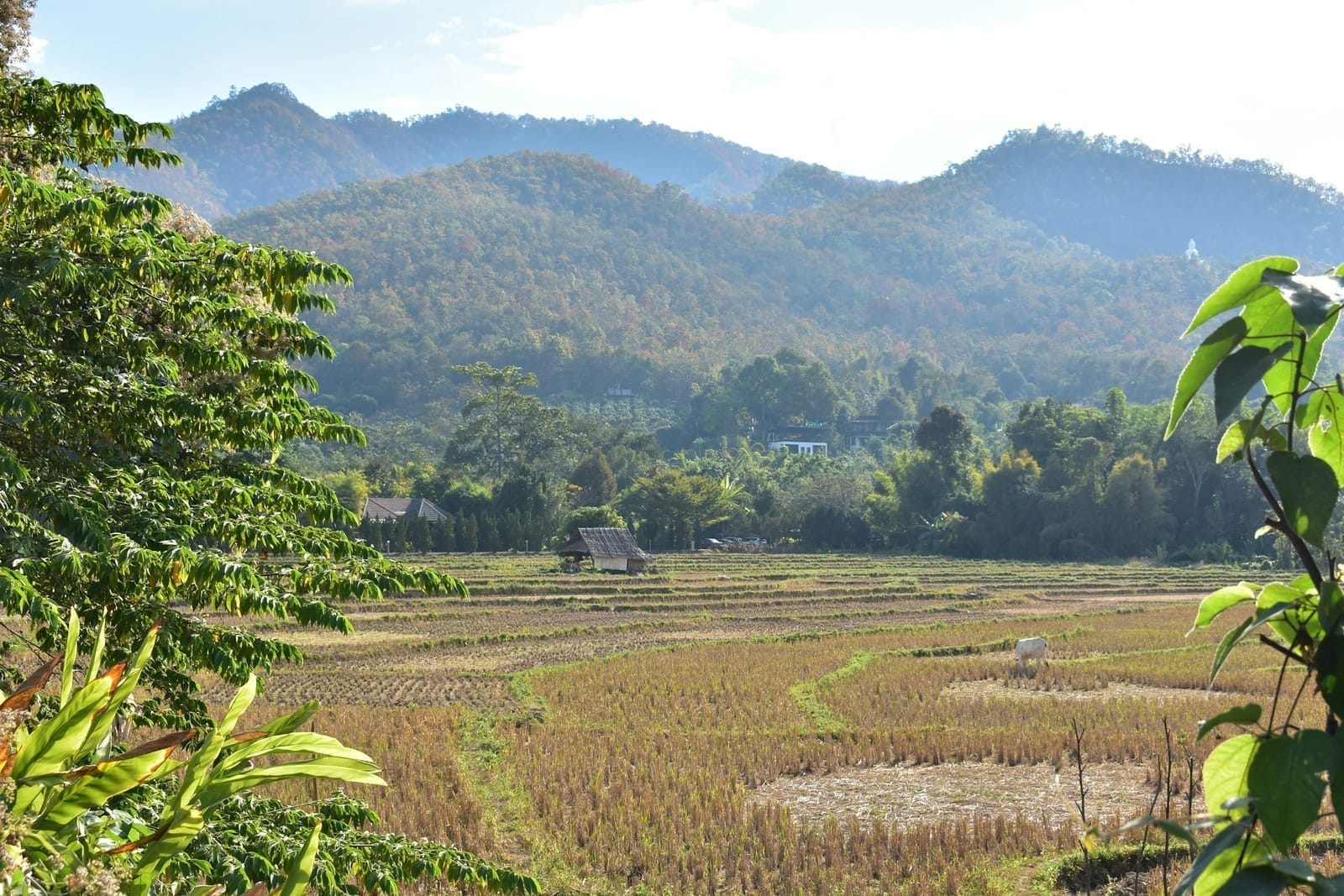
Pai sits in Pai district, Mae Hong Son province — a town in a valley ringed by mountains on every side. The draw is the cool, easygoing vibe: morning fog rolling through the valley, cafés overlooking the fields, and a night walking street. But because it's up in the hills, two things need a little more prep than your average town: when you go, which decides both the morning fog and the smoke haze, and the winding road up with its 762 curves, which really can make you carsick. Sort those two out and the rest of the trip is easy.
When is the best time to visit Pai?
The short answer is the cool season, roughly November through February. The air stays pleasantly cool all day, mornings give you a real shot at fog filling the valley, the skies are clear, the rice fields start turning color, and this is when the field-side cafés and viewpoints look their best. It's Pai's high season — a bit busier, but the atmosphere is the most rewarding of the whole year.
- Nov–Feb (cool season) — the best window. Cool air, genuinely cold mornings, a good chance of fog, clear skies. Great for photos and getting outdoors. This is Pai at its truest.
- Mar–Apr (hot + smoke haze) — northern Thailand enters burning season with haze drifting across borders. Dust levels usually spike, and on some days the mountain views go so washed-out you can't see them. Avoid it if you can, especially March, which is usually the worst.
- May–Oct (rainy season) — lush and green, waterfalls running full, fewer crowds, cheaper rooms. But rain comes in spells and some mountain stretches get slippery. Late in the season (October) the weather starts improving and the skies open up.
Straight talk on the sea of fog
The fog isn't guaranteed — it depends on each day's weather. It forms more easily on nights that are very cold, with clear skies and enough humidity. December and January give you the best odds, but you can still head up to a viewpoint and find no fog at all. Keep your expectations flexible and you won't be let down.
An honest word about the smoke haze
From March to April, northern Thailand — Pai included — usually gets hit by smoke from agricultural burning and forest fires. PM2.5 climbs high for days at a time, the air turns murky, the mountain views vanish, and it's rough on anyone with allergies or asthma. If you have to come during this stretch, check the daily dust readings (the AirVisual or IQAir app) and pack a dust mask.
What's the weather like in Pai month by month?
Pai sits in a valley higher than Chiang Mai city, so nights and early mornings get colder than many people expect — especially in the cool season, when temperatures down in the valley can drop a lot. Daytime stays comfortably warm, though. The bottom line: the gap between day and night is big, so pack for both.
- Cool-season pre-dawn (Dec–Jan) — genuinely cold. Down in the valley it can fall to around 8–13°C, sometimes lower. If you're heading up to a viewpoint at 5 a.m., dress warm.
- Cool-season daytime — comfortably warm, around 24–28°C with nice sun. You can be outdoors all day and shed the jacket.
- Hot season (Mar–Apr) — daytime heats up to around 32–36°C, plus smoke haze that makes the air feel stuffy and visibility poor.
- Rainy season (May–Oct) — cooled down by rain, humid, with showers mostly in the afternoon and evening. Keep a rain jacket on hand.
Hot by day, cold by morning
The single thing people most often get wrong about Pai is the temperature swing in a single day. Midday you'll be hot in a t-shirt, but once the sun sets the temperature drops fast. Dressing in layers you can peel off or add throughout the day is the answer.
The 762-curve road to Pai — how to prep so you don't get carsick
The road from Chiang Mai to Pai is Highway 1095, about 130 km, but it's a winding mountain road with roughly 762 curves — enough that the number has become the route's nickname. The minivan ride takes around 3 hours, turning left and right almost nonstop the whole way, so anyone who gets carsick easily has a real chance of feeling rough. The good news: a little prep goes a long way.
- Take motion-sickness pills before you leave — most work best if you take them about 30 minutes to an hour before getting on the bus, not once you already feel dizzy. You can buy them at any pharmacy.
- Don't eat too much or travel on an empty stomach — have a light bite to tide you over before boarding. A heavy or greasy meal will only make the nausea worse.
- Sit up front and look into the distance — if you can, take a front seat and watch the road far ahead; it confuses your brain less. Avoid staring down at your phone the whole way.
- Bring a bag and drinking water — better to have it just in case. Some minivans provide bags, but bringing your own is reassuring. Sipping water steadily helps.
- Open a window for some air — if you're in a private car, cool air and stopping for breaks make a big difference.
Riding a motorbike up yourself? Be very careful
Plenty of people rent a motorbike for the Chiang Mai–Pai run, but Highway 1095 is a steep, winding mountain road with trucks and minivans coming the other way fast. If you're not used to mountain roads or aren't a confident rider, the risk is higher than you'd think — Pai has a fair share of tourist motorbike accidents. If you're not sure, the minivan is safer; rent a bike once you're in Pai town, where the roads are flat.
How to get to Pai — minivan or drive yourself?
Pai has no operating commercial airport and no train. Most people fly into Chiang Mai first, then continue to Pai by minivan or private car. These are the two main ways people go.
- Scheduled minivan — the main operator is Prempracha Transport, departing from Chiang Mai's Arcade Bus Terminal 2. Vans run frequently, about one an hour from 06:30 to 17:30, with tickets around 150 THB and a ride of roughly 3 hours. In high season, book ahead — seats fill fast.
- Drive / rent a car yourself — rent a car in Chiang Mai and drive up. It's the most flexible option and you can stop for photos at viewpoints along the way, but you'll be tackling the 762 curves yourself. Best for people comfortable with mountain roads.
- Motorbike — popular with backpackers who like the freedom and fun, but the risk on mountain roads is high. Only for people who are genuinely confident riders.
Getting around once you're in Pai
In town you can easily explore the walking street on foot, but sights like Pai Canyon, the waterfalls, and the viewpoints are spread out beyond the town. Most people rent a motorbike in Pai town for around 100–150 THB/day, since the in-town roads are flat and everything's close. If you don't ride, there are chartered songthaews and daily tours to choose from.
What to wear and what to pack
The key to packing for Pai is being ready for warm days and cold nights, especially if you come in the cool season. A warm jacket is the item people most regret forgetting, because nights and early mornings in the valley really are colder than you'd expect.
- Warm jacket (essential in cool season) — a jacket or a thick top. Pre-dawn in the valley can drop to around 8–13°C, and if you're heading up to a viewpoint at 5 a.m. for the fog you'll want real warmth. Add a beanie and thin gloves if you feel the cold.
- Layers — hot by day, cold by night. A t-shirt underneath with a jacket over it, so you can add or shed throughout the day, is the most convenient setup.
- Comfortable walking shoes — Pai Canyon is a narrow dirt ridge that takes some balance, and some waterfall paths are slippery. Sneakers or hiking shoes beat sandals.
- Motion-sickness pills — for the 762-curve climb. Have them ready ahead of time so they kick in.
- Dust mask (if you come during haze season) — Mar–Apr brings high dust levels, so pack a few N95s.
- Cash — small shops, the night market, and some cafés mainly take cash. There are ATMs in town but not many, so keep some cash on you.
Things people often forget
A power bank and a car charger, since days out mean using maps and taking photos all day and your battery drains fast. Plus sunscreen and lip balm, because the mountain sun is strong and the dry cool-season air chaps your lips easily.
How much does a day in Pai cost?
Pai is known for working on a tight budget or a comfortable one. Accommodation ranges from hostels at a few hundred baht a bed to field-side boutiques, and food and cafés are reasonably priced. The one thing that really adds up is the room rate in high season, when prices climb. Here are rough per-person, per-day numbers, not counting travel from Bangkok.
- Accommodation — hostels / fan rooms around 200–400 THB/night, air-con rooms or bungalows around 500–900 THB, field-side boutiques with mountain views from 1,200 THB up. Rates rise in the cool season.
- Food — walking-street eats at 40–80 THB a plate, sit-down restaurants 80–150 THB/meal, café drinks 60–90 THB a cup. Three meals plus snacks runs about 300–500 THB/day.
- Attraction fees — Pai Canyon and many viewpoints are free or charge a small upkeep fee; waterfalls inside national park areas have an entry fee. Allow roughly 0–200 THB/day.
- Local transport — a motorbike rental is around 100–150 THB/day plus fuel. Chartering a songthaew or taking a daily tour costs more.
Budget summary
Backpacking Pai on a budget runs about 600–900 THB/person/day, while a comfortable trip with an air-con room and good restaurants is around 1,200–1,800 THB/person/day — not counting the minivan up to Pai or travel from Bangkok. It's a town where you can flex the budget easily.
A rough plan before you go
Pai's sights split simply into in-town (walking street, cafés, the wooden bridge) and out-of-town (Pai Canyon, waterfalls, viewpoints, hot springs). A loose plan before you go helps you fit the time together nicely. Here's a rough outline you can adjust to your energy and tastes — the idea is not to rush.
Up to Pai + exploring town
Morning fog + nature
Adjust for time
If you only have one day, trim it to Pai Canyon in the evening, the night walking street, and the Yun Lai fog the next morning before heading back — you'll still catch the highlights. For many people, 2 nights in Pai hits the sweet spot without being too tiring.
Quick recap before you set off
- Best time — cool season, Nov–Feb, especially Dec–Jan: cool air and a real shot at the morning fog.
- Avoid — Mar–Apr: heavy smoke haze and forest fires, washed-out views, bad for your health.
- The road up — 762 curves; take motion-sickness pills before boarding, and be very careful on a motorbike up the mountain.
- What to wear — layers, a warm jacket is essential in the cool season, comfortable walking shoes.
- Budget — backpacking around 600–900 THB/person/day, comfortable around 1,200–1,800 THB, not counting long-distance travel.
Ready? See the full overview of Pai before you plan in detail
See the Pai travel guide →