🔄 Updated 21 Jun 2026
Sam Khok is the old name for Pathum Thani, used before King Rama II granted the province its current name, and it's where the Mon people settled along the Chao Phraya more than 300 years ago. The big draw of this trip is how close it sits to Bangkok — an hour's drive from the city center — yet the moment you arrive, the mood switches to a quiet stretch of river. We've set it up so day one covers the temples on the Sam Khok side, you stay the night around Pathum Thani town or Rangsit, and day two takes in the old market and the temples you missed.
Before you set off
Most temples around Sam Khok open roughly 8:00 AM–5:00 PM, and since they're active places of worship, dress modestly — no tank tops or short shorts — and you'll be able to enter everywhere without a hassle. The 100-year-old Rahaeng Market is only really lively on Saturdays and Sundays, so if you want to catch all the shops open, line up day two with a weekend.
Day 1 — Sam Khok Temples Along the Chao Phraya
Wat Sing · Pottery Kilns · Wat Pa Ngio · Wat Sala Daeng Nuea
The honest heads-up
Each temple in Sam Khok is a community temple, not a fully decked-out check-in spot like the famous temples in tourist towns. The charm here is the quiet and the genuine history. If you come expecting lots of cafés and photo corners, it might feel plain — but if you love old temples and riverside life, this place delivers in full.
Book the activities in your Pathum Thani trip ahead
Booking online ahead on Klook or GetYourGuide is usually cheaper than the gate and skips the queue. Pick only the experiences you actually want — prices and availability are shown live on each site.
Day 2 — The Old Market and Riverside Life
100-Year Rahaeng Market · Canal-side Eats · Extra Temples
Temples and Cultural Spots Not to Miss
Wat Sing (Sam Khok)
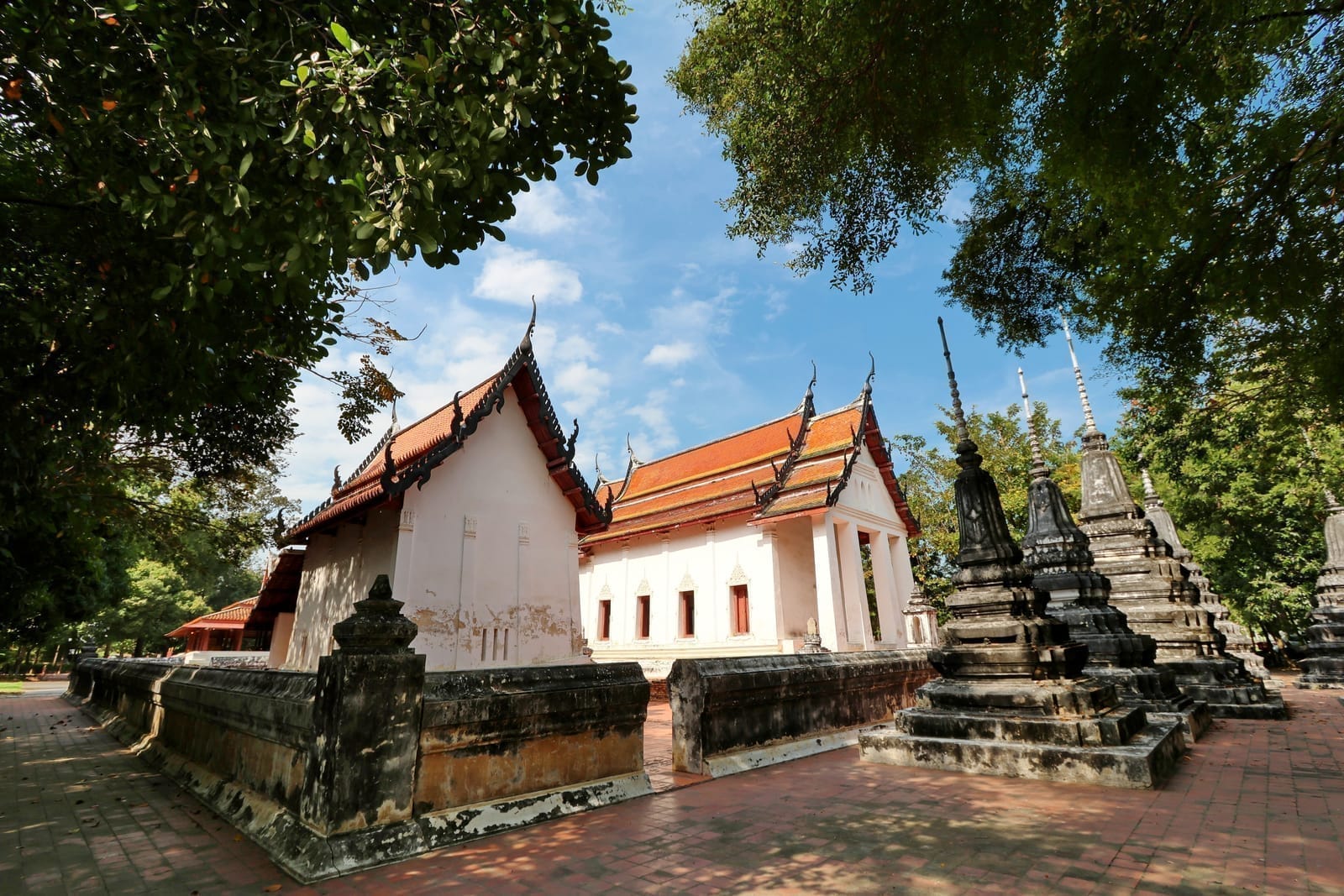
Sam Khok's old companion temple from the Ayutthaya period, over 400 years old and registered as a historic site by the Fine Arts Department. It has several old principal Buddha images and a temple museum, and has been a spiritual center for both Thai and Mon people here since long ago.
Ancient pottery kilns
A historic site of the Mon community's earthenware kilns, opposite Wat Sing — the birthplace of the unglazed, hard-fired red Sam Khok water jar. It helps tell the story of why this place was once an important pottery-making center.
Wat Sala Daeng Nuea
A Mon temple on the Chao Phraya with a chedi and a Mon-style sermon hall, plus a museum holding everyday objects and old wooden boats once used for river trading. At certain times there's a boat to see the riverside way of life.
Wat Pa Ngio
A Mon community temple on the Chao Phraya in Ban Ngio subdistrict, with a Mon-Burmese-style chedi over 200 years old. The setting is shady and quiet, good for merit-making and photographing the riverside chedi.
100-Year Rahaeng Market
A wooden canal-side market over a hundred years old in Lat Lum Kaeo, with wooden shophouses on both banks, old-style coffee, a Chinese pharmacy, an old-school barber, and home-style eats. A relaxed walk for vintage-style photos.
Sam Khok Mon Traditions You Can Still See
The Mon people moved in and settled at Ban Sam Khok around 1659 (B.E. 2202), in the reign of King Narai the Great, and made their living firing earthenware by the river. The traces still clearly visible today are the ancient pottery kilns, the Sam Khok water jars dotted around the temples, the Mon-style chedi architecture, and the Mon-style sermon halls at the riverside temples.
- Mon-Burmese chedi — you can spot these at Wat Pa Ngio and Wat Sala Daeng Nuea; the shape differs from a typical Thai chedi.
- Sam Khok water jars — unglazed, hard-fired red earthenware jars that were once a key product shipped by boat all over the Chao Phraya basin.
- Riverside life — the community still lines up along the river, with temple landing piers and, in some spots, sightseeing boats to ride.
If you want the real Mon goods
If you're after Mon snacks and old-fashioned sweets, try aiming for a merit ceremony or a Sam Khok community festival, which the temples often host — on regular days there aren't many shops selling Mon specialties. That's why we'd suggest focusing mainly on the temples and the kilns, and filling up your main meals at the general riverside restaurants.
Getting There and Where to Stay
Drive yourself
The most convenient option. The temples are scattered along the river at different points and public transport connections are awkward; you can park at the temples and the market.
Stay in Pathum Thani town / Rangsit
Sam Khok has few places to stay. We'd suggest the town or Rangsit side, with more hotels and dinner options — it's only a 20–30 minute drive over.
This trip suits anyone who wants to travel close to Bangkok without a long drive — you get merit-making, old temples, and a taste of riverside Mon life over one or two days. You can trim it to a single day by dropping day two, but staying the night means you can wake up and stroll the old market at an easy pace.
Plan a full trip across all of Pathum Thani
See the Pathum Thani travel guide →