🔄 Updated 21 Jun 2026
Say Pathum Thani and a lot of people picture Future Park Rangsit or Dream World first. But on the western side of the province, along the Chao Phraya, there's a small district called Sam Khok that has quietly held onto its history for centuries. This is the home of the Mon (Raman) people who fled the Burmese armies and crossed over here back in the Ayutthaya period, then settled down and made a living with a skill they brought with them: pottery.
These days Sam Khok isn't busy the way a tourist town is, but that quiet is exactly the charm. Stroll along the river, drop into an old temple, look at the ancient kilns, then track down a bowl of noodles or some Mon sweets. It's an easy day trip that gives back more than you'd expect.
How the Mon Came to Settle in Sam Khok
Sam Khok is an old town dating to the Ayutthaya period — it appears on Dutch maps as far back as 1650, during the reign of King Prasat Thong. Later, in the reign of King Narai the Great, Mon people from Martaban fled the Burmese armies and came to take refuge under royal protection, and the king granted them permission to settle around this Sam Khok area.
The name Sam Khok (literally "three mounds") is believed to come from three earthen mounds the Mon raised to keep floodwaters away from their pottery kilns — a bit of practical know-how from Mon craftsmen who had to live with annual flooding. A key turning point came in 1815, when King Phra Phutthaloetla Naphalai (Rama II) traveled here to present kathina robes and receive lotus flowers at Sam Khok. The locals brought him so many lotuses that he was deeply moved and bestowed a new name on the town: Prathum Thani — the origin of the "City of Lotuses" nickname that still sticks today.
Worth Knowing
The poet Sunthorn Phu once passed through Sam Khok and mentioned it in his travel poems, so the riverside area has a small Sunthorn Phu monument you can stop by for a photo.
Want more out of Pathum Thani? Book tours & activities
Booking online ahead on Klook or GetYourGuide is usually cheaper than the gate and skips the queue. Pick only the experiences you actually want — prices and availability are shown live on each site.
The Sam Khok Water Jar — the Pottery That Made the Town Famous
The most celebrated thing here is the Sam Khok water jar, called "i-loeng" in the Mon language. It's a round drinking-water vessel with a narrow mouth, thick hard-fired clay walls, a brick-red color, and no glaze, fired at high temperature until the body is dense. It keeps water cool and lasts for years, and back in the late Ayutthaya to early Rattanakosin era it was sold all across the Chao Phraya basin.
Beyond the jars, the Sam Khok kilns also turned out pots, urns, large water jars, basins, and fire-resistant bricks as the town's main exports. Over time most of the Mon potters moved their production to Koh Kret in Nonthaburi, and the Sam Khok kilns gradually fell silent, leaving only kiln remains for later generations to see.
- Color and body — brick-red, unglazed, thick and hard; tap it and it rings out
- Shape — round and bulging with a narrow mouth, designed so water evaporates slowly and stays cool
- The Mon name — "i-loeng" is a Mon word, reflecting the cultural roots of the craftsmen
Wat Sing — a Riverside Ayutthaya-Era Mon Temple
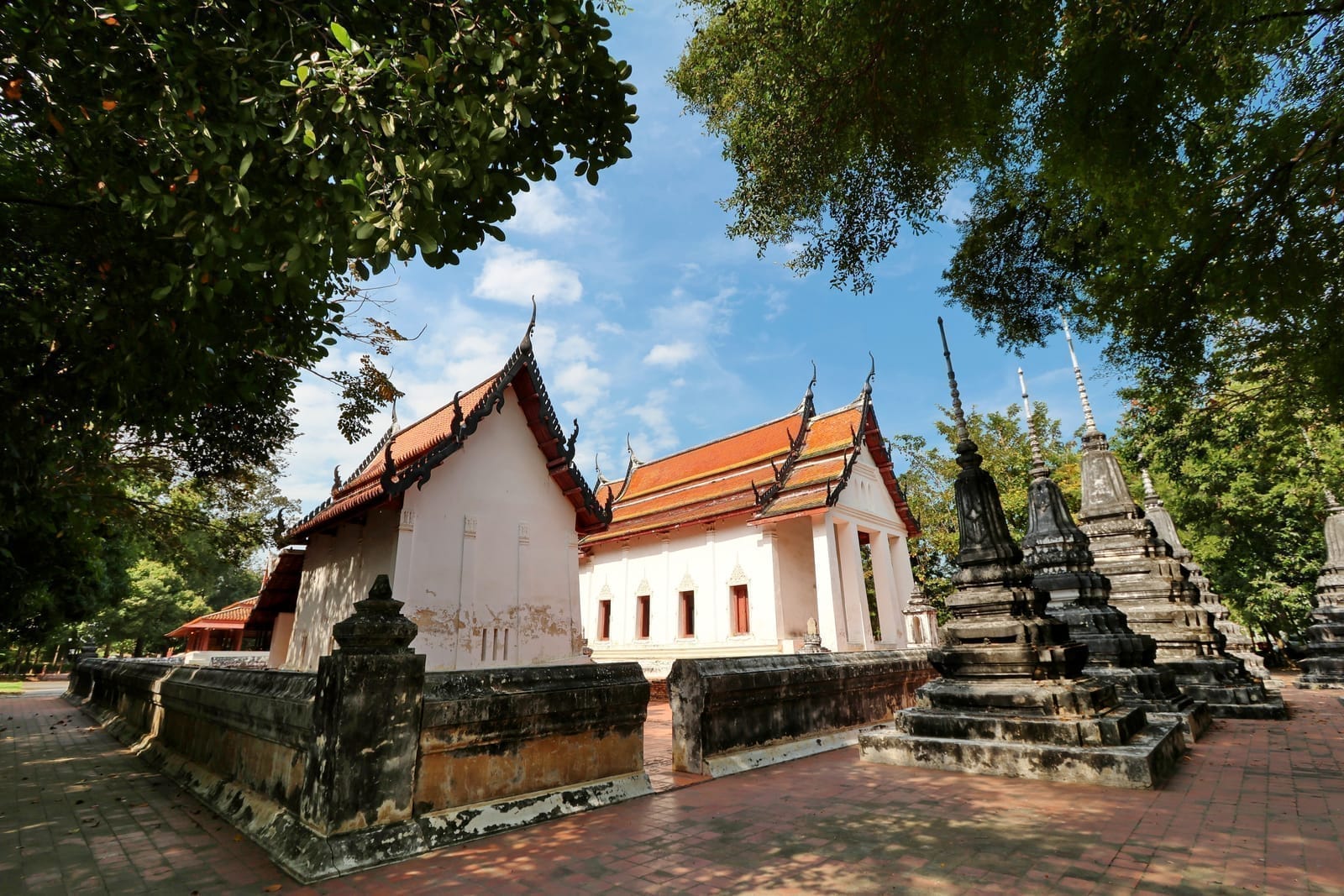
Wat Sing sits on the west bank of the Chao Phraya in the Sam Khok area. It's an old temple built back in the middle Ayutthaya period, fell into ruin after the first fall of Ayutthaya, and was then restored by the Mon who migrated here during King Narai's reign. The Fine Arts Department registered it as a national historic site in 1992.
There's plenty to see here: a middle-Ayutthaya ordination hall, a small vihara with the boat-hull-curved base typical of that era, and several old Buddha images. The standout is Luang Pho To, a roughly 400-year-old Buddha image enshrined in a glass case in the earthen pavilion, plus the Luang Pho Phaya Krai chedi holding the relics of an important Mon monk. Just as important, across the river from the temple is the site of the old Sam Khok water-jar kilns, where you can still make out enough remains to picture how it worked.
Temple Etiquette
This is a working temple with resident monks where local people still come to make merit. Dress modestly, take off your shoes before entering the ordination hall, and ask before photographing the old Buddha images in the glass cases.
Strolling the Sam Khok Riverside Quarter
The heart of the trip is simply walking slowly along the river. The old Sam Khok quarter still has wooden houses and old shophouse rows that show a riverside way of life that has vanished from the big cities. On some weekends there's a small riverside market selling local food and Mon sweets.
Old Wooden Houses & Shophouses
Walk past riverside timber architecture that people still live in; photographs best in the morning or evening light.
Sunthorn Phu Monument
A small spot honoring the poet who once passed through and mentioned Sam Khok in his travel verse.
Ancient Kiln Site
Kiln remains shaped like an overturned boat across from Wat Sing — Mon craftsmanship up close.
If you have time left over, you can stop by nearby Mon temples too, such as Wat Bang Toei or other temples in the Sam Khok area that still hold Ayutthaya-Mon era art. Many of them are quiet and tourist-free, perfect for anyone who likes a peaceful atmosphere.
Food and Souvenirs Around Sam Khok
The food around here is genuinely local, not tourist-trap fare. Mon sweets like khao chae in the hot season and a range of other desserts can still be found at the markets and community merit-making events. For souvenirs, think pottery and local snacks.
- Mon sweets — khao chae and various simmered desserts, found at the riverside market and merit events
- Riverside noodles & made-to-order dishes — affordable community shops, around 40-60 THB a plate
- Pottery — plant pots, small jars, and decorative pieces in the Sam Khok water-jar style, souvenirs with a story behind them
How to Get to Sam Khok
Sam Khok is on the west side of the Chao Phraya, not far from the center of Pathum Thani town. It's about a 1-hour drive from Bangkok along the Pathum Thani-Sam Khok road. Driving yourself is the easiest option since the sights are spread out and public transport isn't frequent.
- By car — from Bangkok take the expressway or the Tiwanon-Pathum Thani road, then turn onto the Sam Khok road; about 1 hour
- SRT Red Line train — get off at Rangsit station or a station in Pathum Thani, then take a taxi or local hired vehicle into the district
- Best timing — morning or late afternoon when the sun is softer, for a comfortable riverside walk; go on a weekend for a chance to catch the riverside market
A Quick Plan
Half a day is enough to see all of Sam Khok. Start at Wat Sing and the kilns in the morning, walk the riverside quarter, have lunch, then move on to other spots in Pathum Thani in the afternoon — an old temple or a café out in the fields.
Want a full day-by-day Pathum Thani itinerary?
See the Pathum Thani temple & Mon community plan →