🔄 Updated 21 Jun 2026
Pattani souvenirs roughly split into three groups. The first is seasonings and ferments like budu, the heart of this local kitchen. The second is processed seafood, since Pattani sits on the Gulf of Thailand and lands fish and squid every day — fish crackers, dried squid, dried shrimp, salted fish. The third is Malay sweets, which are getting harder to find outside the area. We'll go through each group so you can see what's worth buying and how long it keeps.
Budu — the souvenir that says Pattani
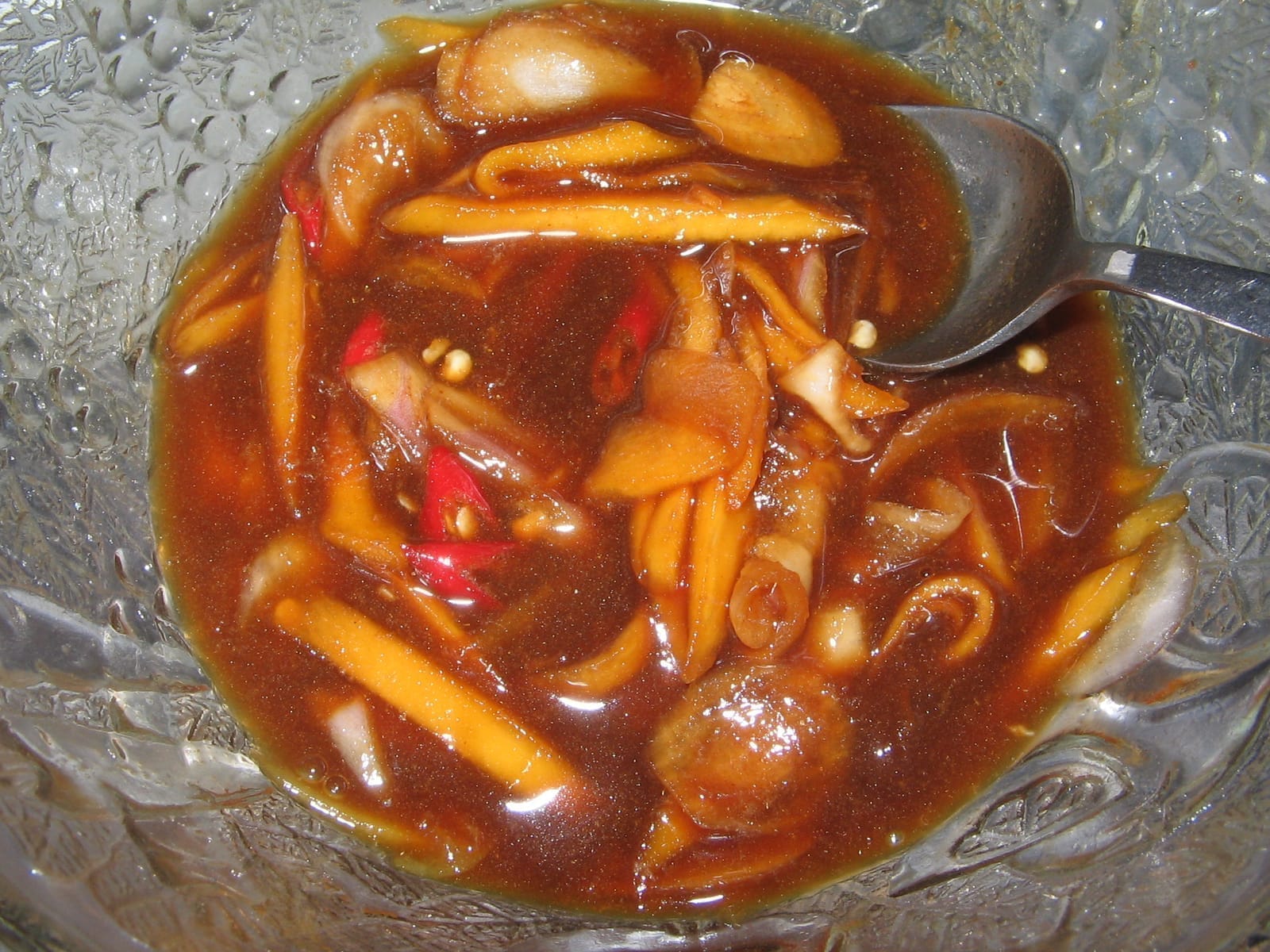
If you could only grab one Pattani souvenir, a lot of people pick budu. It's a dark-brown fermented fish sauce made from anchovies cured with salt in jars for months or even years, with a deeper umami punch and a stronger smell than ordinary fish sauce, because it keeps both the liquid and the broken-down fish together. The budu people talk about most comes from Sai Buri district, right on the Gulf, where there's fresh anchovy and local salt. When it's fermented just right it smells good, the flavor is rounded rather than aggressively salty, and it keeps for a long time — an easy souvenir to carry home.
- Thick budu (ready-seasoned) — already simmered and seasoned, so you can open the bottle and spoon it over rice or use it as a dip straight away. Good for first-timers or for giving to people who aren't from the South. Most souvenir bottles run from the tens up to the low hundreds of THB per bottle.
- Clear budu (first draw) — taken from the first batch in the jar, lighter in color, genuinely salty, and unseasoned. Best for people who like to make their own budu chili dip or the dressing for khao yam to their family recipe.
- Budu for khao yam — some makers season it sour-salty-sweet so it's ready to pour over khao yam. Easy to take home and put a rice salad together yourself.
Get your budu home safely
Budu is a strong-smelling liquid, so if you're flying, put it in checked luggage, wrap it in several layers of zip bags and plastic to stop leaks, choose a bottle with a tight screw cap or a good seal, and check your airline's liquid rules first. Budu prices vary by size and brand — the figures in this article are rough estimates just for budgeting.
Want to taste deeper? Try a Pattani food tour or cooking class
Half a day with a local who knows the lanes — or cooking a dish yourself — teaches you more than just eating. Book ahead on Klook or GetYourGuide.
Processed seafood — dried squid, dried shrimp, salted fish
Pattani is on the coast, so processed seafood is fresh, fairly priced, and the second most popular souvenir after budu. The most famous is dried squid from Panare district — big, white flesh, a natural sweetness, not too salty. Grill it over low heat and tear into it, or use it in a salad. There's also dried shrimp, salted fish, butterflied dried fish, and plenty of other sun-dried seafood to choose from.
- Panare dried squid — the local pride from the Panare coast, big with thick flesh. Pick pieces that are fully dry and not damp, with a clean smell rather than a sharp one. Price depends on size and grade — big, top-grade pieces cost a fair bit more than small ones.
- Dried shrimp — sun-dried sea shrimp with a nice orange color. Choose firm pieces that aren't crumbly; use them in chili dips, som tam, or sprinkled over khao yam.
- Salted and butterflied fish — once-sun-dried and salted sea fish in several styles. Easy to carry home and fry up with rice porridge.
- Shrimp paste & local chili pastes — some shops carry shrimp paste and processed chili pastes in tubs that keep well too.
How to pick dried seafood right
Choose pieces that are fully dry, with no rancid or musty smell and no oddly faded color, and if you're buying a lot, ask for vacuum-sealed packs — they keep longer and contain the smell on the way home. Saltiness is hard to gauge with dried seafood, so taste it or ask how salty it is if you're buying for someone who can't handle salt.
Fish crackers (keropok) — the local snack
Fish crackers are the snack people in the Deep South call keropok, made from fresh ground fish mixed with sago or tapioca flour, with some recipes adding black sesame or seaweed for extra aroma. The ones from Sai Buri district have a name for being good because they use plenty of fresh fish — firm texture, not fishy, and when fried they puff up crisp with a clear fish flavor. An easy souvenir to carry that suits all ages.
- Raw fish crackers (unfried) — dried sheets or raw discs ready to fry, which keep longer and weigh less. Good for taking home to fry yourself.
- Ready-fried fish crackers — fried and bagged, crisp and ready to eat, but best eaten within a few days for full crunch.
- Stick-style keropok (lopak) — boiled or steamed and eaten with a local dipping sauce. This one is more of a fresh, eat-it-here thing, best sampled while you're in Pattani.
A souvenir for kids and adults alike
Fish crackers are a souvenir every household will accept — no strong smell like budu. The raw version is better value and keeps longer; fry it in very hot oil so it puffs up crisp. The ready-fried version is good for snacking on the road or giving as a tear-open-and-eat gift.
Malay sweets — desserts hard to find outside the area
Another charm of Pattani souvenirs is the Malay sweets that are getting harder to find outside the three southern provinces. Many are made fresh and sold only locally, and some appear only during Ramadan. If your timing's right and you come across them, give them a try and buy the kinds that keep well enough to carry home.
Akok (ah-koh)
An old-school sweet of batter mixed with egg and coconut milk, fried in a dimpled mold until fragrant, sweet, and rich — a classic from Pattani's old market. Some makers sell it only during Ramadan; being fresh, it's best eaten the same day.
Putu mayong / Malay rice noodles
A Malay-style sweet that's hard to find outside the area, soft and fragrant with coconut milk. Better sampled while you're in Pattani than carried home far.
Luk yi paste / candied luk yi
A local fruit processed into a sweet-tart treat, easy to carry, keeps a long time, and an easy souvenir to find in town. Roughly tens to low hundreds of THB a bag.
Local baked goods & bakeries
Several cafes and dessert shops in town make coconut cake and locally flavored baked goods — good to buy as a box the whole household can share.
Fresh sweets vs. ones that keep
Freshly made Malay sweets like akok or rice-noodle sweets are best while new, eaten the same day. If you have to carry them far, dried or paste-style ones like luk yi are safer. During Ramadan the Malay food markets get especially lively, with a lot of hard-to-find sweets on sale.
Souvenir shops and markets that actually stock it
If you don't have time to drive all the way out to Sai Buri or Panare, you can still buy the full range of souvenirs right in Pattani town — general souvenir shops, markets, and the mall in town. Here's the rundown.
Tani Souvenir Shop (OTOP / Doi Kham)
A shop in town pulling together local products and OTOP goods — bottled budu, fish crackers, processed seafood, and gift hampers. Good for buying several things in one stop, and you can pick items with FDA and halal labels for peace of mind.
Asan Pattani Souvenirs
The souvenir shop people think of when they want local goods — budu, Panare dried squid, fish crackers, and a range of processed seafood. Ask about vacuum-sealed packs for carrying home far.
Pattani Bazaar
A cluster of shops in town with souvenirs, food, and local products all together. You can browse several shops in one place — good for scouting out what to buy and take home.
Pattani Municipal Market
A fresh market in town with a dried-goods and processed-seafood corner at market prices. Buy dried squid, dried shrimp, and salted fish by the kilo — good for anyone after local goods at modest prices.
Mae Nim Luk Yi Shop
A go-to for luk yi paste and candied luk yi that people often buy as souvenirs — sweet-tart, around ninety THB a bag, easy to carry and keeps a long time. Good for buying to share around.
Big C / supermarkets in town
The local-products corner in the big stores usually stocks small travel-size budu bottles and pre-packed souvenirs — good for buying to share around or topping up before you leave, with air-con and easy walking.
Paseyawo Budu Community Enterprise (Sai Buri)
A source budu producer in Paseyawo subdistrict, Sai Buri district, still fermenting with Gulf anchovies and local salt the traditional way. If you drive out, you'll see the real fermentation jars and can pick thick or clear budu straight from the source.
OTOP / Deep South product center
A center selling the area's OTOP products, with many brands under one roof. Most items carry full FDA and halal labels — good for anyone who wants to compare several makers before buying.
Buy smart and safe
Choose items with clear FDA and halal marks for confidence in cleanliness and for giving to Muslim friends. For liquids like budu, ask for a tightly sealed bottle; for dried seafood, ask for vacuum packs if you're carrying it far; and compare prices at two or three shops before buying a lot. All prices in this article are rough estimates and can change with the season and the grade of the product.
Plan a souvenir route without wasting the trip
If you want to collect the full set of souvenirs without running around, try organizing it in loops like this — you'll get both the in-town goods and the source goods without wearing yourself out.
Half a day collecting souvenirs in Pattani town
Half a day out to the Sai Buri–Panare producers
Before you head out to collect souvenirs at the source
Pattani is in the Deep South. The atmosphere in town and around the markets is normal, people are friendly, and it's a food town well worth visiting to gather souvenirs at the source. But before every trip, check the latest news and safety advisories, and planning your shopping for daytime through early evening is more comfortable. Respect the Muslim-Malay culture, dress modestly especially when entering communities or near a mosque, and your souvenir-collecting trip will go a lot more smoothly.
Plan a full Pattani eating trip, with places to stay and things to do
See the Pattani travel guide →