🔄 Updated 21 Jun 2026
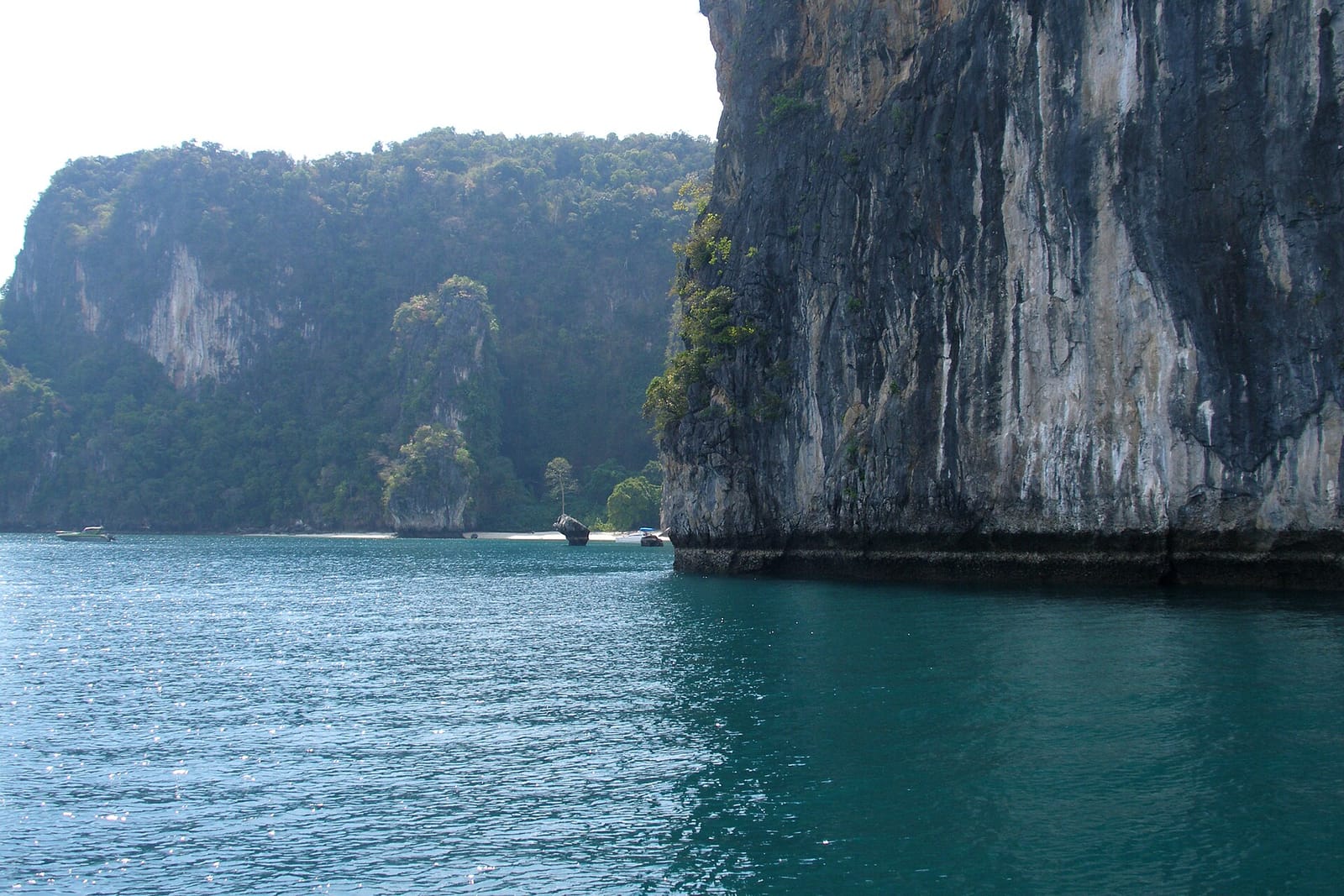
The whole point of kayaking in Phang Nga Bay is access — getting into places a longtail or speedboat simply cannot reach. Most of the limestone karst islands have low cave openings that you can only squeeze through when the tide is at a precise middle level. You paddle in complete darkness, then emerge into a hong: a sky-lit lagoon with sheer rock walls, dangling mangrove roots, ferns, and sometimes a startled macaque. The star spots are Koh Panak — which has a bat cave, a crystal cave, and a hong — and Koh Hong, where the only way into the central lagoon is through a narrow, low-ceilinged tunnel.
What you need to know about tides first
Most hong cave entrances are only passable during a roughly 2–3 hour window around mid-tide. At high tide, the opening is fully submerged. At dead low tide, it is mud and sharp rock. A good operator times the tour to that window — which is why departure times shift day by day and why you should never lock your schedule to the times in this plan. Always go by the tide schedule your operator gives you.
Guided paddling vs. self-paddle — which tour type suits you?
Phang Nga Bay kayak tours come in two main formats. The first puts you in a sit-on-top kayak and lets you paddle yourself around the exterior of the islands — good if you want to work for it and set your own pace. The second uses inflatable canoes steered by a guide who sits behind you; you just sit back and duck when they say duck. Operators like John Gray's Sea Canoe and Andaman Sea Kayak run the guide-steered format, which is how they get into the deepest cave passages safely. Most big-boat day trips from Phuket offer the self-paddle version around the outside.
- Guide-steered inflatable (recommended for caves) — the guide handles navigation inside dark passages; you just need to listen and lean. Ideal for first-timers, families, or anyone who does not want to worry about technique. Costs more, typically a full-day program.
- Self-paddle sit-on-top — you control your speed and route around the island exteriors. More physical, more satisfying if you like paddling. Depth into caves is limited because you are responsible for your own safety.
- Big-boat group tour + kayak add-on — cheaper, covers Khao Tapu and Koh Panyee village too, but actual kayak time is usually 20–30 min and it is busy. More sightseeing, less paddling.
Book the activities in your Phang Nga trip ahead
Booking online ahead on Klook or GetYourGuide is usually cheaper than the gate and skips the queue. Pick only the experiences you actually want — prices and availability are shown live on each site.
Full-day itinerary — Koh Panak bat cave, crystal cave & hong
This day focuses entirely on Koh Panak. It has the densest cave system in the bay: a bat cave where you paddle through total darkness with the ceiling alive with roosting bats, a crystal cave whose calcite walls catch your headlamp and scatter sparks, and a passage that opens into a silent green hong. Morning is the best window — tides are usually favourable and the bats are still active.
Koh Panak — bat cave, crystal cave & hong
Want to see bioluminescent plankton? Look for the Starlight tour
Some operators run an afternoon-to-evening version — John Gray's Hong by Starlight is the best-known — that gets you into the hong at dusk, floats candles in the lagoon, and finishes with bioluminescent plankton glowing around your boat in the dark. Prices run around THB 3,950 per adult, THB 1,975 for children aged 7–12, free for younger children. Includes Phuket transfers, equipment, guides, and dinner on board. It is a genuinely different experience from the day tour, but you get back late and group sizes are smaller.
Realistic costs to budget for in 2026
- Full-day guided canoe tour (guide steers) — around THB 3,000–4,500 per person with established operators like John Gray's or Andaman Sea Kayak. Includes transfers, equipment, meals, and guides.
- Big-boat group tour with kayak option — around THB 1,300–2,000 per person. Covers Khao Tapu and Koh Panyee village as well, but real kayak time is short.
- Ao Phang Nga National Park entrance fee — Thai nationals THB 60, foreign visitors THB 300, children THB 150. Some tours include this; confirm when booking.
- Chartered longtail from Tha Dan or Surakul pier — around THB 1,500–2,500 per boat for 3–4 hours. Good if you want to self-paddle and keep costs low, but no cave guide is included.
- Personal gear — reef-safe sunscreen, hat, sunglasses, a light windproof layer, sandals with a heel strap, waterproof phone case or dry bag.
Honest heads-up
This tour sells the experience of slipping through a cave into a hidden lagoon — not a strenuous kayak workout. If you book a cheap group boat that includes kayaking as a bonus activity, expect 20–30 min of paddling in a crowd. If you want quiet cave passages with room to breathe, choose an operator that limits group size per round. Also: hong access depends entirely on tides, and tides do not negotiate. On any given day, conditions might mean you cannot reach every cave on the list. That is nature — go in with flexible expectations.
Which pier should you leave from?
Ao Por Pier (Phuket)
The main departure point for most branded kayak operators. Close to Koh Panak and Koh Hong, with hotel transfers from across Phuket. Best if you are based on the island.
Tha Dan / Surakul Pier (Phang Nga Town)
Charter a longtail from here if you are staying in Phang Nga Town and want to keep things simple and affordable. You control the itinerary, but there is no cave guide included. Tha Dan is usually cheaper than Surakul.
Khao Lak
Some operators pick up from the Khao Lak strip too — earlier departure and a longer boat ride. Makes sense if Khao Lak is your base and you want to add bay kayaking to the same trip.
See verified hotel picks for Phang Nga
Top 10 Hotels in Phang Nga →