🔄 Updated 21 Jun 2026
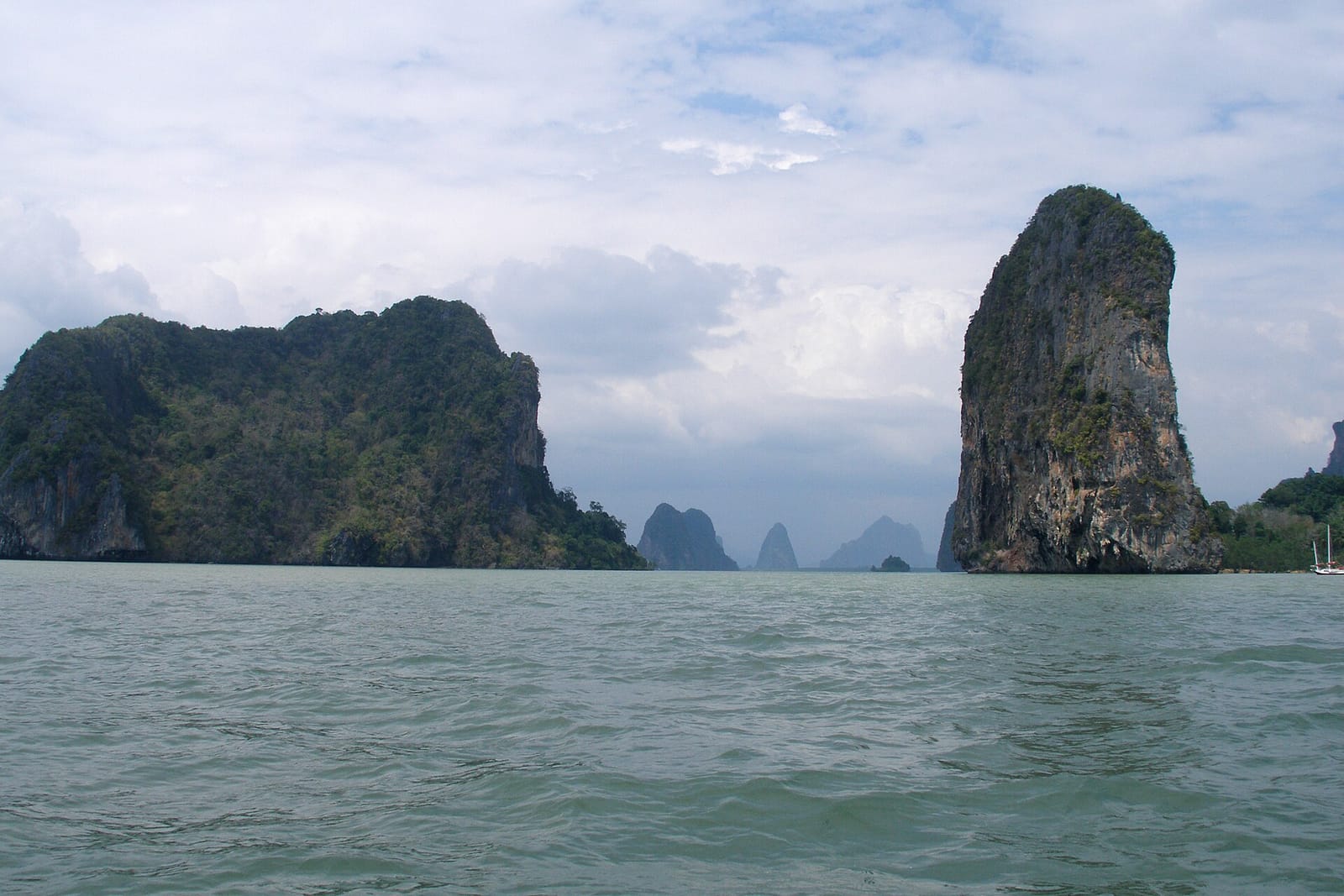
Phang Nga Bay is not your picture-postcard white-sand sea — the water runs a murky green from mangrove sediment, and that's the point. The real draw is the karst towers jutting out of the water in every direction, many of them hollow inside. Paddle through a low cave entrance and you emerge into a hong — a vertical-walled lagoon open only to the sky, ringed by cliffs, utterly quiet except for monkeys, hornbills, and bats. That's the experience people come all this way for.
Top spots to paddle — which caves are worth it
Most tours loop through the same cluster of islands, but each stop has a different feel. If you're chartering your own boat or booking a specialty tour, check exactly which sites are included.
Tham Lod (Lod Cave)
The bay's most famous through-cave — longtail boats can pass at low tide, and the ceiling hangs with stalactites close enough to brush your head. It's the classic shot and usually the first stop on any tour.
Koh Panak
An island riddled with multiple cave passages — paddle into the dark for a minute or two and you break through into a hong on the other side. Some tunnels are low enough that you have to duck flat. The most genuinely adventurous stop for cave enthusiasts.
Koh Hong, Phang Nga
A large, open hong you can paddle around comfortably — cliff walls rise on every side like the inside of a giant bowl. The water stays calm and there's no tight cave to navigate, making it perfect for anyone who wants the lagoon experience without the dark-tunnel part.
Khao Ma Ju (Poodle Dog Rock)
A limestone formation that looks uncannily like a poodle sitting down. It's a photo stop between sites rather than a cave to paddle through, but guides always point it out and everyone gets a laugh from it.
Khao Khian (Painted Cave)
A cliff face covered in prehistoric rock art over three thousand years old — figures of people, animals, and boats painted in red. You can paddle right up to it. Adds a history angle to what otherwise feels like a pure nature trip.
Khao Tapu (James Bond Island)
The pencil-thin stack of rock made famous by The Man with the Golden Gun — you either view it from the boat or walk around the small island beside it. Mornings are packed; some kayak operators deliberately schedule their visit for the late afternoon to skip the crowds.
Cave access depends entirely on the tides
Many cave entrances are only passable when the tide is at exactly the right level — too high and the mouth is underwater, too low and it's too shallow to paddle through. Good tour operators plan the day's itinerary around that morning's tide table, not a fixed schedule. If anyone guarantees you'll enter every cave on every day no matter what, treat that as a red flag.
Want more out of Phang Nga? Book tours & activities
Booking online ahead on Klook or GetYourGuide is usually cheaper than the gate and skips the queue. Pick only the experiences you actually want — prices and availability are shown live on each site.
Mangrove forest — what you'll actually see
Before reaching the karst towers, boats typically wind through mangrove channels first. A lot of people tune out for this section — but if you paddle slowly and stay quiet, there's more life here than anywhere else on the trip.
- Mudskippers — fish that skip and crawl across the mud on their fins; easiest to spot at low tide
- Fiddler crabs — small crabs with one oversized, brightly coloured claw they wave on the mud flats
- Hornbills — fly past in pairs; you can hear their wingbeats clearly in the silence of the mangroves, found around the islands in the middle of the bay
- Crab-eating macaques — perch on cliffs and shorelines; don't feed them and keep food sealed
- Mangrove roots — the prop-root network is a nursery for juvenile fish; guides often explain the ecosystem here
Departure piers — where to get on the water
Tours depart from different sides of the bay depending on where you're staying and which sites you want to prioritize.
Tha Surakul Pier (Tha Krasorn)
The main pier on the Phang Nga side, in Takua Thung district. Closest point to the bay — longtails depart here for Khao Tapu, Koh Panak, Tham Lod, and Khao Ma Ju. Best for people staying in Phang Nga town.
Tha Dan / Phang Nga town pier
A smaller pier inside Phang Nga town — good for chartering a private longtail with a flexible schedule where you choose the stops yourself.
Depart from Phuket / Khao Lak (hotel pickup)
Larger operators like John Gray's Sea Canoe pick up from hotels in Phuket or Khao Lak, then drive 1–2 hours to the pier. The right choice if you're based there and don't want to drive yourself.
Real tour prices — what's available
Prices vary a lot depending on whether you join a group speedboat tour, charter a private longtail, or book a premium kayak experience. The ranges below reflect what's actually on offer right now — always confirm with the operator before booking.
Join-in group tour (speedboat or large boat)
The budget option — you go with a large group, the boat covers Khao Tapu, Koh Panak, then stops at 1–2 spots where a guide paddles you through in a kayak. Fine if you're watching the budget and don't mind crowds.
Private longtail charter from Tha Surakul
Charter the whole boat for your group, set your own schedule and stops. Kayak service at Koh Hong or Tham Lod costs roughly ฿300/person per stop extra if you want someone to paddle you through.
Premium kayak tour (John Gray's Sea Canoe)
The original sea kayak pioneer in Thailand. Uses custom inflatable kayaks with dedicated paddlers, focusing on hongs that other boats can't access. The Hong by Starlight trip departs afternoon, enters caves when crowds have thinned, and ends with floating krathong lanterns inside a hong and watching bioluminescent plankton glow in the dark.
Will you actually paddle — or just sit there?
On group speedboat tours you almost never paddle yourself — a guide steers the kayak while you sit and look at the view. If you actually want to paddle your own kayak, you need to book a dedicated kayak tour or specifically request it from the operator in advance. Don't assume every 'sea kayak' tour means you're the one holding the paddle.
How to book without getting burned
- Confirm exactly which caves are included — some tours just cruise past Khao Tapu for photos and come straight back. Ask specifically whether Tham Lod and Koh Panak are on the itinerary.
- Ask if national park fees are included — Phang Nga Bay is inside a national park with an entrance fee. Some operators charge it separately at the pier.
- Check how many people share the boat — large join-in group tours pack them in. If you want a quieter experience, go private or choose a small-group kayak tour.
- Time your visit smartly — Khao Tapu is packed from around 10am to noon. Afternoon and early-evening departures have noticeably fewer boats and better light for photos.
- Book ahead in high season — November to April the sea is calm and tours fill fast. In the rainy season the bay is more sheltered than open coast but some days still get cancelled due to conditions.
Best time to visit
High season in Phang Nga runs November to April. The bay stays relatively calm year-round because the islands provide shelter, but during the wet season (May–October) skies are overcast and some days get cancelled due to swells. If you're coming in the rainy season, build a spare day into your itinerary.
Find a hotel near the departure pier and make the most of your Phang Nga Bay trip.
See Top 10 Hotels in Phang Nga →