🔄 Updated 21 Jun 2026
If you look at the map, Phang Nga Bay sits between Phuket island, Krabi, and the Phang Nga mainland. Most people know it from day-trip tours departing Phuket — but Khao Tapu and Khao Ping Kan are actually much closer to Phang Nga town. Leaving from the Phang Nga side means a shorter boat ride and you're into the karst scenery almost immediately. One thing worth knowing: this isn't a swimming spot. The water in the bay runs a murky greenish colour from mangrove silt. The draw here is the extraordinary landscape, kayaking through caves, and getting a feel for how people have lived on this water for generations.
Which Pier to Depart From — The Phang Nga Side
There are two main piers on the Phang Nga side, quite different from the Phuket tours that typically leave from Ao Po or Royal Phuket Marina. The advantage of departing from Phang Nga is that you're closer to Khao Tapu, the boat ride is shorter, and it works well if you're based in Phang Nga town, Khao Lak, or just driving through the province.
Surakul Pier (Krasong)
The most popular departure point on the Phang Nga side, located near Krasong. This is where most longtail boats and private charter operations are based. Quieter atmosphere than Phuket piers, easy road access — a good fit if you're driving from Khao Lak or Phang Nga town.
Tha Dan Customs Pier (Tha Dan)
An older pier close to Phang Nga town centre — the classic starting point for longtail tours of the bay. You pass through mangrove forest before opening onto the wide bay, making it the better pick if you want the full route through the cave passages and Khao Khian.
Departing from Phuket
If you're staying in Phuket, most tours leave from Ao Po or Royal Phuket Marina. It's a longer boat ride but hotel transfers are usually included. For Phuket-based tours, check the link at the bottom of this article.
Want more out of Phang Nga? Book tours & activities
Booking online ahead on Klook or GetYourGuide is usually cheaper than the gate and skips the queue. Pick only the experiences you actually want — prices and availability are shown live on each site.
Highlights You'll See on the Water
Most boat routes on the Phang Nga side cover similar ground — the difference is how many stops you make and how long you spend at each. Below are the spots that almost every route includes, ranked by how often they feature in real visitor itineraries.
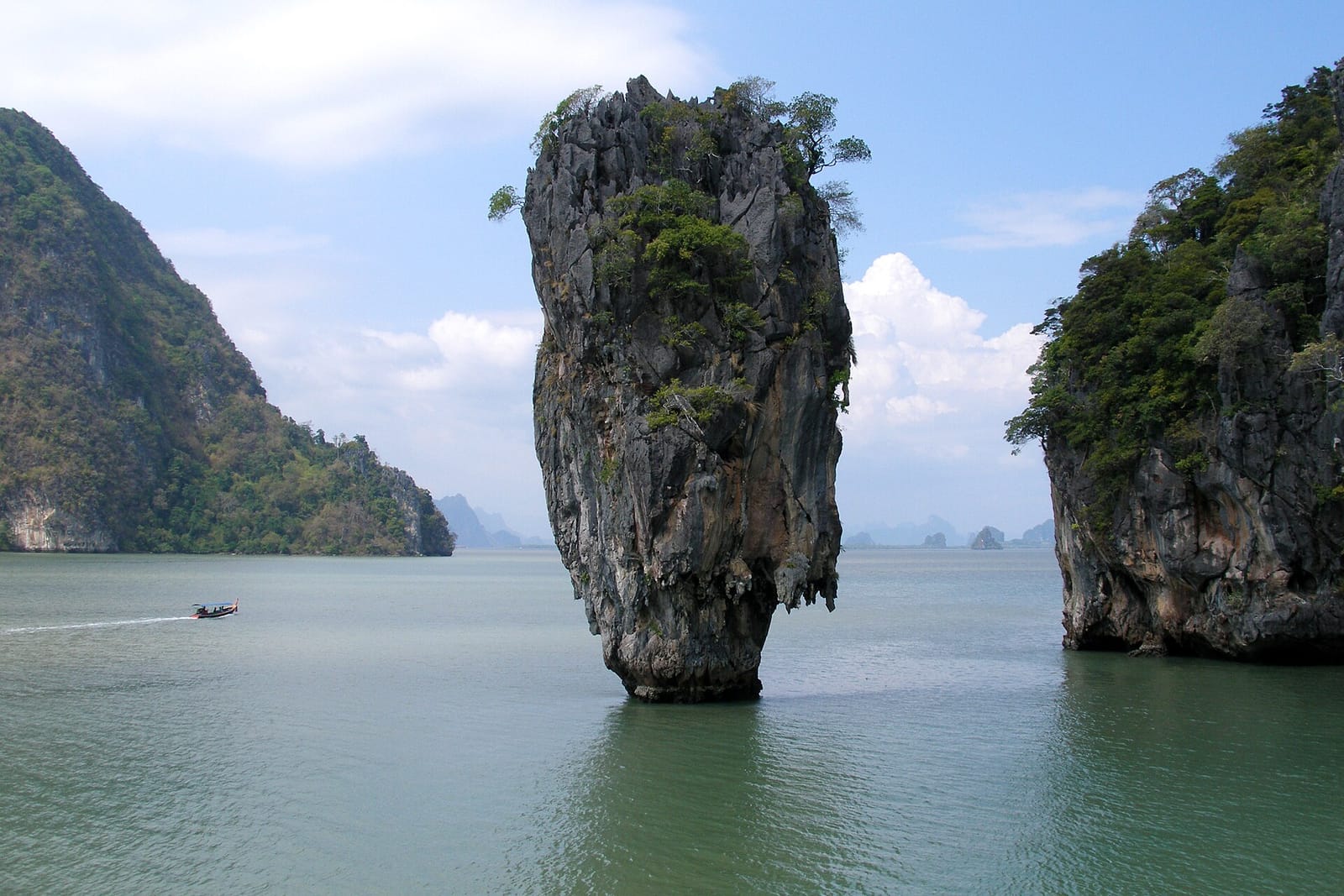
Khao Tapu (James Bond Island)
A tall, impossibly thin limestone pillar with a narrow base rising from the water — the name "Tapu" means nail, which describes the shape. It became known globally as a location in the 1974 James Bond film The Man with the Golden Gun. Boats stop at Khao Ping Kan beach next door so you can walk up and photograph Khao Tapu from across the water. Landing on Khao Tapu itself is not allowed — it's closed to protect the base of the rock.
Khao Ping Kan
Two large limestone boulders leaning against each other on a small beach — that's the literal meaning of the name. This is the dock stop where you disembark and walk up to photograph Khao Tapu. Souvenir stalls line the path. The whole loop takes about 20–30 minutes.
Cave Passages (Tham Lod)
Limestone mountains with tunnels wide enough for a longtail boat to pass straight through. Inside, stalactites hang from the ceiling. This is a favourite moment for most visitors — riding a boat through a stone tunnel in the middle of the sea. Longtails handle it more comfortably than larger speedboats.
Khao Khian (Ancient Cave Paintings)
A limestone cliff face covered in prehistoric paintings estimated to be over 3,000 years old — figures of humans, land animals, sea creatures, and geometric patterns. Thought to have been left by ancient seafarers sheltering from monsoons. The boat slows so you can look from the water, and the paintings tell a surprisingly vivid story about who was moving through this bay long before tourists.
Koh Panyi Floating Village
A Muslim fishing community built entirely on stilts at the foot of a limestone cliff. Around a thousand people live here, with a mosque, a school, and a floating football pitch the local kids built themselves. This is typically the lunch stop and the place to browse local shops and pick up a few things to take home.
Koh Hong, Phang Nga
A limestone island with a lagoon and cave openings — some tunnels are shaped like a heart and lead into an enclosed lagoon surrounded by tall cliffs. Calm water, quiet, and very well suited to kayaking and photography. (Note: this is a different island from Koh Hong in Krabi.)
Khao Ma Ju / Twin Brothers Island
Oddly shaped limestone formations that boats pass slowly so you can get a look. Khao Ma Ju resembles a sitting dog in profile; the Twin Brothers are a pair of rocks side by side in open water. These are bonus photo stops that guides point out as you cruise between the main highlights.
Tides Matter Here
The cave passages in Phang Nga Bay are only passable at the right tidal level. When the tide is high, the ceiling drops too low for a boat to clear it. Kayaking through narrow passages depends on tidal timing as well. This is why departure times shift from day to day — the boat schedule is built around the tide table. If getting through the caves is important to you, ask your boat operator about the tidal conditions on the day you're going.
Boat Tour vs. Sea Kayaking — What's the Difference
Two main options exist in Phang Nga Bay, and people often confuse them: a "bay cruise" and "kayaking through caves." Some trips include both; some offer only one. Pick the version that matches what you actually want.
- Longtail / speedboat cruise — Ride a boat around the bay to see the karsts, pass through caves, dock at Khao Ping Kan and Koh Panyi. The focus is views and photographs. No physical effort required.
- Sea kayaking — Paddle a small kayak into caves and lagoons that bigger boats can't reach. Most kayaks come with a guide who does the paddling for you, so you don't need to know how to swim. Life jacket on at all times.
- Both combined — Many full-day tours use a larger boat as the base, then deploy kayaks at specific cave and lagoon spots. This is the most complete experience and the best value for first-timers who want both perspectives.
Rough Prices & Park Entry Fees
Prices below are approximate ranges from multiple operator websites on both the Phang Nga and Phuket sides, checked in early 2026. Join-in day tours by speedboat start around THB 1,500–2,000 per adult (some promotional rates run lower). Private longtail charters from the Phang Nga side — leaving from Surakul Pier — start at around THB 2,300 and up; premium longtail private charters priced by the hour can reach into five figures per boat (split among several people, the per-person cost drops considerably). Tour prices generally include lunch, kayak equipment, life jackets, and basic insurance.
Ao Phang Nga National Park Entry Fee
Phang Nga Bay is a national park. Entry fees: foreign adults approximately THB 300, children approximately THB 100. Thai nationals pay considerably less. Some tours include this fee in their price; others don't. Ask before you book. Rates can change based on official National Parks Department announcements.
Straight Talk on Pricing
All prices above are rough ranges pulled from multiple operator sites. Actual rates shift with season, promotions, and group size. A private longtail charter gets better value per person the more people you split it with. Compare two or three operators and confirm whether the national park fee and insurance are included before committing.
Sample Half-Day Schedule Departing from Phang Nga
Because the Phang Nga-side piers are closer to Khao Tapu, you can do either a half-day or a full-day trip from here. The sample schedule below is for an early-morning departure — the goal is to reach Khao Tapu before the Phuket tour groups arrive mid-morning.
Half-Day Cruise — Departure around 07:30
Full Day — Add Snorkelling
When to Go for Smaller Crowds
Khao Tapu gets very busy between 10:00 and 14:00, especially during high season from November to March, when Phuket tour groups converge on the spot simultaneously. The advantage of leaving from the Phang Nga side is a shorter boat ride — head out early and you'll reach Khao Ping Kan ahead of the main wave. If you want a photo of Khao Tapu with no strangers walking through the frame, being on the water before 08:00 gives you the best chance.
- Best overall window — November through April: calm bay, clear skies, easy conditions for cave passages and kayaking
- Beat the crowds — depart before 08:00 from a Phang Nga pier; you'll reach Khao Ping Kan before the Phuket flotilla
- Rainy season (May–Oct) — Phang Nga Bay is an enclosed inland sea, so it's calmer than the open Andaman even in the wet months. Tours still run, but skies can be overcast and some days bring rain. Prices are typically lower.
What to Bring
- Sunscreen + hat + sunglasses — mid-bay sun is strong, and longtail boats have limited shade
- Shoes that can get wet — sandals with straps or rubber shoes; you'll step into shallow water boarding smaller boats
- Waterproof pouch for phone and camera — water splashes during kayaking and cave passages
- Cash — for the park entry fee, tipping your kayak guide, and shopping at Koh Panyi; the village runs mostly on cash
- Motion sickness tablets — worth having if you're prone to seasickness and choose a speedboat on a choppy day
- Swimsuit + towel — if your programme includes a snorkelling or swimming stop on the full-day option
A Note on Koh Panyi
The lunch included in most package tours is a set-menu affair — decent enough, but nothing special. If you want fresh seafood, the restaurants in the village take separate orders at your own cost. Prices on the island run higher than in town — it's a tourist spot, so that's expected. Koh Panyi is a Muslim community; dress modestly and be respectful of local customs.
Who This Trip Is (and Isn't) For
Phang Nga Bay is a good fit if you want to see dramatic karst scenery up close, ride through cave tunnels, kayak a lagoon, and spend time around a sea community with genuine history — without needing to be a strong swimmer, since the main activities are boat-based and kayaks come with a paddling guide. If your priority is white-sand beaches and clear water for snorkelling or diving, somewhere like the Similan Islands or Surin Islands will serve you better. The water in Phang Nga Bay is murky and greenish from mangrove run-off — it's a landscape experience, not a swimming one.
Planning the full Phang Nga trip — inland sea, outer islands, and southern food
Read the Phang Nga Travel Guide →