🔄 Updated 21 Jun 2026
This trip works best if you drive yourself, because Phatthalung's nature spots are scattered in different directions. Thale Noi and Pak Pra sit to the north and east of the province, while Khao Pu Khao Ya and Phrai Wan Waterfall are to the west, up against the Banthat range. If you don't have your own car, you can rent one in Phatthalung town, or fly into Hat Yai and drive up. The total distance isn't far — each leg is a little over an hour at most.
Before you set off
The highlight of this trip is the "morning light" at Thale Noi. If you want good shots of water buffalo wading through the red lotuses, stay near Pak Pra or Thale Noi on the first night so you can get on a boat at 5:30 a.m. without having to wake in the middle of the night and drive in from far away.
Day 1 — Thale Noi, Pak Pra, and the giant fishing nets
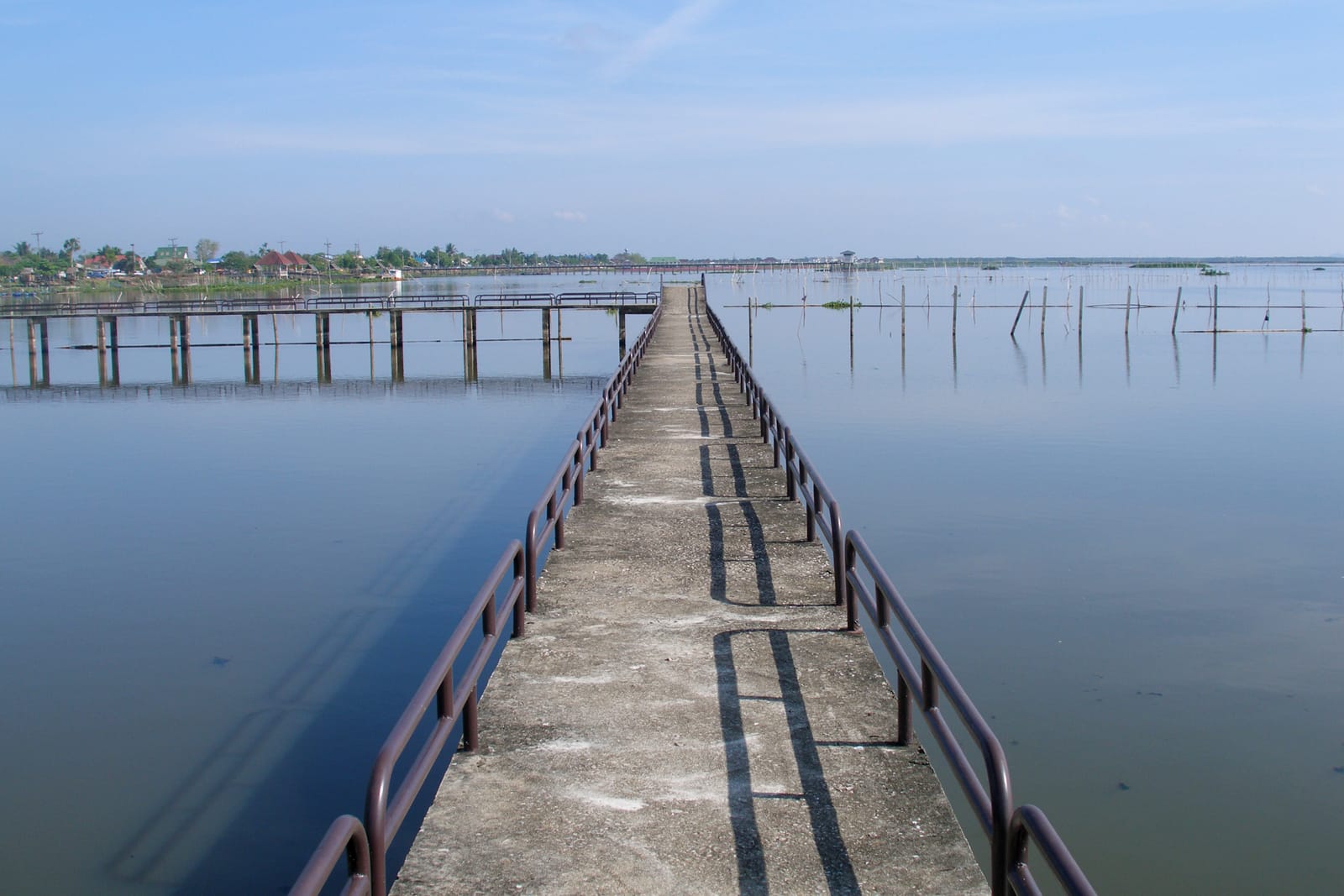
The first day focuses on the Thale Noi wetlands, a Wetland of International Importance (Thailand's very first Ramsar site). Check in to a place around Pak Pra in the afternoon and bank your energy for an early start the next morning.
Arrive in the Thale Noi–Pak Pra area
About the Thale Noi boats
If you board directly at the Thale Noi tourist pier, it's around 550 THB per boat, seating up to 5 people. Chartering a longtail from a place around Pak Pra to run the Pak Pra–Thale Noi route runs about 700–1,000 THB per boat depending on size. Prices shift by season, so it's worth asking your accommodation ahead of time.
Book the activities in your Phatthalung trip ahead
Booking online ahead on Klook or GetYourGuide is usually cheaper than the gate and skips the queue. Pick only the experiences you actually want — prices and availability are shown live on each site.
Day 2 — First light at Thale Noi, then up to Khao Pu Khao Ya
Today is the heart of the trip: a wide lake in the morning, then a switch to mountain rainforest in the afternoon. The red lotuses bloom most fully around February to April, but the water buffalo and birds are around for most of the year.
Thale Noi at dawn → Khao Pu Khao Ya
Entry fees and park lodging
Entry to Khao Pu Khao Ya park is 20 THB for Thai adults and 10 THB for children (100/50 THB for foreigners). Park cabins run roughly 600–3,000 THB per unit depending on size. They fill up fast over long weekends, so book ahead through the National Park reservation system.
Day 3 — Phrai Wan Waterfall before heading home
On the last day you catch a waterfall the locals love. Phrai Wan Waterfall is in Kong Ra district and has seven tiers; the lower tier is an easy walk and good for swimming. On the way down from Khao Pu Khao Ya back toward town, you turn off toward Kong Ra right along the route, so there's no backtracking.
Khao Pu Khao Ya → Phrai Wan Waterfall → home
When is the best time to go
- Red lotuses at Thale Noi — densest from February to April, the window when shots of water buffalo wading through the lotus fields look their best
- Water buffalo and birds — visible almost year-round in the mornings, so you don't have to wait for lotus season
- Phrai Wan Waterfall — strongest and clearest in late rainy season (October–December), but skip the upper tiers when the rain is heavy
- Khao Pu Khao Ya — tropical rainforest, green all year; the streams run full in the wet season and the air stays cool and comfortable
What to prepare and good to know
- Your own car pays off most — the spots are in different directions and public transport is hard to reach, especially the mountain park
- Book the boat and cabin ahead — arrange the morning Thale Noi boat with your accommodation, and reserve the park cabin through the National Park system
- A light jacket — nights at Khao Pu Khao Ya are noticeably cooler than on the lowlands
- Cash on hand — around Pak Pra, Thale Noi, and some points in the park it's cash only, and phone signal is limited too
- Non-slip shoes — the rocks at Phrai Wan Waterfall are slippery, so shoes with tread are safer for getting in the water
To be straight with you, this isn't an air-conditioned, take-it-easy kind of trip — there's one pre-dawn wake-up and a night spent in the forest. But if you genuinely love nature, seeing water buffalo emerge from the morning mist at 5:30 a.m., then falling asleep the next night to the sound of a stream deep in the forest, is the reason a lot of people come back to Phatthalung.
Want a different plan or more places to stay in Phatthalung?
See the Phatthalung travel guide →