🔄 Updated 21 Jun 2026
Say Phatthalung and a lot of people picture Thale Noi and its red lotus first, but the thing that really sticks with you and pulls you back is the rice fields and the buffalo. People here still farm for real all around town: some plots sit behind a temple, some right next to a cafe. And what sets this place apart is that the buffalo here actually wade out to graze in the water, which is why locals call them water buffalo. We've laid out this side of the province so you can picture it, from the green paddies around town to the buffalo herds along the lake to the fields of Sangyod, the local heritage rice.
Thale Noi Water Buffalo — the one thing no other town has
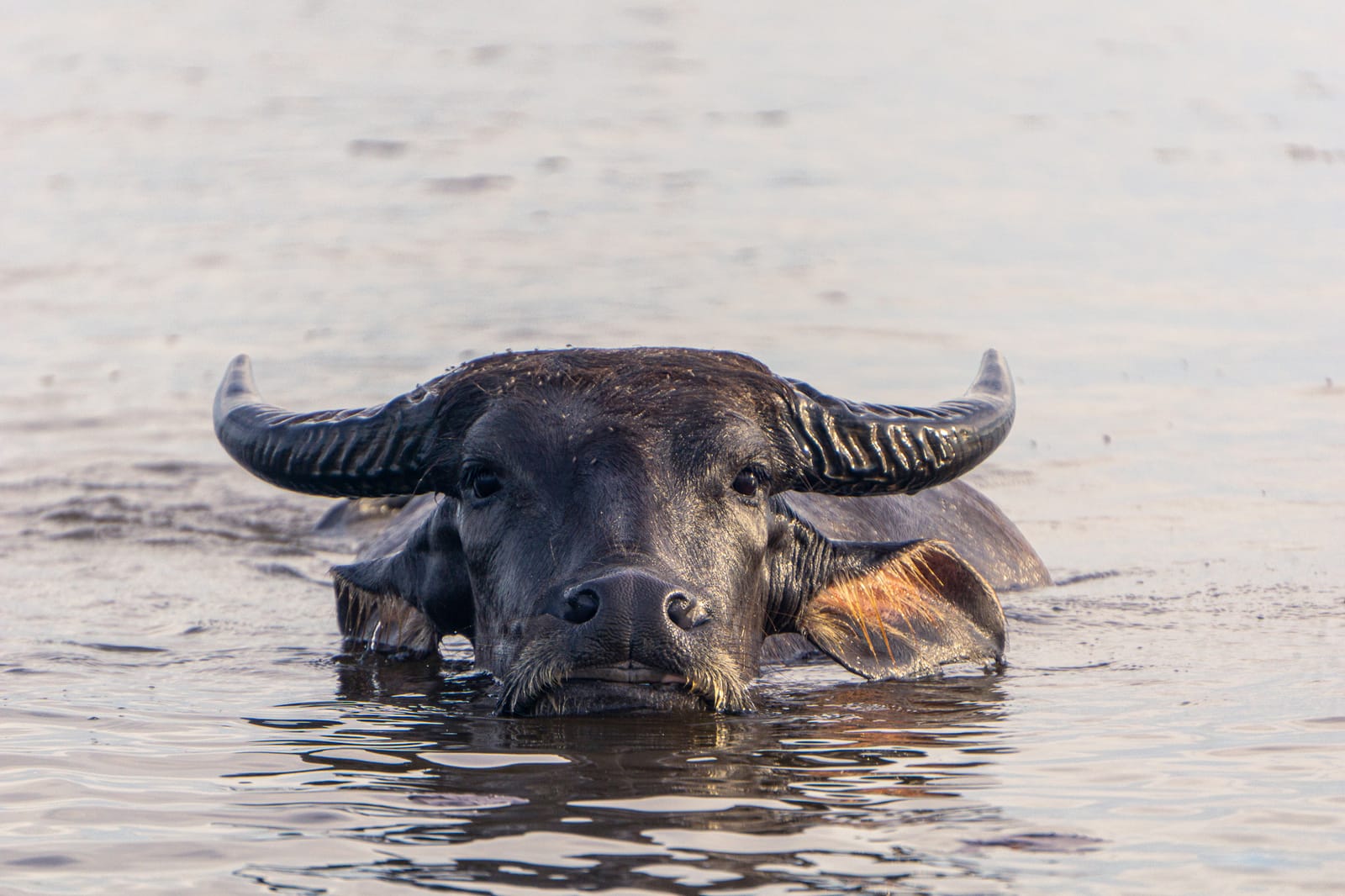
These are the swamp buffalo that have long been raised around Thale Noi in Khuan Khanun district. When the floods come and water covers the fields they normally graze on, the buffalo simply adapt and wade out to eat lotus stems, lotus leaves, and water grasses in the middle of the lake. Some dunk their whole body under with just their nostrils poking up. A hundred buffalo bobbing in the water like this is a sight you'll struggle to see anywhere else in Thailand, and the Thale Noi swamp-buffalo grazing grounds were named a Globally Important Agricultural Heritage System (GIAHS) by the UN Food and Agriculture Organization, the first such site in Thailand.
The spot most people go to watch and shoot is Ekkachai Bridge (officially the 80th Anniversary Bridge), an elevated road that runs several kilometres across the wetland. There are parking pull-offs along the way where you can step out and watch the herds up close. It's one of the best places to see the buffalo in full, and it doesn't cost a thing.
When you'll see the buffalo in the water
The buffalo wade out to feed most visibly during the flood season, roughly December to February. The red lotus at Thale Noi, meanwhile, blooms best from late February to May. If you want both the swimming buffalo and the red lotus, late February to early March is the sweet spot.
Want more out of Phatthalung? Book tours & activities
Booking online ahead on Klook or GetYourGuide is usually cheaper than the gate and skips the queue. Pick only the experiences you actually want — prices and availability are shown live on each site.
A morning boat trip for buffalo and lake life
Another way to see the buffalo closer than you can from the bridge is to take a boat from the Thale Noi pier. The boat loops past the buffalo herds, the red lotus fields, the waterbirds, and the villagers fishing with dip nets and gathering krajood reed along the water. Early morning, when mist is still drifting over the surface, is the best window of the day for photos.
- Boat charter price — around 500–1,200 THB per boat, seating about 6 people. The price depends on the operator and the route, so ask at the pier before you go.
- Best time to head out — between 6:00 and 6:30 a.m., when the morning light is soft, the buffalo are starting to wade in, and it isn't hot yet. The loop takes about an hour and a half.
- What to bring — a hat, sunglasses, and a windbreaker, because it's windier out on the water than you'd expect. Keep your camera or phone on a strap so it doesn't drop.
Green rice fields around town
You don't have to go all the way to Thale Noi to find pretty fields. Phatthalung is a province where people still farm right around the town, especially around Lampam sub-district and Khuan Khanun district, where green paddies stretch out with Khao Ok Thalu and the Banthat mountains behind them. From the young seedling stage through to when the rice is in ear, the fields are a fresh, vivid green; closer to harvest they turn gold.
Fields around Lampam
Green paddies close to town, a few minutes' drive out, with a road running along the fields where you can pull over and shoot the Khao Ok Thalu view. Good in the late afternoon before sunset.
Khuan Khanun fields
Wide-open paddies on the way to Thale Noi, passing villages that still farm and raise buffalo for real, so you catch everyday rural life along the road.
Tucked among the fields around here are several cafes, many of them built as a sala or a deck reaching out over the paddies so you can sip coffee looking out at the green. They make a good shady break between photo stops. If you want to focus on the rice-field cafes specifically, we've broken those out in the province's cafe guide.
Sangyod rice fields — Thailand's first GI rice variety
The local product tied to Phatthalung's fields is Sangyod rice, a heritage variety with deep-red grains that has been grown in the province for a long time. In 2006 it was registered as a Geographical Indication (GI) product under the name Sangyod Muang Phatthalung, making it the first GI rice in Thailand. Cooked, it's soft with a slightly sticky bite, and people often eat it as brown rice for the health benefits.
As for the name, one local story says it's a twist on sang yut, meaning "order it to stop," because it was so good you had to order yourself to stop eating. It's a tall tale, but it's stuck with Phatthalung folks for ages. If you want to see green Sangyod paddies, planting happens around September and harvest around late February, when the fields turn gold.
Taking some home
You'll find Sangyod rice at markets in town, souvenir shops, and community enterprises around Khuan Khanun. Pick a bag with the Sangyod Muang Phatthalung GI mark to be more sure of where it was grown.
Village-life photo spots
The charm of this kind of trip is in the real, lived-in scenes, not setups arranged for the camera. Plan to swing by these spots according to the light.
- Ekkachai Bridge — shoot the buffalo bobbing among the lotus fields; a wide angle gets both the herd and the sky. Go early or late to avoid the harsh sun.
- Giant dip net at Thale Noi — the oversized fish-lifting nets along the water make a classic sunrise frame that Phatthalung locals recommend.
- The road along the Lampam fields — green paddies with Khao Ok Thalu behind them; shoot in the late afternoon for golden light.
- Paddy bunds and buffalo pens in Khuan Khanun villages — you'll see villagers herding buffalo, lifting nets, and gathering reed. Ask the owner's permission before shooting up close; it's the polite thing to do.
Planning a rice-and-buffalo day
This is an easy-going trip; half a day to a full day covers it. If you want the buffalo in the morning and the rice fields in the evening, you can do the whole thing in a single day.
Water buffalo and Thale Noi
Rice fields and souvenirs
What to know before you go
- Getting around — having your own car or a rental is by far the easiest, because the spots are spread out and public transport to Thale Noi is limited.
- Season — the southern rainy season runs roughly November to January with heavy rain, so check the forecast first, though that's also the flood season when the buffalo wade into the water.
- Respect the area — the water buffalo are villagers' livestock and a real livelihood, so don't feed or chase them, and don't leave litter in the lake.
- Leave time in the morning — almost all the highlights are in the morning, so getting up early gets you both the good light and the cool air.
Bottom line: if you want to see Phatthalung the way locals are proud of it, the rice-and-lakeside-buffalo trip is the right pick. You get the one-of-a-kind sight of buffalo in the water, green fields with mountains behind them, and a bag of Sangyod rice to take home. It's a day that slows down and lets you breathe with nature.
Want a place to stay near Phatthalung town so you can set off early for the rice fields and Thale Noi
See the Top 10 Hotels in Phatthalung →