🔄 Updated 21 Jun 2026
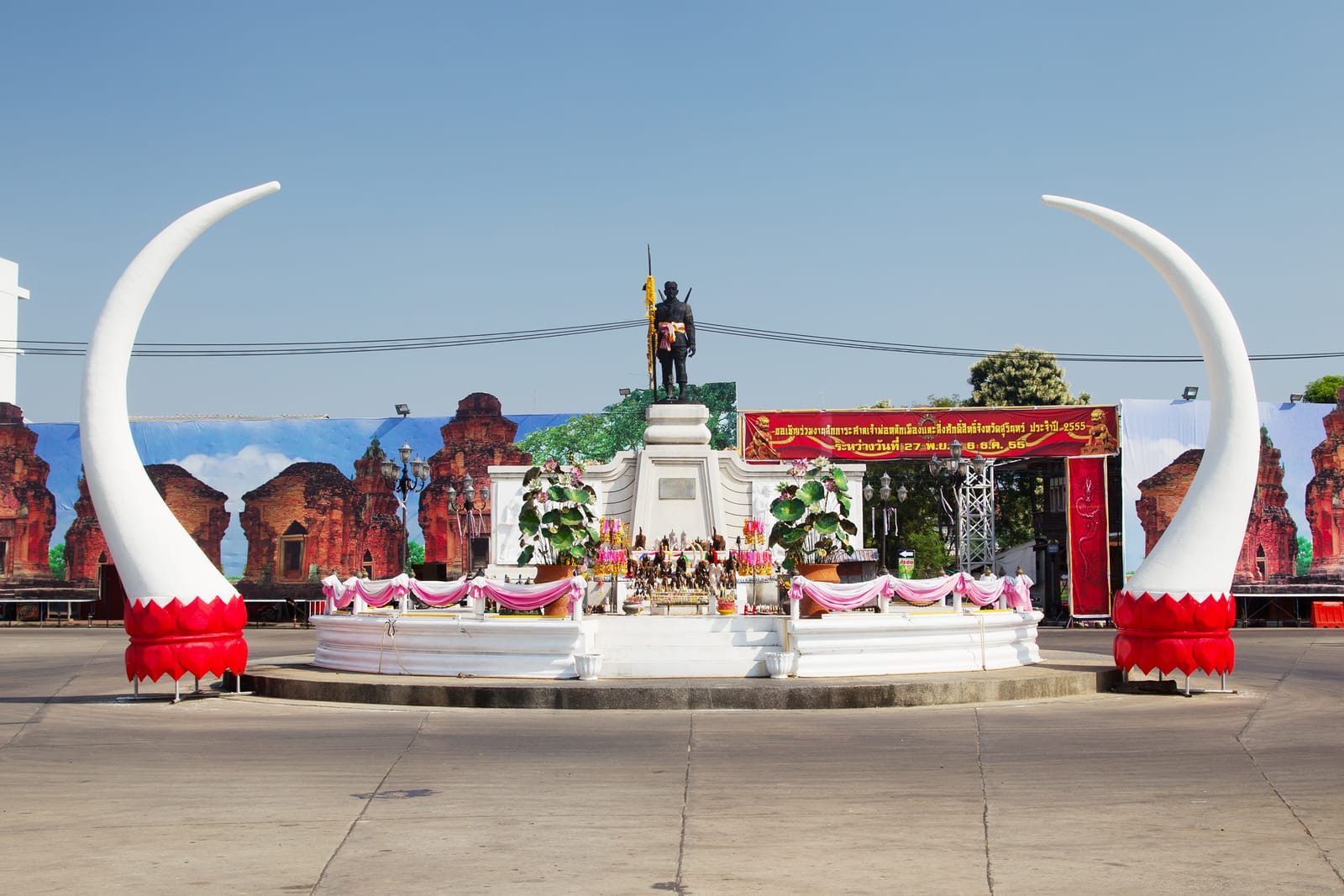
The Phaya Surin Phakdi Si Narong Changwang Monument stands within Surin municipality, in the Soi Si Chumphon area of Nai Mueang sub-district. Locals pass by it almost every day, and many use it as a meeting point because it's easy to find right in the middle of town — only about 1–1.5 km from the bus terminal and the city market, a short walk or quick ride away. The monument itself isn't so big that you'll spend an hour here, but it's a spot that helps you understand the city's roots before you head off to see other places.
Who was Phaya Surin Phakdi?
Phaya Surin Phakdi Si Narong Changwang was originally named Chiang Pum, and was also known as Luang Surin Phakdi (Pum). He was a leader of the Kui people (also called Kuy, and sometimes Suay) — a group long renowned for catching and raising elephants. During the Ayutthaya period he served the crown well enough to earn royal favour, and he led the founding of a settlement in the area that has since become today's Surin. In short, he laid the foundations of the city and was Surin's first governor. The province's name, "Surin", itself comes from his noble title.
What ties him so closely to elephants is that the Kui people he led had a special skill with them — catching, training and caring for elephants. That culture carried on until Surin became the country's elephant town. So the goad in the statue's hand (a tool used to direct elephants) isn't just decoration; it tells the city's identity straight.
Want more out of Surin? Book tours & activities
Booking online ahead on Klook or GetYourGuide is usually cheaper than the gate and skips the queue. Pick only the experiences you actually want — prices and availability are shown live on each site.
The statue — bronze figure with an elephant goad
The figure is cast in black-patina brass, about 2.2 metres tall, standing with the elephant goad in his right hand — the signature weapon of mahouts and war-elephant commanders of the past. It carries the dignified feeling of a warrior bound to his elephants. The monument was unveiled on 13 April 1985, set on a base in the middle of an open plaza, with surrounding space where people come to pay respects and take photos at ease.
- Material — black-patina brass figure, about 2.2 m tall
- Highlight — the right hand holds an elephant goad, symbolising the elephant town and the handling of war elephants
- Unveiled — 13 April 1985
- The setting — an open plaza in the city centre, open for paying respects and photos any time
For good photos
The light before 9am and around sunset is softer than midday, because the plaza is fully open and the sun gets harsh. If you come at midday, bring an umbrella or a hat to stay comfortable.
How to get there, opening hours
The monument sits right in the centre of town. If you're staying in Surin city, a motorbike taxi or a motorised samlor (skylab) gets you there in a few minutes, or you can walk from the market and railway-station area since it's only a kilometre or so away. Coming by car, you can park along the plaza. The plaza is a public space, open all the time, with no entry fee — you can come any time of day, but for an easy stroll we'd suggest morning or evening.
- Location — Soi Si Chumphon, Nai Mueang sub-district, Mueang Surin district (city centre)
- Distance from bus terminal/market — about 1–1.5 km, a quick ride
- Opening hours — the area is open all the time, no entry fee
- Getting around town — motorbike taxi, skylab, or walk from the market area
Memorial day, 13 April
Every year on 13 April, the people of Surin hold a day to remember Phaya Surin Phakdi, the first governor, with a merit-making ceremony on the plaza in front of the monument. There's a worship ritual, paying of respects, and community activities. If you happen to be in Surin around Songkran, it's worth stopping by to see the atmosphere — you'll notice how much locals genuinely value him. And late in the year, when the Surin Elephant Round-up takes place, this area and the whole city come especially alive.
Where to go next nearby in town
The good thing about this spot is that it's in the city, so it pairs easily with other sights within a short radius — a quick walk or ride away. It works well as a half-day trip wandering around town before heading further out.
Surin City Pillar Shrine
Also in town, less than 2 km away and open all the time. A respected shrine of the city that people like to visit right after the monument.
Surin National Museum
Just outside the city along the Surin–Prasat road, about 4 km away, with displays on elephants, silk and the area's Khmer civilisation.
Chaloem Phra Kiat Park (the new park)
A city park for strolling and exercise; busy in the evening and good for resting your legs after a day of sightseeing.
Surin Night Bazaar
Evening food and shopping in the city — the perfect way to cap off the day with some street food.
Cafes near the monument
The area around the monument has several cafes to rest at, a few minutes' walk or drive away — handy if you've been out walking in the midday heat and want a cool corner to sit.
361 Three Six One
A big cafe in the city with plenty of space, a lounge zone and an outdoor setting. Open late, so it suits both a daytime stop and an easy evening chill.
Dearry Cafe
A minimalist cafe in cream-white tones along Phakdi Chumphon Road, near the monument. A varied drinks menu and a quiet, comfortable feel that's good for working.
Kafae Ta Nuat, Phaya Surin Monument branch
A local coffee shop that people in Surin know well; this branch is right in the monument area, easy for grabbing a cup and walking on.
Straight talk
The monument is a short stop, not a place to linger — about 10–20 minutes is enough. Its real value is the city's story and being a starting point for walking around town. Don't expect a large space or lots of activities. Come to grab a photo, understand the city's roots, then move on — that's when it's most worth it.
Want a full Surin plan covering elephants, temples and silk?
See all Surin attractions →