🔄 Updated 21 Jun 2026
Most people think of elephants first when Surin comes up, and for good reason — it's the province most tied to elephants, home to the largest elephant-keeping village in the country. But Surin has plenty of other corners worth a stop: Khmer stone temples that sit on the same ancient civilisation route as Angkor Wat, silk-weaving villages skilled enough to weave for royal occasions, and easy nature near town like small hills and a reservoir locals call the Sea of Surin. We've sorted everything into groups so you can pick what you like and plan your trip easily.
Up front: this guide focuses mainly on places you can actually visit right now, because some of the temples that sit right along the Thai–Cambodian border are still off-limits due to the border situation. We'll be clear about which ones are open as usual and which you should check before going, so you don't waste a trip.
Elephant Country — Ban Ta Klang Elephant Village
The thing most first-timers come to Surin for is Ban Ta Klang Elephant Village, in Krapho subdistrict, Tha Tum district, about 50–60 km from the city. It's a Kuy community that has kept and lived alongside elephants for generations. There's an elephant museum that explains the keepers' way of life, an elephant show twice a day around 10am and 2pm, and feeding spots nearby. It's a good fit for families or anyone bringing kids.
Around November each year the city hosts the big Surin Elephant Round-up, with parades of hundreds of elephants and performances. If you can plan your trip for then, the atmosphere is completely different from an ordinary day — but it gets crowded and rooms fill up fast, so book ahead.
Before you go to see the elephants
Ban Ta Klang is a fair way out of town and the show runs at set times, so leave the city a little earlier to make the 10am slot, and check the show times and opening days in advance — some days have special events or no show. If you're an animal lover, choosing activities that let you watch elephants in a more natural setting, rather than ones that push the animals, will sit easier with you.
Want more out of Surin? Book tours & activities
Booking online ahead on Klook or GetYourGuide is usually cheaper than the gate and skips the queue. Pick only the experiences you actually want — prices and availability are shown live on each site.
The Khmer Temple Trail — Sikhoraphum and the Border Group
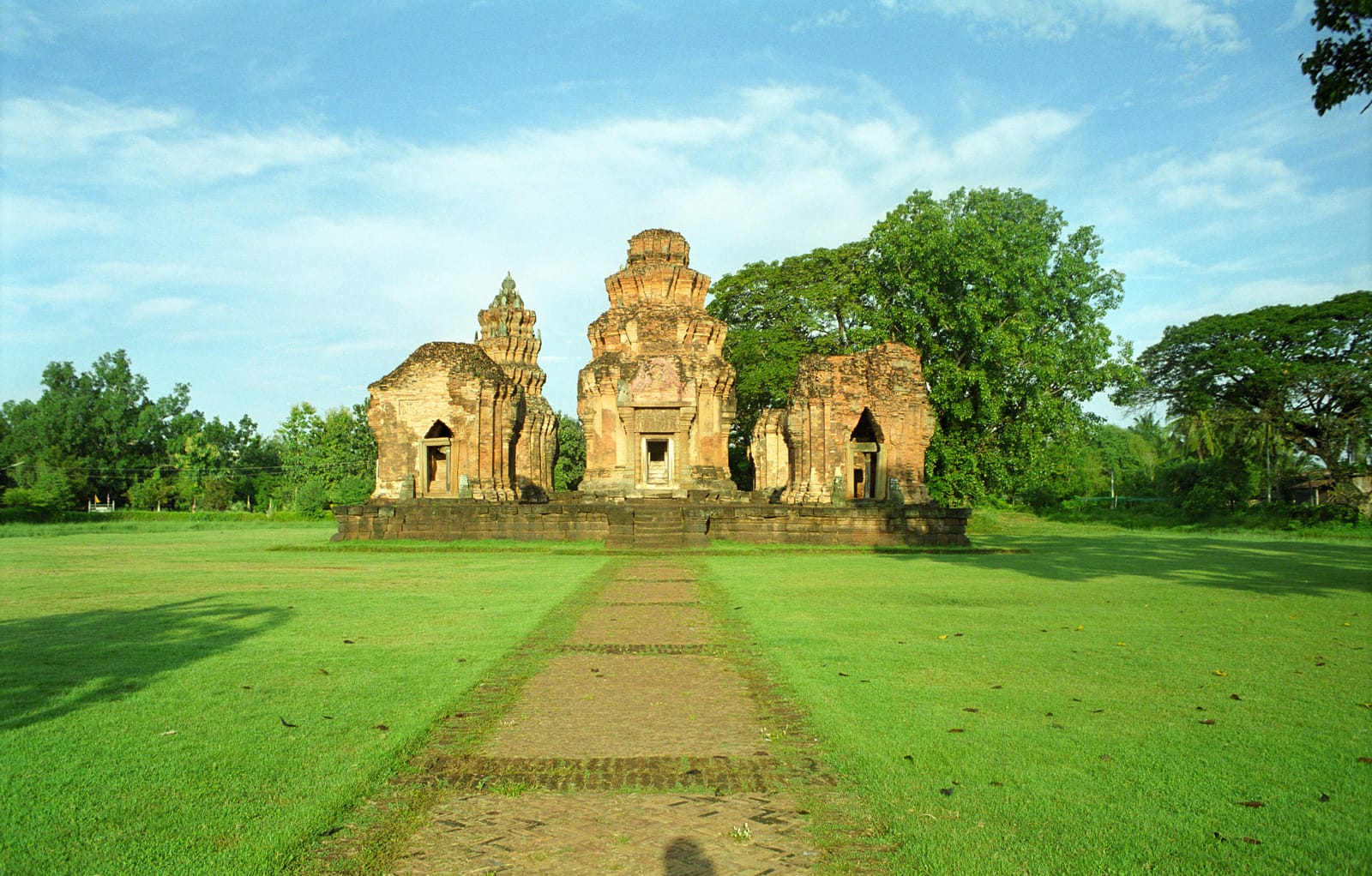
Surin once sat on an ancient Khmer civilisation route, so stone temples are scattered across the province. The easiest to reach and the most beautiful is Sikhoraphum Temple, in Sikhoraphum district, about 35 km from the city along the Surin–Si Sa Ket highway. It's a cluster of five brick prangs on a laterite base, and its standout features are the lintels and the carving of an apsara holding a lotus, detailed work reminiscent of the art at Angkor Wat. It's open roughly 7.30am–6pm, with a small entry fee in the tens of baht for Thais. Morning or late afternoon light makes for easier photos than the harsh midday sun.
As for the Ta Muen temple group — including Prasat Ta Muen Thom, the largest in the group — it sits right on the Thai–Cambodian border in Phanom Dong Rak district. To be straight about it: this area is still closed to normal visitors right now, because it's affected by the border situation and remains under military control. Before you think about visiting any of the border temples, always check the latest area announcements and news first. If they're still closed, we'd suggest saving them for a future trip and enjoying Sikhoraphum and the in-town spots instead.
A straight word on the border temples
Prasat Ta Muen Thom and Prasat Ta Kwai sit extremely close to the boundary line. While the border situation remains unsettled, this area is not open for normal visits and may close intermittently. Don't rely on old information from blogs written years ago — always check the current situation with local authorities before you set out.
Khmer Temples in Surin Worth a Stop
Sikhoraphum Temple
Five brick prangs on a laterite base, with detailed apsara carvings reminiscent of Angkor Wat. The easiest temple to reach in Surin, about 35 km from town, open daily.
Check before goingPrasat Ta Muen Thom
A large Khmer temple right on the Phanom Dong Rak border, with a shivalinga in its central chamber. Beautiful and historically important, but currently off-limits — check before you go.
Prasat Ban Phluang
A small, compact stone temple in Prasat district with a finely carved lintel. A good stop on the way to somewhere else — it won't take long to walk around.
Surin National Museum
Khmer antiquities, silk and the story of people and elephants in one place — get the big picture of the province before heading out. Open Wed–Sun, 9am–4pm.
Silk — Ban Tha Sawang Weaving Village
Surin is a genuine silk town, especially for the brocade silk at Ban Tha Sawang in Mueang district, about 10 km from the city. The village is home to the Chansoma group, which once wove ancient brocade patterns for royal occasions. The weaving uses large looms worked by several people at once, with detail so dense it's become well known. You can visit any day, roughly 8.30am–5pm, with no entry fee — walk around watching the weaving, chat with the artisans, and pick out cloth to take home as a souvenir.
If you want silk at a friendlier price than a large brocade piece, the village also has scarves, lengths of cloth and smaller items to choose from. And if you'd like to follow the silk trail across more patterns and more villages, Surin has plenty of other weaving villages scattered around to seek out.
Buying silk worth the money
Ancient brocade silk is handmade and takes a long time, so prices run from the low thousands to the tens of thousands of baht depending on the detail. If your budget is tight, start with a scarf or a small length of cloth, and ask the weaver how to care for real silk so it lasts. Don't be quick to call it expensive — a single piece takes several days of human effort to finish.
Nature Near Town — Phanom Sawai and Huai Saneng
Surin is mostly flat, so its nature spots are more about easy relaxation near town than big mountains. The popular one is Phanom Sawai Forest Park in Mueang district, about 20 km from the city — a low, three-peaked hill with a Buddha image and a replica Buddha footprint at the top. You can drive up, the view looks out wide over the town, and there are bells to ring along the walking path. It's a good spot to pay respects and stroll in the breeze in the morning or evening.
Another spot is Huai Saneng Reservoir, even closer to town — a large reservoir that locals fondly call the Sea of Surin. It's open and breezy, good for sitting in the wind, cycling along the water, or taking photos at sunset. It's where townsfolk come to relax, an easy stop that doesn't require a long drive.
- Phanom Sawai Forest Park — a low three-peaked hill, pay respects, ring the bells, town views, about 20 km from the city, drivable to the top
- Huai Saneng Reservoir — the Sea of Surin near town, sit in the breeze, cycle, watch the sunset
- Wat Burapharam — an old temple paired with the city since the Thonburi era, home to the revered Luang Pu Dulya, right in the centre of town and easy to stop by
- Phraya Surin Phakdi Monument — a memorial to the city's first governor, a cast figure holding a sword astride a war elephant, a landmark in the middle of town
The Border and Chong Chom Market — the Current Status
Chong Chom Market in Kap Choeng district used to be a popular border outing — you could shop on the Cambodian side and be back by evening. But to be straight, the Thai–Cambodian border crossing here is currently closed due to the border situation, and crossing and trade in the area haven't returned to normal. If you're set on visiting the border or Chong Chom Market, always check the latest news on the crossing reopening first, and don't plan your trip around old information.
Visiting Surin safely right now
Surin's main sights — the elephant village, Sikhoraphum Temple, Ban Tha Sawang, Phanom Sawai and the in-town spots — aren't near the flashpoint and can be visited as usual. The only places to be careful about are the temple group and market right on the boundary line. Plan to avoid the border zone and focus on spots within the province, and you can enjoy Surin to the full without taking any risks.
Surin Itineraries by Number of Days
If you're not sure how to order it all, here's a rough plan that covers elephants, temples, silk and nature while avoiding the border zone. Grab it and adjust to your own schedule.
In town + silk + nature near the city
Ban Ta Klang Elephant Village
Khmer temples for the history
How to Get to Surin, and Is It Easy to Get Around?
There are several ways to reach Surin. The Lower Isan rail line drops you at Surin station right in the centre of town, which is very convenient; overnight buses from Bangkok arrive in the morning; and you can fly into Buriram and take a car on to Surin in a little over an hour. In town you can walk to the main spots, but for places outside the city like Ban Ta Klang, Sikhoraphum and Ban Tha Sawang you'll want a vehicle. If you didn't drive your own car, renting one or hiring a car by the day is the smoothest way to get around.
Plan your Surin stays and food to round out the whole trip
See the Surin travel guide →