🔄 Updated 21 Jun 2026
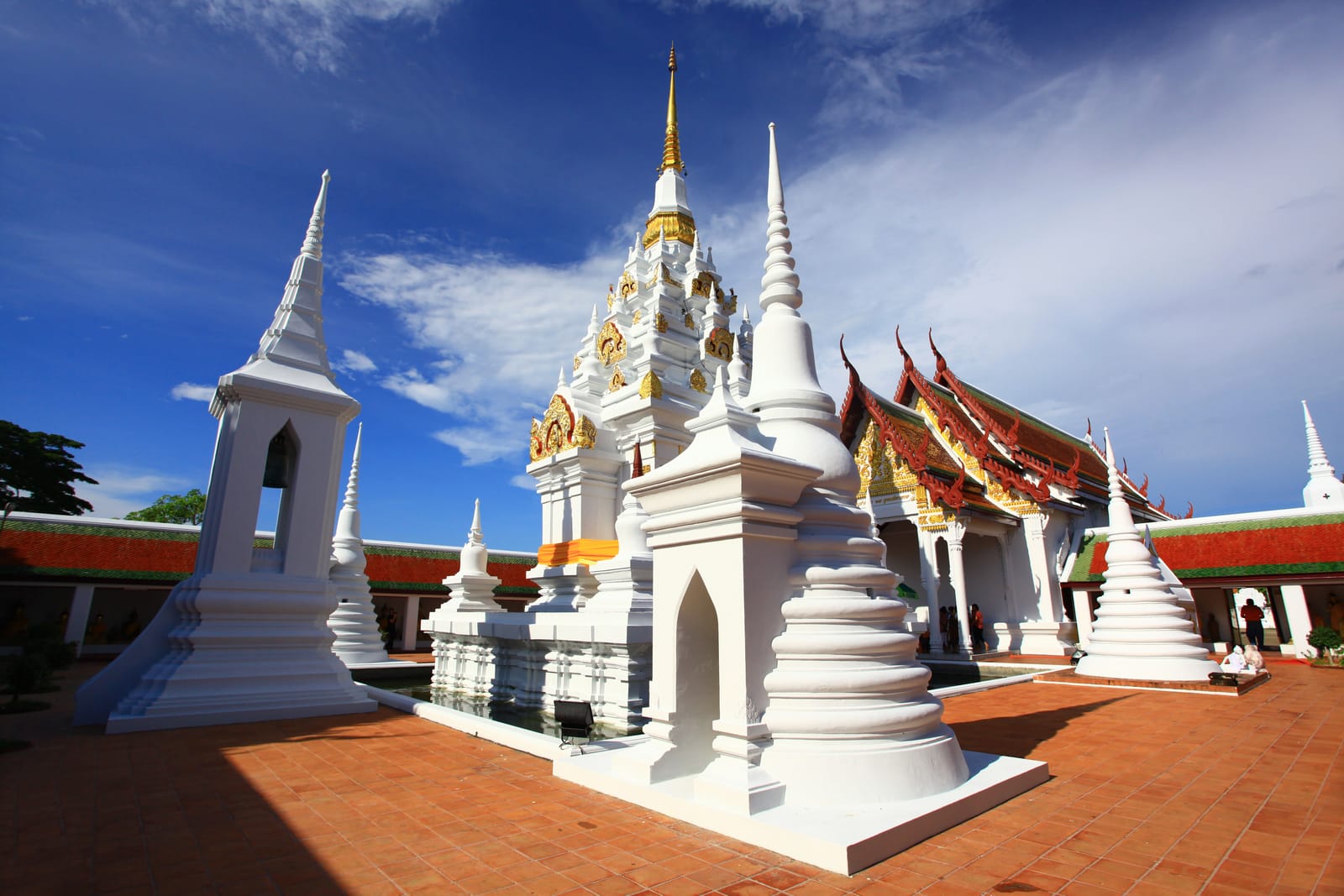
Phra Borommathat Chaiya stands inside Wat Phra Borommathat Chaiya Ratchaworawihan in Wiang sub-district, Chaiya, Surat Thani province, about 50–55 km north of Surat Thani town. It's one of the oldest stupas still intact from the Srivijaya era, and it's the image of Chaiya that the whole province takes pride in. If you've pictured the tall, gilded, sky-piercing stupas of central Thailand, the real thing here may surprise you — it's low, stocky, and packed with architectural detail you could read all day.
A short history — the real deal from the Srivijaya era
Scholars believe the stupa was built around the 7th–8th century CE (some date it later), during the height of the Srivijaya kingdom when Chaiya was an important port on the Gulf of Thailand. There's no clear record of who built it, but one thing is certain: its form draws on the candi art of central Java, which makes Phra Borommathat Chaiya a reference point that art historians have leaned on for generations.
The stupa fell into disrepair and underwent a major restoration in the reign of King Rama V, when it was extended taller than before. What you see today is the old structure mixed with restored sections, but the main reliquary body and the base are still original. The temple also holds several Bodhisattva Avalokiteshvara figures and Srivijaya-style Buddha images (many of the important pieces have been moved to the museum for safekeeping).
- Stupa form — a tiered tower on a cruciform plan, with porticoes projecting on all four sides, standing about 24 metres tall
- Material — built from fired brick laid without mortar, an ancient technique of the period
- Three stacked tiers — each tier is decorated with miniature stupas, 24 of them in total
- Chamber in the reliquary body — roughly 2×2 metres, housing a Buddha image to pay respects to
Want more out of Surat Thani? Book tours & activities
Booking online ahead on Klook or GetYourGuide is usually cheaper than the gate and skips the queue. Pick only the experiences you actually want — prices and availability are shown live on each site.
Paying your respects — how to do it properly
Phra Borommathat Chaiya is believed to enshrine a relic of the Buddha, which makes it the temple's main place of worship. Chaiya and Surat Thani locals often come to pray for good fortune, success at work, and safe travels. The way to pay respects is simple: walk around the stupa clockwise (a practice called pradakshina), then bow at the open portico.
- Start at the courtyard in front of the stupa, set your intention, and light incense and candles at the spot the temple provides (the temple usually asks visitors not to light incense right up against the stupa, to protect the ancient brick)
- Walk clockwise three times around the stupa — you can take in the stucco patterns and miniature stupas as you go
- Enter the open portico to bow to the Buddha image inside the reliquary chamber
- Finish at the vihara and ordination hall in the temple grounds, which hold more old Buddha images to honour
Dress appropriately
This is a royal temple and a sacred site, so wear sleeved tops and trousers or skirts that cover the knee, and skip spaghetti straps and very short shorts. If you visit midday when the sun is strong, bring an umbrella or a hat — the stupa courtyard is wide open with no shade.
Chaiya National Museum — don't skip it
Right next to the temple is the Chaiya National Museum, which keeps the genuine Srivijaya antiquities found in the Chaiya area. The highlight is the bronze head and figure of Bodhisattva Avalokiteshvara in Srivijaya style — a masterpiece that turns up in art history textbooks. If you've made it all the way to Chaiya, it's worth stopping in, because it makes the context of the stupa far easier to understand.
- Opening hours — Wednesday–Sunday, 9:00–16:00 (closed Monday–Tuesday and public holidays)
- Admission — 20 THB for Thais · 120 THB for foreigners
- Time needed — about 45 minutes to an hour is right
- The stupa and temple are open every day with no entry fee (donate as you wish)
Getting to Phra Borommathat Chaiya
Chaiya is easier to reach than you'd expect — it has its own train station and sits right on the main Phetkasem highway. Coming from Surat Thani town, you can drive or hire a car and be there in about an hour.
Train to Chaiya station
Several Southern Line trains stop at Chaiya station each day. From the station, hop on a songthaew or motorcycle taxi for the last few kilometres to the temple. It's cheap and full of atmosphere — good for solo travellers.
Drive / rent a car
From Surat Thani town, take Highway 401 onto Phetkasem (Route 41) heading north, about 50–55 km and roughly an hour. The temple has a large parking lot, so parking is easy.
Hire a car / taxi
If you'd rather not drive, you can charter a car from Surat Thani town or the airport for a round trip. Pairing it with a full day around Chaiya is better value than coming for one stop.
Pair it with Suan Mokkh
Phra Borommathat Chaiya is in the same district as Suan Mokkhaphalaram (Suan Mokkh), the forest monastery of Buddhadasa Bhikkhu, not far away. Since you've come all the way to Chaiya, it's worth doing both in one day — pay respects at the stupa in the morning, then the museum, then head to Suan Mokkh in the afternoon.
The souvenir to buy — Chaiya salted eggs
Come to Chaiya and don't take home Chaiya salted eggs, and you can't really say you've been. Chaiya salted eggs are a celebrated GI product, made from free-range duck eggs coated in termite-mound soil mixed with salt to a local recipe that dates back to before World War II. The yolks turn a rich, oily, bright orange. You'll find them at souvenir shops in town and at stalls around the temple, priced around 50–80 THB a box (10 eggs) depending on size.
Plan a full day in Chaiya and Surat Thani
See the Surat Thani guide →