🔄 Updated 21 Jun 2026
Phuket is bigger than most people expect — driving from the north of the island down to the south takes nearly an hour. The trick to not wearing yourself out is to travel by zone. The famous beaches and nightlife sit on the west coast (Patong, Kata, Karon); island trips depart by boat from Rawai Pier or Chalong Bay Pier in the south; and the old town and cultural sights are on the east side, in town. Doing one zone per day is far easier than crisscrossing the island.
Beaches and viewpoints
Phuket's west-coast beaches run in a line from north to south, and each one has its own feel. Patong is lively and has everything; Kata and Karon are quieter with clearer water; and smaller beaches like Freedom take a short walk down a hill but pay off. The clear-water season runs November through April, while the rainy season (May–Oct) brings strong surf — always check for red flags before you go in.
Patong Beach
Phuket's liveliest beach — a long stretch of sand with water sports, restaurants, and Bangla Road, the nightlife strip. Free to enter, and great if you like the buzz, though high season gets crowded and there are a lot of vendors working the sand.
Kata + Kata Noi
Clearer water than Patong and a more relaxed feel, with a surf spot in the rainy season. Free entry. Kata Noi, just to the south, is quieter and good for families, with beachfront restaurants to choose from.
Karon Beach
A long beach of fine white sand that squeaks underfoot, less crowded than Patong and Kata. Free entry, good for a long walk and watching the sunset. There's a Kata-Karon viewpoint on the coastal hill road that's worth stopping at for photos.
Freedom Beach
A small, clear-water beach tucked below a hill — about a 300-meter, 15-minute walk down, or a shuttle for around 200 THB per person. At some times there's a checkpoint charging roughly 200 THB to enter, so check before you go. Good if you want a quiet, pretty beach.
Promthep Cape
Phuket's most famous sunset spot, at the southern tip of the island, with a wide view over the Andaman Sea and the Kanchanaphisek Lighthouse. Free entry. Come about an hour before sunset to grab a good spot — the evening crowds are heavy.
Beach tip
In the rainy season Phuket's surf is strong and rip currents are a real danger. If you see a red flag planted on the sand, do not go in the water, even if it looks calm. When in doubt, listen to the lifeguards.
Want more out of Phuket? Book tours & activities
Booking online ahead on Klook or GetYourGuide is usually cheaper than the gate and skips the queue. Pick only the experiences you actually want — prices and availability are shown live on each site.
Islands and snorkeling trips
Phuket's real magic is in heading out by boat to the islands around it. The popular trips leave from Rawai Pier, Chalong Bay Pier, or Ao Po Pier, and most are early-out, evening-back day trips on either a fast speedboat or a larger boat. Book at least a week ahead in high season (Nov–Apr); in the rainy season some trips don't run because of rough seas.
Phi Phi Islands + Maya Bay
The islands made famous by the film The Beach, with limestone cliffs and emerald-green water. Maya Bay is open to walk into but swimming is banned to let the coral recover. Speedboat day trips run about 1,500–3,800 THB per person, covering several bays and snorkeling spots.
Phang Nga Bay + Koh Panyee + Koh Tapu
A cruise among limestone karsts rising out of the sea — Koh Tapu (James Bond Island), the floating sea-gypsy village of Koh Panyee, and sea kayaking through caves. Day trips run about 1,200–2,500 THB per person, better suited to people who prefer nature over beaches.
Coral Island (Koh Hae)
The closest island — about a 15-minute speedboat ride from Rawai Pier — with clear water and shallow coral, good for swimming and water activities on an out-and-back day. Half- to full-day trips run about 1,000–2,000 THB per person, fine for first-timers and families.
Koh Maithon
A private island with clear water and a white-sand beach that some call the Maldives of Thailand. Quieter than Phi Phi and good if you want calm. There's a resort on the island, so you can visit for the day or stay overnight. Day trips run about 1,500–2,500 THB per person.
Koh Khai (Nok / Nui / Nai)
A cluster of small islands with shallow, clear water and plenty of fish you can feed right near shore — good for families and weaker swimmers. About a 20-minute boat ride from Ao Po Pier, and usually bundled into multi-island day trips.
Island tip
Maya Bay at Phi Phi can now be visited on foot, but swimming in the bay is not allowed, and it closes periodically for restoration. Check with the tour company before booking that the trip on your date can actually get in. And remember there's a separate national park fee on top of the tour price.
The Sino-Portuguese Old Town
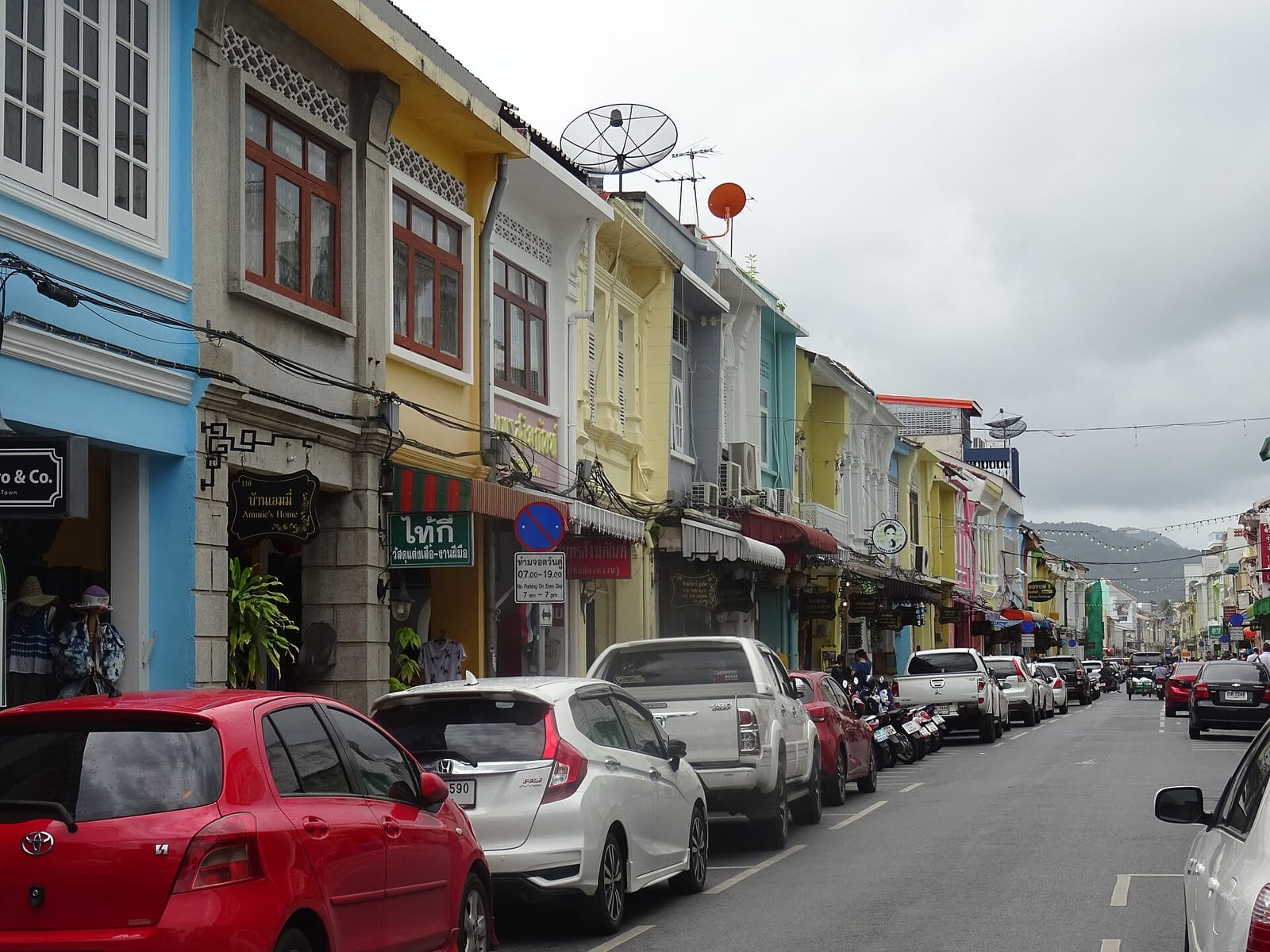
Phuket Old Town is the other side of the island that a lot of people miss. The quarter was built by Chinese merchants during the tin-mining era over a century ago, and the pastel Sino-Portuguese shophouses run along Thalang, Dibuk, Phang Nga, and Krabi roads. You can wander it in half a day — there are cafes, small museums, antique shops, and street art to photograph.
Thalang Road
The heart of the old town — brightly colored Sino-Portuguese shophouses lining both sides, with cafes, souvenir shops, and the photogenic Soi Romanee. Easy to wander all day. On Sunday evenings there's the Lard Yai Walking Street, packed with food and crafts.
Baan Chinpracha
An old Sino-Portuguese mansion belonging to the Tan Bunkit family, open to visit as a museum, with furniture and collectibles from the tin-mining era. Entry around 150 THB, open roughly 9:00–16:30. A close-up look at how Phuket's Chinese-descended families lived in the old days.
Thai Hua Museum
A former Chinese school turned museum telling the history of overseas Chinese in Phuket. The building itself is beautiful and photogenic. Entry around 200 THB, open roughly 9:00–17:00. A good way to understand the island's Peranakan cultural roots.
Soi Romanee
A short lane in the old town with some of the most photogenic pastel buildings in the quarter, plus cafes and small shops. You can walk straight to it from Thalang Road. Best for photos in the morning before the sun gets harsh and the crowds arrive.
Culture and sacred sites
Phuket has a mixed Thai-Chinese-Malay culture that shows clearly in its temples and Chinese shrines. If you're into making merit or want to understand the island more deeply, these are not to be skipped. Dress modestly when entering temples and shrines, and take off your shoes where it's required.
Wat Chalong (Wat Chaithararam)
The most-visited temple in Phuket, known for the revered monk Luang Pho Cham and the Phra Mahathat Chedi Phra Chom Thai Barami pagoda. Free entry, open roughly 7:00–17:00, dress modestly. People come to pray and apply gold leaf; there's plenty of parking.
Big Buddha
A white marble Buddha on Nakkerd Hill with 360-degree island views. Free entry, open roughly 9:00–18:00. Note: it was closed for a long stretch after a 2024 landslide and reopened on 3 March 2026. In the rainy season, check the status of the hill road before you go.
Jui Tui Shrine
An old Chinese shrine in town and the center of the Phuket Vegetarian Festival, which draws crowds from far away in October. Free entry, open all day. If you come during the festival, you'll see the ceremonies and processions that are unique to the island.
Wat Phra Thong (the Half-Buried Buddha)
A temple in Thalang District with a half-buried Buddha image emerging from the ground — a long-told Phuket legend. Free entry, and quieter than Wat Chalong. Good if you want to avoid the crowds and are curious about local lore.
Culture tip
If you're in Phuket in October, you may catch the Vegetarian Festival at shrines all over the island, with processions and dramatic fire-walking ceremonies. But the firecrackers are loud and the crowds are heavy — if you're bringing small children or don't like loud noise, brace yourself.
How to plan your days without burning out
Phuket is most fun when you plan one zone or one theme per day, because the beaches, islands, and old town sit on different sides of the island. Here's a sample 3-day plan that actually flows without making you crisscross back and forth.
Beaches and sunset
Islands and a snorkeling trip
Old town and culture
Getting around Phuket easily
- Rent a car or motorbike — the most convenient option, since the sights are spread across the island. Car rentals run about 800–1,500 THB/day, motorbikes about 200–300 THB/day. You'll need an international driving permit and a helmet.
- Ride-hailing apps (Grab/Bolt/InDrive) — available in town and at the main beaches, priced by the app with no haggling, though some areas have few cars late at night.
- Songthaews / taxis — they run between the beaches and town, but the fares are fixed and fairly pricey. Always ask the price before you get in.
- Tour transfers — most island and day trips include hotel pickup and drop-off in the price, ideal if you'd rather not drive yourself.
Want a detailed Phuket trip plan for the whole stay
See the Phuket travel guide →