🔄 Updated 4 Jun 2026
Ask a Phuket local what the island's signature dish is, and the answer usually isn't the grilled seafood by the beach that tourists know. It's a hot bowl of Hokkien mee in the morning, dim sum sold before the sun is even up, and sweet-savoury moo hong eaten over steamed rice. The town took in Hokkien-Chinese culture back in the tin-mining days, then slowly blended it with southern Thai flavours into a Peranakan style of cooking you won't taste anywhere else. Here's what we'd send you to try.
Hokkien Mee — One Bowl That Explains Phuket
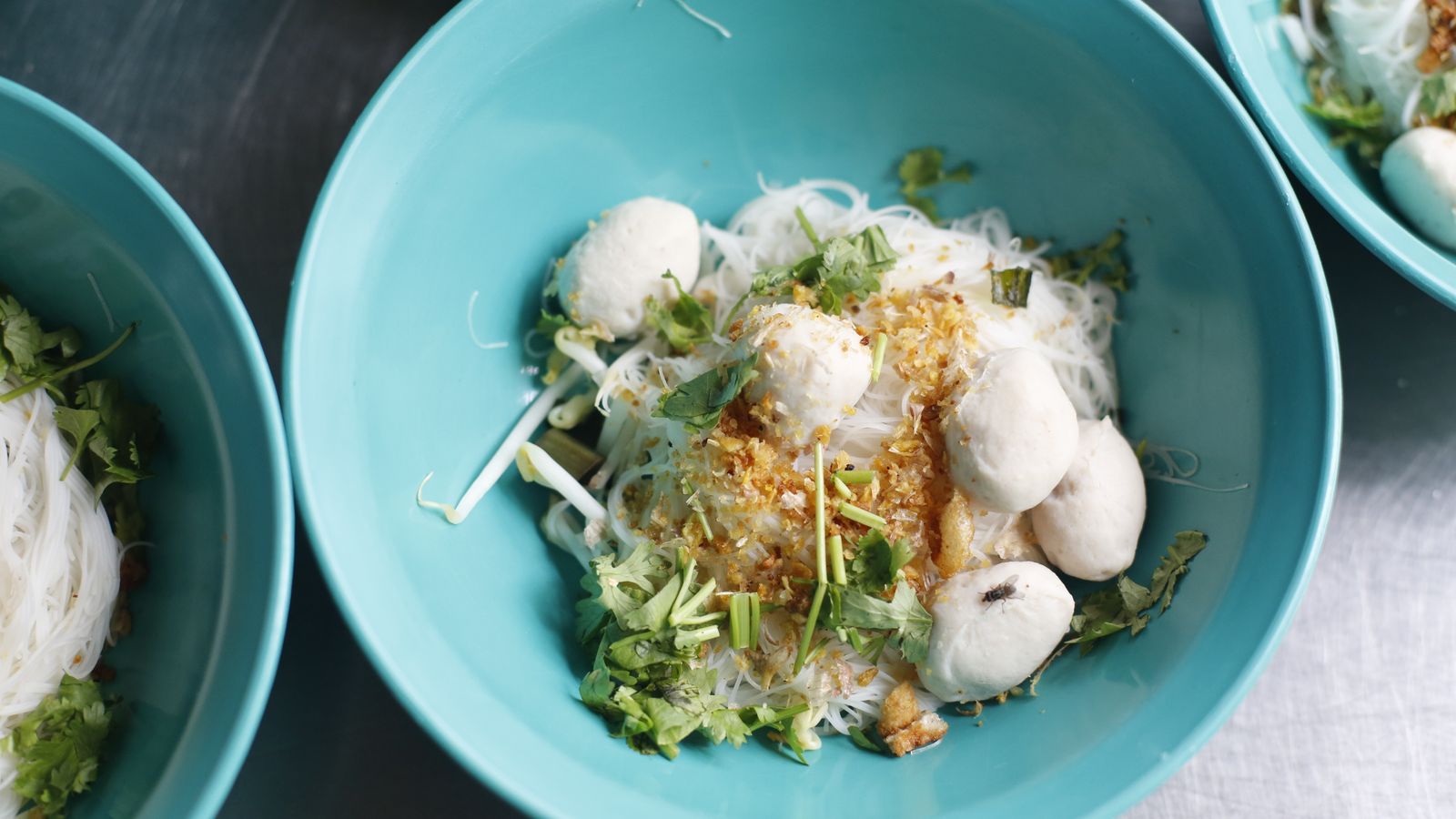
Hokkien mee is a thick, yellow egg noodle, either stir-fried or blanched in a rich broth with prawns, squid, pork and vegetables, seasoned with black pepper and dried shrimp until it's fragrant. It's a legacy of the Hokkien families who came over during the mining era, with the local kitchens later tuning it to a southern Thai palate. Some places call it mee sapam, after the fishing village that has been making these noodles for generations.
Mee Ton Poe
The stuff of Phuket Hokkien-mee legend, going since 1946, with a slogan locals still repeat: "come to Phuket, you have to eat Mee Ton Poe." The standout is the stir-fried Hokkien mee, cooked hot and smoky off the wok, topped with a soft-cooked egg and fresh seafood. You eat it under the big bodhi tree out front, the way Phuket folks have for decades.
Ko Yoon
An old-guard noodle shop deep in the Old Town that locals rate as having one of the deepest, most dried-shrimp-fragrant broths around. The noodles have just the right chew, and the setting is a classic old shophouse.
Mee Sapam
A noodle shop in Sapam village going since 1952 — the original of Hokkien noodles stir-fried with soy and seafood. It's the long-standing spot that turned "mee sapam" into shorthand for Phuket-style Hokkien mee.
Know before you go
Many of the old-guard Hokkien-mee shops close in the afternoon, and some have unpredictable days off. If you're set on a famous one, aim for late morning to midday and check the shop's closing day first — they tend to sell out fast.
Want to taste deeper? Try a Phuket food tour or cooking class
Half a day with a local who knows the lanes — or cooking a dish yourself — teaches you more than just eating. Book ahead on Klook or GetYourGuide.
Southern Thai and Peranakan — Bold Flavours Phuket Does Well
Beyond noodles, Phuket is a town for fiery southern Thai food and hard-to-find Baba dishes. The one you can't skip is moo hong — pork belly braised with garlic, pepper, soy and palm sugar until it's fall-apart tender, sweet and savoury in equal measure, eaten over steamed rice. Follow it with crab curry with wild betel leaf, shrimp-paste chilli dip with grilled fish, and stink beans stir-fried with fresh prawns for that proper southern heat.
Tu Kab Khao
A southern Thai and Baba restaurant set in an old building in Phuket Town, with a Michelin nod. It serves moo hong, crab curry and local Phuket dishes in a handsome setting — good for a special meal.
Thalang RoadKopitiam by Wilai
An old shophouse on Thalang Road, walls lined with photos of old Phuket, serving Hokkien mee, mee hoon and thick, old-style kopi coffee.
Lock Tien
A 1950s food court on the corner of Dibuk and Yaowarat roads, gathering long-running Peranakan and Hokkien stalls under one roof. Open morning to afternoon, busiest when locals come in for lunch.
Morning Dim Sum — The Phuket Food Worth an Early Start
Dim sum is a serious morning ritual in Phuket. Plenty of shops open from 6am and sell out before mid-morning, and locals like to settle in with dim sum and old-style coffee before the day starts. To catch the real atmosphere, you'll have to be willing to get up early.
- Boonrat Dim Sum — has been serving traditional Cantonese-recipe dim sum to Phuket since 1917. Open roughly 6:00–10:00; show up late and you risk no seat.
- Old-style coffee with your dim sum — order a kopi (black coffee with condensed milk) or a hot pulled tea on the side. It's the standard Old Town breakfast set.
- Moo hong and rice porridge — many dim sum shops have moo hong and dressed-up rice porridge to add on for a proper, filling breakfast.
Dim sum tip
The famous dim sum shops in Phuket are mostly cash-only and the queues get long on weekends. If you miss the morning window, look for a dim sum shop that stays open all day around the Old Town instead — it may not match the legends, but it's still good.
Fresh Seafood — Eating Local at Rawai and the Piers
Phuket seafood is at its best eaten close to where it's caught. The spots locals go to are the Rawai fishing village on the south of the island and the pier-side restaurants on the east coast. Here the prawns, crab, squid and fish come straight off the fishing boats, priced by weight and quite a bit cheaper than the tourist beach zones.
Rawai Seafood Market
Phuket's long-established fishing village, where you pick fresh seafood from the stalls by weight, then walk it to one of the shops next door to cook for you. You eat it fresh and support the local fishing community directly. It's on the dirt road to the left, just before Rawai pier.
Laem Hin Seafood
A restaurant at the end of Laem Hin pier on the east coast, with seafood kept live in pens that you can see for yourself. Bold Thai flavours, fair prices, and views over the water and the little islands offshore.
Kan Eang @ Pier
One of Phuket's veteran seafood spots — the original opened in 1973, about 50 years ago — set on Chalong Bay beside Chalong pier and well known to both locals and visitors. The signature is the mixed seafood basket with tiger prawns, Andaman mud crab, fish and squid.
Phuket Sweets and Snacks
Round things off with the local sweets you can find almost only in Phuket. Many share the same Hokkien-Chinese roots as the savoury dishes, aren't overly sweet, and tend to be good for cooling off.
- O-aew — shaved ice with jelly made from o-aew seeds and banana, topped with syrup and Chinese herbs. Cool and refreshing; the legendary spot is O-Aew Pao Leng in the Old Town.
- Apong — a small fried batter cake that looks like a little pancake, crisp at the edges and soft in the middle, made from flour, sugar, egg and coconut milk. Mae Sunee's apong has earned a Michelin nod.
- Tao sor — a thin, layered pastry with both sweet and savoury fillings, a Phuket souvenir with Hokkien-Chinese roots. You'll find it at the souvenir shops around the Old Town.
Want to plan a full eat-and-explore trip to Phuket?
See the Phuket travel guide →