🔄 Updated 21 Jun 2026
The three main stops on this trip all cluster in Si Mahosot district, about 20 km south of Prachinburi town along Highway 319. It's under half an hour's drive from the town centre to this zone, and the best part is that everything sits close together, so you can do it in a single day if you're pressed. Stay a night, though, and you can take it slow, soak up the details, and stop for good food along the way without rushing.
How to get there
Public transport into the Si Mahosot zone is hard to come by, so driving yourself or renting a car is by far the easiest option. From Bangkok, take Motorway 7 or Route 304 (Kabin Buri) into Prachinburi town in about 2 hours, then continue south on Highway 319. If you don't have a car, hiring a van or a motorbike taxi from town for the day works fine too, since the three stops are close together.
Day 1
Si Mahosot ancient city + Sa Morakot and the twin Buddha footprints
09:30
Leave Prachinburi town and head for Si Mahosot districtHave a full breakfast in town first, because there are few eateries in the Si Mahosot zone. Drive about 20 km south on Highway 319; the route runs through rice fields and rubber plantations, an easygoing countryside drive.
10:00
Walk Si Mahosot ancient city, the Dvaravati hub of eastern ThailandThe ancient city has a rounded-square layout covering roughly 742 rai, ringed by an earthen moat, and dates back over a thousand years to the Dvaravati period. Inside there are several numbered laterite monuments to wander among. Open daily around 08:00–18:00, free entry. The late-morning sun is strong, so bring a hat and water.
11:30
Stop at the Prachinburi National Museum (if you pass through town) or the Si Mahosot information centreIf you want to understand the city's background before you walk it, drop in to see the excavated artefacts: Buddha images, pottery, and other Dvaravati finds. It helps you picture what those monuments out in the fields once were.
12:30
Lunch break at a made-to-order shop or a noodle stall in the districtSi Mahosot is a small district, so the food isn't flashy but the prices are local: noodles for tens of baht, rice-and-curry plates for 40–60 THB. If you want a proper meal, save it for dinner back in town.
13:30
Head to the Sa Morakot monument group and the twin Buddha footprintsSa Morakot is an ancient pond carved down into the laterite bedrock, roughly 115 x 214 metres and about 3.5 metres deep. The highlight is the 'twin Buddha footprints' unearthed in 1986, carved into the laterite floor with a dharma wheel at the centre of each sole. Archaeologists consider them the oldest Buddha footprints in Thailand. Free entry.
14:45
See the marble ordination hall at Wat Sa MorakotIn the same area, Wat Sa Morakot has built its entire ordination hall from marble, a contemporary look that stands out and photographs well. It's only a short walk from the monuments, so you can take it all in at one stop.
16:00
Return to Prachinburi town and check inMost accommodation is in or around the town centre, ranging from guesthouses in the low hundreds of baht to riverside hotels. Rest up before heading out for dinner.
18:00
Dinner in town and try some local Prachinburi foodPrachinburi is known for boat noodles, the herbal products of Abhaibhubejhr, and its evening market. Order a few easy dishes, take it slow, and save your energy for the next day.
Day 2
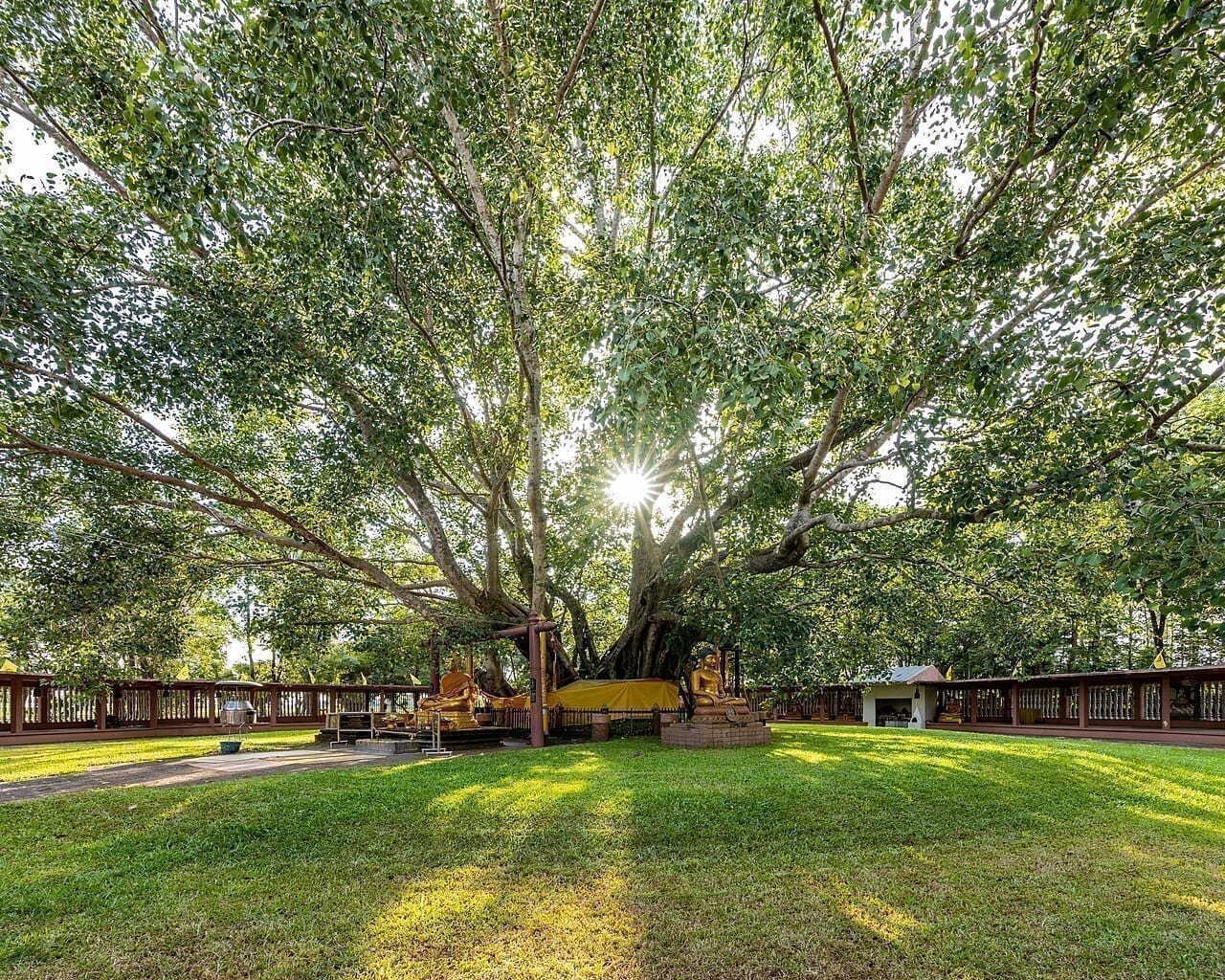
Pay respects at the Sri Maha Bodhi tree, Thailand's oldest bodhi tree
08:30
Have breakfast, then head out to the Sri Maha Bodhi temple in Khok Pip subdistrictThe temple is also in Si Mahosot district, not far from the Sa Morakot zone, so it's a short drive. In the morning the sun is still gentle, making it more comfortable to walk the grounds than later in the day.
09:00
Pay respects at the Sri Maha Bodhi tree, the symbol of Prachinburi provinceThis bodhi tree is enormous, with a trunk circumference of about 20 metres and a height of around 30 metres. It's believed to be a sapling from the Sri Maha Bodhi tree at Bodh Gaya, India, brought here and planted in the Dvaravati period over a thousand years ago. It's considered Thailand's oldest bodhi tree and the symbol of the province.
09:45
Pray, make merit, and apply gold leaf at the templeOn weekdays it's not crowded, so the atmosphere is quiet and peaceful for unhurried praying. If you come during Visakha Bucha, there's a worship festival at the Sri Maha Bodhi tree with especially large crowds, so brace yourself for parking.
10:45
Stop at a few more historical sites along the way (if you have time)This zone still has small monuments scattered across the fields. If you're into archaeology, ask locals or staff, since some are laterite mounds that haven't been fully restored but do have signs to read.
12:00
Have lunch to close the trip, then head homeOn the way back, if you pass through town, stop to pick up Abhaibhubejhr herbal products or seasonal fruit. Prachinburi is known for durian and santol from summer into the early rainy season, perfect souvenirs to take home.
Rough budget per person
- 1 night's accommodation — guesthouses in town start around 400–700 THB; riverside hotels and resorts run 900–1,800 THB
- Monument entry fees — both Si Mahosot ancient city and Sa Morakot are free, and the bodhi-tree temple has no entry fee either; set aside a little for merit-making as you wish
- Fuel / car rental — if you drive yourself, fuel for the round trip from town is in the low hundreds of baht; car rental is about 1,000–1,500 THB per day
- Food for 2 days — eating at local shops and the evening market, around 400–600 THB
- Souvenirs — Abhaibhubejhr herbal products or fruit, set aside another few hundred baht
🎟️Book the activities in your Prachinburi trip ahead
Booking online ahead on Klook or GetYourGuide is usually cheaper than the gate and skips the queue. Pick only the experiences you actually want — prices and availability are shown live on each site.
🎟️ See all Prachinburi tours & activities (Klook) Why the Si Mahosot zone is worth it for history lovers
Si Mahosot ancient city was one of the key cities of Dvaravati culture in eastern Thailand, with evidence of long, continuous settlement: moats, earthen ramparts, and many excavated laterite religious sites. Add the twin Buddha footprints actually carved into the laterite at Sa Morakot, plus the giant bodhi tree tied to the legend of how Buddhism arrived, and the whole route ends up telling the story of Buddhism's early arrival in this region, all in a single day. It suits people who love history and those on a merit-making trip who want more than just photos.
When's the best time to go
Most of the monuments are open-air, so the cool season (Nov–Feb) has the nicest weather and the most comfortable walking. The rainy season turns the fields a lovely green but you'll need an umbrella, while the hot season brings fierce sun, so walking in the morning or evening is more bearable. And if you come during Visakha Bucha, you'll catch the big merit festival at the bodhi-tree temple, though it's crowded and parking gets tight.
Can you do it as a day trip?
Easily, since all three stops sit close together in the same district. Start a little early, cover Si Mahosot ancient city and Sa Morakot in the morning, have lunch, then continue to the Sri Maha Bodhi tree in the afternoon and you'll be back in town before dark. An overnight stay suits people who want to take it slow, or who plan to tack on a Khao Yai or cafe trip the next day; it isn't required.