🔄 Updated 21 Jun 2026
Most people think of the Bridge over the River Kwai and Erawan Falls first when Kanchanaburi comes up. But out in Sai Yok district there's a Khmer monument tucked away beside the Khwae Noi River: Prasat Muang Sing, a laterite temple complex that archaeologists consider the westernmost Khmer settlement ever excavated in Thailand. The park is spacious and easy to walk, with big shade trees and few visitors, so it's ideal if you want to see the real thing at a quiet pace.
What is Prasat Muang Sing?
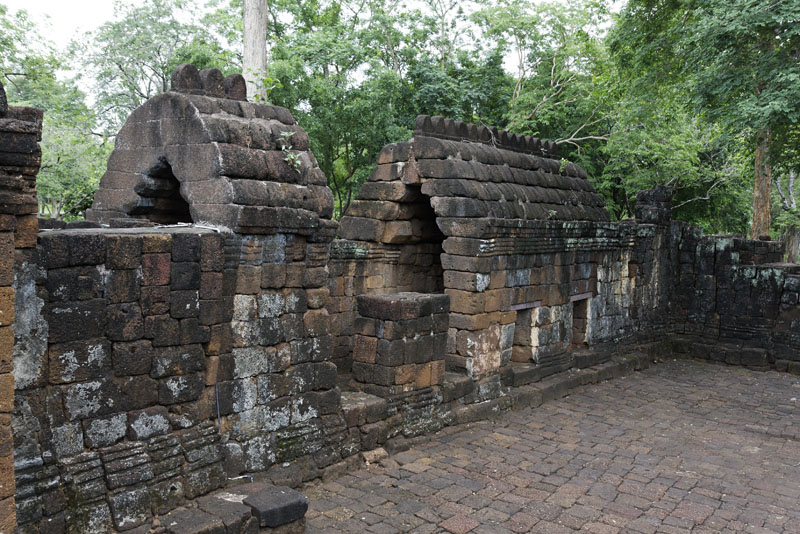
Prasat Muang Sing is a group of monuments built from laterite, thought to date to around the 13th century CE, when Khmer influence reached the Mae Klong and Khwae Noi river basins. The art here is in the Bayon style, linked to the reign of Jayavarman VII of the Khmer Empire. The ancient town was laid out in a square plan, ringed by laterite walls and a moat, with the main prang (central sanctuary) at its heart.
What makes the place interesting is the trace of Mahayana Buddhism. Sculptures such as the Bodhisattva Avalokiteshvara and other religious figures were excavated here, which suggests Muang Sing was a frontier town or an important community along the Khmer Empire's western route — not just an abandoned temple lost in the forest.
Want more out of Kanchanaburi? Book tours & activities
Booking online ahead on Klook or GetYourGuide is usually cheaper than the gate and skips the queue. Pick only the experiences you actually want — prices and availability are shown live on each site.
Opening hours and admission
- Opening hours — daily, roughly 08:00–16:30 (go in the morning or late afternoon; the midday sun is harsh)
- Admission for Thais — about 20 THB per person
- Admission for foreigners — about 100 THB per person
- Car parking — about 50 THB
- Time to allow — plan for around 1–1.5 hours to walk the main prang and the excavation sites
Check before you go
Admission fees and closing times at historical parks can change from time to time, and on some days the gate stops admitting visitors a little early. If you're heading all the way out to Sai Yok, try to arrive before 15:30 so you can walk around without feeling rushed.
Highlights you shouldn't miss
The main prang
The laterite sanctuary at the center of the ancient town — the main photo spot and where you can see the Khmer craftsmanship most clearly.
Laterite walls and moat
The square line of ancient city walls wraps the whole site, so you can walk along it and trace the layout of the old town.
Skeleton excavation pit
A display of prehistoric burial evidence found in the same area, showing that people lived here long before the temple itself.
Khwae Noi riverside
The back of the park borders the Khwae Noi River — a shady, relaxed spot to rest before moving on.
How to get to Prasat Muang Sing
Prasat Muang Sing is in Sai Yok district, about 40 km from Kanchanaburi town. You can get there by car or by train. A private car is the easiest option, since there isn't much public transport that drops you right at the park entrance.
- By car — about 45 minutes to 1 hour from town, with parking at the park. It pairs nicely with Tham Krasae and the Tham Krasae railway station in one trip.
- By Death Railway train — take the train from Kanchanaburi station to Tha Kilen station, then walk about 1 km to the park. It's the most atmospheric way to go, but there are only a few trains a day, so check the return times carefully.
- Tour or car with driver — an easy choice if you'd rather not drive. It's often bundled with Erawan Falls or Sai Yok.
Pair it up
This is the same route as Sai Yok and Tham Krasae. A good plan is to stop at Prasat Muang Sing mid-morning, then continue to the Tham Krasae railway station or a waterfall in the afternoon.
Before you go
- Wear comfortable walking shoes — the grounds are wide and mostly dirt and grass paths.
- Bring a hat, an umbrella, and drinking water, since the center of the complex has almost no shade.
- Go in the morning or evening for better photos and cooler weather.
- There are few shops inside the park, so bring snacks if you plan to stay a while.
Plan the rest of your Kanchanaburi trip
See the Kanchanaburi travel guide →