🔄 Updated 21 Jun 2026
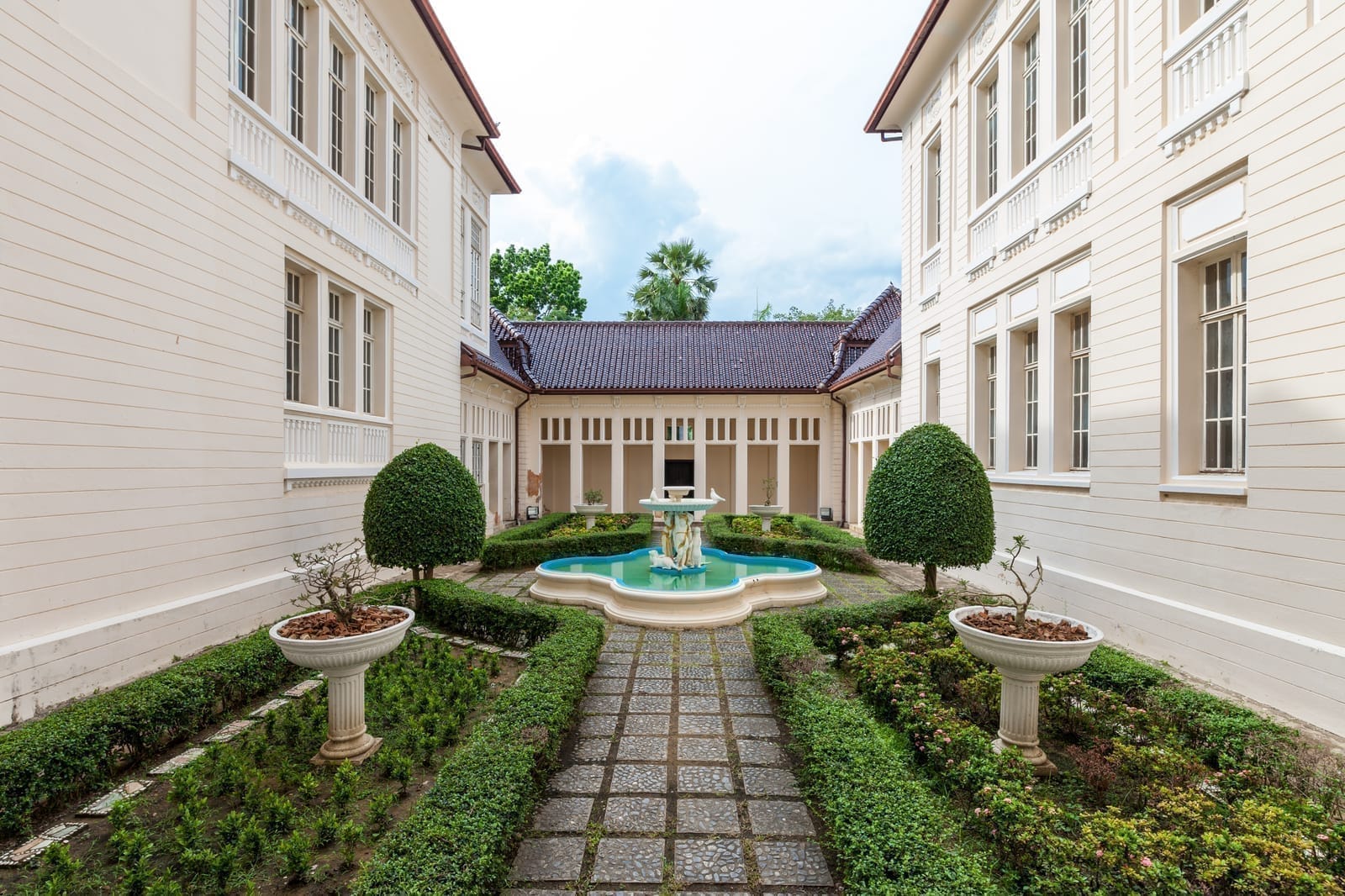
Ban Puen Palace looks nothing like a typical Thai palace — it reads as a genuine European building from top to bottom. It sits on the bank of the Phetchaburi River, just a 10–15 minute drive from the town centre. What wins people over is how quietly beautiful it is: never crowded, easy to wander through with the whole family, and the entry fee is tiny compared with what you actually get to see.
A short history — a German palace in Phetchaburi
King Chulalongkorn (Rama V) ordered the palace built as a residence for his visits to Phetchaburi. The designer was Karl Döhring, a German architect who had served in the royal railway department. He assembled an all-German team of engineers and decorators so the whole building would come out in one consistent style.
Rama V passed away before the palace was finished, so the work was completed and formally celebrated in the reign of Rama VI, around 1918. The name "Ban Puen" comes from the original sub-district where it stands, while the official name "Phra Ram Ratchaniwet" was granted later. Today the grounds are looked after by the 15th Military Circle, Ram Ratchaniwet Camp, which keeps the surroundings tidy and shaded.
Want more out of Phetchaburi? Book tours & activities
Booking online ahead on Klook or GetYourGuide is usually cheaper than the gate and skips the queue. Pick only the experiences you actually want — prices and availability are shown live on each site.
Architecture — Art Nouveau and the central dome
The building is a two-storey brick structure mixing Baroque with Art Nouveau (the Germans call it Jugendstil), the style in fashion across Europe at the time. The lines of the windows, archways and decorative details curve in a natural, flowing way rather than staying stiff and rigid. The spot people love to photograph most is the central hall under a tall dome, with a curving staircase winding up to the second floor — the light filtering down from the dome makes the space feel open and stately.
- The domed central hall — the heart of the palace, with a high ceiling and a sweeping spiral staircase, the most classic photo angle of all.
- Glazed tiles — many of the walls are lined with yellow-and-green tiles bearing finely detailed relief patterns of animals and plants.
- Curved windows and archways — the Art Nouveau lines give the building a softer feel than most European palaces.
- A riverside setting — from the opposite bank you can see the dome reflected in the water, lovely in the late afternoon.
Go a little deeper
If you're visiting as a group and want the full backstory, try arranging a guide in advance — you'll understand the origin of each room and pattern far better than wandering on your own. Call the palace office at 032-428506 to ask.
Opening hours, entry fee and rules to know
The palace is open daily, generally around 8:00am–4:00pm (on some weekends it closes around 4:30pm). The entry fee is very light: walking the gardens and taking photos outside is free, while going inside the building carries a small maintenance fee. Hours and fees can shift by season, so it's worth a quick call ahead if you're set on visiting on a special day.
- Indoor entry fee — around 20 THB for Thai adults, 10 THB for children, 50 THB for foreign visitors, and about 5 THB for students in uniform.
- Dress code — keep it modest, since this is both a historic site and within an army camp. Carry your ID in case staff ask to see it.
- Photography — some interior rooms restrict photos, so watch for the signs and follow what staff tell you. Outside, shoot all you like.
- Time needed — an unhurried walk takes about 1–1.5 hours, perfect as a stop on the way to somewhere else.
The best time to look its best
Morning sun around 9–10am hits the front of the building just right, giving you soft light without too much heat. Late afternoon before closing brings warm light and thinner crowds, so you can stroll at your own pace. In the rainy season the garden greenery looks lush and fresh, though packing an umbrella will put your mind at ease. Overall it's an attraction that never feels packed — go on a weekday and you'll practically have the place to yourself.
Where to go next in the same day
Ban Puen Palace sits right in town, so it's easy to pair with other sights on the same day — the next stop is only a few minutes' drive away. It works well as part of a half-day to full-day old-town route.
Phra Nakhon Khiri (Khao Wang)
A hilltop palace overlooking the town, with a tram ride up to 360-degree views of Phetchaburi — a natural pairing with Ban Puen Palace.
Old townWat Mahathat Worawihan
A white five-spired prang in the old town, where you can take in genuine Phetchaburi craftsmanship up close.
Chill outOld-town cafes
Stroll the riverside quarter and stop at a cafe in an old shophouse for coffee and a rest before the next stop.
An easy plan
A route that works: climb Khao Wang in the morning before the sun gets harsh, have Phetchaburi sweets at midday, drop by Ban Puen Palace in the afternoon for photos, then finish at a riverside cafe — history, food and good photo spots all in one day.
Want a Phetchaburi itinerary timed to fit the day?
See the Phetchaburi 1-day plan →