🔄 Updated 21 Jun 2026
Ranong's attractions stretch in a long north-south line along the Myanmar border, with the town in the middle. Raksawarin Hot Springs and the old town sit close enough to cover in one day, while Koh Phayam and Koh Chang need a boat out from Pak Nam pier, so set aside a full day or an overnight for those. Further south you'll find Ngao Waterfall and Grass Mountain. The trip works best if you alternate town days with island days — don't pack two boat days back to back, since they take real energy and travel time.
The Best Things to Do in Ranong (ordered by how often people mention them)
The order below isn't a ranking of which place is better than another — it just follows how often first-time visitors to Ranong end up at each one. Pick and mix them into your days however suits your style. Prices and times are rough estimates, so double-check before you go.
Raksawarin Hot Springs
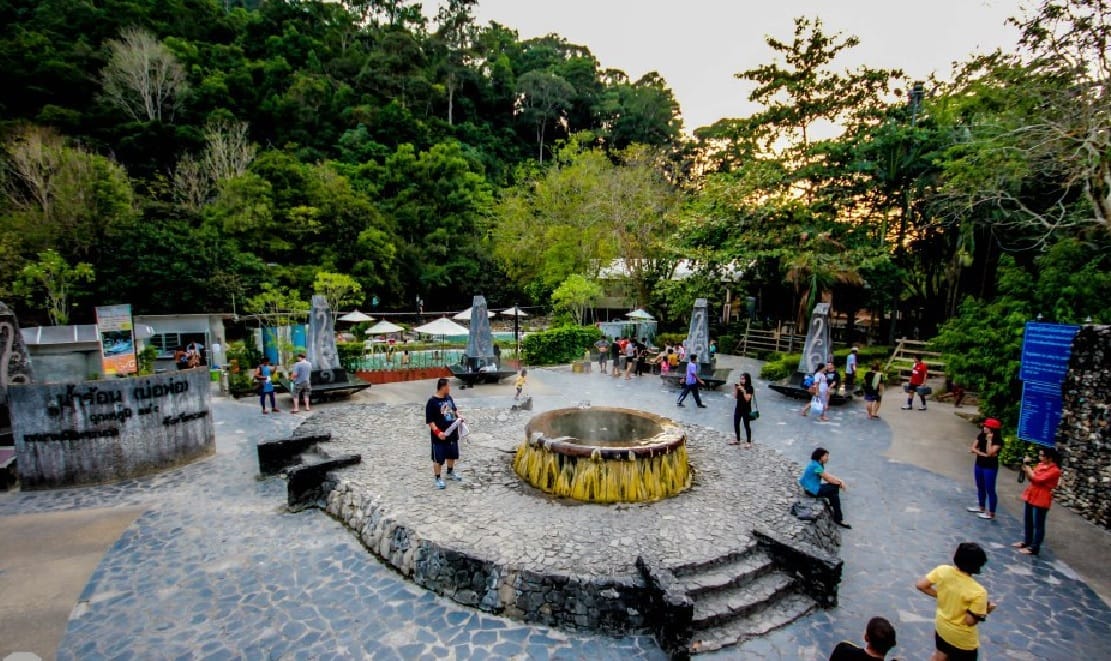
Natural hot mineral pools set in a public park right in the middle of town. The water runs around 65°C — you can't drink it, but it's lovely to soak in. There's a free foot-soak pool to sit at, plus a separate mineral-bath area with a fee. It's the first place people think of when Ranong comes up.
Koh Phayam
Ranong's main island — white sand, clear water, and a quiet, slow-paced feel. The highlights are Ao Yai and Ao Khao Kwai, both long beaches, and it's great for an overnight to catch the sunset. You get around the island mostly by motorbike; there are no cars driving around it.
Ngao Waterfall
The town's signature waterfall, inside Ngao Waterfall National Park. You can spot the tall cascade from the Phetkasem highway, and walk in to swim. It runs fullest after the rainy season. The area is also known for the locally found purple Phufa crab.
Grass Mountain (Khao Hua Lan)
A bald hill covered in short grass that you can easily walk up for a 360-degree view. The grass is greenest in the rainy season and turns a golden brown in the dry months. It's one of the town's favourite spots for photos and catching the breeze.
Rattanarangsan Palace (Replica)
A teak and takhian-thong wood palace built as a replica to commemorate the royal visits to Ranong by Kings Rama V, VI, and VII. It sits on a hill in the middle of town, so you can take in the wooden architecture and the town view in one place.
Koh Chang, Ranong
A small island next to Koh Phayam, rawer and simpler in feel, with limited electricity and phone signal — good for people who genuinely want to unplug. Quiet beaches, few crowds; it's a low-key corner that hasn't been discovered as widely as Koh Phayam.
Khao Fa Chi Viewpoint
A mountain shaped a bit like a conical lid, rising about 259 metres above sea level. You can drive all the way to the top and look out over mangrove forest, scattered islands, and the wide Andaman Sea. The view is better than you'd expect, but there's no café or restaurant up top yet — bring your own water.
Ranong Old Town Street (Tha Muang–old buildings)
An old-building district with a mix of Chinese, Burmese, and Sino-Portuguese style — old shophouses, Chinese shrines, and local cafés tucked in between. It's a pleasant area to wander and photograph, and to try the dumplings and dim sum in the morning that the town is known for.
Kra Isthmus (Kiu Kra)
The narrowest point of the Malay Peninsula, where the gap from the Andaman coast to the Gulf of Thailand is only about 50 km. There's a monument and a signboard arch to stop and photograph — a good roadside break while driving through Kra Buri district in the north of the province.
Rattanarangsan Palace (old site) and the Governor's Residence
Traces and old buildings that tell the story of Ranong's governors — the Na Ranong family, who ran tin mines that made the town prosperous. History buffs will like it, and you can continue on to the old town and the governors' cemetery within the same area.
Pak Nam Ranong Border Checkpoint (to Kawthaung, Myanmar)
The boat border crossing over to Kawthaung on the Myanmar side. You can take a longtail boat to see the river mouth and the border line between the two countries. If you want to set foot in Myanmar or do a visa run, this is the way — check the latest crossing rules before you go.
Ranong Canyon (old mine)
A former kaolin mine that's become an emerald-green pool ringed by clay cliffs — striking and a little surreal to photograph, like a miniature Grand Canyon. No swimming, as it's deep and unsafe; it's best as a quick photo stop.
Planning tips
Ranong gets the heaviest rainfall in Thailand. The easy stretch to visit is December to April — clear skies, calm seas, and reliable island runs. In the rainy season (May to October) boats to the islands may be cancelled on some days because of wind and waves, but the upside is fuller waterfalls and a greener Grass Mountain. If you come in the rainy season, always check the weather and boat schedule first.
Want more out of Ranong? Book tours & activities
Booking online ahead on Klook or GetYourGuide is usually cheaper than the gate and skips the queue. Pick only the experiences you actually want — prices and availability are shown live on each site.
For Hot Springs and Relaxing
Ranong is a mineral-water town — natural hot springs bubble up in several spots, and the mineral water here is known to be clean enough to be bottled as drinking water. If you've come to genuinely rest your body, set aside half a day just for soaking.
Raksawarin Hot Springs
Hot mineral pools in a public park in town, with a free foot-soak pool and a paid mineral-bath area. The easiest one to get to.
Mineral spas at resorts
Many places to stay in Ranong pipe hot mineral water into private soak rooms — good for those who want a private soak without competing for space in a shared pool.
Phon Rang / community hot springs
Community hot springs around town that locals actually use — simple, easygoing, and cheap, good for travellers who want to see real daily life.
For Islands and the Andaman Sea
The charm of Ranong's sea is its quiet — it's still not as crowded as the famous islands elsewhere. Koh Phayam suits people who want a nice beach with a decent amount of accommodation and restaurants, while Koh Chang suits those who want something rawer and quieter. Both islands leave from the same Pak Nam pier.
- Koh Phayam — Ao Yai and Ao Khao Kwai are long beaches with clear water, plus accommodation, restaurants, and sunset spots. Get around the island by motorbike.
- Koh Chang, Ranong — the simpler island next door, with limited electricity and signal, good for genuinely getting away from it all.
- Island snorkelling trips — there are boat tours out to small islands like Koh Khang Khao and Koh Kam to snorkel over coral in a single day.
- Pak Nam pier — the main departure point for every island, about 10 km outside town; arrive before your boat's departure.
For the Old Town and History
Ranong prospered in the tin-mining era, which left it with a blended Chinese-Burmese feel — old shophouses, Chinese shrines, and the story of the Na Ranong governors' family are all still visible around town. Wandering in the early morning, while it's still cool, is the most comfortable.
- Rattanarangsan Palace (replica) — a teak palace on a hill in the middle of town; take in the architecture and the town view.
- Ranong old town street and shophouses — a district of Sino-Portuguese buildings and Chinese shrines, good for walking, photos, and a morning bite.
- Governor's residence and governors' cemetery — traces of the Na Ranong family who made the town prosperous; history lovers will enjoy it.
- Temples and shrines in town — both Thai temples and old Chinese shrines, reflecting the town's multi-ethnic community.
For Nature and Viewpoints
Beyond the islands, Ranong also has waterfalls, mangrove forest, and hilltop viewpoints at every level — from quick roadside stops to a full day driving up a mountain. Pick based on the energy and time you have.
Ngao Waterfall
The town's signature waterfall inside the park; visible from the roadside, walk in to swim, fullest after the rainy season.
Grass Mountain
A bald hill that's green in the rainy season; walk up for a 360-degree view. A favourite photo spot.
Khao Fa Chi
Drive to the summit for views over mangrove forest and the Andaman Sea — wide open as far as you can see.
Mangroves and Ngao park
A mangrove-forest nature walk, shaded and cool, good for families and easygoing walkers.
A Relaxed Day-by-Day Plan to Try
Here's a sample three-day plan that alternates town, island, and nature — adjust the timing to suit reality. If you have your own car or rent one, you'll move around far more easily, since the attractions are spread out and public transport is limited.
Hot springs + old town
Full island day (Koh Phayam)
Nature and viewpoints
Getting around Ranong
In town you can flag a motorbike taxi or a songthaew, but spots like Ngao Waterfall, Grass Mountain, Khao Fa Chi, and Pak Nam pier are far out with little public transport — renting a car or motorbike is the most flexible. On Koh Phayam it's motorbike only; there are no cars to rent.
Want a full day-by-day Ranong itinerary?
See the Ranong travel guide →