🔄 Updated 21 Jun 2026
Ranong sits on the Andaman coast right up against the Myanmar border, and it's one of the wettest provinces in Thailand. Locals sum it up with the saying eight months of rain, four of sun — roughly eight months of rain a year, with only about four months of genuinely dry, sunny weather. That single fact is the key to planning a trip here, because the season when boats run to the islands and the season when the rain hammers down are two completely different things. Know it in advance and you won't be disappointed.
What "eight months of rain" really means, and when to go
The best stretch is November to April — the rain eases off, the skies clear, the Andaman calms down, and boats run to the islands every day. Narrow it down further and December to March is the sweet spot: comfortable air, good sun but not the brutal heat of peak summer, perfect for both Koh Phayam and wandering around town.
May to October is the monsoon — heavy, frequent rain and rough seas. Boats to Koh Phayam may stop running in stretches, or only the larger ferries operate. It's not off-limits, but go in expecting rain and always check the sea conditions first. The upside: the province turns lush and green, the waterfalls are at full flow, and room rates drop a lot.
What's still worth doing in the rain
Even in the wet season, anything that doesn't mind a downpour is still easy. The Raksawarin Hot Springs are arguably better in the rain — soaking in the warm water while cool air drifts over you. Old town Ranong, the cafés, and the seafood restaurants all work fine too. Build your plan around in-town activities first, then play the island trips by ear depending on the weather.
Getting to Koh Phayam — boats, pier, prices
Koh Phayam is Ranong's beach highlight — still quiet, no cars, mostly motorbikes, and a good fit for anyone who genuinely wants to switch off. You board at Pak Nam Municipal Pier (behind the Pak Nam police station), about 10 km from town, where you can leave your car parked overnight. There are two types of boat to choose from.
- Speedboat — about 35–45 minutes, roughly 350 THB per person, with more departures starting early and several afternoon runs. Best if you want to get to the island fast.
- Slow boat (ferry / wooden boat) — about 1.5–2 hours, roughly 200–250 THB per person, fewer departures and usually only in high season, but a more relaxed ride.
- On the island — motorbike taxis or self-drive rentals run about 200–300 THB per day and are the main way to get around, since there are no shared songthaew routes.
Check before you book a boat
Boat schedules change with the season and the tides. In the monsoon the speedboats may stop, leaving only the big ferry, or some days nothing runs at all. Always call the operator or ask your island accommodation before you set out — don't treat schedules you find online as fixed. And leave plenty of buffer on the return leg before any flight or onward transport.
The main beach on the island is Ao Yai, a long stretch of sand with the most accommodation and restaurants and a great sunset view. Ao Khao Khwai (Buffalo Bay) is prettier and clearer, quieter, and better if you really want some peace. A day trip is doable, but staying at least one night gives you the full island feel.
Soaking in the hot springs — Raksawarin and beyond
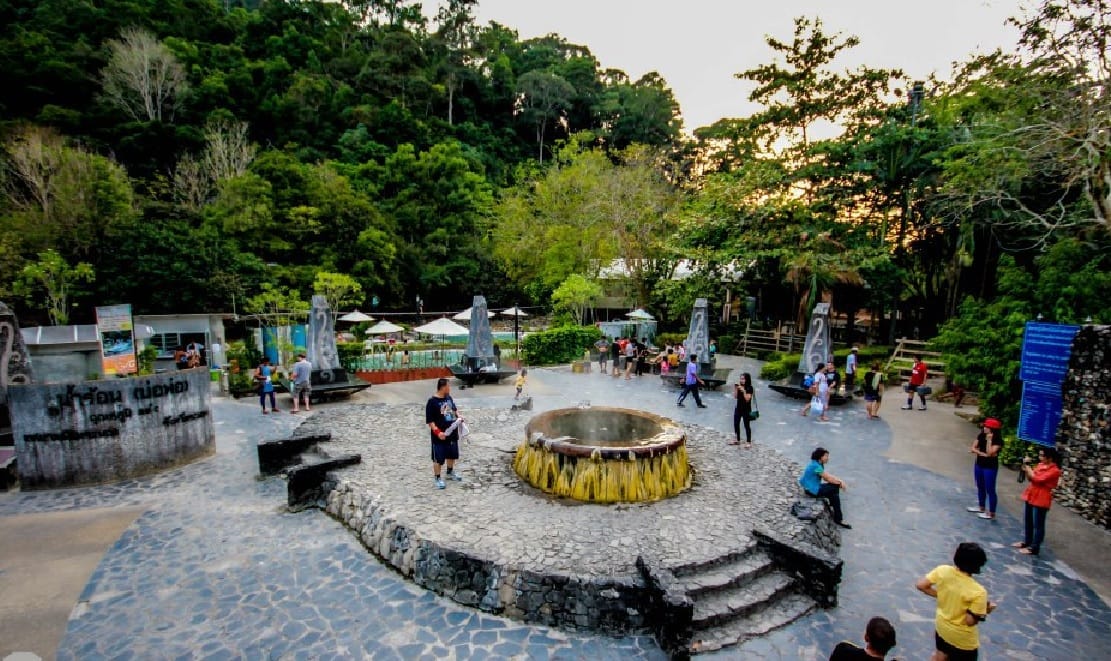
Ranong is nicknamed the "city of mineral water" thanks to hot springs scattered across several spots. The star is Raksawarin Hot Springs in town. What makes it special is that this is hot mineral water with no sulphur smell — genuinely rare — so the water is clear and odourless and you come out feeling great. The name Raksawarin was bestowed by the late Princess Mother during a royal visit to Ranong.
- Entry to Raksawarin Park — free, with a free public foot-soak pool as well. It's open-air and shaded, with a relaxed feel.
- Private soaking / mineral baths — there are mineral bathing rooms and soaking pools inside the park and at the mineral-water resorts around town, charged per visit from tens to a few hundred THB depending on the place.
- Hotel spas and onsen — many hotels in Ranong pipe natural mineral water into the rooms or have their own onsen, with prices scaling up by accommodation level.
How to soak well without getting dizzy
The water at Raksawarin is fairly hot (around 65°C at the source; the soaking areas are mixed to cool it down). Soak in 10–15 minute spells, then get out and rest, and drink plenty of plain water. Don't stay in for one long stretch, or you may feel faint. Avoid soaking on a totally empty or very full stomach, and bring your own change of clothes and a towel.
Rough daily budget
Ranong can be done cheaply — the fresh seafood is well priced and the hot springs are free. Your main costs are island boats and accommodation. Here's a rough per-person, per-day estimate, split between staying in town and heading out to Koh Phayam.
- Accommodation — guesthouses and hotels in town from around 400–800 THB/night; bungalows on Koh Phayam from the high hundreds to low thousands depending on location and season.
- Getting around town — motorbike rental around 250–300 THB/day; songthaew or motorbike taxi in town a few tens of THB per ride.
- Koh Phayam trip — round-trip boat around 400–700 THB; motorbike rental on the island 200–300 THB/day.
- Food — local rice-and-dish places at 40–80 THB a plate; a sit-down seafood meal around 150–400 THB per person depending on what you order.
- Rough total — a frugal day in town around 700–1,200 THB/day; an overnight Koh Phayam trip closer to 1,500–2,500 THB per person.
Where you actually save
Raksawarin Hot Springs is free, seafood at the fresh market or waterfront shacks is cheaper than the tourist restaurants, and if you're in a group, splitting motorbike and chartered-boat costs brings the per-head price right down. Room rates drop a lot in the rainy season too — if island trips aren't a dealbreaker, that's great value.
What to wear and pack
Ranong is a rainy seaside town, so dress light, breathable, and ready for both sun and rain. Nothing formal is needed, but a handful of essentials make the trip a lot more comfortable.
- Light, quick-drying clothes — it's humid and thick fabrics dry slowly, so pick thin, breathable ones, and bring a change for the hot springs and the sea.
- Rain jacket or folding umbrella — a must in a town this rainy; it can pour in almost any season, so keep one on you.
- Strap-on sandals or water-friendly shoes — the beaches, the hot-spring decks, and the waterfalls all get slippery and wet, so shoes with good grip are safer.
- Sunscreen + insect repellent — the sun is strong on clear days, and the island and waterfalls have plenty of mosquitoes, so bring both.
- Swimwear + towel — useful for both the sea at Koh Phayam and the mineral baths.
Keep your gear dry
Carry a zip-lock or waterproof bag for your phone, documents, and power bank — both for the boat ride out, where there can be spray, and for sudden downpours. It keeps the important stuff safe through the trip.
SIM cards, data, and other small stuff
Mobile coverage is good in town and Thai travellers can use their usual SIM as normal. Foreign visitors can pick up a tourist SIM at a convenience store or phone shop in town. On Koh Phayam there's signal but it isn't strong everywhere — some corners of the island have weak or dropping data, so be ready for a bit of a phone detox.
- Cash — small shops, markets, boat fares, and island vendors lean on cash, so bring small notes.
- ATMs — there are plenty in town and at the malls, but Koh Phayam has very few or none, so withdraw enough before you board.
- PromptPay / QR payment — many shops in town accept QR payments, but the island and small stalls still prefer cash.
- Myanmar border — if you want to cross over to Kawthaung / Victoria Point, bring your passport and check the current border procedure first, as the rules change from time to time.
All set? See the full guide to Ranong's stays and itineraries
See the Ranong travel guide →