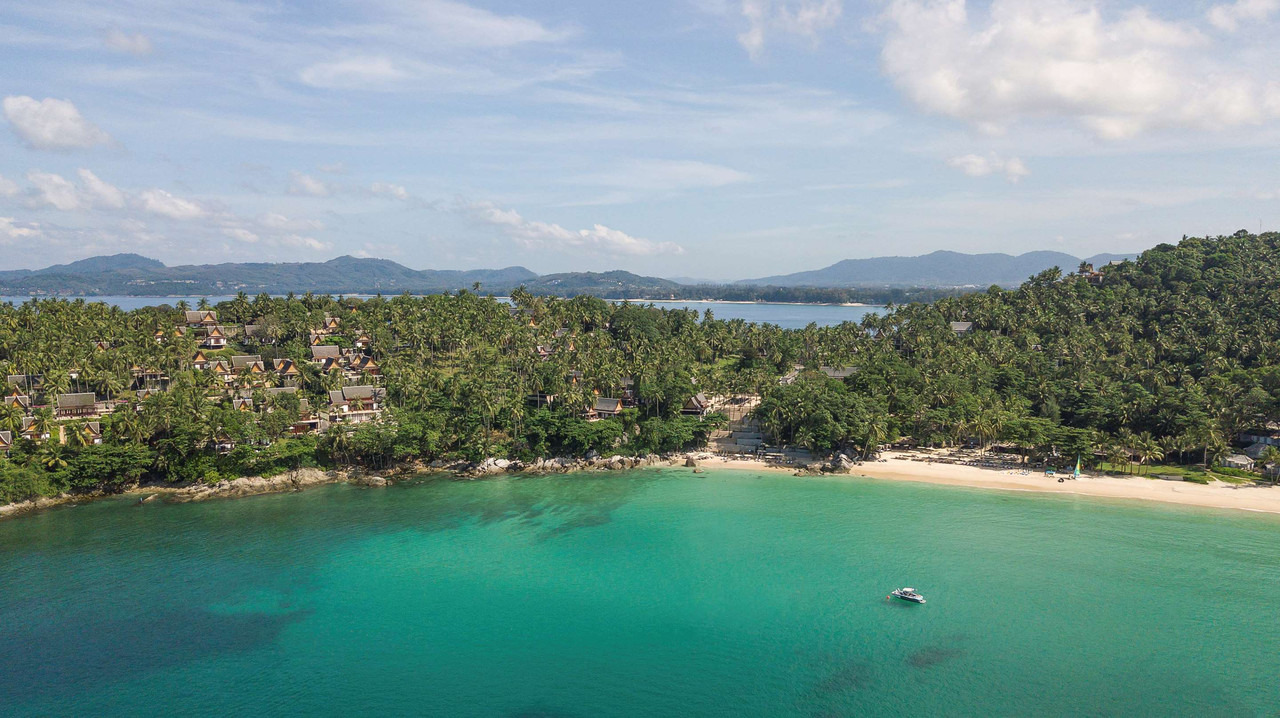
Amanpuri — where the Aman legend began, on a coconut headland above Pansea Beach
Before "Aman" became a word luxury travellers say with a certain reverence, everything started here. Amanpuri, the first resort of the Aman group, opened its doors in January 1988 on a coconut-grove headland above Pansea Beach — a short crescent of white sand tucked between Bang Tao and Surin that stays so quiet it feels private. Forty Thai-roofed pavilions and villas of 3–9 bedrooms, each villa with its own chef and butler, hide beneath thousands of coconut palms. Rates start from approx. ฿40,000/night in low season (climbing steeply in peak months). Guests rate it 9.6 on Trip.com and 4.7/5 across 660 Google reviews. One thing to know before you plan: the resort is closed for renovation 15 May – 13 September 2026, reopening 14 September 2026.

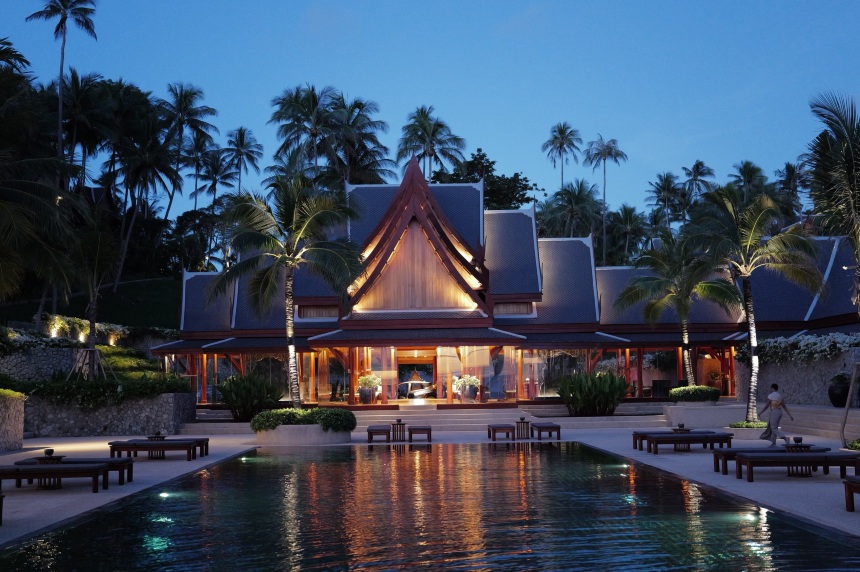
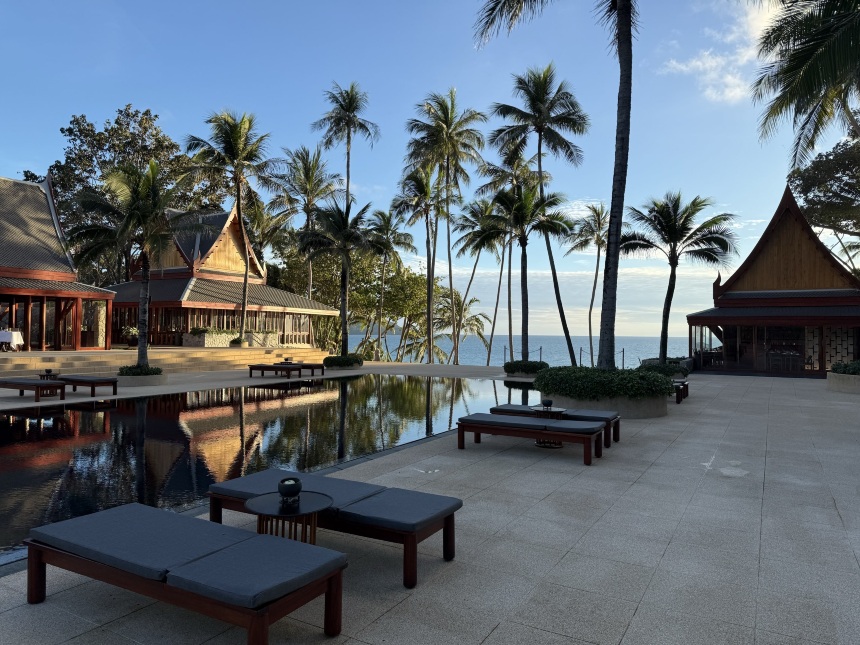
To understand Amanpuri you have to go back to 1988. Adrian Zecha set out to build himself a private holiday home on this coconut plantation, and the project grew into a small resort that thought differently from every grand hotel of its era — fewer rooms, far more space per guest, privacy above everything. Architect Ed Tuttle spent months travelling Thailand studying temples and classical teak houses, then distilled what he saw into steep-gabled pavilions echoing Ayutthaya, drawn with a minimalist line that was years ahead of its time. The name comes from Sanskrit and means "place of peace" — and from this hillside the Aman brand spread worldwide, spawning a following so devoted it earned its own nickname: the "Amanjunkies". The image of the midnight-black tiled pool set against Thai rooflines and coconut trunks remains one of the most recognised hotel photographs in Thailand.
The accommodation splits into two worlds. First come the 40 pavilions, starting at roughly 115 sqm each — every one a free-standing house of its own with an outdoor sala, king bed, deep bathtub and an oversized dressing area. They climb from the Garden Pavilion amid the greenery up through Partial Ocean, Ocean and Pool Pavilions that add a private pool. The second world is the villas of 3–9 bedrooms, around forty of them towards the tip of the headland, each with a private pool plus a dedicated chef and butler — self-contained compounds where a large family or group can spend a week barely seeing another guest. One thing worth saying plainly: most pavilions do not have a full sea view, because the resort deliberately hides every building beneath the palm canopy. If open water from your bed matters, book an Ocean Pavilion or above — and the price steps up accordingly.
"The staff here know what you need before you ask. They remember what everyone drinks and where everyone likes to sit — you can feel thirty-plus years of practice in every small gesture."
The thing reviews on every platform agree on is service that has become the reference point for the whole island. The staff-to-guest ratio is unusually high, and a culture of anticipating rather than reacting — refined continuously since 1988 — leads many guests to call this the finest service they have experienced anywhere. The scores back the picture up: 9.6 on Trip.com, 4.7/5 from 660 Google reviews and 4.5/5 from 457 Tripadvisor reviews. Rates include breakfast, and many packages of three nights or more include airport transfers. Non-motorised watersports — kayaks, stand-up paddleboards, snorkelling gear — are free for guests during the dry season (roughly November to April).
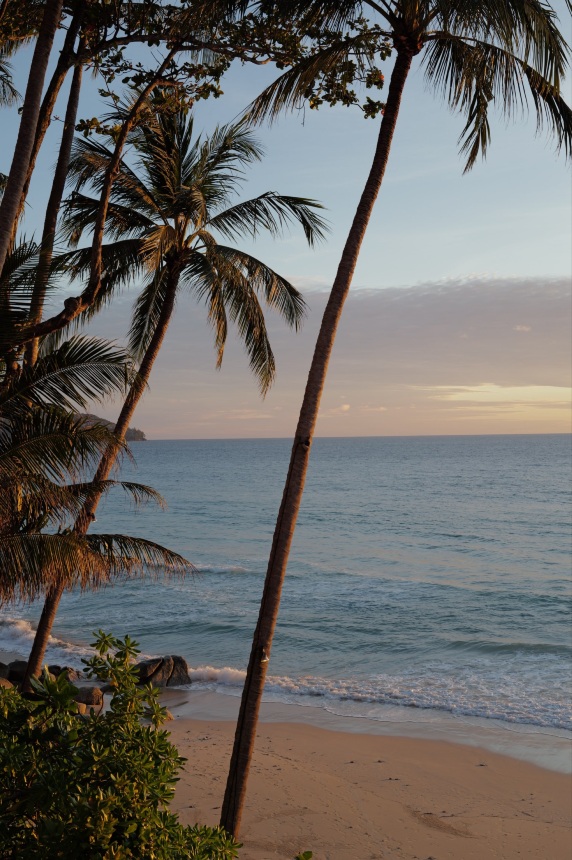
Location is the trump card that explains half the price. Amanpuri occupies the entire headland on the northern side of Pansea Beach — a short arc of white sand that is public under Thai law, yet so hard to reach from the road that in practice only guests of Amanpuri and The Surin, which sits at the beach's southern end, ever use it. The result feels like a private beach without anyone having to pretend it is one. The address puts you at the southern tip of the Bang Tao area: about 5 minutes by car to Surin and Bang Tao beaches, 10 minutes to Boat Avenue and Porto de Phuket — the dining hub of the Laguna zone — 25–30 minutes to Patong, and around 30 minutes from Phuket airport. The quiet is both the selling point and the limitation: there is no walking street outside the gate, no beach-bar strip, and every night out means a drive.
Food and wellness run far beyond what a 40-pavilion resort would normally carry. Five restaurants range from Buabok, Thai cooking by the pool, through Arva (Italian) and Nama (izakaya-style Japanese) to The Lounge for evening cocktails and the seasonal Beach Terrace grill, backed by a walk-in wine room of more than 200 labels. On the wellness side, the Holistic Wellness Centre is serious enough to build personal recovery programmes: traditional Thai-inspired spa treatments, a fully equipped gym, infrared sauna, steam room, cold plunge, yoga and Muay Thai classes, plus a Mobility & Recovery Programme developed with Novak Djokovic. Two honest notes on dining: there is no Michelin-starred restaurant on the property (unlike neighbouring Trisara with PRU), and food and drink prices follow the Aman standard — an ordinary dinner for two can easily run into the thousands of baht.
The trade-offs are real and worth weighing before you book. One — the price: from approx. ฿40,000/night in low season for a Garden Pavilion, ฿50,000–65,000 in peak months (November–April), and villas from six figures per night; the same money buys the top suite at most other five-star resorts on the island. Two — the 1988 design: timeless and classic to its admirers, but travellers who prefer the contemporary polish of newly opened resorts may find the rooms plainer and older-feeling than expected. Three — stairs everywhere: the resort steps down a hillside and the beach is reached by a long staircase; guests with limited mobility should tell the resort in advance (only a few pavilions are wheelchair-accessible). Four — the quiet can tip into understimulation for travellers who want activity programmes and entertainment; this place deliberately has none. And five — the resort is closed for a major renovation from 15 May to 13 September 2026, reopening 14 September 2026, so plans in that window need to shift — or look at the other hotels in this same Bang Tao series.
So who is Amanpuri for? Couples marking a special occasion who want the most polished privacy and service money can buy. Architecture lovers and brand devotees — sleeping in the very first Aman carries meaning of its own for this crowd. Large families or groups taking a chef-staffed villa, which split per head can come surprisingly close to the cost of two pavilions. Who should look elsewhere: party travellers and anyone who wants restaurants and shops within walking distance (the Laguna zone or Patong suit better), guests who value brand-new hardware over service depth, and anyone stretching their budget to get here — at these prices, Trisara, Banyan Tree or The Surin in the same area deliver luxury for considerably less.
Tips drawn from reading a large number of real guest reviews: book low season (May–October), when rates drop well below peak and the west-coast light is still beautiful, accepting some rain. If you are going after the resort reopens, from 14 September 2026 onwards is a special window — the legend, freshly renovated throughout. Choose your pavilion deliberately: if you want to see water, specify Ocean or above rather than assuming "beach resort" means a sea view. Reserve Nama and wellness treatments before you fly — with only 40 pavilions, slots fill quickly. Mention any special occasion when booking; the team here is known for quiet, unprompted surprises. And if you plan to explore beyond the resort often, budget for transfers or a rental car — a quiet location means nothing is within walking distance.
Summary from Booking & Agoda
- ✓ Service beyond expectations — staff remember every guest's name and preferences
- ✓ Pansea Beach is genuinely quiet and clear, shared only with The Surin
- ✓ Pavilions from 115 sqm, each a free-standing private house
- ✓ All five restaurants deliver, especially Thai at Buabok and Japanese at Nama
- ! Very expensive — rooms, food and drinks alike; value depends on your budget
- ! Most pavilions lack a full sea view; upgrade to Ocean category or above
- ! Closed for renovation 15 May–13 Sep 2026 — plans in that window must shift
- ✓ Exceptional privacy — each pavilion hides under the palm canopy, unseen by neighbours
- ✓ Classic Thai architecture and the black-tiled pool look exactly like the photos
- ✓ Serious wellness — spa, gym, infrared sauna, cold plunge, yoga, Muay Thai
- ✓ Made for special occasions; the team adds thoughtful touches unprompted
- ! The 1988 design is restrained and classic — fans of contemporary luxury may find it dated
- ! Many stairs across the hillside, especially down to the beach; flag mobility needs in advance
- ! Very quiet surroundings with nothing in walking distance — every outing needs a car
- 💡If your budget sits in the low five figures of baht per night — Amanpuri starts around ฿40,000 and dining costs follow → Banyan Tree, Angsana or SAii in this same Bang Tao–Laguna series deliver five-star stays for far less.
- 💡If you want a brand-new room with a full sea view from the bed — most pavilions here hide in the coconut grove with classic 1988 interiors → specify an Ocean Pavilion or above when booking, or look at Trisara where every villa faces the sea.
- 💡If your trip falls between 15 May and 13 September 2026 — the resort is closed for renovation throughout, reopening 14 September 2026 → move the dates or pick another hotel in this series.