Kaomai Lanna Resort — 60-year-old tobacco-curing barns turned nature resort amid a green garden
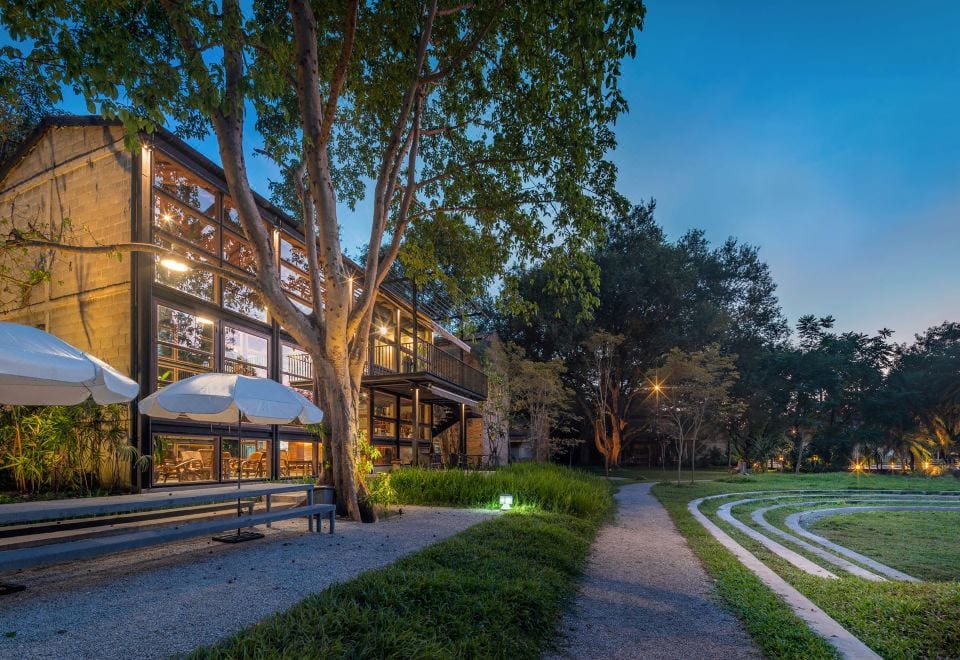
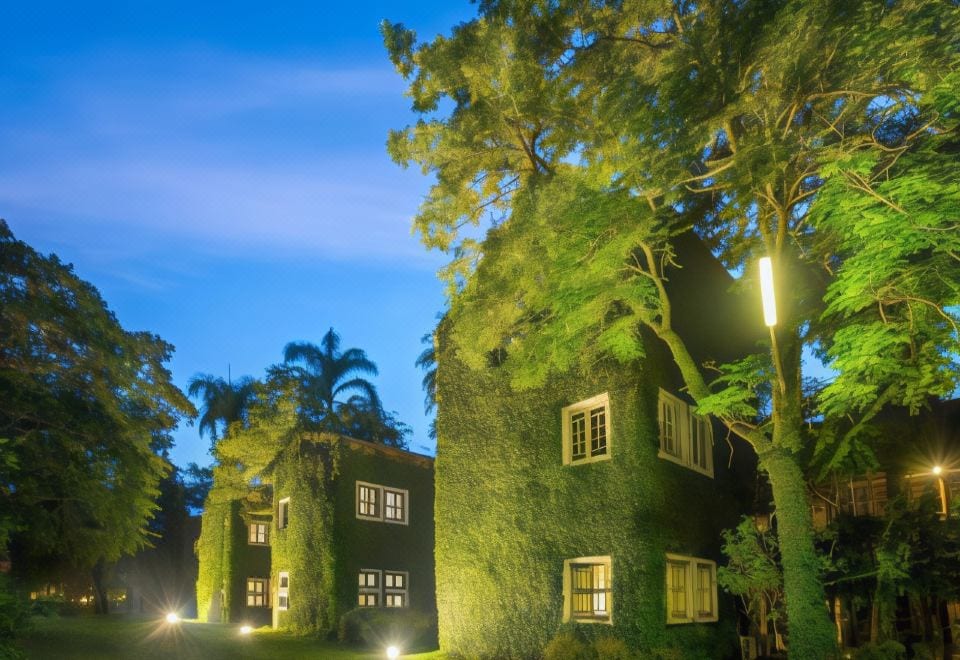
Picture low, squat brick-and-timber buildings that once cured tobacco leaves more than sixty years ago, standing in rows under big trees that have grown to cover the whole plot of land — Kaomai Lanna Resort takes those old barns and turns them into guest rooms, a cafe, and a restaurant, while keeping the sense of history in almost every brick · It sits on the Kaomai Estate 1955 grounds, winner of the UNESCO Asia-Pacific Awards 2018 for cultural heritage conservation · Prices start at around ฿1,500/night
The story here begins back in 1955, when this plot of land in San Pa Tong district was used as a tobacco-curing factory, with more than 50 timber and brick barns lined up among large trees planted for shade · When the tobacco industry declined, the later owners chose not to tear it down, but instead slowly restored and adapted it into accommodation, a cafe, and a museum under the project name Kaomai Estate 1955 · It is this commitment to preserving the original structures that earned the project the UNESCO Asia-Pacific Awards for Cultural Heritage Conservation in 2018 in the New Design in Heritage Contexts category — proof that this place doesn't just make things look 'old' but conserves the real thing
Who it suits: Kaomai Lanna Resort is a great fit for anyone who wants to escape the bustle of central Chiang Mai and stay close to nature, listening to birdsong and rustling leaves, with no real plan to go out every day · Plenty of real reviews agree this is a place to 'recharge' — for couples after some quiet, families who want the kids to run around the garden, or creative types looking for a photogenic spot and a mental break · But if you're into nightlife, want to wander a market every evening, or need the convenience of a city-center hotel — the out-of-town location may not be the answer
Location and getting there: The resort is in San Pa Tong district, to the southwest of central Chiang Mai · It's about 25–29 kilometers from the Old City, roughly a 40-minute drive (some real reviews say it can take up to 50 minutes in traffic) · From Chiang Mai Airport (CNX) it's likewise about 35–40 minutes · Something guests bring up often is that calling a taxi or Grab in and out each trip costs a fair bit (some reviews put it at around 400–500 baht per trip) · If you plan to head into the city often, renting a car and driving yourself is far more cost-effective and flexible
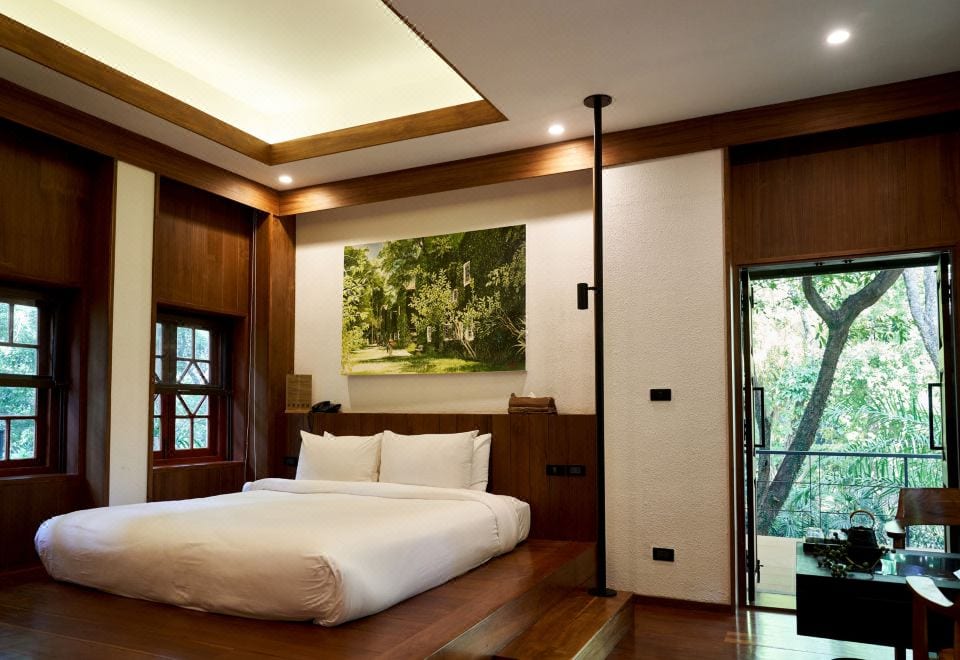
Rooms and decor: Most of the rooms are converted from the original tobacco-curing barns, so each one has its own distinct charm — some still keep the bare red brick walls and original timber framing on show · The design is a style many call Post-Lanna — contemporary Lanna mixed with dark-toned teak furniture, local woven textiles, and warm lighting that makes the rooms feel cozy in the evening · The Superior rooms at around 35 sqm and Deluxe at around 38 sqm are noticeably more spacious than rooms of the same class at city hotels · Real reviews praise the rooms as 'big and open,' with high ceilings, opening onto a balcony or terrace looking out over the trees, so you wake up to the smell of earth and leaves instead of the city · There are newer room types like the Kaomai Heritage and a two-story Duplex for anyone wanting a more special setting, or for families · The thing to make peace with is that, because these are old restored buildings, some rooms may show their age — like hot water that takes a little while to come through, or fittings that aren't brand new the way they would be at a freshly opened hotel — but that's the price you trade for sleeping in a genuinely historic building, not a new block made to look old
"I opened the door in the morning to nothing but the green of big trees that are probably as old as the barns, so quiet I could hear the leaves — like stepping out of the Chiang Mai I thought I knew."
Facilities, pool, and spa: The heart of this place is the garden of large trees that covers the whole property — many of the trees are about as old as the barns, so even at midday you can stroll comfortably in the shade · The outdoor pool sits amid the greenery; it's not big or fancy, but it's shady and quiet, better suited to soaking and relaxing or floating while you look up at the treetops than to doing laps · The spa here earns steady praise in real reviews, especially the Thai massage and herbal treatments that many people describe as 'so blissful' in a calm setting where you hear birds and leaves at the same time · There are also yoga classes at certain times in the outdoor area, which one review called one of the most beautiful yoga corners they'd ever come across, plus common areas with seating that's good for reading, sipping coffee, or working quietly on a day when you don't want to go anywhere
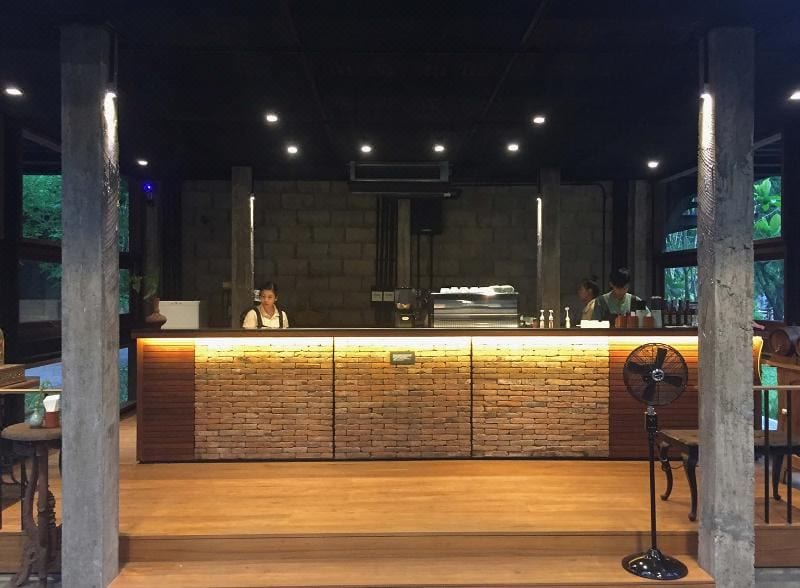
Food and cafe: The main restaurant is Po Liang Bistro, serving Thai and northern dishes built around local ingredients · The highlight that made Kaomai widely known is the Kaomai Tea Barn, a cafe and tea house converted from a pair of old twin barns, designed by PAVA architects into such a popular check-in spot that outside guests drop by to take photos and sip tea even without staying · Real reviews on the food are fairly mixed — many praise it as fresh with a nice atmosphere, but some say a few dishes are on the bland side, and because it's far from the city the choice of restaurants outside is limited, so you end up relying mainly on the resort's own dining · Another common observation is that the buffet breakfast isn't always served piping hot at some meals, and the selection may not be as varied as a big city hotel's · The advice from reviews is to order northern dishes and freshly cooked à la carte items rather than relying on the buffet alone, and to set aside time to sip tea or coffee at the Tea Barn as one of the day's activities, because the atmosphere of the old barn is part of a flavor you won't find elsewhere
Service: Overall, real reviews rate the service well · Staff are friendly, warm, and helpful with calling cars, arranging transfers, or recommending nearby places to visit · Because it's a smallish resort, staff can remember guests and look after them more attentively than a big, crowded hotel · The service feel is relaxed and not overly formal, which fits the character of a nature resort · There are a fair number of international travelers and groups coming for weddings or retreats; staff can communicate in basic English and often help coordinate activities or tours around the area · Many real reviews tell of the team smoothly handling weddings and small functions, from setting up the venue under the big trees to coordinating the food, a strength that makes this a popular Chiang Mai wedding venue · For a resort of around 32 rooms, the high staff-to-guest ratio keeps the care thorough and personal, and it's a big reason many guests accept the distant location — they feel genuinely looked after, worth the journey
More than a place to stay — a living museum: What sets Kaomai apart from a typical nature resort is that you don't just come to sleep; you get to walk through the history of the North's tobacco industry · On the same grounds there's a museum that tells the story of three generations of tobacco-curing barns, from ones made of clay mixed with straw, to brick, to concrete block · The restoration designed by PAVA architects chose to 'fix only what was necessary' rather than demolish and rebuild, so you can still see traces of smoke from curing the leaves on the walls, the original timber posts, and the barns' ventilation openings · Many real reviews say walking around to look at these details is an enjoyable, educational activity that feels like stepping back in time, well suited to anyone interested in architecture, design, and local stories
Exploring around and the rhythm of the day: Even though it's outside the city, there's plenty to drop in on around San Pa Tong — San Pa Tong Market for sampling northern food and buying fresh produce, Ob Khan National Park for those who like nature at full intensity, and driving routes up to the various mountains in southern Chiang Mai · But the real charm of staying at Kaomai is letting the day unfold slowly — waking up for coffee at the Tea Barn, strolling the garden in the soft morning light, coming back for a spa treatment in the afternoon, then taking a dip before dinner under the trees · The real reviews that sound the most moved are usually from people who 'weren't in a hurry' — who stayed two or three nights without planning much sightseeing, and found that this was exactly the kind of rest they'd really come for
Real reviews (the good and the not-so-good): On the praise side, what comes up most is the lush, beautiful garden of big trees, the peace and quiet, the one-of-a-kind architecture, and the spa · Slow Travel types and keen photographers seem especially taken with this place · On the flip side, beyond the distance from the city, some reviews mention the small things you'd expect from an old building in a garden, like the odd ant or insect getting into the room, the sound of crickets or small animals on the roof at night, and slow-draining plumbing in some bathrooms · These are reasonable observations for a genuine nature stay rather than serious flaws
Comparing price and value: With a starting price of around ฿1,500/night for a Superior room, rising to roughly ฿2,200–฿3,200 for a Deluxe or special room type in high season · It's very good value for a large room in award-winning heritage surroundings · Compared with a city-center boutique hotel at a similar price, Kaomai gives you space, quiet, trees, and a story you can't find in town · But you have to factor in the cost of getting around too — if you reckon on 800–1,000 baht a day for cars in and out of the city, over several nights that adds up to a fair amount, so it's best value for people who plan to spend their time mainly at the resort rather than heading into town every day · Put simply, the value here isn't measured by the room price alone, but by how much you value 'getting to be still with nature' — if that's you, this is one of the best-value stays in the area
Things to know before booking: One — plan your transport well; rent a car or arrange transfers with the resort in advance, because calling cars in and out often adds up · Two — if you're sensitive to insects or the sounds of nature at night, make peace beforehand that this is a genuine garden stay · Three — because the choice of restaurants outside is limited, plan your meals at the resort or bring some snacks · Four — even if you're not staying, you can drop by the Kaomai Tea Barn for tea and a walk around the old-barn museum · Five — during the cool season (Nov–Feb) the weather is just right and the garden is lush and lovely, so book ahead
Compared with other nature stays in Chiang Mai: If you're choosing between Kaomai and a nature resort around Hang Dong, Mae Rim, or Mae Taeng, what Kaomai has that no one else does is the 'story' — it's not a resort newly built to blend in with nature, but an old factory that nature has slowly reclaimed on its own · For people who love architecture and history, that difference matters a lot · But if what you're after is open mountain views or a clifftop infinity pool, a stay up in the mountains may answer that better · Kaomai plays on the feeling of being 'shady, quiet, and rooted in something' rather than the drama of a view — pick what matches what you really want from this trip and you won't be disappointed
The verdict: Kaomai Lanna Resort isn't a place for everyone, and it isn't trying to be · It's a place for people who understand what they came for — to be among big trees, to have quiet, and to feel the history of a tobacco barn brought back to life with taste · If you can accept the distance from the city and a nature that comes with small limitations, this place will reward you with an experience you won't get from a typical city-center hotel · Real reviews overall rate it good to very good, and people who 'come for the right reasons' tend to leave feeling they really did rest
Summary from Booking & Agoda
- ✓ Shady garden of big trees, a calm quiet setting perfect for resting
- ✓ Beautifully restored old tobacco-barn architecture, unlike anywhere else
- ✓ Spacious rooms with high ceilings that open onto nature
- ✓ Spa and massages earn high praise; the Tea Barn cafe is pretty and photogenic
- ! Far from central Chiang Mai, about 40 minutes, you always need a car
- ! Limited choice of restaurants outside, you rely on the resort's dining
- ! An old building in a garden, so there may be insects or nature sounds at night
- ✓ A genuine natural setting, great for recharging and Slow Travel
- ✓ Rooms converted from old barns, each with its own character
- ✓ Friendly, helpful staff
- ✓ Good value relative to the room size and the heritage of the place
- ! Plumbing or fittings in some rooms show the age of the old building
- ! A few dishes are on the bland side
- ! Travel costs in and out of the city add up as something to budget for
- 💡If you want to be out in the city every day, wandering a market every evening — the ~40-minute distance and accumulating car costs will eat into both your time and budget → consider a stay in town or the Nimman area instead
- 💡If you're sensitive to insects or animal sounds at night — this is a genuine garden stay; there may be ants, crickets, or nature sounds → a stay in a fully enclosed building would be more comfortable
- 💡If you expect a wide choice of food outside the property — the area around the resort is rural and outside restaurants are limited → plan to eat at the resort or rent a car to find places yourself