The Okura Prestige Bangkok — Japanese luxury on Wireless Road, a cantilevered infinity pool at floor 25, Michelin-starred Elements and Yamazato kaiseki
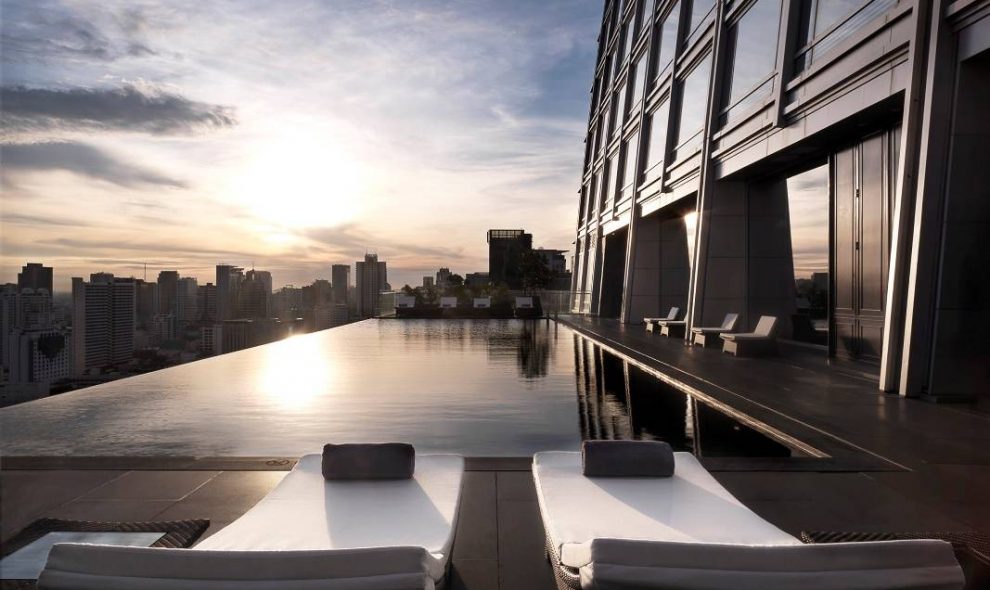
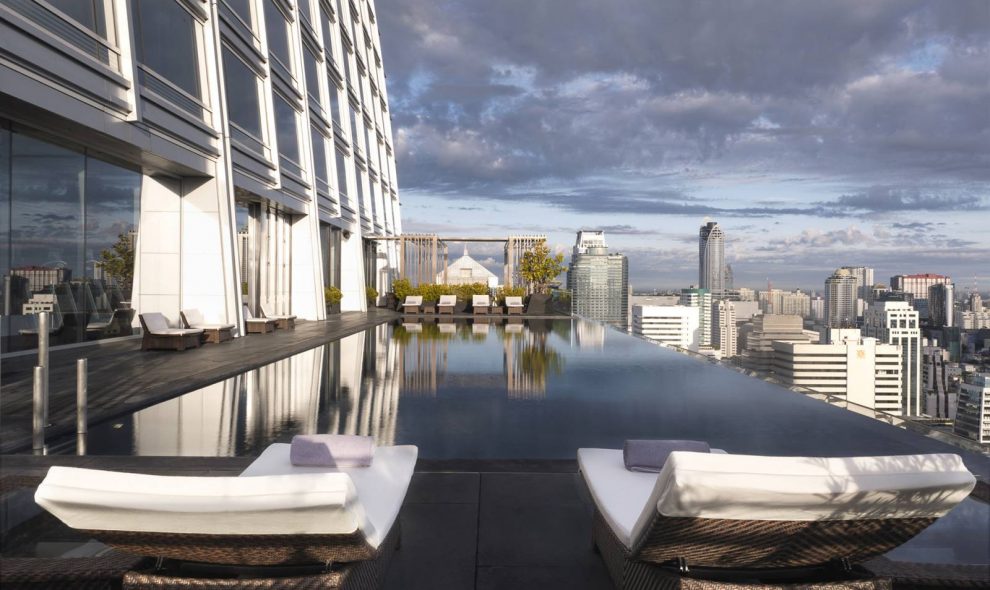
The Okura Prestige Bangkok is one of the quietest and most refined 5-star hotels in Bangkok's central business district — positioned at Park Ventures Ecoplex, 57 Wireless Road, Lumpini, within a 2-minute walk of Central Embassy and connected to BTS Phloen Chit via a covered walkway. The hotel opened in May 2012 under Okura Hotels & Resorts, Japan's most storied luxury hospitality brand, and its identity has remained consistent: understated Japanese precision in the middle of a restless city. The 240 rooms and suites occupy floors 26 to 34, every one fitted with triple-glazed panoramic windows that shut out Bangkok's heat and noise while framing the skyline in full. The signature attraction is the 25-metre heated infinity pool cantilevered out from the north face of the building on floor 25 — widely cited in guest reviews as one of the most memorable pool experiences in the city. Dining is headlined by Elements (inspired by Ciel Bleu, Amsterdam), which has held a Michelin 1-star for eight consecutive years, and Yamazato, a kaiseki room recognised in the Michelin Guide annually. The hotel's overall score sits at 9.2 out of 10, and standard rooms start from approx. THB 6,900/night outside the high season. The property also holds 2 Michelin Keys in the MICHELIN Guide Hotels selection.

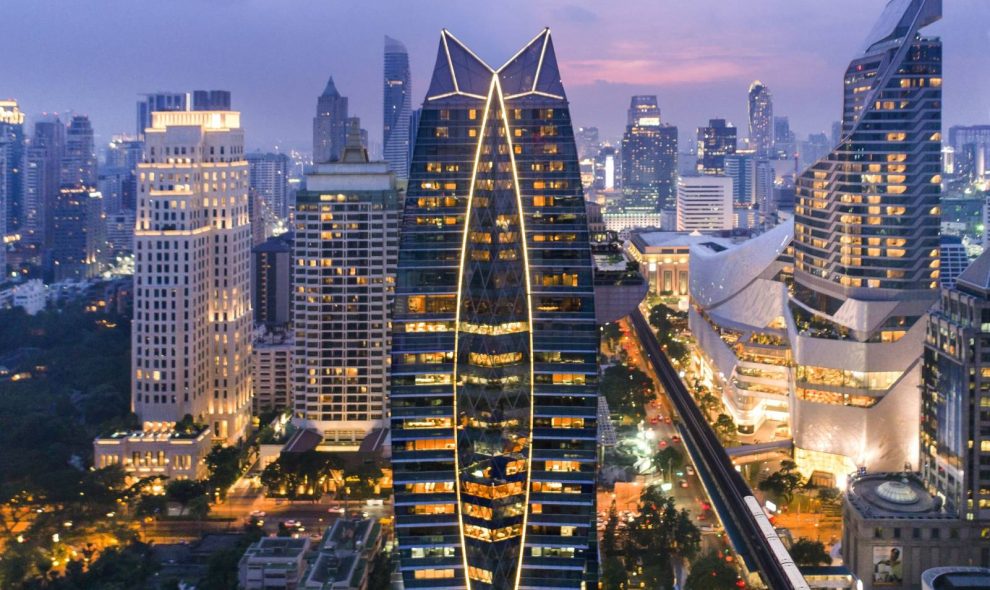
When Okura Hotels & Resorts chose Bangkok for its first Southeast Asian property, the address it selected — a corner of Wireless Road at the Phloen Chit intersection, directly above a major BTS station — was no accident. The neighbourhood is home to foreign embassies, multinational headquarters and the Central Embassy shopping complex, making it a natural counterpart to the brand's Tokyo roots: professional, unhurried and a little separate from the louder parts of the city. The building, Park Ventures Ecoplex, was purpose-built as an integrated tower; the hotel occupies floors 25 through 34, while the lower floors are given over to Grade-A offices and the retail podium. The practical effect is that every room in the hotel is genuinely high up, with no low-floor rooms that trade views for proximity to the street.
The 240 rooms are divided into Deluxe Rooms (around 43 sqm), Okura Club Rooms, Premier Club Rooms and a tier of suites culminating in the Prestige Suite at approximately 97 sqm. All rooms share the same design grammar: triple-glazed floor-to-ceiling windows, a Japanese cotton yukata in place of a hotel bathrobe, an in-room tea ceremony set, a deep soaking bath and rain shower in a separate bathroom, Aromatherapy Associates toiletries and twice-daily turndown service — the evening version includes hand-folded origami left on the pillow. Club tier rooms add access to the Club Lounge on floor 33, which seats 32 guests and provides complimentary breakfast, afternoon tea and evening cocktails. Reviews consistently note the room's sound insulation as better than expected: the triple glazing largely erases the sound of Wireless Road below.
"The pool is the reason I keep coming back. Floating there at sunset, looking out over Lumpini Park and Central Embassy from the 25th floor, the city goes quiet in a way that feels impossible. Nowhere else in Bangkok does that."
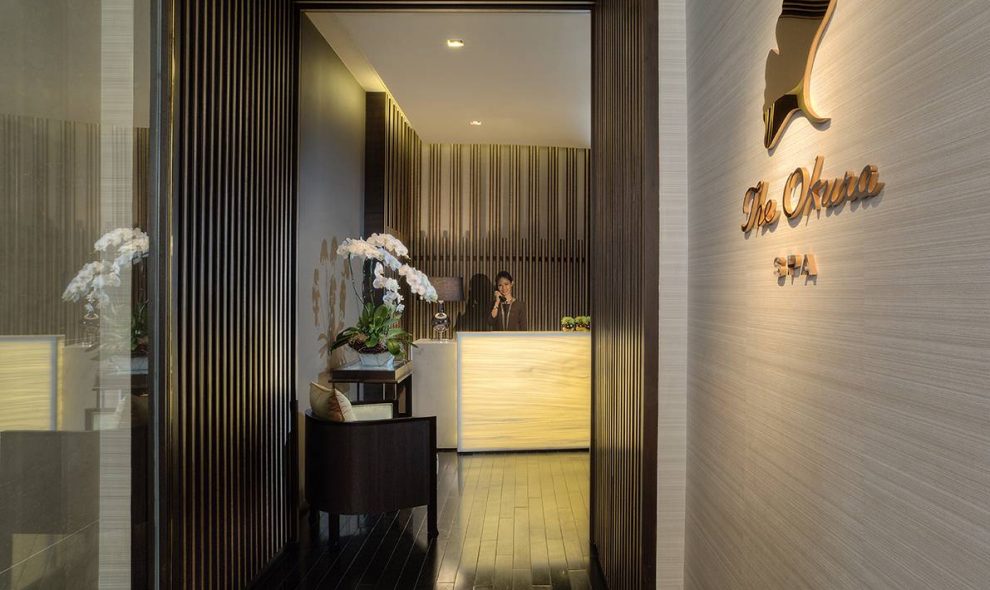
The facility guests mention most is the 25-metre heated infinity pool on floor 25. It is engineered as a cantilevered structure projecting from the north face of the building — meaning the water appears to spill out over the city rather than simply ending at a wall. Heat for the pool comes from a recycled thermal system. The pool is open 06:00–22:00 daily. Adjacent are the fitness centre and The Okura Spa, with five private treatment rooms offering traditional Thai massage, body therapies and signature Japanese-influenced treatments. Guest reviews consistently single out the combination of pool, fitness centre and spa as unusually calm for a city hotel — a function of the floor's physical height above Bangkok's street-level noise as much as the design.
The dining programme is where The Okura Prestige Bangkok makes the sharpest claim on attention. Elements (floor 25), inspired by two-Michelin-starred Ciel Bleu in Amsterdam, offers French fine dining shaped by Japanese ingredient sensibility and seasonal menus. It has held a Michelin 1-star every year since the inaugural Thailand Michelin Guide in 2018 — a record that places it in a very short list of Bangkok restaurants with unbroken recognition. Yamazato (floor 24) provides the kaiseki counterpoint: a formal Japanese menu using seasonal ingredients, with some flown direct from Tokyo's Toyosu fish market. Up & Above (floor 24) handles all-day dining and is the venue for breakfast — an international buffet that earns consistently high marks in reviews. A small monthly event, the Afternoon Tea Omakase (third-weekend Fridays through Sundays), pairs inventively plated savouries with sake and spirits in an intimate chef-presented format. La Pâtisserie in the lobby rounds out the food offering with French-Japanese pastries.
The hotel's position on Wireless Road puts it within comfortable reach of several distinct parts of the city. The covered walkway to BTS Phloen Chit (approximately 3–5 minutes on foot, fully under shelter) is the primary transit link — from there, BTS Chit Lom is one stop, Siam is two stops and Asok is three. Central Embassy is a 2-minute walk; Lumphini Park and Benchakitti Park are directly across Wireless Road. The neighbourhood's relative quiet compared with Ratchaprasong or Sukhumvit is a deliberate draw for the hotel's core audience: executives on extended visits, couples seeking a calm base, and travellers who prefer to arrive at their room without the sensory overload of a busier intersection. Cultural sites — the Grand Palace, Wat Pho, Wat Phra Kaew — require a taxi or BTS ride and a comfortable walk, so this is not the optimal base for temple-heavy itineraries.
Some honest context from real guest feedback: a handful of reviews describe the hotel's aesthetic as so thoroughly Japanese that it can feel lacking in "Thai character" — a reasonable observation, though others cite exactly this as a strength. The Club Lounge seats only 32 guests; during high season or when the hotel is at full occupancy, it can feel tighter than the room rate implies. Prices in peak season (November through February) rise sharply — Deluxe Rooms can reach THB 10,000–12,000/night and suites considerably more. A small number of reviews mention faint street noise in lower-floor rooms on certain orientations, though the triple glazing generally holds.
Deluxe Rooms start from approx. THB 6,900–8,300/night outside the high season. Okura Club Rooms start around THB 9,500 — when breakfast, afternoon tea and evening cocktails at the Club Lounge are factored in, the effective premium over a base room narrows meaningfully. Prestige Suites begin around THB 18,000. Relative to Bangkok's 5-star field, The Okura Prestige Bangkok sits in the upper-middle tier by headline rate but differentiates with assets that have no direct equivalent nearby: a Michelin-starred restaurant in the building, a genuinely unusual pool design and a service philosophy that multiple reviewers describe as producing the most effortless luxury stay they have had in Bangkok. For guests whose priority is precisely that combination — high craft, low theatre — the case for this hotel makes itself.
Summary from Booking & Agoda
- ✓ Japanese omotenashi service that anticipates preferences before being asked — staff remember names, requests are handled quietly and without fuss
- ✓ Unusually quiet rooms for a city-centre hotel: triple-glazed windows effectively eliminate the noise of Wireless Road below
- ✓ The cantilevered infinity pool on floor 25 and the Up & Above breakfast buffet both earn consistent top marks in reviews
- ✓ Covered walkway to BTS Phloen Chit (3–5 min); Central Embassy 2-minute walk — excellent logistics for business or leisure
- ! The hotel's Japanese aesthetic is strong and thorough — some guests find it lacks a distinctly Thai character
- ! Club Lounge (floor 33) seats only 32 guests; during peak season it can feel crowded relative to the room rate
- ! Heritage temples and traditional Bangkok sightseeing require a taxi or BTS journey — not ideal as a cultural-sightseeing base
- ✓ The cantilevered infinity pool at floor 25 is the most cited highlight in guest reviews — particularly at sunset, when the city light and the pool reflections combine to stunning effect
- ✓ Michelin-starred Elements and kaiseki Yamazato mean world-class dining without leaving the building
- ✓ Every room is high-floor with panoramic views; the minimalist Japanese design and genuine sound insulation make for a restorative stay
- ✓ Prime business-district location: Central Embassy 2 min, Lumpini Park across the road, BTS Phloen Chit via covered link
- ! Rates in high season (November–February) climb steeply; peak-period pricing puts the Deluxe Room at a significant premium over comparable Bangkok options
- ! Elements and Yamazato are destination dining at destination prices — better suited to special occasions than everyday meals during a longer stay
- ! A small number of reviews report faint traffic noise from Wireless Road in lower or street-facing rooms, despite the triple glazing
- 💡If absolute quiet is your priority — request a high-floor room (floor 30 or above) away from the Wireless Road face. Most reviews confirm the triple glazing handles city noise very well, but for light sleepers a room-orientation note at booking costs nothing and removes the variable entirely.
- 💡If you want to eat at Elements or Yamazato — book a table before you travel. Both restaurants have limited covers and fill quickly, especially Friday through Sunday and throughout November to February. Elements should be booked two to three days ahead; Yamazato usually a day ahead is sufficient outside peak season.
- 💡If nightly rate is the deciding factor among 5-star options in this corridor — InterContinental Bangkok is on the same Wireless Road stretch and typically starts lower; Grand Hyatt Erawan Bangkok (one BTS stop, BTS Chit Lom) has the iconic i.sawan Spa complex and the Ratchaprasong skywalk network. Neither has an on-site Michelin-starred kitchen or a cantilevered pool, but both are worth comparing before you commit.