Thailandaddict
Home › Thailand › Roi Et › Roi Et & Maha Sarakham Following Jasmine Rice and Isan Culture in 2 Days, 1 Night
🌾 Cross-Province Plan

Roi Et & Maha Sarakham
Following Jasmine Rice and Isan Culture in 2 Days, 1 Night

Roi Et and Maha Sarakham are next-door neighbours, with their two town centres only about 35–40 km apart. Highway 23 (Chaeng Sanit Road) runs almost dead straight between them, so the drive takes under an hour. This trip ties the two towns into one thread, and the storyline is the jasmine rice of Thung Kula Ronghai — the huge stretch of paddies that spreads across both provinces and produces fragrant rice with its own GI registration. Day one stays on the Roi Et side: ride up Roi Et Tower for a view over town, stroll Bueng Phlan Chai, then head down to Ku Ka Sing and the edge of Thung Kula Ronghai in Kaset Wisai. Day two crosses into Maha Sarakham to pay respects at the Dvaravati-style Phra That Na Dun, walk an old Khmer ruin, and finish with fragrant rice and silk to take home. Here's the plan with the times and distances already worked out, so you don't have to map it yourself.

🌾 Thung Kula Ronghai jasmine rice🗼 Roi Et Tower + Bueng Phlan Chai🛕 Khmer ruins + Phra That Na Dun
Roi Et & Maha Sarakham Following Jasmine Rice and Isan Culture in 2 Days, 1 Night

🔄 Updated 21 Jun 2026

This route suits anyone with a car, because the sights are scattered across the outer districts. On the Roi Et side the highlights sit in different directions: the tower and Bueng Phlan Chai are downtown and easy to walk between, while Ku Ka Sing and the edge of Thung Kula Ronghai are down south in Kaset Wisai district. On the Maha Sarakham side, Phra That Na Dun and Ku Santarat are out in Na Dun district. Roi Et to Maha Sarakham is about 35–40 km along Highway 23, roughly 40 minutes to an hour. So we've set things up to stay one night in Roi Et town, soak up the best of Roi Et on day one, then cross over to Maha Sarakham on day two before heading home.

Trip overview and getting around

  • Length — 2 days, 1 night is just about right: easy-going, no need to rush. If you want to fit in every stop, stretch it to 3 days, 2 nights.
  • Transport — Your own car is by far the easiest, since spots like Ku Ka Sing and Phra That Na Dun are out in the rural districts. Without a car, buses and vans run the Khon Kaen–Maha Sarakham–Roi Et line between towns, but around town and in the outer districts you'll need to grab a motorbike taxi or arrange a ride.
  • Main route — Roi Et to Maha Sarakham runs along Highway 23 (Chaeng Sanit Road), a straight shot on a good road.
  • Roi Et → Maha Sarakham — About 35–40 km, roughly 40 minutes to 1 hour by car.
  • Admission — Most stupas, temples and Khmer ruins are free. The upper viewing deck of Roi Et Tower runs about 50 THB, and Ku Santarat charges a small entry fee in the tens of baht.

Why build the whole trip around jasmine rice? Because Thung Kula Ronghai is a vast plain of more than two million rai that overlaps five provinces, including Roi Et and Maha Sarakham. The salty, dry soil here actually gives Khao Dawk Mali 105 rice an unusually strong fragrance, which earned it Geographical Indication (GI) status back in 2007. Drive across the plain late in the rainy season and the paddies are green as far as the eye can see; come November they turn golden as the rice ripens. It's an Isan view that looks plain but stays with you.

Day 1

Roi Et — the view tower, the lake in the middle of town, and Thung Kula Ronghai

08:30
Bueng Phlan Chai (Somdet Phra Si Nakharin Park) — a stroll along the lake in the centre of townA big lake right in the middle of Roi Et town, with an island in the centre, walking paths, pedal boats and flower gardens. Mornings are cool and pleasant — easy to wander and take photos. Free to enter, a relaxed way to start the day before tackling the other stops.
09:30
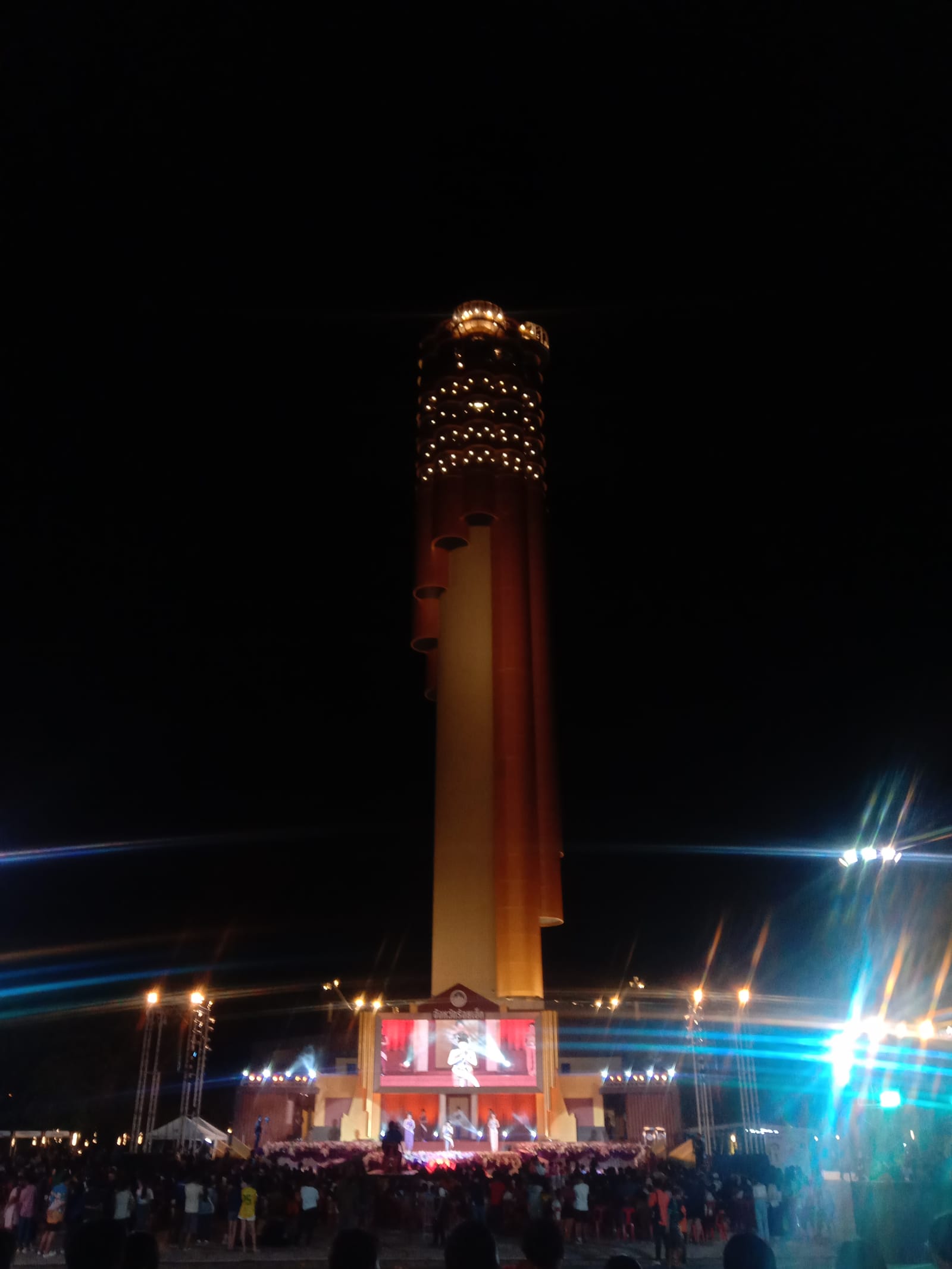
Roi Et Tower — an observation tower more than 101 metres tallIt stands in Somdet Phra Si Nakharin Park right beside Bueng Phlan Chai. The name "Wot" comes from a traditional Isan musical instrument. The lower levels are free; the upper viewing deck costs around 50 THB. From the top you can see Roi Et town and the lake on every side, plus a glass-floor skywalk and a zipline for anyone who likes a thrill.
11:00
Wat Burapha Phiram — pay respects at the tall standing Buddha, Phra Phuttha Rattana Mongkhon Maha MuniThis towering standing Buddha is a Roi Et landmark, not far from Bueng Phlan Chai. Easy to drop by after the tower. Free to enter.
12:00
Lunch in town — an Isan place by Bueng Phlan ChaiThere are several Isan restaurants around the lake. Try som tam with pla ra, larb and grilled chicken alongside hot jasmine rice — the real thing in the region where it's grown. Fuel up before heading down to Thung Kula Ronghai in the afternoon.
13:30
Drive down to Kaset Wisai district, into the edge of Thung Kula RonghaiAbout 60 km south of Roi Et town, past long stretches of paddy. Late in the rainy season the fields are green; in November the rice ripens into a golden plain. It's an Isan view worth pulling over for along the way.
15:00
Ku Ka Sing, Kaset Wisai district — a sandstone Khmer sanctuary in the middle of Thung Kula RonghaiA Khmer sanctuary in Baphuon style, with three prangs lined up on a single base facing east, in fairly complete condition. It sits in the Ban Ku Ka Sing community, which still weaves silk and grows jasmine rice. Free to enter and easy to walk around for photos.
16:30
Wander the Ban Ku Ka Sing community and see life on the Kula plainThis community trains young local guides and runs homestays, with silk-weaving groups and smaller ruins like Ku Phon Rakhang dotted nearby. If you're into history and silk, stop and chat with the villagers.
17:30
Drive back into Roi Et town and check inMost Roi Et accommodation is around Bueng Phlan Chai and the town centre. Drop your bags and rest up before heading out for dinner.
18:30
Dinner by Bueng Phlan ChaiIn the evening Bueng Phlan Chai has fountains and a lively walking crowd. Around the lake you'll find Isan restaurants and cafes with a view of the lit-up tower. Try tom saep, larb and som tam for a proper Isan dinner.

Day one tips

If you can set out early, knock out the in-town spots (Bueng Phlan Chai, the tower, Wat Burapha Phiram) from morning to midday, then head down to Kaset Wisai in the afternoon, because the softer afternoon light makes the paddies and Ku Ka Sing photograph beautifully — and you'll roll back into town right around evening. If you'd rather not drive far, you can drop Ku Ka Sing and just take Roi Et town slowly all day; save it for next time.

🎟️

Book the activities in your Roi Et trip ahead

Booking online ahead on Klook or GetYourGuide is usually cheaper than the gate and skips the queue. Pick only the experiences you actually want — prices and availability are shown live on each site.

🎟️ See all Roi Et tours & activities (Klook)

Isan dishes worth trying across both towns

Both Roi Et and Maha Sarakham are pure Isan, so the food revolves around som tam, larb, grilled chicken, sticky rice and pla ra. What makes it special here is eating jasmine rice in the region where it's actually grown. These are the dishes we'd want you to try on the trip, ordered roughly by how easy they are to find and how much the locals genuinely eat them.

1

Som tam pla ra + sticky rice

Every meal · from ฿20–60

The heart of an Isan meal — pounded fresh in the mortar with fragrant pla ra and eaten with hot sticky rice. You'll find it at every market and roadside stall. In Roi Et, the som tam spots around Bueng Phlan Chai give you plenty to choose from.

Pure IsanMust try
2

Thung Kula Ronghai jasmine rice

Food + souvenir

Not a single dish but the rice that comes with every meal. The GI jasmine rice from the Kula plain has a standout fragrance, and eating it with larb or som tam is noticeably different from ordinary rice. You can buy it to take home, too.

GISouvenir
3

Larb / koi, beef or pork

Lunch–dinner · from ฿50–80

Boldly seasoned larb tossed with toasted rice and herbs, eaten with fresh vegetables and sticky rice — a dish Isan locals order all the time. Both towns have plenty of larb places to pick from.

Pure Isan
4

Grilled chicken / grilled pork neck

Every meal · from ฿60–120

Chicken marinated and grilled until fragrant, eaten with jaew dipping sauce and sticky rice — the inseparable partner to som tam. Roadside stalls around the Kula plain grill it fresh all day.

Pure IsanGrilled
5

Tom saep / offal soup

Dinner · from ฿80–150

A hot, sour-spicy soup with offal or soft bone, fragrant with kaffir lime leaf and lemongrass. It's a popular dinner around Bueng Phlan Chai — perfect slurped hot in the evening.

Dinner
6

Lakeside Isan fusion

Dinner · settle in

Newer spots in Roi Et like Tara by Bueng Phlan Chai and craft-leaning places like Hed reworking Isan ingredients to be more approachable while keeping the regional flavour. Good for a long, relaxed meal in a nice setting.

Good vibeLakeside
7

Lakeside cafes & homemade sweets

Afternoon snack

In the afternoon, drop into a cafe by Bueng Phlan Chai with a view of the tower — everything from bare-concrete spots to garden-style ones. A drink and a slice of cake are enough to shake off the drowsiness before carrying on.

CafeBreak
8

Khanom jeen nam ya & Maha Sarakham local food

Breakfast · from ฿35–60

On the Maha Sarakham side there are morning markets and local spots around the university. Try khanom jeen nam ya and an Isan-style breakfast before heading down to Na Dun — filling and cheap.

Maha SarakhamBreakfast
Day 2

Maha Sarakham — a thousand-year stupa and a Khmer ruin in Na Dun

08:00
Check out and drive over to Maha Sarakham along Chaeng Sanit RoadFrom Roi Et, take Highway 23 into Maha Sarakham town, about 35–40 km, 40 minutes to an hour. Grab breakfast or a coffee for the road on the way.
09:00
Pass through Maha Sarakham town and head for Na Dun districtNa Dun is about 60–65 km south of Maha Sarakham town, roughly an hour's drive. The route passes paddies in stretches.
10:30
Phra That Na Dun, Na Dun district — a round Dvaravati-style stupa at the heart of the Isan Buddha precinctRelics of the Buddha and many Dvaravati artefacts were once unearthed here. The grounds around the stupa are shaded, with a religious museum, an arboretum and a herb garden to walk through. Free to enter.
11:45
Ku Santarat, Na Dun district — a sandstone Khmer sanctuary from the reign of Jayavarman VIIBuilt as an arogayasala (an ancient community hospital) along the route of Khmer civilisation. The ruin is small but complete, with an entry fee in the tens of baht. It pairs with the Ku Ka Sing you saw yesterday, continuing the Khmer storyline nicely.
12:30
Lunch — an Isan place around Na Dun or on the way back to townTry som tam, larb, grilled chicken and sticky rice at local spots, with dishes from the tens of baht to the low hundreds. Filling and easy on the wallet.
14:00
Stop for jasmine rice and silk souvenirs before heading homeClose the trip with on-theme souvenirs — GI jasmine rice from Thung Kula Ronghai, Isan silk, mu yo and Isan sausage. You can find them on the Maha Sarakham side and again passing through Roi Et.
15:00
Optional — drop into Maha Sarakham town before heading backIf you've still got energy, visit a temple in town or a cafe around Maha Sarakham University. The area has plenty of cheap student-priced spots before you hit the road home.

Day two tips

Phra That Na Dun and Ku Santarat are in Na Dun district, south of Maha Sarakham town — not in the town itself. Allow about an hour each way for the drive down and back. If you leave Roi Et a bit early, you can take Na Dun at an easy pace and still get back before dark. If you start late, you might do just Phra That Na Dun and focus on souvenirs and the town instead.

What to know about going up Roi Et Tower

Roi Et Tower is a downtown landmark that many people come for to take in the view from up high. It stands in Somdet Phra Si Nakharin Park right beside Bueng Phlan Chai, so you can walk straight over from the lake. A few things are worth knowing beforehand to make planning your time easier.

  • Lower levels free, upper deck paid — The upper viewing deck costs around 50 THB; the lower levels are free to walk around.
  • There's a glass-floor skywalk — If heights make you nervous, walk slowly and hold the rail. The view takes in Bueng Phlan Chai and the town all around.
  • The zipline runs in sessions — For thrill-seekers, it opens in morning and afternoon slots; check the times on site first.
  • Go in the evening for the best view — Softer sun and the town as the lights come on. But following this plan you go in the morning, which still leaves you the whole day for the other stops.

Where to stay during this trip

Recommended

Stay in Roi Et town

The main choice for this plan. Most Roi Et accommodation is around Bueng Phlan Chai and the town centre. Wake up, walk the lake, go up the tower, then branch off to Ku Ka Sing or cross over to Maha Sarakham with ease.

Alternative

Stay in Maha Sarakham town

Good if you want to flip the order and start with Maha Sarakham. There are places to stay around the university and in town, though slightly fewer options than Roi Et. Better as the night before the trip than a mid-route overnight.

For this plan we'd suggest staying mainly on the Roi Et side, since day one spends most of its time in Roi Et town and down in Kaset Wisai — that way you avoid backtracking. Both towns have everything from small guesthouses to mid-sized hotels. You can see a ranked list of Roi Et stays on our roundup page.

Tweak the plan to your style

1

Jasmine rice & Kula plain life

Focus on paddies & souvenirs

Give day one to Kaset Wisai — walk Thung Kula Ronghai, Ku Ka Sing and the silk-weaving community, and buy GI jasmine rice straight from where it's grown. On day two take Na Dun lightly, leaning into farm life and on-theme souvenirs.

Jasmine riceCommunity
2

History & archaeology

Focus on Khmer ruins & stupa

Tie the two Khmer ruins together. Day one is Ku Ka Sing in Kaset Wisai; day two is Ku Santarat and Phra That Na Dun in Na Dun. Both ruins were built around the same era, so the Khmer–Dvaravati storyline carries through the whole trip.

HistoryArchaeology
3

Relaxed — cafes & food

Focus on food & lounging

Trim the sightseeing. Bueng Phlan Chai and the tower are enough; sit at a lakeside cafe and eat Isan fusion. Day two, just hit Phra That Na Dun and shop for jasmine rice on the way home. More eating, drinking and photos than running around.

CafeFood

Want a ranked list of Roi Et stays before you set out?

See Top 10 Roi Et stays →

FAQ

How far apart are Roi Et and Maha Sarakham? Is it a long drive?

The two town centres are only about 35–40 km apart along Highway 23 (Chaeng Sanit Road), a straight shot on a good road, roughly 40 minutes to 1 hour by car. That's very close — easy to combine into a 2-day, 1-night trip.

Why build this trip around jasmine rice?

Because Thung Kula Ronghai — the huge plain of more than two million rai that produces GI jasmine rice — overlaps both Roi Et and Maha Sarakham. Touring the two provinces lets you see the paddies where it grows, the communities that farm and weave silk, eat the fragrant rice in its home region, and buy it as an on-theme souvenir.

Do you need your own car for this trip?

A car is much more convenient, since spots like Ku Ka Sing in Kaset Wisai, and Phra That Na Dun and Ku Santarat in Na Dun, are out in the rural districts far from the town centres. Without a car, buses and vans run the Khon Kaen–Maha Sarakham–Roi Et line between towns, but within each town and the outer districts you'll need to grab a motorbike taxi or arrange a ride.

Which province should you stay overnight in?

We'd suggest staying in Roi Et town, since day one spends most of its time in Roi Et and down in Kaset Wisai. Most accommodation is around Bueng Phlan Chai and the town centre. Cross over to Maha Sarakham on day two, so you avoid backtracking.

How do Ku Ka Sing and Ku Santarat differ? Is it worth seeing both?

Both are sandstone Khmer sanctuaries, but Ku Ka Sing (Kaset Wisai, Roi Et) is in Baphuon style with three prangs in a row, while Ku Santarat (Na Dun, Maha Sarakham) is an arogayasala from the reign of Jayavarman VII. If you like Khmer history, both are worth it — they're in different provinces, but this trip passes both anyway.

What's the best time of year for this trip?

You can go year-round, but late rainy season into early cool season, roughly October to February, is the most comfortable — walking the open stupa grounds and going up the tower without the heat. To see Thung Kula Ronghai golden as the rice ripens, come around November; late in the rainy season the paddies are green as far as the eye can see.

Copyright & Image Takedown Policy

Thailandaddict is created to review and share travel experiences. Where an image is sourced from elsewhere, we credit the source. If you are the copyright owner and prefer that your image not appear on this site, please contact us and we will gladly remove the image or correct the information.

Display


Saved Near me
ไทย English

Search

View my trip →