🔄 Updated 21 Jun 2026
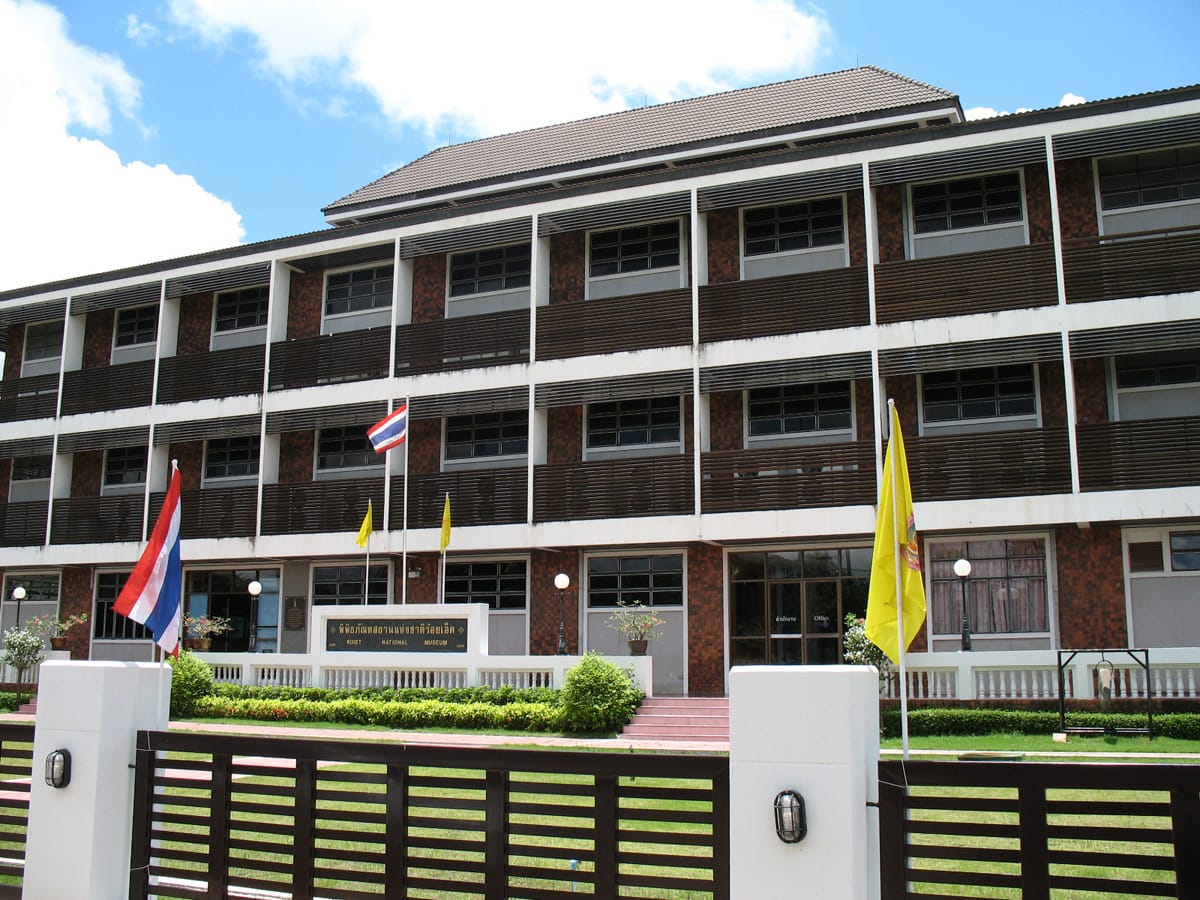
Provincial museums in Thailand are often quiet places that people walk straight past, but Roi Et's is more worth a stop than you'd expect, because it was built from the start as a museum of Isan arts and crafts, with a special focus on silk and local textiles. Walk all three floors and you get the full picture of how people here have lived, from before there was a written language right up to the weaving that's still done every day.
Floor by floor, what's there to see
The building is split into three floors, ordered from the physical landscape of the province, through its history, and finishing with daily life and craft. Walking up in order is the smoothest way to do it.
- Floor 1 — getting to know the province geography, geology, and why Roi Et is such a wide, flat plain, plus the town's history and the roll of past governors and rulers. It's the groundwork floor before you head up to the real artefacts.
- Floor 2 — archaeology and history running from prehistory through the Dvaravati and Khmer periods to the Rattanakosin era, with standout pieces like the inscription of Prince Chitrasena (around the 12th Buddhist century) and votive tablets from Tambon Phrai, plus folk art.
- Floor 3 — daily life and woven textiles the room many people come specifically to see. It displays local customs, the Heet Sip Song and Khong Sip See traditions, and the silk and folk weaving of the Roi Et people. This is the heart of the museum.
How to make the visit count
If you're short on time, go straight up to floors 2 and 3 first, then catch floor 1 on your way back down, because the upper floors hold the things that are harder to see elsewhere. A quick read of the labels on floor 1 is enough to get the overall picture.
Want more out of Roi Et? Book tours & activities
Booking online ahead on Klook or GetYourGuide is usually cheaper than the gate and skips the queue. Pick only the experiences you actually want — prices and availability are shown live on each site.
The highlight you shouldn't skip — the Saket silk room
If you had to pick one room that's worth the ticket, it's the textile room, because Roi Et has a signature provincial cloth called Saket silk, and the story behind it is worth hearing — it's not just another pretty piece of fabric.
Saket silk comes from taking five local mat-mi (ikat) patterns that Roi Et weavers favour and weaving them together in a single length: Khom Jet, Nak Noi, Khong Ia, Mak Jap, and Kham Phao. Each pattern is separated by a plain band in the colour of the inthanin bok flower (a pinkish-purple), the province's official flower. The idea is to fuse the many patterns of many communities into one cloth, a symbol of the unity of the people here. The province declared it Roi Et's signature textile on 13 September 2001.
- Khom Jet — the core mat-mi pattern of the cloth
- Nak Noi — a naga (serpent) pattern common in Isan textiles
- Khong Ia — an old pattern specific to the area
- Mak Jap — a tight, geometric pattern
- Kham Phao — the pattern that rounds out the Saket set
How to enjoy the textiles more
Before you look at the actual cloth, fix the inthanin bok colour in your mind, then look for the pinkish-purple bands separating each pattern. You'll see how a single length tells the story of several communities woven together. Once you understand where it comes from, you'll spot Saket silk instantly when you pass it in the souvenir shops in town.
Opening hours, entry fee, and what to know before you go
- Open days — Wednesday to Sunday. Closed Monday and Tuesday, and on some public holidays.
- Hours — 9:00 AM to 4:00 PM. Aim to arrive at least an hour before closing.
- Entry fee — under 100 THB for Thai visitors, a little more for foreigners. Students in uniform, monks, and novices enter free (rates may change, so check on site).
- Location — Phloen Chit Road, within Roi Et municipality, near Bueng Phlan Chai and the town centre.
- Time needed — about 45 minutes to an hour to walk all three floors at an unhurried pace.
Check before you set off
The museum is closed Monday and Tuesday, which people often forget. If you're planning to visit Roi Et early in the week, swap this in for Wednesday onward, or call the museum first on 043-514456, since opening hours can shift over long holiday weekends.
Where to go next from the museum
The good thing about this place is that it's right in the centre of town, so a few minutes on foot or by car gets you to the next stop easily. It works well as the first stop of the day, before you spread out to the rest.
Bueng Phlan Chai
A public park set around a lake in the middle of town, with an island in the water and the city pillar shrine. Good for a stroll and photos, and very close to the museum.
LandmarkPhra Maha Chedi Chai Mongkhon
A huge white-and-gold pagoda that's the province's landmark, out of town in Nong Phok district — a good half-day add-on.
Temple visitWat Burapha Phiram (Luang Pho Yai)
A giant standing Buddha in the blessing pose in the centre of town, tall enough to see from afar. Stop by to pay respects.
Want a full one-day plan for in-town Roi Et?
See the Roi Et 1-day plan →