🔄 Updated 21 Jun 2026
Sakon Nakhon is known as Thailand's indigo capital, and it's one of the craft towns people across the country associate with indigo-dyed cloth. What makes it special isn't just the patterns — it's how the colour is made. Sakon indigo gets its blue from the indigo plant fermented in a vat using an all-natural method, with no synthetic dye. Many communities here grow the indigo, ferment it, dye it and weave it themselves from start to finish. So when you visit, you don't just see cloth on a shelf — you see the whole process and get to talk to the people actually doing the work.
Why indigo cloth is Sakon Nakhon's signature
Indigo is local knowledge that has been part of Sakon life for a long time, especially among the Phu Tai people who have dyed indigo cloth for everyday wear for as long as anyone can remember. They used to dye it almost black for durability and field work. As the craft scene and sustainable fashion took off, Sakon indigo was developed into new shades and patterns, until several brands started getting orders from overseas, Japan included, and Sakon Nakhon earned its title as a World Craft City for Natural Indigo. What sets Sakon indigo apart is that the colour is fully natural — it wears cool and breathes well, and there's research pointing to the cloth's UV-blocking and antibacterial properties too.
- Fully natural colour — from indigo plants fermented in a vat, not chemical dye, with a deep blue that has its own depth
- Made end to end in the community — many villages grow, ferment, dye and weave it all themselves into finished cloth
- Genuinely comfortable — hand-woven cotton dyed with indigo breathes well and suits the heat
- Nationally known — Sakon is a craft town for indigo cloth, named a World Craft City for Natural Indigo
Want more out of Sakon Nakhon? Book tours & activities
Booking online ahead on Klook or GetYourGuide is usually cheaper than the gate and skips the queue. Pick only the experiences you actually want — prices and availability are shown live on each site.
How the indigo vat works
The heart of Sakon indigo is the vat. Dyers often say indigo is a living colour — you have to feed and tend it every day so it doesn't die. Getting a vat of dye that takes to cloth nicely can take a week or more. If you visit a community to watch, you'll see all these steps for real, and you'll understand exactly why genuine indigo costs more than chemically dyed cloth.
Growing indigo and picking leaves
Indigo is a fast-growing annual — plant it for about 3–4 months and the leaves are ready. Villagers grow it around the house or at the edge of the fields, pick the leaves early while they're still fresh, then soak them in water straight away to get the most indigo pigment.
Soaking leaves for the pigment
Soak the indigo leaves in water for about 18–24 hours until the water changes colour, then add lime and beat it until it foams. The dark blue sediment that settles at the bottom is the indigo paste, the heart of the dye.
Building the vat
Mix the indigo paste with ash water and lime in a vat, then stir it every day for about 7–10 days so the indigo gradually revives until the dye turns a yellowish green. This step tests the dyer's skill the most, because if the vat doesn't come right, the indigo won't take to the cloth.
Keeping the indigo alive
Dyers say indigo is a living colour that has to be kept in the vat continuously, like a fermentation starter — feed it and stir it every day so it doesn't die. A vat kept going for years gives a more even, beautiful colour, and is a point of pride for each household.
Dyeing and airing the colour
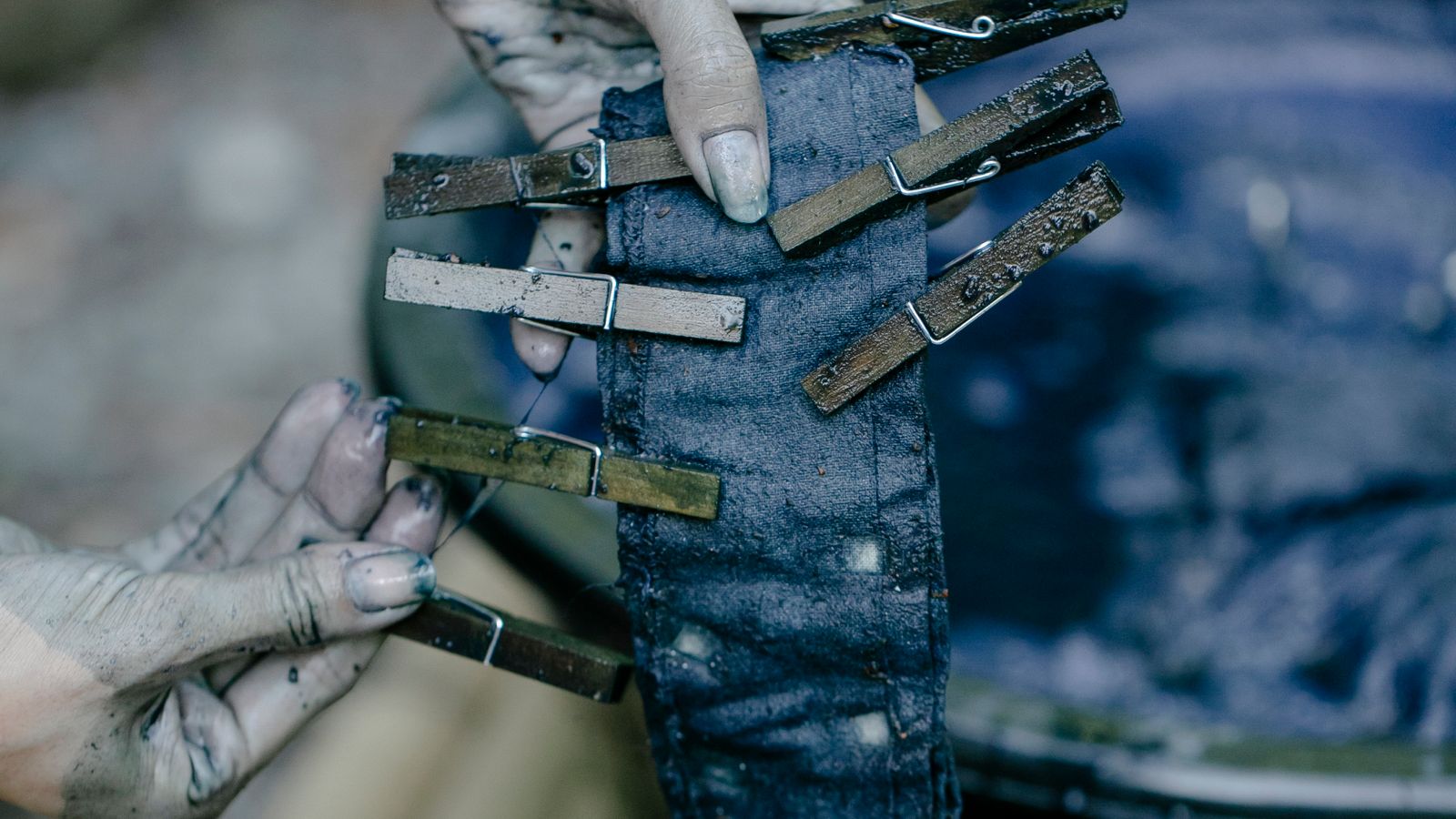
When the dye is ready, dip the cloth or thread into the vat, squeeze it through, then lift it out to air. Freshly lifted cloth comes out green and slowly turns blue as it meets the oxygen. You dip again and again to reach the depth you want — the darker the shade, the more dips it takes.
Tying patterns and weaving the cloth
Indigo-dyed thread is woven on a hand loom, both plain cloth and mat-mi (ikat) where the pattern is tied before dyeing. Most weavers are homemakers and older folks who have done it since their mothers' day. One length of cloth takes several days to a week depending on how detailed the pattern is.
Why genuine indigo costs more
Once you see that building the vat takes a week, that the indigo has to be tended daily, that the cloth is dipped over and over and then hand-woven on top of all that, it makes sense why genuine indigo costs several times more than chemically dyed cloth. What you pay for is the time and skill of the maker, not just the fabric.
Where to buy and learn about indigo in Sakon
Sakon has indigo spots at every level, from big shops in town with showrooms, cafés and workshops, to model villages and designer brands doing indigo seriously. We've picked places that are genuinely open and popular to visit, with the neighbourhood and what you get out of each one, so you can choose by the kind of experience you're after.
Kram Sakon
The most complete indigo shop in town, in Ban Phanao, Huai Yang sub-district. It has a showroom selling indigo cloth and clothing, demos of how it's made, a café corner to rest, and DIY indigo dyeing workshops where you can choose a handkerchief, scarf, bag or shirt. It's a brand that has developed modern designs to the point of export orders to Japan, and it's good if you want to see the big picture of Sakon indigo in one place.
Ban Don Koi (Don Koi Academy)
A model Phu Tai indigo-cloth village in Sawang sub-district, Phanna Nikhom district, famous as the 'Don Koi model' under the royal initiative of making Thai cloth fun to wear. The community lifted its indigo cloth so the patterns and colours follow fashion trends, and the Don Koi Academy learning centre lets you see the process from growing indigo to weaving the finished length. You can buy cloth straight from the weaving group at community prices.
Bhukram
An indigo brand from a community group around the Phu Phan mountains, based in Ban Nang Toeng, Phu Phan district. It's known for plain, easy-to-wear hand-woven cotton clothing dyed with natural indigo, with small embroidered flowers and leaves inspired by Phu Phan as the standout detail. The minimal design has a loyal following and suits people who want indigo shirts to actually wear day to day rather than cloth to display.
Suan Mann / Mann Craft
Artistic indigo work by Prach Niyomka, a Sakon indigo artist who believes indigo is life. The work leans on storytelling and dyeing with auspiciously named natural-dye plants, more than ordinary cloth. There's Mann Gardens, a learning space with workshops, demos and a craft market held in seasons. It suits people who see indigo as art and want a piece with a story behind it — check the page before you go.
Ban Tha Wat by Nong Han Lake
An old indigo-dyeing community on the shore of Nong Han Lake in Lao Po Daeng sub-district, Mueang district — the closest to town, a 15–20 minute drive away. People here do indigo alongside fishing on Nong Han, so you can see the indigo vats and take a raft out for a fish meal in one trip. Good if you're short on time but still want to see the real thing.
Ban Kut Chik Indigo Weaving Learning Centre
A learning centre in Wanon Niwat district where the community keeps the whole craft alive, from growing cotton and indigo to dyeing and weaving. It suits people who want to see a truly end-to-end production line in a real community. It's a bit far from town, so it's best to contact them ahead and fold it into a route through the north of the province.
Indigo Street / souvenir shops in town
Within Sakon town there are neighbourhoods and shops selling indigo cloth all together, both Indigo Street and souvenir shops around the city. You can compare prices and browse several brands in one place, which suits people short on time who want to finish their shopping before heading back — though prices are usually higher than buying direct from the village.
Seasonal indigo festivals and craft markets
During festivals and provincial events, Sakon often brings indigo booths from many communities together — for example the Kram & Craft Sakon event held around late March, with exhibitions, indigo dyeing workshops, fashion shows and a community market. You can see many brands, chat with the makers, and some booths do live dyeing demos. Check with the province's tourism page to see if there's an event while you're visiting, so you catch the timing.
Want to learn dyeing? Contact ahead to be safe
Most indigo dyeing workshops run about 2–3 hours and you take home a handkerchief or small cloth as a keepsake. Big shops in town like Kram Sakon usually have sessions you can just join, but the village groups are home operations and aren't on display all the time. If you want to watch the vat being built or try real dyeing, call or message the page to arrange 1–2 days ahead so you can see the full set of steps.
Buying indigo cloth that's the real thing
The classic problem for indigo buyers is telling genuine indigo apart from chemical dye made to imitate it. Both are in the market, and genuine indigo costs several times more. Buying straight from the maker in the community has the advantage that you can ask which vat it was dyed in and how many dips it took, and you usually get a better price than the souvenir shops out on the highway.
- Smell — genuine indigo has a soft indigo and natural scent, not the sharp smell of chemical dye
- Colour — genuine indigo is a deep, slightly muted blue with depth that isn't perfectly even, while chemical dye looks too vivid and unnaturally uniform
- Colour run — genuine indigo cloth runs a little in the first few washes, which is normal for natural dye, not a defect
- Fabric — hand-woven cotton indigo wears cool and breathes well, unlike factory cloth
- Ask the source — buying from the maker, just ask if they dyed it themselves and how many days the vat took; people who really do it can answer all of it
Rough prices to compare against
An indigo-dyed handkerchief or small cloth starts around 80–150 THB. An indigo scarf runs about 250–500 THB depending on the cloth and pattern. An indigo-dyed shirt is roughly 500–2,500 THB depending on the brand and cut, while a detailed hand-woven mat-mi length can run from a thousand to several thousand THB each. Buying direct from the village is usually cheaper than shops in town and along the highway.
Planning a Sakon indigo trip
Sakon's indigo spots are spread across the city and out into other districts. Plan your route well and you can hit several in one trip. We've laid out two options: one day focused on indigo around the city, and two days heading out to the model villages farther from town without rushing.
Indigo around the city + learn to dye
Model indigo villages outside town
Straight talk
The indigo villages in Sakon are communities where people actually live, not staged tourist villages. Some days, if you turn up without arranging anything, you might not catch anyone mid-dye, or the indigo vat may not have come right yet. If you're set on seeing the full process or want to learn dyeing, contact them ahead. If you just want to buy cloth, walking into a shop in town like Kram Sakon is more convenient.
See the full guide to Sakon Nakhon's attractions and stays before planning your indigo trip
See the Sakon Nakhon guide →