🔄 Updated 21 Jun 2026
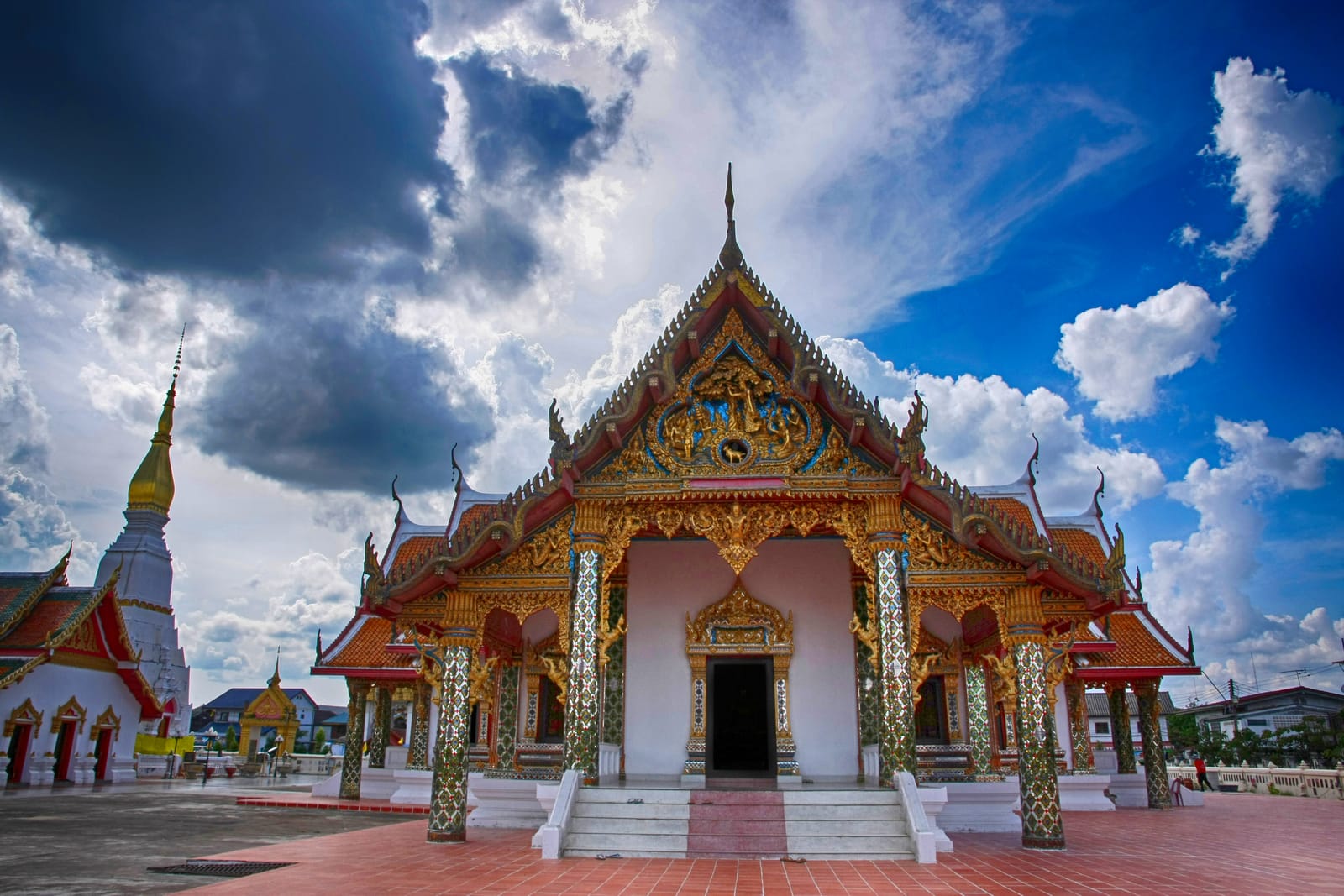
Sakon Nakhon sits in upper Isan, a town driven by faith and nature more than nightlife. Most people come to pay respects at Phra That Choeng Chum, the town's twin stupa, to honor the relics of forest-tradition meditation masters like Ajahn Mun Bhuridatta, and then to catch the cool breeze along Nong Han lake. Nature lovers head up into the Phu Phan range that rises behind the town. On a first visit, getting your head around these few basics first makes planning a lot smoother.
How to get to Sakon Nakhon — fly or take the bus
Sakon Nakhon is about 650 km from Bangkok — too far for a day trip, so most people stay at least one night. There are three main ways to get here; pick based on your budget and time.
- Flying — the fastest and easiest. Nok Air and Thai AirAsia fly direct Don Muang–Sakon Nakhon in a little over an hour. Sakon Nakhon Airport (SNO) is about 8 km from the town center, with vans/shuttles into town for around 80 THB per trip, or you can rent a car right at the airport.
- Bus — air-conditioned coaches run daily from Mo Chit (New Northern Bus Terminal) to Sakon Nakhon, taking around 10–11 hours. Most are overnight, so you sleep on the way and arrive in the morning, saving a night's accommodation. Good for tight budgets and travelers who aren't in a rush.
- Driving yourself — about 8–9 hours from Bangkok via Saraburi–Nakhon Ratchasima–Khon Kaen–Udon Thani. Good if you want to stop off in other provinces along the way, or if you want your own car to head up Phu Phan and reach temples outside town easily.
- Fly to Udon Thani, then transfer — another popular option, since Udon has more frequent flights and is often cheaper. Land in Udon, then take a van/bus to Sakon Nakhon, around 2–2.5 hours. Handy if flights into Sakon are full or pricey.
If you can't decide
Short on time and have the budget? A direct Don Muang–Sakon flight is the best value and saves you half a day. · If you're keeping costs down and aren't in a hurry, the overnight bus saves on both the ticket and a night's accommodation. · Coming as a group and want to do Phu Phan too? Driving yourself is the smoothest.
Book the activities in your Sakon Nakhon trip ahead
Booking online ahead on Klook or GetYourGuide is usually cheaper than the gate and skips the queue. Pick only the experiences you actually want — prices and availability are shown live on each site.
What to get around town with
The town of Sakon Nakhon isn't big. In-town highlights like Wat Phra That Choeng Chum, the Ajahn Mun museum, and Nong Han are close together, but nature spots like Phu Phan and the hilltop temples are a fair way out of town. So your wheels matter.
- Private car / rental — the most convenient way to see Sakon, since the sights are spread out and in-town public transport is limited. You can rent at the airport and in town, starting from around five hundred to a thousand THB per day depending on the model.
- Motorbike rental — good if you're only doing the town and not heading up the hills. Around 200–300 THB per day, nimble and cheap, but be careful on the steep stretches going up Phu Phan.
- Ride-hailing apps + hired transport — you can get a ride in town, but not as readily as in big cities. If you're going far, agree on a flat full-day rate with the driver up front.
- Hired car with driver — an easy option if you don't drive or are traveling solo: have them loop you around the stupa, Nong Han, and Phu Phan in one day. Always settle the route and price before you set off.
Sights first-timers shouldn't miss
Wat Phra That Choeng Chum Worawihan
Sakon's twin stupa right in the town center, a white prang topped with gold. Come to pay respects to Luang Pho Ong Saen, a revered Buddha image — locals consider this the first stop you should make.
LakesideNong Han
The largest freshwater lake in Isan, with a waterside park, viewpoints, and restaurants serving fresh freshwater fish. In the evening the breeze is cool and pleasant — you can sit and take it in for a long while.
SpiritualAjahn Mun Museum (Wat Pa Suthawat)
Home to the museum of Ajahn Mun Bhuridatta, the founding teacher of the forest tradition, holding his relics and monastic requisites. A place devout visitors come specifically to honor.
Nature / hillsPhu Phan National Park + Wat Tham Pha Daen
The range behind town, with Kham Hom waterfall, viewpoints, and Phu Phan Ratchaniwet Palace. Wat Tham Pha Daen stands out for its huge cliff carvings and wide-open views.
How many days in Sakon Nakhon is enough
Since it's far, it's worth giving yourself enough time to make the trip count. For a first visit, most people land on 2–3 days. · 2 days, 1 night is enough to cover the in-town highlights — Phra That Choeng Chum, Nong Han, the Ajahn Mun museum — and eat the local specialties without rushing. Good if you're flying in and out. · 3 days, 2 nights is far more relaxed: you can add Phu Phan, Wat Tham Pha Daen, and the old buildings of Tha Rae. Good if you want the town, the temples, and nature all at an unhurried pace.
Food first-timers shouldn't miss
- Phon Yang Kham beef — Sakon's number-one specialty. Thai–French crossbred cattle from the Phon Yang Kham cooperative, tender and fragrant with nicely marbled fat, eaten as steak, grilled, or in jim jum hot pot. Well-known spots are all over town.
- Mu yo and naem nueang — Sakon draws Vietnamese culinary influence from its Vietnamese community. Firm-textured mu yo (pork sausage) and naem nueang (pork rolls wrapped in greens with a rich dipping sauce) are easy to find across town, both a meal and a souvenir.
- Nong Han freshwater fish — restaurants along Nong Han prepare fresh lake fish boiled, grilled, fried, or as laab. A meal that comes with the lakeside atmosphere too.
- Khao piak sen and Vietnamese-style breakfast — the Sakon local's morning meal: hot khao piak sen noodles with Vietnamese bread and coffee, found at morning shops around town.
Want to take souvenirs home
The town's signature souvenirs are pack-and-go mu yo and naem nueang, plus the hand-dyed indigo (cram) cloth Sakon is known for. · Buy mu yo toward the end of your trip and pack it in a cooler bag if you're traveling far. Indigo cloth keeps easily and makes a one-of-a-kind gift.
Dress and temple etiquette
- Dress modestly at temples — Sakon is a town of stupas and forest monks, and many temples are places of meditation practice. Skip shorts/short skirts and sleeveless tops, and bring a shawl just in case.
- Be extra mindful in forest-monastery areas — the Ajahn Mun museum and meditation-tradition temples are about stillness. Keep your voice down, don't photograph where signs forbid it, and walk with respect.
- Remove shoes where required — many shrines and sacred areas require you to take off your shoes. Watch for signs and follow the locals' lead.
- Prepare for sun and rain — many sights are open and lakeside, so bring a hat, sunglasses, and drinking water. In the rainy season carry an umbrella, since Isan rain comes fast.
Sample plan for first-timers — 2 days, 1 night
This plan is built for someone flying in for the first time who wants to cover the in-town highlights in full. Day one: pay respects at the town's twin stupa, honor the forest tradition, then wind down at Nong Han. Day two: stop by the old buildings of Tha Rae and pick up souvenirs before heading home. It's not tiring to walk and lets you see several sides of Sakon. With a rental car it's the smoothest.
Twin stupa + forest tradition + Nong Han lakeside
Old buildings of Tha Rae + souvenirs before heading home
Want a fuller trip
With 3 days, 2 nights, add a day up in the Phu Phan range for Kham Hom waterfall, viewpoints, and Phu Phan Ratchaniwet Palace, then continue to Wat Tham Pha Daen with its huge cliff carvings and wide-open views. · For activities up in the hills, have your own car and allow extra time, since the roads are winding.
Ready to go? Check out the full Sakon Nakhon guide, or find a well-located place in town to stay the night.
See the Sakon Nakhon travel guide →