🔄 Updated 21 Jun 2026
A lot of people fly into Udon and then dither over whether Sakon Nakhon is worth the detour — or they come to Sakon Nakhon and end up wishing they'd seen the Red Lotus Sea. The truth is you don't have to choose. The two provinces are joined by the Nittayo Road, an easy straight drive on mostly flat terrain, and it's only about two and a half hours from one town centre to the other. This plan starts in Sakon Nakhon because the in-town sights are clustered close enough to walk between, then works its way up to Udon, which has more return flights. If you fly into Udon instead, just flip the order of the days — the route is the same.
Why pair Sakon Nakhon with Udon Thani
The main reasons are the short distance and the way the two cities complement each other — you're not seeing the same kind of thing twice. Sakon Nakhon is a city of temples and craft, while Udon is a bigger city with both cool-season nature and Vietnamese food. Here's what each one gives you.
Sakon Nakhon — temples, craft and Nong Han
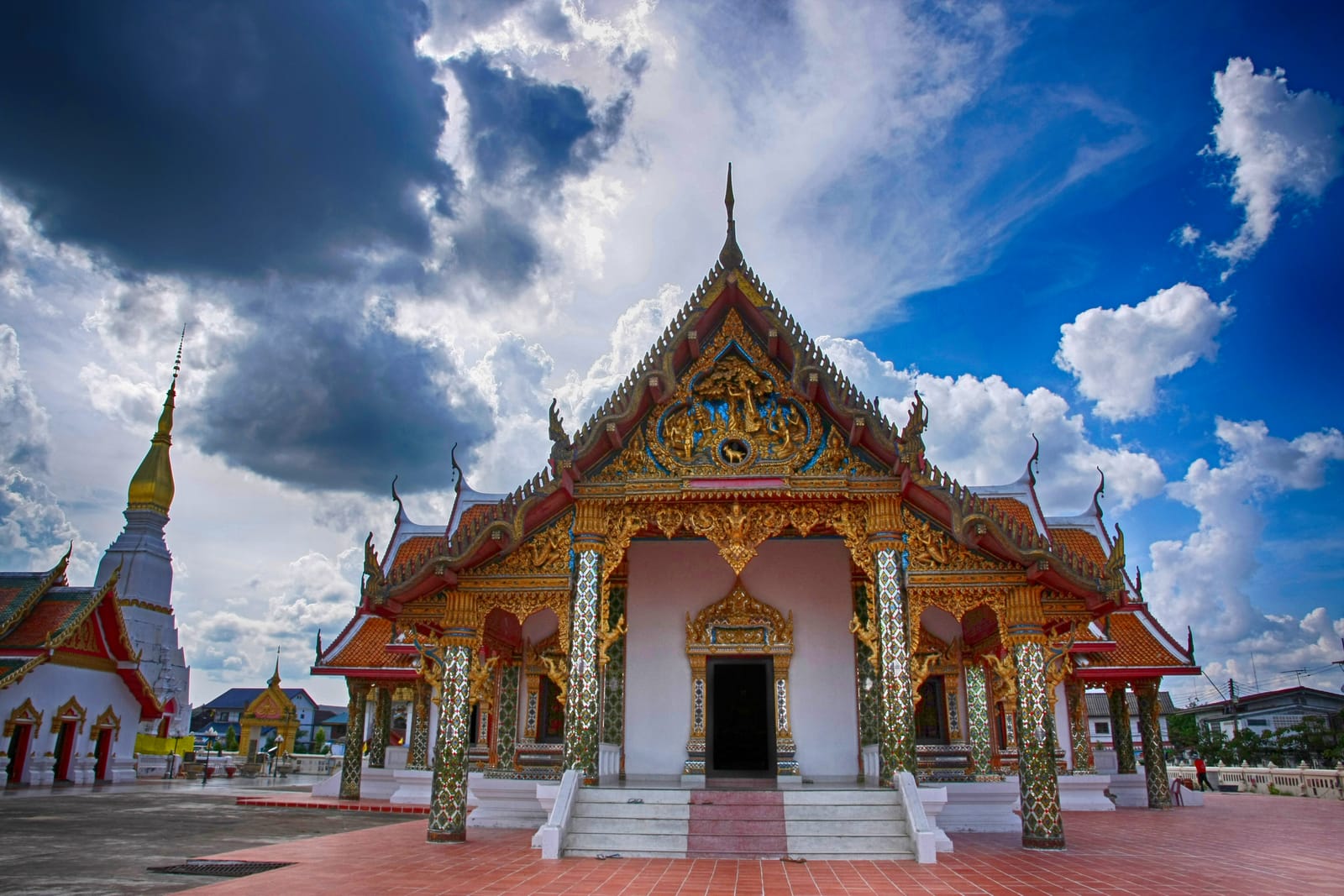
The revered Wat Phra That Choeng Chum sits right in the middle of the city, alongside the Ajahn Mun forest-monk museum, Nong Han (Isan's big freshwater lake), and indigo-dyeing villages that ship their cloth as far as Japan. A good way to open the trip with a mix of merit-making and handicraft.
Udon Thani — red lotus, Ban Chiang and Vietnamese food
In winter the Red Lotus Sea at Kumphawapi blooms across the whole water. There's the World Heritage site of Ban Chiang, Nong Prajak park in the city centre, and Vietnamese food like nam neuang that doubles as the city's signature souvenir. A solid way to close the trip in a bigger city.
The link — the Nittayo Road
Highway 22 connects the two cities over about 160 km, passing Phang Khon, Sawang Daen Din and Nong Han. The terrain is flat and easy, and the road runs right past Ban Chiang so you can stop before reaching Udon. So this isn't just a transfer between cities — there are sights along the way.
Book the activities in your Sakon Nakhon trip ahead
Booking online ahead on Klook or GetYourGuide is usually cheaper than the gate and skips the queue. Pick only the experiences you actually want — prices and availability are shown live on each site.
Route and getting around
- Distance — about 160 km from central Sakon Nakhon to central Udon Thani along the Nittayo Road (Highway 22), passing Phang Khon, Sawang Daen Din and Nong Han.
- Driving time — usually two and a half to three hours; mostly flat and easy, but expect traffic lights and slow stretches when you pass through the district towns.
- Van/bus — vans and buses run all day between the Sakon Nakhon and Udon Thani bus terminals, fares in the low hundreds of THB per trip, taking around 3 hours.
- Flights — both cities have airports (Sakon Nakhon SNO and Udon Thani UTH); if you can find tickets to fly into one and out of the other, it saves more time than flying in and out of the same point.
- Car rental — the most flexible option, since the Red Lotus Sea, Ban Chiang, Kham Chanot and the indigo villages are all outside the towns and hard to reach by public transport.
Get the direction and timing right
If seeing the Red Lotus Sea is the goal, plan the trip for December to early March, when the lotus blooms thickest, and get to the pier before 11am because the flowers close up later in the morning when the sun gets strong. That's why this plan puts the Red Lotus Sea as the early-morning activity on the Udon day. If you come at another time of year, swap it for Kham Chanot or Wat Pa Phu Kon instead so you don't end up disappointed.
Day 1 — Sakon Nakhon: city temple, Nong Han and indigo cloth
Day one stays entirely on the Sakon Nakhon side. Morning is for Wat Phra That Choeng Chum in the city centre and the Ajahn Mun museum, both within walking distance. In the afternoon head out to Nong Han and the indigo village outside town, then come back into the city for dinner. It's a day that mixes merit-making, handicraft and unhurried lakeside nature.
Sakon Nakhon: Choeng Chum–Nong Han–indigo cloth
Call ahead before going to Ban Don Koi
The indigo village is a real working community, not a shop that's open all the time. If you want to see the full dyeing and weaving process, call the weaving group or Home Khram Mae Waree a day ahead (087-232-9016), because on some days the women are busy in the fields. The last 12 km or so into the village is a dirt road that gets slippery in the rain, so drive slowly. If you'd rather not head far out of town, you can swap in an indigo-cloth shop in central Sakon Nakhon instead.
Day 2 — Drive the Nittayo Road up to Udon, stop at Ban Chiang, into the city by evening
Day two is the crossover day. Leave Sakon Nakhon in the morning and drive the Nittayo Road toward Udon, stopping at Ban Chiang to see the World Heritage site right along the way, then reach Udon in the late afternoon. In the evening take in Nong Prajak park and some food in the city. It's a day that delivers both history and big-city atmosphere.
Crossing to Udon: Ban Chiang–Nong Prajak
Ban Chiang is closed on Mondays
The Ban Chiang museum is closed every Monday. If your day two happens to fall on a Monday, swap in the Wat Pho Si Nai excavation pit inside Ban Chiang village instead (open daily, with real skeletons and pots in the pit), or shift the museum to the following day. The other stops on the route are open every day as usual.
Day 3 — Red Lotus Sea at dawn, last Udon highlights before heading home
The last day starts before dawn, because the Red Lotus Sea looks best during golden hour. Head out to Kumphawapi and take a boat to see the lotus in bloom before the sun gets strong, then come back into the city mid-morning for breakfast. After that, pick between Kham Chanot and Wat Pa Phu Kon depending on your time, buy some souvenirs and head home. It's a day that closes the trip with cool-season nature you can only catch at this time of year.
Udon: Red Lotus Sea–Kham Chanot
On the season and timing your days
The Red Lotus Sea is a highlight you can only visit in winter, roughly December to early March. At other times of year the water at Nong Han Kumphawapi has no lotus flowers to see, so check first whether you're hitting the right season. If you're not, cut it and go all-in on both Kham Chanot and Wat Pa Phu Kon instead, so you don't end up rising at dawn only to find an empty lake.
Food in both cities worth trying
The Sakon Nakhon–Udon route gives you two food traditions to try. Both cities have had Thai-Vietnamese communities for a long time, so Vietnamese food is strong in each, while the Isan side has jaew hon and Phon Yang Kham beef pho as local standouts. Here are spots that are actually open in 2026 and that locals go to, ordered by how well they fit this trip's route.
Willy Nam Neuang (Sakon Nakhon)
An old Vietnamese restaurant in Sakon Nakhon — soft-skinned nam neuang, a rich dipping sauce, big slices of fried mu yo, and Phon Yang Kham beef pho so good it needs no seasoning. This is where locals bring guests to eat and buy souvenirs; it's also sold at Sakon Nakhon airport.
VT Nam Neuang (Udon Thani)
The original nam neuang of Udon, with a branch at Ban Chan Yai and a drive-through. It does both dine-in and Vietnamese-style souvenirs — nam neuang, mu yo, pak mo yuan. A spot Udon locals have long recommended for picking up souvenirs before heading home.
Saba-nga (Sakon Nakhon)
A traditional Isan restaurant in central Sakon Nakhon with comfortable air-conditioned seating and parking — good for a family dinner after a full day out. Order larb, koi, som tam and a full range of local dishes.
Suan Mai Hom Isan food (Sakon Nakhon)
An affordable Isan spot on Sukkasem Road, known for jaew hon with pla khang, deep-fried tilapia salad and fried pork larb. Opens early, good for a first meal of the day or a quick lunch.
Jaew Hon UD Town (Udon Thani)
Isan-style dinner — a herbal-broth hot pot for dipping fresh pork. The UD Town area has several places to choose from and a lively atmosphere in the evening. A good way to close the Udon day with a filling, affordable meal.
Phon Yang Kham beef pho
Phon Yang Kham is Sakon Nakhon's famous fattened beef, turned into pho with a clear, bone-sweet broth or grilled with jaew dipping sauce. You'll find it at both Vietnamese and beef restaurants in Sakon Nakhon city — a flavour that tells you you've truly reached the region.
Evening market / walking street, Sakon Nakhon
Grilled and fried snacks, local sweets and roadside Isan food in Sakon Nakhon city. Good for grazing on the first evening without sitting down at a restaurant — easy on the wallet, and you can try several things in one meal.
Udon walking street (Nong Prajak)
Open Friday–Sunday near Nong Prajak park, a long stretch of both savoury and sweet — Vietnamese, Isan and snacks. Good if your trip falls on a weekend, with the feel of Udon by night.
Add-ons if you have more than 3 days
If you stretch the trip to 4 days or want a more relaxed pace, there are several more temple and nature spots along the route you can add based on your interests.
- Wat Tham Pha Daen, Sakon Nakhon — cliff carvings and a Naga figure on the Phu Phan range, with a viewpoint over Sakon Nakhon city. The final climb is steep, so take the curves carefully. Good to slot into day one if you start early.
- Kham Chanot and Wat Pa Phu Kon — if you don't have an early flight home on the last day, you can fit both. Kham Chanot is a sacred forest in the middle of water, while Wat Pa Phu Kon has a white marble reclining Buddha set in the forest.
- Udon Thani City Museum — the old Rachinuthit building in central Udon, telling the city's history and its wartime era. Good for a rainy day or a break from the sun, and easy to reach in town.
- Indigo cloth and Sakon Nakhon souvenirs — beyond Ban Don Koi, there are hand-dyed indigo shops in the city to pick up as a local-only souvenir. The patterns and indigo shades differ from one community to the next.
Rough budget per person
- Car rental — an eco-car or sedan runs about 900–1,400 THB/day, not including fuel; split among a few people it's the best value for this trip.
- Intercity van/bus — Sakon Nakhon–Udon is in the low hundreds of THB per trip, but you'll still need onward transport in town.
- Accommodation — guesthouses start in the low hundreds, mid-range hotels around 700–1,800 THB/night; both Sakon Nakhon and Udon have plenty to choose from.
- Entry/boat fees — Ban Chiang 30 THB for Thais; Wat Phra That Choeng Chum and the Ajahn Mun museum are free; a Red Lotus Sea boat is 300 THB for a small boat, 500 THB for a large boat (which you can split).
Before you set off
- Check the Red Lotus Sea season — only possible roughly December to early March; outside that there are no lotus flowers, so lock in the right window if seeing them is the goal.
- Call the indigo village ahead — book Ban Don Koi a day in advance (087-232-9016) so someone is there to demonstrate, and drive the dirt road at the end slowly.
- Allow for Ban Chiang's closing day — the Ban Chiang museum is closed Mondays; if your trip falls on a Monday, swap the order or see the Wat Pho Si Nai excavation pit instead.
- Carry cash and offerings — flowers, incense and candles are available outside the temples, but some community shops and piers still don't take transfers, so keep cash and drinking water in the car.
- Dress modestly at temples — at both Wat Phra That Choeng Chum and Wat Pa Phu Kon, no tank tops or shorts above the knee, and take off your shoes before stepping onto the stupa platform.
Find a base for the trip in Sakon Nakhon
See the Top 10 Sakon Nakhon hotels →