🔄 Updated 21 Jun 2026
A lot of people know Samut Sakhon by its other name, Mahachai — the fishing town that ships seafood into Bangkok every single day. But there's more to do here than you'd expect. Inside one province you'll find busy markets, mangroves you can walk through to watch birds, salt fields that stretch as far as you can see, and old riverside temples wrapped up in historical legend. We've sorted the sights into three themes so you can pick by mood — do the whole lot in a day, or just follow the one that suits you.
The town — markets, seafood, and the Mahachai train
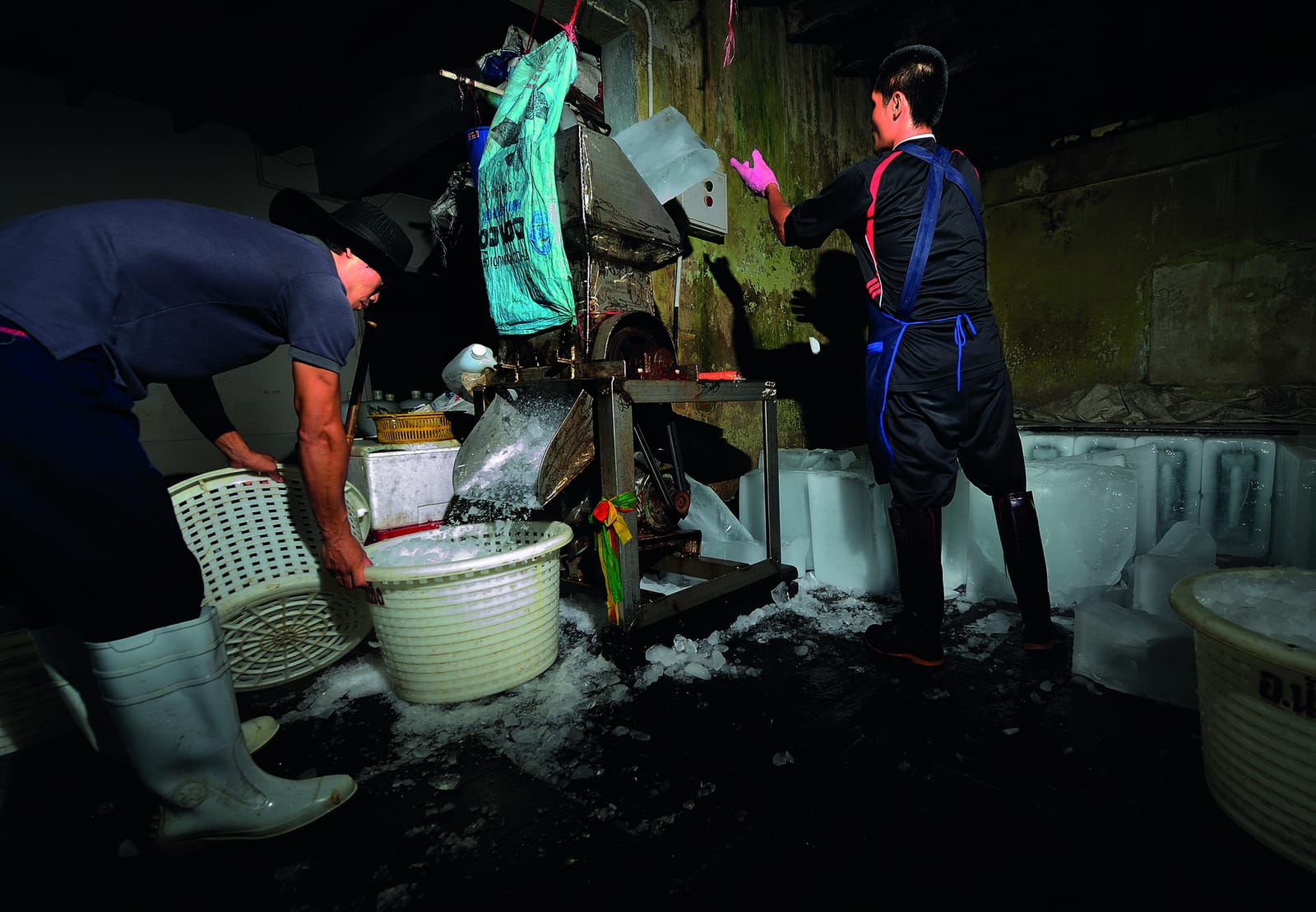
The heart of Mahachai is its markets and the pier. Walk a few steps and you're surrounded by fresh shrimp, shellfish, crab, and fish laid out in rows. If you like the buzz of a real working sea town, this is where to start.
Mahachai Market (Talay Market)
A fresh market in the middle of town right by Mahachai train station, with seafood at dockside prices. There are snacks to graze on too — fried mussel pancakes, coconut-rice hotcakes. It gets especially lively when the Wongwian Yai–Mahachai line train pulls in.
Talay Thai Market
The province's big wholesale seafood market, open from before dawn. Good for buying fresh shrimp, shellfish, crab, and fish to take home at wholesale prices — or just to watch the seafood trade happen for real.
Mahachai station + Tha Chalom ferry
Take the short train line from Wongwian Yai out to the end of the track at Mahachai, then hop on the ferry across the Tha Chin River to the Tha Chalom side. It's a classic route that gives you the full sea-town feel.
Tip
Seafood at the fresh market is at its best in the morning. If you want the good stuff at good prices, come before 9 a.m. for the widest pick — and don't forget to haggle a little, as is the custom at the market.
Want more out of Samut Sakhon? Book tours & activities
Booking online ahead on Klook or GetYourGuide is usually cheaper than the gate and skips the queue. Pick only the experiences you actually want — prices and availability are shown live on each site.
Faith and history — the Phan Thai Norasing shrine
The Phan Thai Norasing shrine has long been a spot where people from Samut Sakhon and Bangkok come to pay their respects. The legend tells of Phan Thai Norasing, the helmsman of the royal barge in the Ayutthaya era, who accepted the punishment the law demanded even though his slip was caused by the wind and waves — making him a symbol of honesty and keeping one's word. People come to ask for blessings around work and success.
Nearby is the Phan Thai Norasing Park, where the Fine Arts Department has set aside the mangrove around the shrine, with a replica of the old barge and a newer shrine hall to walk through. It's shady and pleasant, a nice stroll after you've paid your respects. More recently there's a canalside market by the Phan Thai Norasing canal where you can walk, eat, and shop on weekends.
- Pay respects at the Phan Thai Norasing statue — a life-size statue in the pose of standing at the helm, inside the main shrine
- Walk the mangrove park around the shrine — with a replica of the old barge and shady walkways, good for photos
- Phan Thai Norasing canalside market — a community market with a nice atmosphere and plenty of food, open on weekends, so check the days before you go
Nature — mangroves, salt fields, and birdwatching
What sets Samut Sakhon apart from other towns is its river-mouth ecosystem — the mangroves, the salt fields, and the wetlands that make it one of the country's notable birdwatching areas. If you're here for the nature, don't miss these three spots.
Mahachai Bay Mangrove Nature Study Center
There's a raised wooden boardwalk winding through the heart of the mangrove, so you can watch mudskippers, fiddler crabs, and mangrove plants up close. Shady and easy, and good for bringing kids to learn about nature.
Khok Kham–Ban Laem salt fields
Wide salt fields that reflect the light like a mirror, gorgeous in the late afternoon near sunset. The salt-making season runs roughly October to April, and it's a favorite photo spot for catching the workers raking the salt.
Khok Kham birdwatching flats
The salt fields and fish ponds around Khok Kham are a shorebird-watching area that birders know well. During migration season from late in the year into early the next you'll see plenty of species, so it's worth bringing binoculars.
Best time to go
The salt fields look their best and are only open for photos during the salt-making season (October–April) — in the rainy season the plots are flooded. For birdwatching, the best window is November–March, when the migratory birds stop in to rest and feed.
Culture — old temples and the riverside Tha Chalom community
Across the Tha Chin River from the town center is Tha Chalom, an old fishing community with the distinction of being Thailand's first municipal sanitary district. Wander the old lanes to see wooden shophouses, coffee shops, and a fishing way of life that's still very much going.
Wat Suttiwat Wararam (Wat Chong Lom)
A royal temple that's been part of Samut Sakhon for nearly 200 years, sitting at the river mouth on the Tha Chalom side. It's a fine spot to take in the view of the Tha Chin estuary, and it's home to Luang Pu Kaew, deeply revered by locals.
Old Tha Chalom community
Stroll the old lanes off Thawai Road to see wooden shophouse architecture, dessert shops, coffee shops, and the fishing life. The retro feel is quiet and calm — a relaxed place to walk and take photos.
Don Kai Dee Benjarong Village
An OTOP village that makes Thai-pattern Benjarong porcelain sold all over the country. Come watch the artisans hand-painting the patterns and pick up some handcrafted souvenirs to take home.
If you have the time, we'd suggest taking the ferry across from the Mahachai pier to Tha Chalom. You'll see the Tha Chin River, the fishing boats, and the markets on both banks from an angle you can't reach by car — for a lot of people it's the best part of the trip.
How to plan a Samut Sakhon trip
Town + nature
Riverside culture
Getting around
From Bangkok it's about an hour's drive to Samut Sakhon, or you can take the Wongwian Yai–Mahachai train line for the atmosphere. Within the province most of the spots aren't far apart, but having your own car is by far the most flexible, since public transport doesn't really reach the salt fields and mangroves.
Plan a full Samut Sakhon trip — where to stay, eat, and go
See the Samut Sakhon travel guide →