🔄 Updated 21 Jun 2026
If you want a trip that mixes history with a riverside mood in one go, Samut Songkhram is the easiest answer to reach. From Bangkok it's about 70–80 km down the Rama II road, just over an hour of driving, and you're in Amphawa, the hub of this culture route. The best part is that the main sights all sit close together, so you can drive or take a boat from one to the next without long stretches in between.
This plan sets up the first day around riverside temples in Mae Klong and a visit to Bang Kung Camp, and the second day walking the Rama II teak houses before heading into Amphawa Floating Market. To make it line up perfectly, aim for a Friday–Sunday trip, because Amphawa Floating Market only opens on those days, and those are also the nights you can take a boat to see the fireflies.
Day 1 — Mae Klong Riverside Temples + Bang Kung Camp
The first day leans into merit-making and history. Start with the well-known temples in central Mae Klong, then move down to Bang Kung Camp, the highlight of the trip. The morning air isn't too hot yet, so it's more comfortable for walking and taking photos than the afternoon.
Merit-making along the Mae Klong River
About Bang Kung Camp
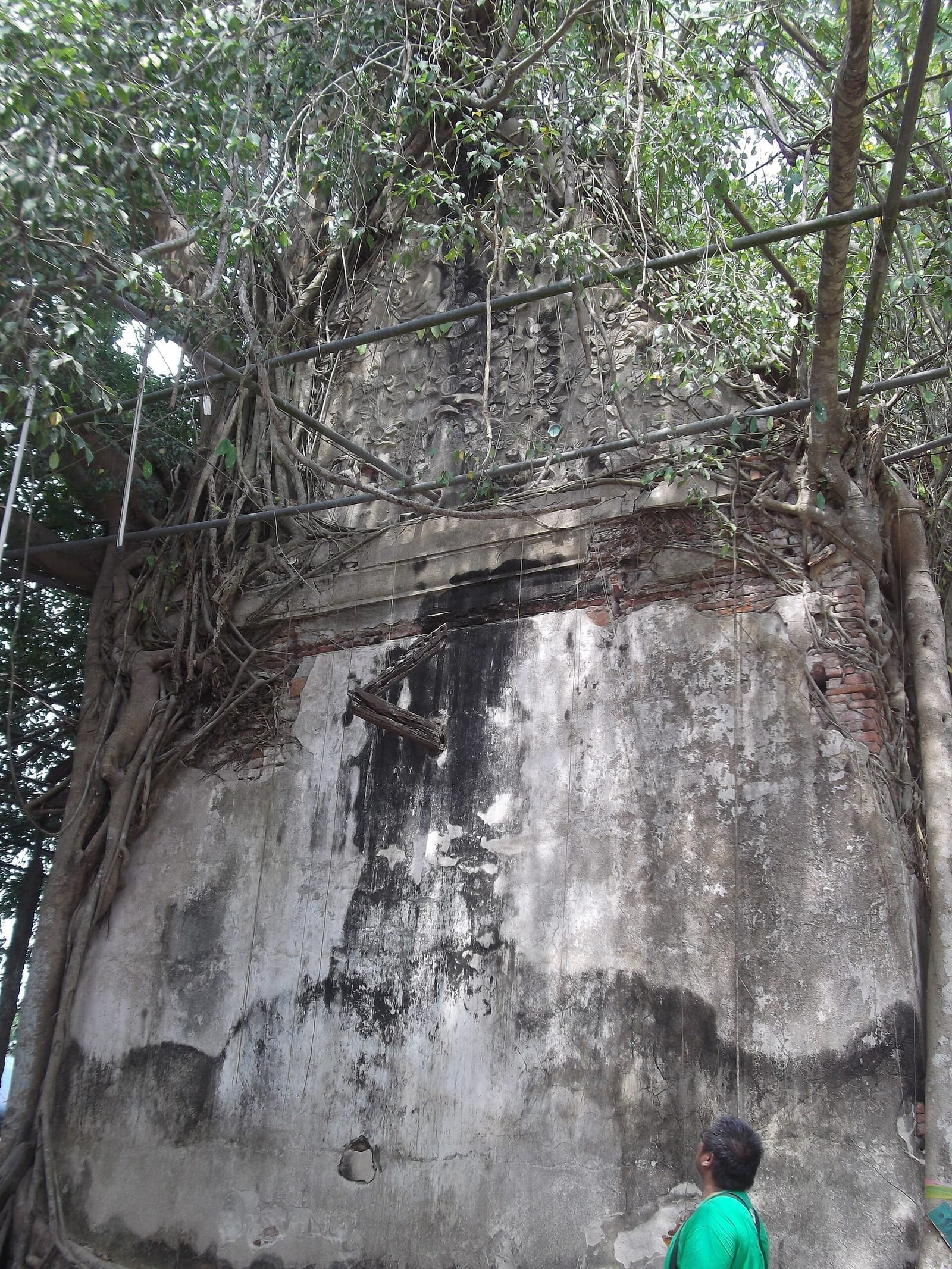
The tree-wrapped chapel is where people take the most photos — the roots of four large trees creep over the whole building until you can barely see the walls. Early morning and late afternoon light gives nicer shots than the harsh midday sun. Inside sits Luang Pho Nin Mani, an old stucco Buddha image that locals here hold in deep respect.
Book the activities in your Samut Songkhram trip ahead
Booking online ahead on Klook or GetYourGuide is usually cheaper than the gate and skips the queue. Pick only the experiences you actually want — prices and availability are shown live on each site.
Day 2 — Rama II Memorial Park + Amphawa Floating Market
The second day starts easy, walking through the teak houses at the Rama II Memorial Park, which sits right next to Amphawa Floating Market — you can walk between the two in just a few minutes. By late afternoon the market gets busy, so you wander and eat your way through it and finish with a firefly boat ride after dark.
From the Rama II teak houses to the evening market
Pick the right day
To get both the floating market and the firefly boat ride, you need to go Friday–Sunday, because Amphawa Floating Market only opens on those days. The Rama II Memorial Park is closed on Wednesdays, so avoid Wednesday if you want to see the teak houses. Planning the trip for a Saturday–Sunday works out best.
Riverside temples worth a stop if you have more time
Samut Songkhram has a row of temples lining the Mae Klong River. If you're into temple-hopping and have time to spare, you can add a few by boat or car. Each one has its own woodwork and its own story.
Wat Bang Khae Noi
Known for an ordination hall carved entirely from teak, telling the Buddha's life story across the wooden walls in remarkably fine detail
Wat Bang Kaphom
Home to a replica Buddha footprint and old stucco reliefs in the assembly hall; a quiet temple that not many people have found yet
Wat Phet Samut Worawihan
A temple in central Mae Klong that enshrines Luang Pho Ban Laem, a revered guardian image that locals hold in high regard
Getting ready for a culture trip
- Dress modestly — for temples and the tree-wrapped chapel, wear sleeved tops and long pants or something that covers the knees; bring an umbrella for the sun too
- Bring cash — the Rama II Park entry, firefly boats, and many food stalls in the floating market take cash, so carrying small notes is handy
- Check the closing days — the Rama II Park is closed Wednesdays and Amphawa Floating Market opens Friday–Sunday, so plan your days to match
- Rainy season is firefly season — May–Oct is when you'll see the most fireflies; pick a dark, moonless night and they show up better than on a full moon
- Book your stay ahead — canalside homestays in Amphawa fill up fast on weekends, so booking early pays off
Which kind of trip suits you
Merit-making and temple wishes
Start at Wat Chulamani and Wat Phet Samut, then finish at the tree-wrapped chapel of Bang Kung Camp — you get both the age and the sense of sacredness
History lovers
Focus on the Rama II Park, Bang Kung Camp, and the temples with carved woodwork, and soak up the stories from the Thonburi to early Rattanakosin eras
Photographers
The tree-wrapped chapel, the Rama II teak houses, and the Amphawa canal at dusk make scenes that tell a story well
Want a different Samut Songkhram itinerary? See the full provincial travel guide
See the Samut Songkhram guide →