🔄 Updated 21 Jun 2026
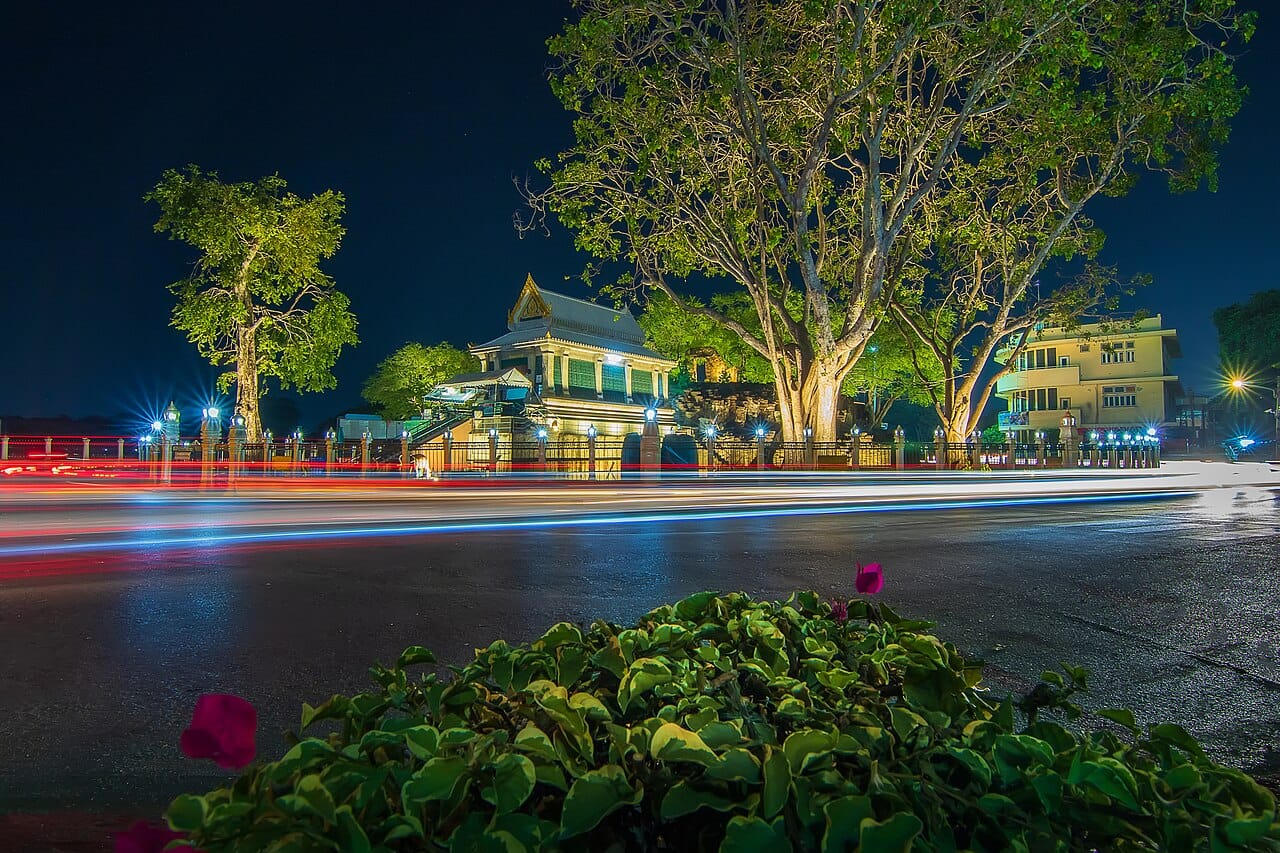
San Phra Kan Shrine sits in the heart of Lopburi's old town on Narai Maharat Road, close to Lopburi railway station and just across the tracks from Prang Sam Yot. Its main draw is that it enshrines Chao Pho Phra Kan, a guardian deity the people of Lopburi have revered for generations. It's also home to several hundred crab-eating macaques that locals believe are the deity's disciples — so in one stop you get both a place to pray and a front-row monkey show.
The legend of Chao Pho Phra Kan
The shrine stands on a large laterite base, thought to be the foundation of a Khmer-era sanctuary that was either never finished or collapsed long ago. The original image is carved from black stone, and many believe it may once have been Vishnu or the bodhisattva Avalokiteshvara. Villagers later added a new head and arms after a legend that the deity appeared in a dream asking for them. From then on the people of Lopburi called this image "Chao Pho Phra Kan" and honoured it as the city's protective spirit.
The current shrine building was rebuilt around 1953, replacing an old wooden structure that had fallen into disrepair. Inside you'll also find an ancient sandstone lintel carved with a scene of Vishnu reclining on the cosmic ocean — a genuine trace of Khmer art you can see up close.
Want more out of Lopburi? Book tours & activities
Booking online ahead on Klook or GetYourGuide is usually cheaper than the gate and skips the queue. Pick only the experiences you actually want — prices and availability are shown live on each site.
Why the monkeys live here
Lopburi's monkeys are tied directly to the city's legend. Locals believe the monkeys around the shrine are the "descendants of Hanuman" and disciples of Chao Pho Phra Kan, so seeing them swarm the deity's image feels like a scene from the Ramayana come to life. The San Phra Kan troop is the largest in town, with several hundred members. They spend the daytime at the shrine greeting visitors, then dash across the tracks to sleep at Prang Sam Yot in the evening.
- Morning to late morning — the troop leaders bring the monkeys across to eat and meet the tourists at San Phra Kan. This is when they're at their liveliest.
- Evening — the monkeys drift back to sleep on the Prang Sam Yot side, a good window to walk over and see the prang.
- The Monkey Buffet Festival — held on the last Sunday of November each year, with the monkeys fed in rounds from tables piled with vegetables, fruit, and sweets. It's an event that draws news crews from around the world.
How to pay respects to Chao Pho Phra Kan
Locals come to Chao Pho Phra Kan mainly to ask for help with work, trade, and good fortune. Many say their wishes came true, and when they return to give thanks you'll see the offerings stacked up everywhere — pig's heads, boiled eggs, and even hired traditional dance performances.
- Offerings — there are stalls selling flowers, incense, candles, and offering sets right in front of the shrine, so it's easy to buy on the spot — no need to bring your own.
- Popular thank-you offerings — boiled eggs, pig's heads, fruit, and traditional dance, given once a wish is granted.
- Etiquette — dress modestly, keep your voice down, and watch the monkeys while you're holding offerings, since fruit and sweets attract them easily.
Watch your belongings around the monkeys
The monkeys here own the place, aren't afraid of people, and are razor-quick with plastic bags. If you walk past holding fruit, snacks, or sweet drinks, there's a good chance they'll be snatched from your hand. Keep food zipped inside a closed bag, take off glasses and hats the monkeys love to grab, and be extra careful with anything in your hands while taking photos.
Where to feed the monkeys and what's allowed
On the plaza in front of the shrine you'll find locals and stalls selling monkey food — bananas, corn, and assorted fruit and vegetables — that you can buy to hand out. If you want to feed the monkeys yourself, set the food down or toss it from a safe distance rather than holding it out, because the monkeys rush in fast and may climb on you. Keep small children close and supervised at all times.
Prang Sam Yot
The three-towered Khmer prang on the opposite side of the railway, just a few minutes' walk across. It's where the monkeys sleep and Lopburi's most iconic photo spot.
King Narai's Palace
A palace from the reign of King Narai, not far from the shrine — easy to add on for a full old-town itinerary.
Opening hours, entry fee, and getting there
- Opening hours — open daily from early morning to evening, roughly 06:00–18:00. The shrine plaza is free to walk into.
- Entry fee — there's no charge to visit the shrine or feed the monkeys; you only pay for offerings and monkey food as you buy them.
- Getting there — it's in the middle of Lopburi's old town, very close to Lopburi railway station and walkable from there. Coming from Bangkok, the easiest option is the train to Lopburi station.
- Best time to go — come in the morning for lively monkeys and gentler sun, ideal for photos and feeding.
Plan a full day around Lopburi's old town
See the Lopburi travel guide →