🔄 Updated 21 Jun 2026
Mention Lopburi and most people picture two things at once: Khmer temples and monkeys. Phra Prang Sam Yot is exactly where those two meet. Three laterite towers stand in a row on a low rise in the old town, and a real troop of a hundred or more long-tailed macaques lives around them, climbing up and down the towers all day. The image of monkeys clinging to a thousand-year-old temple is what earned Lopburi the nickname Monkey Town, and it's a scene foreign travelers keep coming to photograph.
The best part is how easy it is to reach. Lopburi train station is just a few hundred meters away, so you step off the train and walk straight there with no transfer. Within walking distance you'll also find San Phra Kan Shrine, King Narai's Palace, and Ban Vichayen — so Phra Prang Sam Yot usually becomes the starting point for a stroll around the whole old town.
A Khmer temple in the old town: what to see
Phra Prang Sam Yot is a Bayon-style Khmer temple built around the 13th century, during the reign of King Jayavarman VII. It started as a shrine for Hindu and Mahayana Buddhist worship, made of laterite and decorated with stucco reliefs. The three towers are linked by connecting porches and represent the Hindu trinity — Shiva, Vishnu, and Brahma. Later, in the reign of King Narai, it was converted into a Buddhist temple, which is why there are Buddha images enshrined inside.
It really is the signature monument of Lopburi — the towers are used as the official emblem of the province. Walk around the base and you'll spot traces of the old stucco patterns that survive. The angle most people go for is standing where you can see all three towers lined up with monkeys perched in the archways — one photo that sums up what Lopburi is about.
- Three towers — Bayon-style laterite, linked by connecting porches; walk the base to see the old stucco work
- Buddha images inside — traces of the conversion into a Buddhist temple under King Narai
- The towers-and-monkeys shot — a town signature you can't photograph anywhere else
- Right in the old town — easy to continue on foot to San Phra Kan Shrine and King Narai's Palace
Want more out of Lopburi? Book tours & activities
Booking online ahead on Klook or GetYourGuide is usually cheaper than the gate and skips the queue. Pick only the experiences you actually want — prices and availability are shown live on each site.
Entry fees, opening hours, and getting there
Phra Prang Sam Yot is looked after by the Fine Arts Department and opens roughly 06:00–18:00. The fenced historical zone that charges admission is often closed Monday–Tuesday (you can still walk the outer grounds where the monkeys are). Entry is around 10 THB for Thais and around 50 THB for foreign visitors, or you can buy a combined ticket for Lopburi's historical sites at a better rate. These prices can change, so plan for some flexibility and bring cash.
- Train — the easiest option. From Bangkok (Krung Thep Aphiwat / Hua Lamphong), get off at Lopburi station and walk to the temple in a few minutes
- Car — about 2.5–3 hours from Bangkok; park near King Narai's Palace and walk the old town loop
- Van / coach — get off in central Lopburi, then take a songthaew or walk into the old town
Straight talk
Lopburi's old town is small and entirely walkable. If you come by train you won't need to rent a car or transfer at all — step off, then loop Phra Prang Sam Yot, San Phra Kan Shrine, King Narai's Palace, and Ban Vichayen in a single day. The sun in Lopburi is strong, though, so bring a hat and water.
The town's macaques: what to understand before you go
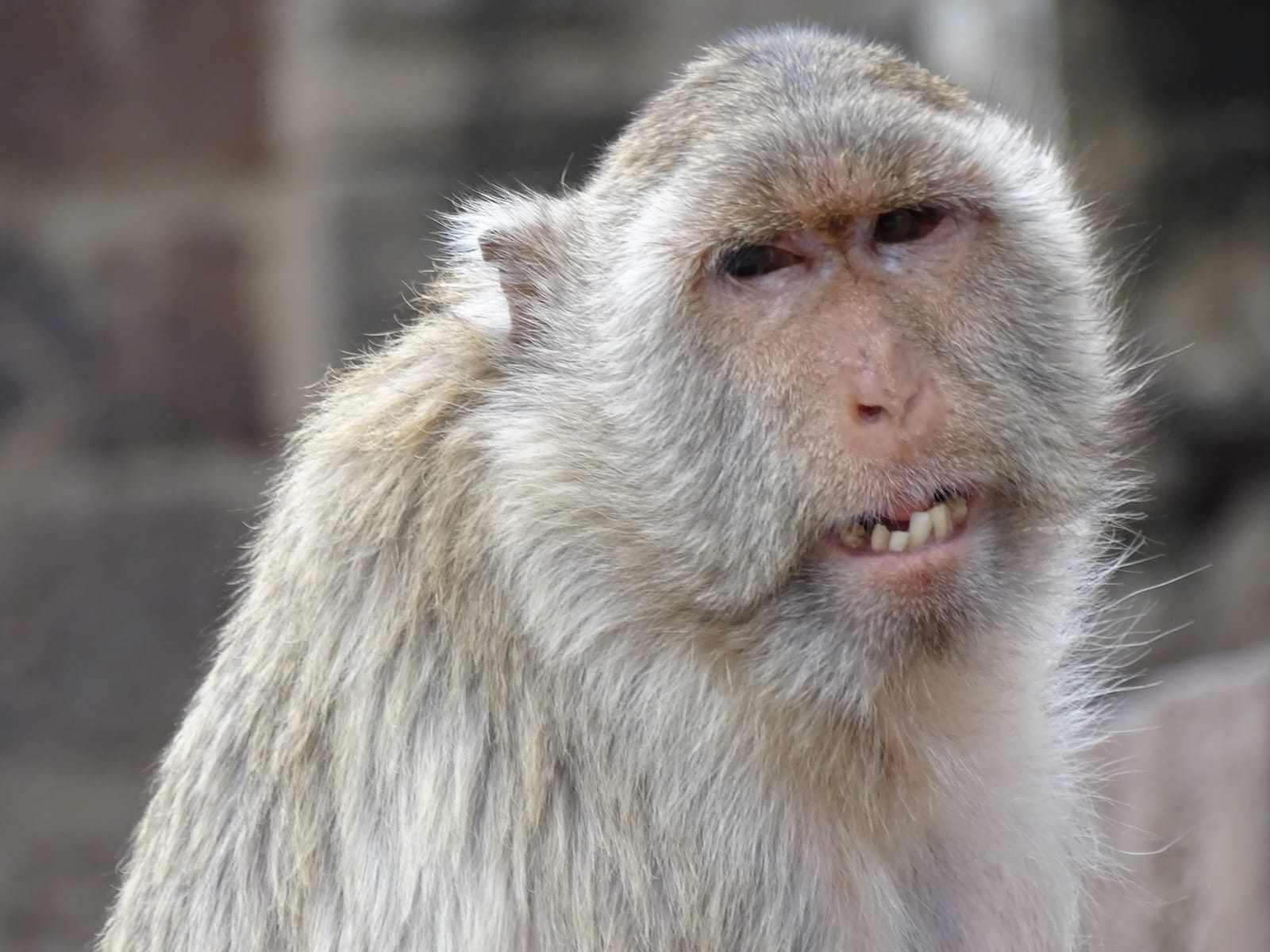
The monkeys at Phra Prang Sam Yot and San Phra Kan Shrine are long-tailed macaques. They've lived in the old town so long that they've become part of Lopburi itself. Some locals regard them as followers of Hanuman, drawing on the Ramakien tale in which Rama founds Lopburi with Hanuman's help — so the monkeys have always been tied to these monuments. But be clear about this: they are wild animals, not tame pets. They're smart, fast, and well practiced at snatching things from people.
In recent years their numbers grew so much they once hit the thousands, causing real problems for residents until the authorities stepped in to sterilize and manage the troops. The picture now is that you'll definitely still see monkeys around the towers and the shrine, but at times parts of the area may be cordoned off or some monkeys relocated. It's worth a quick check of the news or a local page before you go for peace of mind.
How to stay out of trouble with the monkeys
Lopburi's monkeys are streetwise. They know a plastic bag means food, and they know glasses and phones are worth grabbing. The trick is to make yourself uninteresting and to never let them feel challenged.
- Don't carry plastic bags or food — that's the first thing a monkey lunges for; if you have snacks, zip them away out of sight
- Secure your valuables — glasses, hats, phones, earrings, necklaces — they can grab it all; take off anything loose and stow it
- Don't hold eye contact or bare your teeth in a smile — they read it as a threat; stay calm and walk around them
- Don't feed them yourself — it draws them toward people and you can get swarmed; the authorities have proper feeding spots already
- Be careful while taking photos — monkeys love to jump onto your shoulder; stay composed and don't flail, or you may get scratched
- If you're scratched or bitten — wash the wound right away with clean water and soap, then see a doctor about a rabies vaccine; don't leave it
Tip
In the early morning the monkeys are less worked up than in the afternoon, and the sun isn't fierce yet — the best window for walking around and taking photos. If monkeys make you nervous, you can shoot from outside the fence of the historical zone and still see the towers and monkeys clearly without going near them.
The town's signature: towers, monkeys, and railway tracks
What makes Lopburi special is that everything stacks into one frame: the thousand-year-old Khmer towers, the climbing macaques, and the railway line that cuts through the old town near San Phra Kan Shrine. The moment a train rolls past with monkeys sitting beside the rails is the shot many photographers come to wait for. If you want a higher angle that takes in both the shrine and the tracks, there's an upstairs café in the area where you can sit and wait for the timing.
San Phra Kan Shrine
Right across from Phra Prang Sam Yot, just over the railway tracks. A revered shrine with another resident monkey troop, popular for prayers and wishes.
10-min walkKing Narai's Palace
The royal palace from King Narai's era, a short walk on from the towers. Inside is a museum and shady palace grounds.
12-min walkBan Vichayen
The ruins of a European-style residence from King Narai's reign, home of Constantine Phaulkon, his Greek official. Lovely in the afternoon light.
The Monkey Buffet Festival, if you visit in late November
If you plan to come in late November, Lopburi hosts an event that's become known worldwide: the Monkey Buffet Festival, held around the last Sunday of November at Phra Prang Sam Yot and San Phra Kan Shrine. The town lays out tons of fruit and vegetables in pyramids to feast the whole troop, and crowds of foreign visitors flock in to watch. It's a strange, memorable sight that captures the bond between the town and its monkeys. This is peak crowd time and the monkeys are especially worked up, so guard your belongings more carefully than usual.
A half-day at Phra Prang Sam Yot
Since everything is close together, here's a half-day on foot: start at the towers in the morning, then loop around to pick up the rest.
Phra Prang Sam Yot → San Phra Kan Shrine
King Narai's Palace → Ban Vichayen
Plan a full day around Lopburi's old town
See the Lopburi guide →