🔄 Updated 21 Jun 2026
Most people think of Sao Hai curry puffs when they hear Saraburi food. But the local sweet scene runs much deeper than that. Saraburi is home to a Tai Yuan community — descendants of people who migrated from Chiang Saen and Chiang Rai in the early Rattanakosin era, settling around Sao Hai district. That history brought a set of sweets you won't find anywhere else in the region, sitting alongside the Central Thai-style khao niao mun sold at town markets every morning. So we split this into two tracks: the sticky rice toppings trail in town, and the Tai Yuan heritage sweets across the river in Sao Hai.
Khao Niao Mun Toppings You Should Try
Khao niao mun is glutinous rice steamed and folded with coconut milk and sugar until fragrant and rich, then served with a topping ("na") of your choice. At Saraburi's town markets, vendors scoop it into takeaway boxes and let you pick your topping. Here are the ones people order most — and the ones worth trying first.
Mango Sticky Rice (Khao Niao Mamuang)
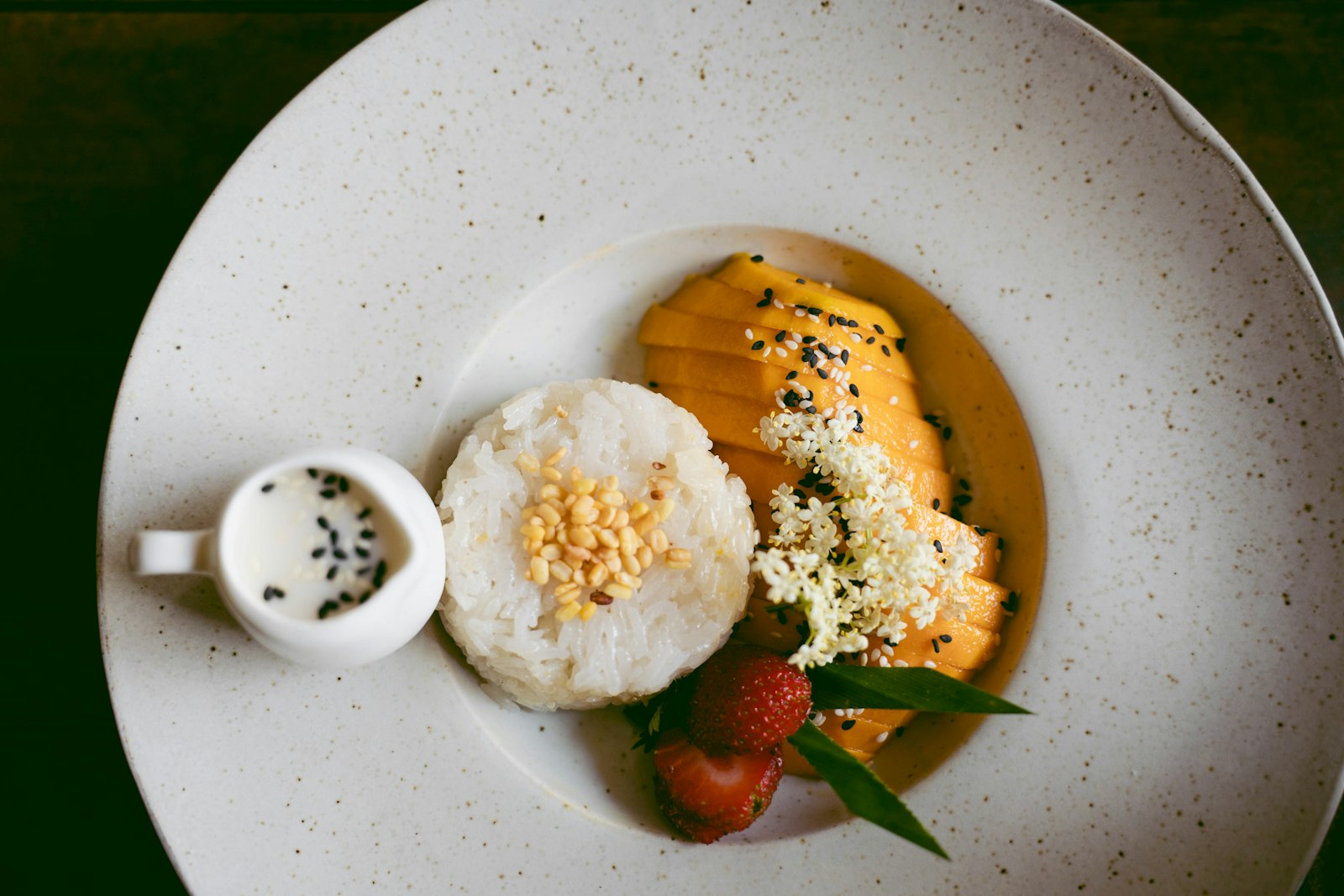
The summer classic. Coconut-glazed sticky rice topped with sliced ripe mango — usually nam dok mai for its dense, floral sweetness, with ok rong as an alternative at some stalls. A drizzle of salted coconut cream cuts through the richness, finished with toasted mung beans. This is the one people queue for from March through May.
Sangkaya (Pandan Custard) Sticky Rice
Sticky rice with a smooth steamed pandan-egg custard on top. Gentler sweetness than the mango version, available year-round. Vendors who make their own custard get a distinct pandan fragrance and a clean sweetness — not the sharp, sugary kind. Second best-seller after mango.
Shrimp or Dried Fish Topping
For people who want savory-sweet rather than pure sweet. The topping is shrimp or minced dried fish stir-fried with palm sugar until fluffy and slightly caramelized, scattered over the coconut rice. Sweet-forward with a salty finish — more interesting than it sounds. A heritage topping that's slowly disappearing from regular markets.
Moo Yong (Shredded Pork) Sticky Rice
The one kids always go for. Lightly salted coconut rice topped with fluffy shredded pork — some stalls add Chinese sausage or goon chiang. Good as a quick morning bite before heading out. Easy to find on carts parked outside the market.
Tri-color Sliced Sticky Rice (Khao Niao Mun Tat)
Coconut sticky rice cut into bite-sized pieces, usually in three colors: white, pandan green, and butterfly pea purple. Sold alongside other toppings or packaged as a set. Holds well for several hours without losing texture — makes a good take-home gift from older rice sweet shops that have been doing this for decades.
Buying tips
Good khao niao mun should have coconut milk that coats the rice — rich, not watery. Check that the grains hold their shape without being soggy. Buy in the morning to get that day's freshly steamed batch. If you're ordering with mango, ask the vendor to pack the coconut cream drizzle separately so it doesn't go soft on the way home.
Want to taste deeper? Try a Saraburi food tour or cooking class
Half a day with a local who knows the lanes — or cooking a dish yourself — teaches you more than just eating. Book ahead on Klook or GetYourGuide.
Tai Yuan Heritage Sweets — Getting Rarer Every Year
These are what make Saraburi different from other provinces. Several Tai Yuan sweets have fewer and fewer people making them. Most are found on the Sao Hai side of the river, particularly at Ban Ton Tan floating market — open Sundays only — where vendors dressed in traditional sarongs sell both savory and sweet dishes the old way.
Khanom Kong (Wagon Wheel Sweet)
An ancient sweet shaped like a wagon wheel, made from mung bean flour and palm sugar pressed into a ring, battered and deep-fried until the outside is crisp and the inside stays soft. Locals joke that coming to Saraburi without eating khanom kong is like not really showing up. It was traditionally made for merit-making ceremonies and weddings in Tai Yuan communities.
Khao Kaeb (Rice Sheets)
Thin rice flour sheets, similar in form to kite-shaped rice crackers, spread on cloth and sun-dried. Eaten fresh — soft and slightly chewy with nam phrik (chili dip) — or grilled and toasted until crisp, sprinkled with sesame. Every step is handmade. Find them at Ban Ton Tan floating market.
Khai Pam (Grilled Banana Leaf Egg)
Egg mixed with flour and spring onion, poured into a small banana leaf cup and grilled over charcoal until fragrant. Think fluffy omelette with a faint smoky-banana leaf scent. Eat straight off the grill while hot. A morning staple still sold at older local markets.
Paeng Ji (Griddled Rice Cakes)
Glutinous rice flour mixed with coconut and palm sugar, pressed flat and cooked on a griddle until golden and fragrant. Sweet, rich, soft and slightly chewy. A simple, homey sweet that Ban Ton Tan market still has to taste.
Timing tip
Most Tai Yuan sweets are made fresh and sell out fast. If you're tracking down khanom kong and khao kaeb at Ban Ton Tan market, aim to arrive by late morning — before noon. By mid-afternoon, the best items are usually gone.
Where to Actually Find These Sweets
Saraburi's local sweets aren't all in one place. Town markets cover the khao niao mun toppings; Sao Hai covers the Tai Yuan heritage sweets. Here's where to start.
Ban Ton Tan Ancient Floating Market (Sao Hai)
A Tai Yuan-style riverside market along the Pa Sak River. Open Sundays only, 08:00–16:00. Carries khanom kong, khao kaeb, khai pam, paeng ji, mee jae, and a Lanna dance performance around midday. The best single spot for heritage sweets.
Saraburi Town Morning Market (Pak Priao)
The municipal fresh market in town. Stalls sell khao niao mun with all kinds of toppings, seasonal mango sticky rice, and Thai dessert carts. Open every morning — good for a quick bite before heading out.
Tai Yuan Folk Culture Center, Saraburi
Not a market, but also on the Sao Hai side. A traditional Thai house museum telling the Tai Yuan story. Worth a stop before heading to the floating market — it adds context to the khanom kong and khao kaeb you're about to eat.
A Half-Day Sweet Food Route
To cover both tracks in one trip, go on a Sunday — Ban Ton Tan market only opens that day. Do Sao Hai first while the heritage sweets are fully stocked, then loop back into town for sticky rice.
Sao Hai — Tai Yuan Heritage Sweets
Town — Sticky Rice Toppings
Want a full guide to eating in Saraburi — savory and sweet?
See the Saraburi Travel Guide →