🔄 Updated 21 Jun 2026
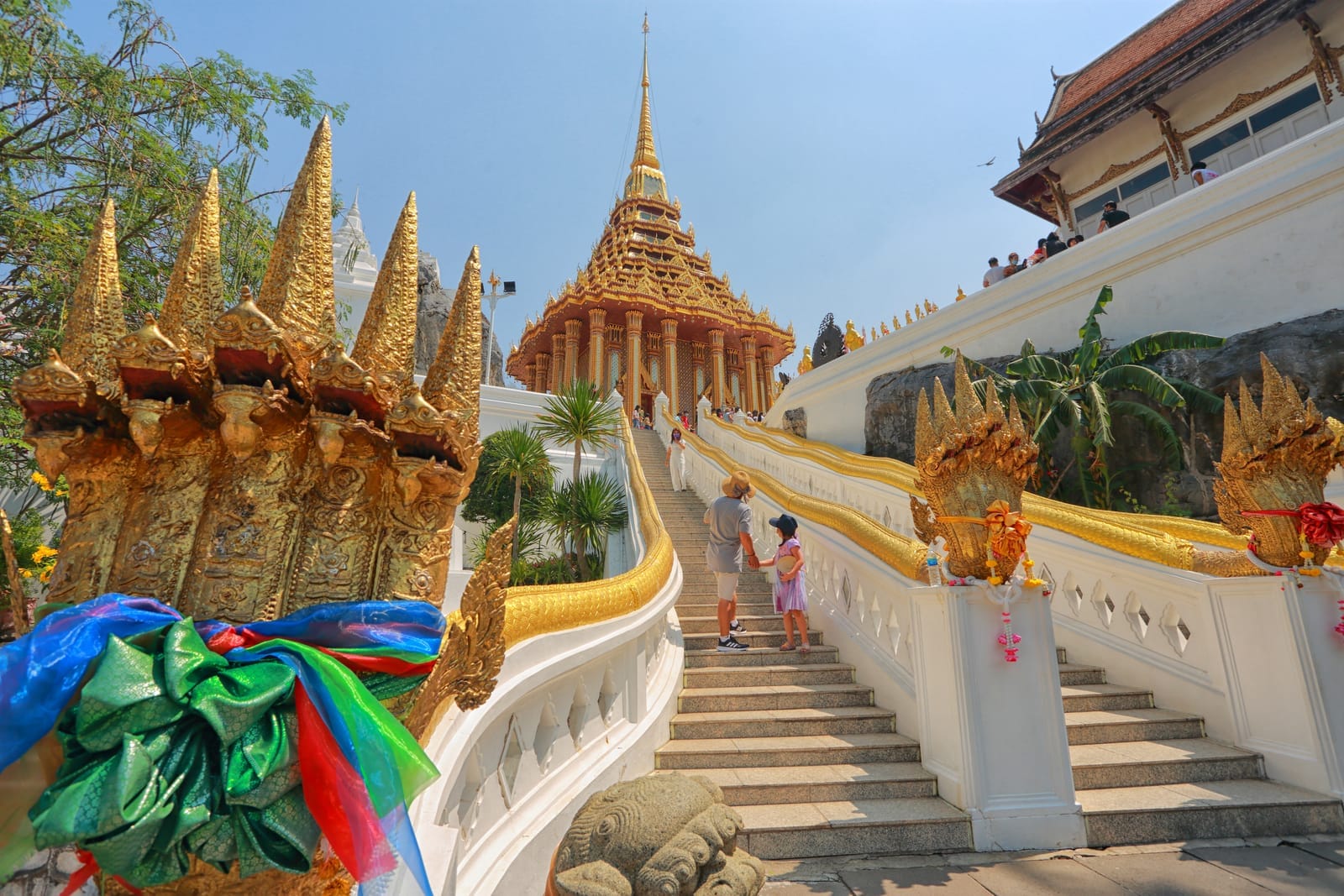
Tak Bat Dok Mai — formally Tak Bat Dok Khao Phansa — is a centuries-old tradition of the people of Phra Phutthabat district in Saraburi Province. What makes it different from an ordinary alms round is that instead of food, devotees hold a single type of wildflower that grows only on the hillsides of this area, waiting to drop the blooms into the monks' bowls as they walk up to venerate the Buddha's Footprint. The offering of flowers is considered a merit-making act of devotion on the first day of Buddhist Lent.
The reason people call it 'one of a kind' is that the flower used — dok khao phansa — blooms precisely during Khao Phansa every year and grows wild only on the mountains in this district. Once the season ends, it disappears. That is why images of this flower-filled alms round are almost impossible to find anywhere else in Thailand.
What Is Dok Khao Phansa? What Colors Does It Come In?
Dok khao phansa — sometimes called dok hong hoen (flying swan flower) by locals — belongs to the same family as ginger and galangal. It grows from an underground bulb and sends up a long stem topped by a curved, elongated bloom that resembles a swan in flight, which is how it got its nickname. The flowers emerge together at the start of the rainy season, exactly when Buddhist Lent begins.
- Purple — the most coveted color, rarer than the others, and usually the most expensive
- Yellow — the most common, the color you will see lining both sides of the path
- White — found in smaller numbers; people often mix it into a bunch with the other colors
On the day of the ceremony, villagers tie the flowers into small bunches and sell them in front of the temple and along the route up. Small bunches start at around ฿20–40; large bunches or all-purple arrangements can reach ฿60–100 depending on the year and how scarce the purple ones are. There is no need to bring flowers from home — buying on-site is more convenient and your money goes directly to the locals who picked the flowers from the hills.
Want the purple ones?
Purple blooms sell out fast and people go after them quickly. If you specifically want an all-purple bunch for photos, arrive at least half an hour before the ceremony starts and walk the stalls first.
Want more out of Saraburi? Book tours & activities
Booking online ahead on Klook or GetYourGuide is usually cheaper than the gate and skips the queue. Pick only the experiences you actually want — prices and availability are shown live on each site.
When Is the Event? What Sessions Are There?
The event follows the lunar calendar date of Khao Phansa — the first waning day of the eighth lunar month — so the Gregorian date shifts every year. The province currently runs the festival over 3 days surrounding Khao Phansa. In the previous year (2025) it fell on 9–11 July; future years will shift according to the lunar calendar. Check the Khao Phansa date for the relevant year before making plans.
- Opening day — late afternoon through evening: royal candle procession, Payuhayatra royal procession, and floral floats, followed by the opening ceremony
- Morning round, approx. 09:00 — the main alms ceremony; largest crowd, beautiful light
- Afternoon round, approx. 15:00 — a second opportunity for those arriving later; slightly fewer people than the morning
Times can shift
Ceremony start times may change from year to year. Before you go, double-check the latest schedule from the Saraburi Tourism Authority page or TAT — the procession order and alms-round timings are adjusted annually.
The Foot-Washing Ritual — Something Many Visitors Miss
After the monks receive the flowers and climb barefoot to venerate the Buddha's Footprint, on their way back down there is a foot-washing ceremony where laypeople have clean water ready to wash the monks' feet. The act symbolizes purification and respect. This moment is quieter and often more moving than the alms round itself — if you can stay for it, it is worth the wait.
There is also a long-held belief that flowers offered to the monks and carried up to the Buddha's Footprint send merit directly to heaven — in keeping with the idea of a celestial staircase. This is why people take time to choose their best blooms and hold a quiet intention in mind before placing them in the bowl.
Where to Stand for Good Photos
Both sides of the path up to the mondop
The classic shot: devotees holding flowers line both sides, monks walking through the middle. Get into position before the monks begin their walk.
Higher up on the mondop staircase
Gain a little elevation and you get a sea of flowers and the crowd from above — good for wide atmosphere shots.
Flower stalls outside the temple
Bunches of purple and yellow piled up in rows — great for close-up shots of the dok khao phansa without having to squeeze through the ceremony.
Ceremony etiquette
This is a religious ceremony, not just a photo backdrop. Dress modestly, do not block the monks' path, do not thrust a camera in front of them, and keep your voice down during the ritual. Photography is welcome, but be mindful of the people who are there to make merit.
Getting There and Parking
Wat Phra Phutthabat Ratchaworamahawihan sits in Khun Khlon sub-district, Phra Phutthabat district, about 28 km from Saraburi town. From Bangkok the drive takes roughly 2 hours along Phahon Yothin Road (Highway 1) toward Lopburi. Alternatively, take a minivan or bus on the Bangkok–Saraburi route, then a songthaew (shared pickup truck) into Phra Phutthabat district.
- Traffic is heavy on festival days — arrive early, park further away and walk in; you will waste less time than circling for a close spot
- Temple entry is free — no admission fee; you only pay for flowers and whatever you choose to donate
- Build in time for the exit — everyone leaves at once after the ceremony and the road backs up; grab a meal nearby and wait for the congestion to ease
Combine it into a full day
If you are already in Phra Phutthabat by morning, the afternoon is easy to fill: drive over to Wat Phra Phutthacha or head into Saraburi town for lunch. This trip works well as a comfortable day trip.
Plan your full Saraburi day — temples, waterfalls and more
Saraburi Travel Guide →