🔄 Updated 21 Jun 2026
When people think of Satun, most picture the sea and Koh Lipe first, but the town's desserts are a story hardly anyone tells. Many of the local sweets are tied to Muslim life and the Ramadan season — some are sold only from a front porch at the morning market, and others you have to order ahead because they're hard to make and the people who still make them are few. We've split them into two groups: first, the old-school local sweets that are the standout treats of the province, and second, the cake bakeries and dessert cafes in town that are easy to drop into all year round.
How many groups do Satun desserts fall into?
- Old-school local sweets — bunga pudak, lopeh, ju-joh-chara, pressed sticky rice cake, roti kapai. Mostly handmade, easiest to find during Ramadan and merit-making festivals, and some need to be ordered ahead.
- Market sweets and souvenirs — found at the morning markets and day markets in Satun town, including coconut-milk sweets, fried sweets, and treats you can wrap up to take home.
- Cake bakeries and dessert cafes — homemade shops in town with cakes, brownies, and tiramisu, plus cafes that pair desserts with coffee. Open all year and easy to get to.
Want to taste deeper? Try a Satun food tour or cooking class
Half a day with a local who knows the lanes — or cooking a dish yourself — teaches you more than just eating. Book ahead on Klook or GetYourGuide.
Old-school local sweets worth trying
Let's start with the local sweets that are genuinely Satun's own. This group reflects the town's Malay Muslim and Chinese roots, and many of them are entirely handmade by fewer makers each year. The names and backgrounds here draw on information from the TAT Satun office and local media. Before you head out, call the shop or check their page first, since many makers only sell seasonally and around festivals.
Bunga pudak (lamjiak flower cake)
Satun's signature sweet, found almost only here. 'Bunga' means flower and 'pudak' is the sea pandanus — the cake is folded into a cone that looks like a flower, with a sweet, fragrant stewed-coconut filling. It started as a sweet inside the old palace walls in the era of Phraya Samantharat, made for big occasions like Hari Raya and weddings. Today it's an OTOP product, with several families passing the recipe down over generations.
Lopeh (lupeh)
An old-school sweet that's soft and sweet, made from sticky rice soaked in limewater, pandan, and cane sugar — gently sweet with a fresh pandan scent and a chewy texture. It sells really well during Ramadan, and many families pass the recipe down from grandmother to make and sell for breaking the fast. Even younger folks still love it.
Ju-joh-chara (Singapore griddle cake)
An old griddle cake that goes hand in hand with Satun and is now hard to find. It looks a bit like khanom krok, but the recipe and method are different. Older folks know it well, but younger ones barely recognize it, and very few people still make and sell it. If you spot a stall that still makes it at the market, count yourself lucky — give it a try and keep it as a memory of the town.
Pressed sticky rice cake (butterfly-pea sticky rice)
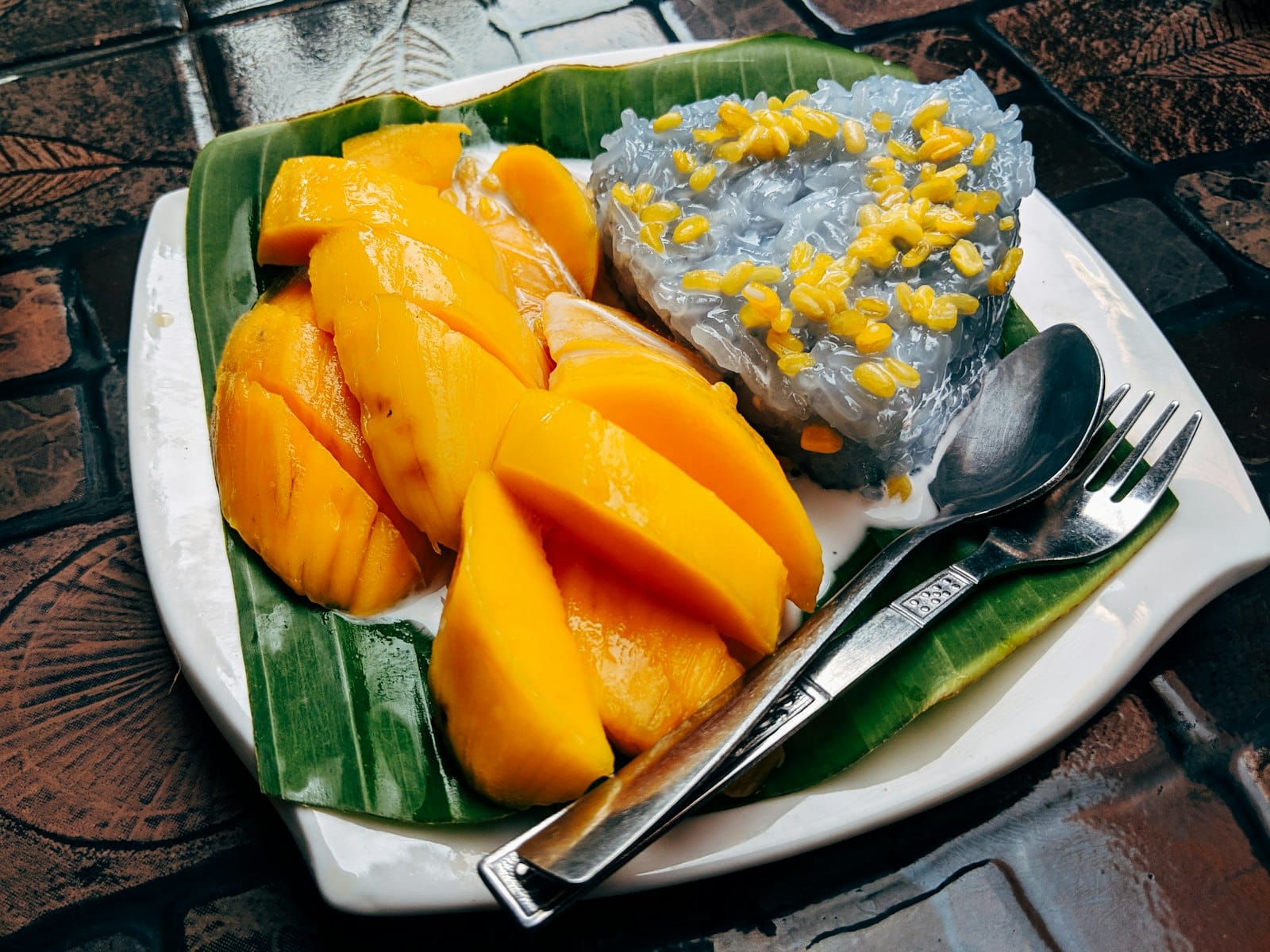
A local sweet of Satun's Chinese community, made with two-tone sticky rice — part of it soaked in butterfly-pea water for a blue-purple color, the rest left white. It's steamed, then sweetened with thick coconut cream, packed into a wooden box and weighed down with a stone overnight to set firm, then cut into pieces. The texture is dense and chewy. It's made in quantity during Ramadan and sold from front porches in two rounds, morning and evening.
Roti kapai
A thin, crispy roti sheet in local Satun style — savory and rich, fun to munch, and different from the usual sweet roti. It's an old sweet that Satun folks have made for a long time, great as a snack with hot tea or coffee. You'll find it at local sweet shops and markets in town.
Wood-fired local sweets (Jao Kagon, La-ngu)
Traditional local sweets baked over a wood fire that still uses real firewood, giving a distinctive aroma a gas stove can't match. This is a maker that local media has written about, doing good business during Ramadan, with several baked sweets rotating by the day. Great for anyone who wants to taste genuinely old-fashioned handmade sweets.
Tips for finding heritage sweets
Many of Satun's local sweets are easiest to find during Ramadan, because lots of families make and sell them for breaking the fast. If you come outside that season, sweets like bunga pudak and lopeh usually need to be ordered ahead from a regular maker, or look for them at the morning markets in Satun town early in the day. Ju-joh-chara is genuinely hard to find, so whenever you come across it, try it right away.
Cake bakeries and dessert cafes in town
If you want desserts that are easy to drop by all year, Satun town has several homemade cake bakeries and dessert cafes that locals genuinely go to. The names, opening hours, and locations here draw on the shops' pages and recent reviews on Wongnai and Lemon8. Check the shop's page again before you go, since many homemade places make to order and adjust their hours.
Bake for you by Khanom Cake Baan Kru Daeng
A cake shop that Satun folks call a local legend for taste. They've been making homemade cakes and bakery items for a long time — the cake is soft and moist, not too sweet, with a rotating selection of flavors. Great for a birthday cake or a little something to bring home.
Arayeh Bakery
A homemade cake and bakery shop focused on good ingredients and lighter sweetness that suits all ages. They have cakes, cookies, and various bakery items — great for anyone who likes desserts that aren't too sweet and wants something freshly made. Good for treating yourself or as a gift.
Ninee House Bakery
A homemade bakery that Satun folks talk about for its Korean tray cakes and tiramisu. They set up at day markets and take orders, with soft cake that's sweet in just the right amount. Great for cake lovers who want something cute and photogenic with a flavor that's easy to like.
Little Brownies Cafe
A minimalist white-toned dessert cafe in the Soi Ton Mai Yai area, near Phiman Phitthayasan School. It's known for fresh-baked brownies and homemade cakes, with coffee and drinks to order alongside your sweets. Great for stopping in for dessert and chilling in the afternoon.
Starin Cafe & Bistro
A halal cafe in white-and-brown tones in the Phiman area on Suwannadee Road, with photogenic minimalist decor. Besides food, it has desserts and drinks to order at the end of a meal. Great for settling in for a while with a dessert and coffee. The shop is clean with a relaxed vibe.
Morning market sweets, Satun town
If you want to taste lots of sweets in one spot for cheap, the morning markets in Satun town have stalls with coconut-milk sweets, fried sweets, and local sweets rotating by the day — including khanom mo kaeng, layered khanom chan, and southern-style coconut-milk desserts. Great for grazing in the morning before things sell out.
Straight talk on homemade shops
Many of Satun's cake bakeries are homemade places that make to order rather than full sit-down storefronts. If you want a specific whole cake or tray, message their page to order at least a day ahead. As for dessert cafes like Little Brownies and Starin, they have seating you can walk straight into during opening hours.
Pick a dessert by occasion
Want a gift to take home
Bunga pudak, pressed sticky rice cake, and roti kapai can be wrapped up to go and keep reasonably well — souvenirs that clearly say Satun.
Want to try rare heritage sweets
Lopeh, ju-joh-chara, and the wood-fired sweets from Jao Kagon — try them during Ramadan or order ahead, when they're easiest to find and freshest.
Want to sit in a cafe with dessert
Little Brownies and Starin Cafe in town pair desserts with coffee, with seating to chill and take photos. Open all year, no need to wait for a season.
A Satun dessert trail in one day
If you want to cover Satun's desserts — both the heritage sweets and the shops in town — in a single day, here's a route that works. Start early at the market while everything's still in stock, then work your way to the cake shops and dessert cafes in the afternoon.
From the morning market to an afternoon dessert cafe
Straight talk
Satun's local sweets are tied to seasons and festivals more than you'd think. Ramadan is when the heritage sweets come out in force and are easiest to find. Outside that season, some need to be ordered ahead, or might not be made for sale at all. As for the cake bakeries in town, many are homemade and make to order — not every shop has a storefront you can walk into. We'd suggest messaging their page to check first every time, so you don't make the trip for nothing.
Plan a full eating-and-traveling trip in Satun town
See the Satun travel guide →