🔄 Updated 21 Jun 2026
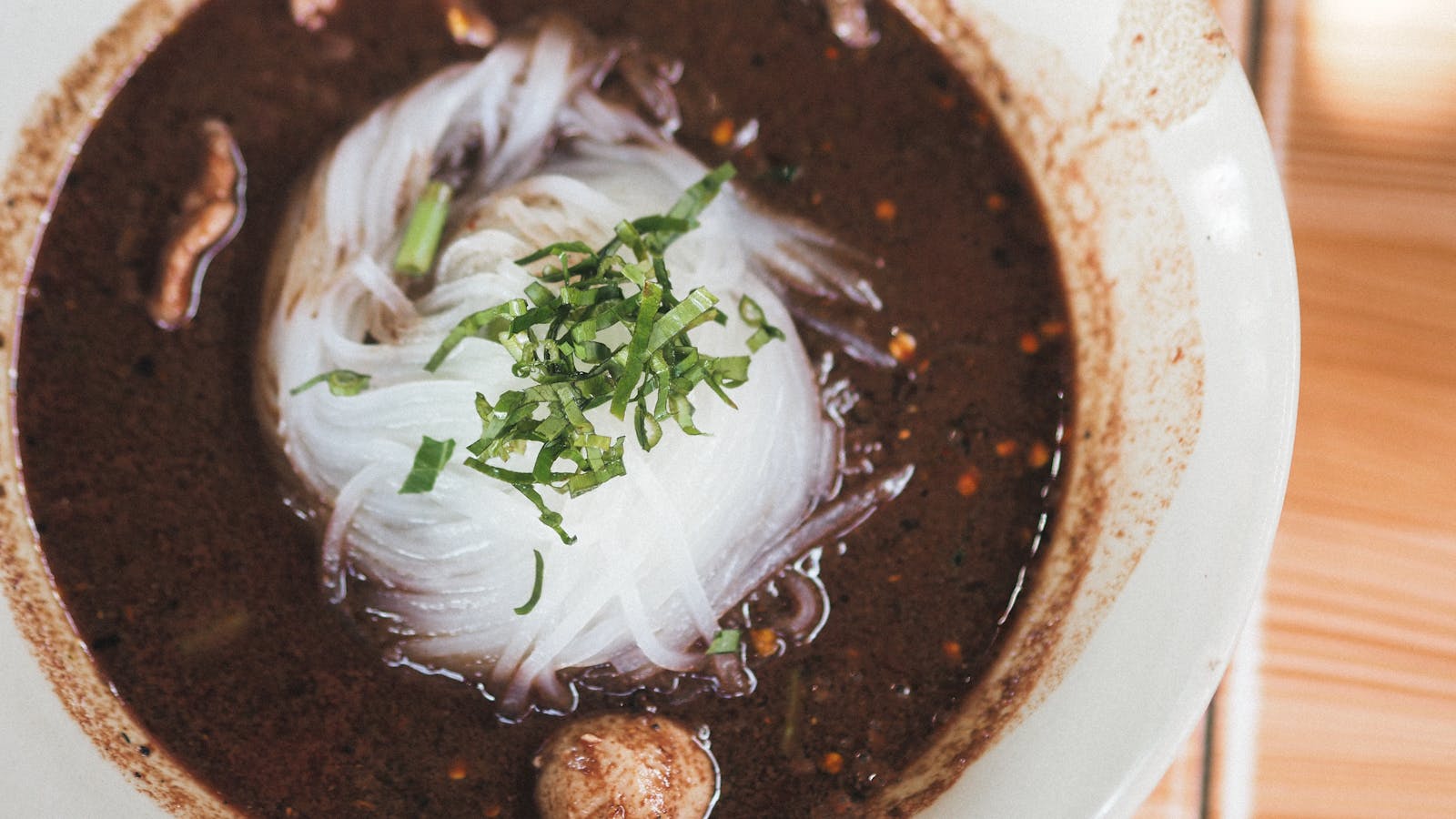
If you want to understand what people in Satun eat in the morning, khanom jeen is one of the first answers — it's filling, easy on the wallet, and there are plenty of shops across the province, from in-town places that make noodles fresh daily to old shops in Langu district passing recipes down through the generations. The charm of Satun's khanom jeen is the bold southern curry sauce paired with a big tray of phak noh that keeps the whole plate interesting. We've picked the shops and standout dishes for you, with neighborhoods and prices as found in real reviews.
How many kinds of southern nam ya are there?
Before you order, knowing the sauces makes choosing easier. Most shops in Satun have at least three or four to choose from, and some have five or six you can ladle over a single plate.
- Coconut nam ya — pale orange from curry paste and coconut milk, rich and rounded. This is what people who can't handle much heat order most often.
- Fermented-fish nam ya (nam ya pa) — deep and intense from salted fish innards and southern curry paste, hot and packed with spice. True southerners usually go for this one.
- Sweet sauce (nam phrik) — sweet-leaning to cut the salt, topped with ground peanuts; good to mix with a spicy sauce for contrast.
- Green curry — some shops offer it over the noodles instead of nam ya, fragrant with curry paste and sweet basil.
- Crab nam ya / mantis-shrimp nam ya — a Satun specialty thanks to the coast, fresh crab or mantis shrimp in a thick curry, harder to find than the usual sauces.
Want to taste deeper? Try a Satun food tour or cooking class
Half a day with a local who knows the lanes — or cooking a dish yourself — teaches you more than just eating. Book ahead on Klook or GetYourGuide.
Satun khanom jeen shops worth trying
Ordered by how much locals and visitors talk about them, covering fresh-noodle shops in town, budget morning spots, and old shops in the outer districts. Opening hours and prices are drawn from shopfronts and reviews. Local shops do shift their hours, so it's worth a quick phone call before you go.
Suan Lung Lee Fresh-Noodle Khanom Jeen (Khlong Khut)
Satun's first fresh-noodle khanom jeen shop, making the noodles fresh every day in a shady garden-house setting. There are several sauces to choose from — coconut, fermented-fish, green curry, sweet nam phrik, and nam ya pa — plus a tray of fresh phak noh you can refill freely, and a house pickled cucumber relish (ajad) with a nicely balanced sweet-and-sour bite. This is where Satun locals often bring out-of-towners.
Negara, Sarit Phuminat Soi
A relaxed sit-down spot in the center of town near Satun Kindergarten, and a regular meeting point for locals. The standout is khanom jeen with crab nam ya, a rich and rounded curry. Beyond the noodles there's made-to-order food and fresh seafood, so it works well if you come with a group and want to order a spread.
Crab & Mantis-Shrimp Nam Ya, Langu District
A shop that made waves in Satun as the first to do mantis-shrimp nam ya, using fresh crab and mantis shrimp daily in a thick, fragrant curry, with free phak noh. The plain noodles start cheap, while a bowl of crab or mantis-shrimp curry climbs with the cost of the ingredients. It's along Chaloem–Langu road near the Ban Kubang Jamang intersection — a good stop on the way to Pak Bara.
The Legendary Khanom Jeen, Langu District
An old khanom jeen shop in Langu run as a family business handed down through the generations, where locals have eaten since childhood. The southern curry sauce is bold in the traditional way and the price is easy. It's a corner tourists haven't really found yet — if you pass through Langu and want khanom jeen the way locals really eat it, stop in.
Ka Da 1 Khanom Jeen (Suan Khun Chin Market)
A khanom jeen shop in Suan Khun Chin Market, just before Toyota Songkhla Satun. It's a morning spot where people working nearby grab a bite before the day starts — bold southern sauce, fresh phak noh, and a low price per head. Good if you want to eat quickly without lingering.
Khanom Jeen Kitchen, Satun
An in-town khanom jeen shop that reviews call good value, with a low price per head, several sauces to choose from, and a full set of phak noh. It works for eating solo or as a pair — an easy pick if you're staying in town and want khanom jeen for breakfast.
Khanom Jeen with Local-Veggie Buffet
A shop with a fresh local-vegetable buffet you serve yourself to pile on alongside the noodles. There are dozens of phak noh laid out in rows — stink beans (sator), luk niang, cashew shoots, pennywort — a setup that lets veggie lovers go all in. The vibe is easygoing and homey.
Khanom Jeen at the In-Town Morning Market
To eat like a true Satun local, wake up early and walk the in-town market, where vendors sell khanom jeen with nam ya both bagged and by the plate at low prices. The southern curry sauce is house-made and full of spice, with fresh phak noh sold beside it — you can buy it to take back to your room. This kind of thing usually sells out before noon.
Southern Khanom Jeen Shop, In Town
A traditional southern khanom jeen shop in Satun town, with fermented-fish and coconut nam ya made fresh, bold the way southerners like it, and plenty of phak noh. Good for anyone who wants to try a deep nam ya pa without dialing the heat down.
Halal Crab Nam Ya Khanom Jeen at the Mall
An option for anyone who wants to eat in air-conditioned comfort at the mall, with a rich halal crab nam ya khanom jeen that gets a lot of mentions. Handy if you're escaping the heat or bringing the family to the mall and want southern khanom jeen without going far.
Tips for ordering southern khanom jeen
If you can't take much heat, start with coconut nam ya, then try ladling on a little nam ya pa or fermented-fish to round out the flavor. And don't forget to grab plenty of phak noh — stink beans, luk niang, long beans, pennywort — which cut the heat and keep the whole plate interesting.
Phak noh, the heart of southern khanom jeen
Southerners call the vegetables eaten with khanom jeen phak noh, and this is what makes Satun's khanom jeen more fun than elsewhere — sitting between forest and sea, the local greens are varied and fresh every day. Many shops lay out a big tray you can refill as much as you like.
- Stink beans (sator) & luk niang — strong, distinctive aromas that click with spicy nam ya; the stars of the phak noh tray.
- Cashew shoots & man pu shoots — tender young shoots, slightly astringent and nutty, good at cutting the heat of the sauce.
- Long beans, bean sprouts & winged beans — crisp, fresh vegetables you'll find at every shop, adding crunch to the plate.
- Pennywort, Thai eggplant & lead-tree seeds — mild fresh greens; alternating them with bold sauce keeps things from getting heavy.
- Pickled cucumber / ajad — a sweet-and-sour side many shops make in-house, good for cutting the richness of coconut nam ya.
Getting the most out of Satun khanom jeen
- Go early for the full spread — khanom jeen is a southern breakfast, and many popular shops and morning markets sell out before noon.
- Try several sauces on one plate — most shops let you mix; try coconut with fermented-fish and a little sweet nam phrik on top.
- Load up on phak noh — shops with free veggie refills are the value pick, so grab plenty — stink beans, luk niang, local shoots.
- Carry cash — many morning shops and market stalls take cash mostly, so small bills are more convenient.
- Stop on the way — if you're heading to Pak Bara or Koh Lipe, the khanom jeen shops around Langu make a tidy breakfast stop.
Plan a full eat-and-explore trip to Satun
See the Satun travel guide →