🔄 Updated 21 Jun 2026
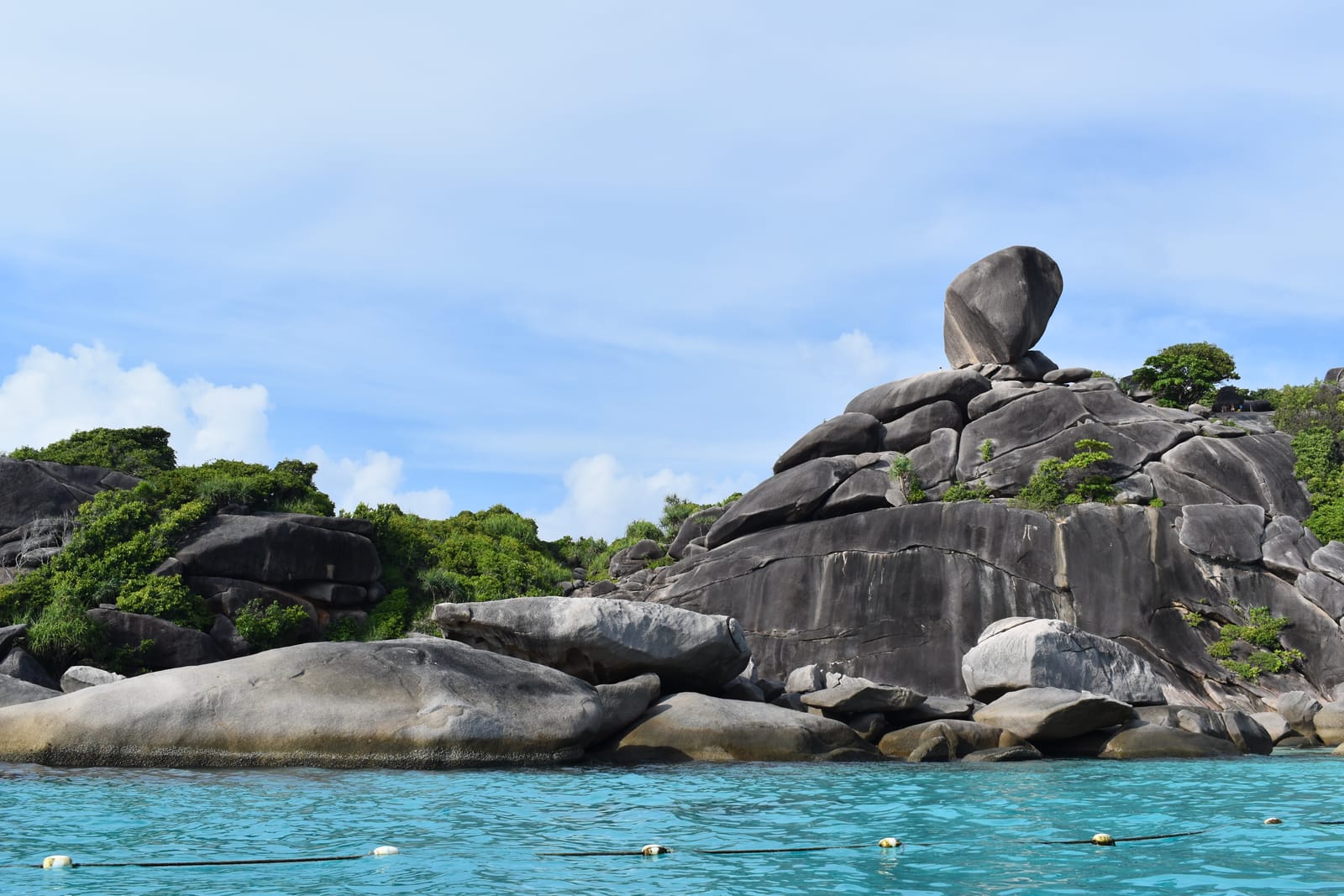
When people talk about Thailand's clearest seas, Similan is usually one of the first names that comes up. The islands lie well off the Phang Nga coast in open water, so it's a lot clearer here than in sheltered bays like Phang Nga Bay. The sand is bright white and the coral is still in good shape, partly because it's inside a strictly managed national park that closes to recover every year. People come here mainly for two things: snorkeling over the coral and fish, and climbing up to the Sail Rock viewpoint on Island 8 for that photo of the curving bay that's become the classic image of Similan. And anyone who dives knows the granite pinnacles on the western side of the islands are some of the best dive sites in the Andaman.
Where are the Similans, and how many islands?
The Similan Islands are in the Andaman Sea, off Khura Buri and Thai Mueang districts in Phang Nga province, about 65 km from Thap Lamu Pier. The name "Similan" comes from the Malay word for "nine," because there are nine main islands. Locals and guides usually refer to them by number — Island 4, Island 7, Island 8, Island 9, and so on. The whole group sits within Mu Ko Similan National Park, which also includes Koh Tachai and Koh Bon to the north. These days, though, Koh Tachai and Koh Bon are closed to landings for conservation, so day-trippers can actually set foot on only a handful of islands.
Want more out of Phang Nga? Book tours & activities
Booking online ahead on Klook or GetYourGuide is usually cheaper than the gate and skips the queue. Pick only the experiences you actually want — prices and availability are shown live on each site.
What you can do on each island
Most day trips loop around 3–4 main stops, focusing on the islands with the nicest beaches and the clearest snorkeling. Here are the islands you can actually reach, ranked from most to least popular.
Island 8 (Koh Similan) · Sail Rock
The largest island and the face of the whole archipelago. It has a curving white-sand beach at Horseshoe Bay (also called Donald Duck Bay), and the highlight is the climb up the stairs and rocky path to Sail Rock, a giant boulder shaped like a ship's sail on top of the island. It's the best spot for that photo of the curving blue bay. The climb is steep and hot, so wear shoes you can walk on rock in.
Island 9 (Koh Bangu)
The northernmost island day trips reach. It has a long white-sand beach and a clear snorkeling spot where you can see coral and fish right from the shoreline. A lot of trips use it as the main swim stop or the lunch break, and it tends to be less crowded than Island 8 because it's further out.
Island 7 (Koh Payu) · Island 6
A clear-water snorkeling zone with healthy hard coral, clownfish, parrotfish, and coral beds you can watch from the surface. The water here is clear enough to see the sandy bottom sharply. Boats usually stop for a snorkel here and there before heading on to Island 8.
Island 4 (Koh Miang)
Home to the park headquarters and the overnight base. It has two beaches — a small one and a large one — plus park bungalows and a campground. Some day trips stop here for a stroll or lunch, while anyone staying overnight is based mainly on this island.
Western underwater pinnacles
Similan's deep-dive playground is the big granite boulders underwater on the western side of the islands, like Elephant Head Rock, with swim-throughs and rock arches to pass under. You'll see big schools of fish and sometimes a manta ray. It suits divers who hold a certification — dive trips here are usually separate boats or overnight liveaboards.
Koh Tachai & Koh Bon
A lot of people have seen photos of Koh Tachai's gorgeous beach and want to go, but right now Koh Tachai and Koh Bon are closed to landings so nature can recover, so regular day trips don't reach them. Most trips just loop around Island 8, Island 9, and the snorkeling spots nearby. If you want to see the northern zone, you'll need to go with a dive trip or an overnight boat that holds a special permit.
Open or closed — when does Similan close?
The single most important thing to check before you plan is that Similan isn't open year-round. Mu Ko Similan National Park closes to recover every monsoon season for several months, because of strong wind and waves and to give the coral and ecosystem time to bounce back. So the open period is the dry season, when the sea is calm and the water is at its clearest.
- Open season — roughly mid-October to mid-May (typically Oct 15 – May 15). This is the only window when you can land on the islands and take a boat out to Similan.
- Closed for recovery — roughly mid-May to mid-October. The park is closed to the entire archipelago, and every tour operator stops running during this stretch.
- Clearest water — December to April, with clear skies, small waves, and very clear water — the best time for diving. But it's also when it's busiest and prices are highest.
Check the actual open date every year
The open and close dates can shift year to year depending on the National Park Department's announcement. Some years the opening is pushed back if the weather hasn't settled. Before you book a trip or a place to stay, check the park's latest announcement or call the headquarters first — don't count on fixed dates.
How much is the park fee?
The Similan Islands are inside a national park, so everyone pays an entrance fee. This is usually separate from the tour price — some operators include it, some don't, so ask clearly before you book. The standard rates are:
- Thai nationals — 100 THB for adults, 50 THB for children.
- Foreign visitors — 500 THB for adults, 250 THB for children.
- Speedboat day-trip price — separate, starting around 1,800–3,000 THB per person depending on the operator and season. It usually covers Khao Lak hotel transfers, lunch, snorkeling gear, and insurance.
About the entrance fee
The rates above are based on the National Park Department's announcement in effect for 2026, which raised the fees. This can change again by government notice, and it's separate from the tour cost. Before you go, it's worth carrying cash for the fee, since some fee booths take cash only.
Speedboat from Thap Lamu Pier — how to get there
The main way to reach Similan is by speedboat out of Ban Thap Lamu Pier, in Lam Kaen subdistrict, Thai Mueang district, Phang Nga — close to Khao Lak. This is the main departure point for almost every operator. The speedboat takes around 70–90 minutes to reach the islands, depending on the wave conditions that day. Most people staying in Phuket or Phang Nga get a hotel pickup by minivan to Thap Lamu Pier before boarding.
Join-in speedboat tour
The option most people pick. You pay per person and depart from Thap Lamu Pier in scheduled groups, with Khao Lak transfers, a guide, lunch, and snorkeling gear included. It's good for first-timers who want everything handled for them.
Scuba dive trip
A separate boat for certified divers, heading to the underwater pinnacles on the western side, with instructors and tanks provided. Some operators run a try-dive course for beginners (Discover Scuba). Good for anyone who wants to go deep and see the rock formations and schools of fish.
Overnight liveaboard
A larger boat that stays out at sea for 2–4 days, with several dives a day and access to the northern zone — like Koh Tachai and Koh Bon — that day boats can't reach. Best for serious divers who want to dive to their heart's content.
About seasickness
The route from Thap Lamu to Similan crosses open water, and the speedboat slams into the waves a fair bit, especially early in the season when the swell is still strong. If you get seasick easily, take a motion-sickness pill about half an hour before you sail, pick a seat in the middle of the boat where it rocks less, and keep your eyes on the horizon — it helps.
Similan day-trip schedule
Most speedboat day trips run along these lines — out in the morning, back in the evening — with several snorkeling stops and the climb up to the Sail Rock viewpoint on Island 8. The real schedule flexes with the waves and how busy it is that day.
Speedboat from Thap Lamu, out in the morning, back in the evening
What time of day has the fewest crowds?
The park caps daily visitors to the islands at about 3,850 people, but the most popular spots — like the Sail Rock viewpoint on Island 8 — still get packed from mid-morning to noon, because the tour boats all arrive at once. Trips that leave earliest usually get to the viewpoint while it's still thin. If you can choose, look for a trip that departs the pier early and hits Island 8 as one of the first stops of the day.
- Leave as early as possible — pick a trip that departs the pier around 08:00 so you climb Sail Rock ahead of the mid-morning boats.
- Avoid long holidays — New Year, Songkran, and long weekends fill the quota fast. Book ahead and accept that it'll be crowded.
- Early and late season — late October and early May see fewer people and cheaper prices, but the waves can be stronger and on some days the underwater visibility isn't as good as in the cool season.
What to bring
- Reef-safe sunscreen — the park campaigns for sunscreen that doesn't harm coral, so avoid anything with oxybenzone.
- Shoes you can walk on rock in — the climb up to Sail Rock is rock and stairs, so closed-heel shoes or rubber shoes are safer.
- A waterproof pouch for your phone and camera — there's definitely spray getting on and off the speedboat, and you'll be in the water for snorkeling.
- Motion-sickness pills — the open-water route gets rough, so take one about half an hour before you sail.
- Cash — for the park fee, any extra gear rental, and food on the islands. The service points on the islands rarely take cards.
- Swimwear + towel + a long-sleeve sun shirt — the sun out at sea is intense, and a sun shirt helps during long snorkeling sessions.
Honest take
Similan really is beautiful, but it's more tiring than you'd think. The round-trip speedboat ride adds up to several hours across open water. If you get seasick easily, or you're bringing young kids or older relatives, weigh it up first. In high season the viewpoint and the beaches get so packed it's hard to get a photo without people in it. If you want the clear water like in the brochure shots, you have to be willing to get up early and accept the crowds. Anyone after a quieter vibe and a fuller diving day should look at an overnight trip, or head to the Surin Islands, which see fewer people.
Plan your whole Phang Nga trip — the outer islands, the inner bay, and the food down south
See the Phang Nga travel guide →