🔄 Updated 21 Jun 2026
Songkhla National Museum is one of those places people walk past without stopping — yet it's actually the best starting point before exploring the whole old town quarter. The museum takes you from prehistoric times through the Srivijaya era all the way to the Na Songkhla family, the Chinese-descended clan that governed this city for generations. Once you've seen this place, the strong Chinese character of Songkhla's old town will make complete sense.
The Building Is the Star — A 148-Year Sino-European Mansion
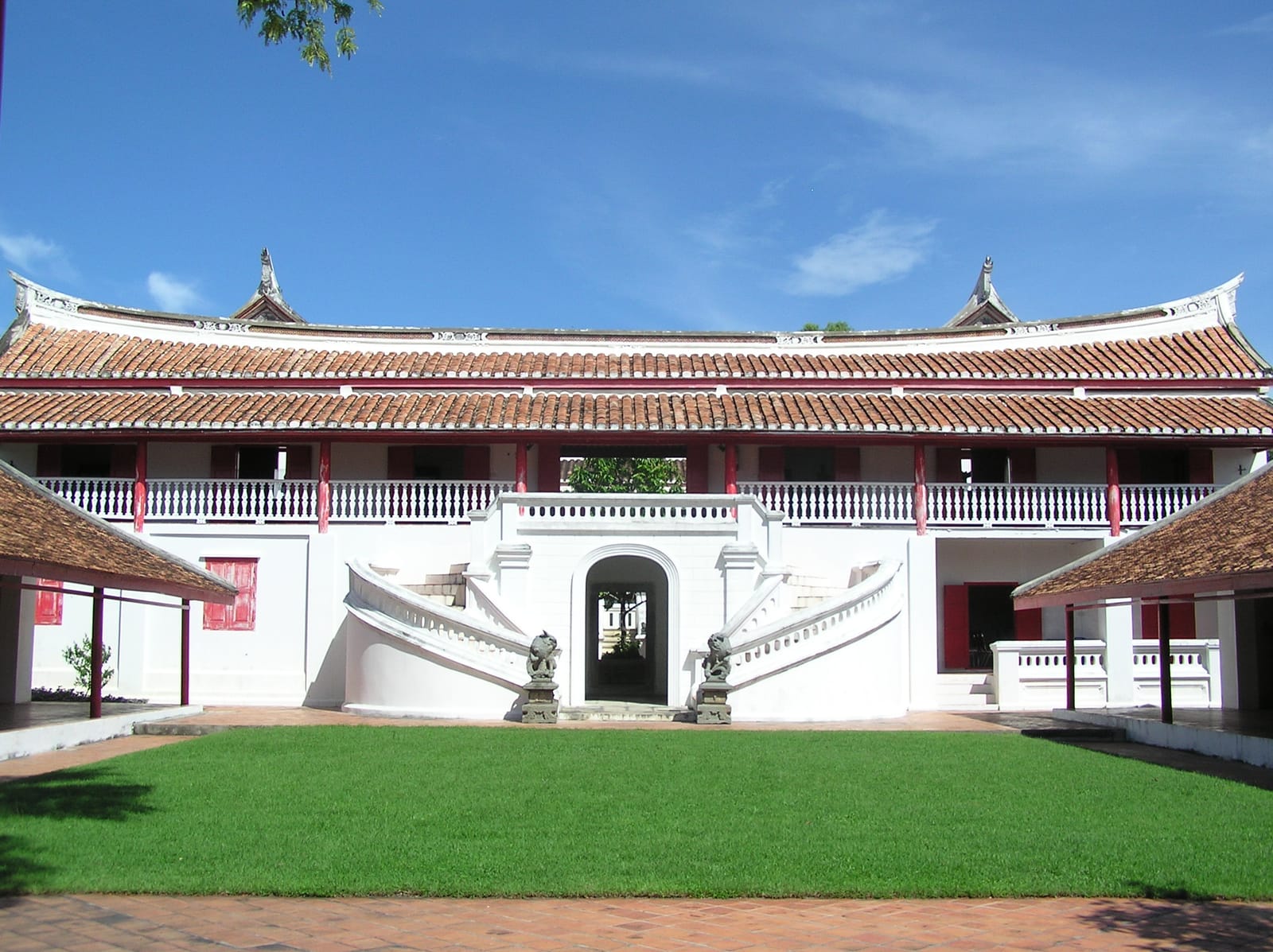
The building was constructed in 1878 (during the reign of King Rama V) by Phraya Sunthoranuraks (Net Na Songkhla), assistant governor of Songkhla and a descendant of the Chinese family that founded the modern city. Originally intended as a private residence, it later served as a government office, a residence for royal commissioners, and for a time even as the provincial hall.
What makes this building special is its Sino-European blend. It's a two-storey brick-and-plaster structure raised about one metre off the ground, laid out as a cluster of four interconnected houses joined by covered walkways enclosing a central courtyard — classic Chinese mansion form. Decorative plasterwork, carved wooden doors and Chinese-style rooflines mix with Western-style ventilation openings and arched niches. You could spend your whole visit just reading the architectural details and feel it was worth it.
The Fine Arts Department listed it as a protected monument in 1973, then restored it as a museum that officially opened in 1982. The building faces Songkhla Lake, and mid-morning light streaming through the wooden verandah makes for a favourite photo spot among visitors.
Honest heads-up
This isn't an interactive museum like the ones in Bangkok. Some signage is old-school and lighting in the galleries is fairly dim. The real draw here is the atmosphere of the old mansion and the building itself, not cutting-edge display technology. Come with that mindset and you'll enjoy it far more.
Want more out of Songkhla? Book tours & activities
Booking online ahead on Klook or GetYourGuide is usually cheaper than the gate and skips the queue. Pick only the experiences you actually want — prices and availability are shown live on each site.
What's Inside — Artifacts Across 12 Rooms
The exhibits are divided across several rooms by era and theme, covering almost the entire story of the lower South. The rooms people tend to linger in longest are the Chinese furniture room and the Na Songkhla family room, since they connect directly to the history of the house itself.
- Prehistoric Room — stone tools, beads, and evidence of the earliest inhabitants of the southern peninsula
- Dvaravati and Srivijaya Art Room — Buddhist images and sculptures from the era when southern Thailand was a major maritime trade corridor
- Chinese and Sino-Thai Ceramics Room — blue-and-white porcelain and tableware that arrived on trading junks, reflecting centuries of Chinese commerce
- Chinese Furniture Room — elaborately carved wooden tables, cabinets, and beds belonging to the city's ruling families
- Songkhla City and Na Songkhla Family Room — the story of the city and the Chinese clan that governed Songkhla across multiple generations
- Southern Folk Art and Wood Carving Room — shadow puppets (Nang Talung), everyday objects, and traditional craftsmanship of the region
A relaxed walk-through takes about 45 minutes to an hour and a half, depending on how closely you read the signs. If you're genuinely into history, budget two hours.
Opening Hours, Admission & Getting Here
- Opening hours — Wednesday–Sunday 09:00–16:00. Closed Monday, Tuesday, and public holidays
- Admission — approx. THB 30 for Thais, approx. THB 150 for foreigners. Monks, novices, and students in uniform enter free. Fees are occasionally waived — check the museum's Facebook page before you go
- Location — Wichian Chom Road, Bo Yang sub-district, Mueang Songkhla district. In the old town quarter near Nang Ngam Road and Nakhon Nok–Nakhon Nai roads
- Getting here — From Hat Yai, drive or take a minivan to Songkhla city: about 30–40 min. If you're staying in Songkhla city, you can walk. Street parking is available around the area
- Contact — Tel. 074-311728 or check the latest announcements on the Songkhla National Museum Facebook page
Planning tip
Because the museum closes Monday–Tuesday and on public holidays, people often show up to find it shut. Plan for Wednesday through Sunday, and aim to arrive in the morning or early afternoon so you have time to explore before 16:00 closing.
Where to Go Next from the Museum
The great thing about this location is that it sits right in the middle of the old town. Step outside and you're already surrounded by the historic quarter. A half-day walking trip with good food along the way is very easy to pull together.
Nang Ngam Road
A strip of old shophouses with cafes, traditional snacks, tao kua, and local sweets. A few minutes' walk from the museum.
Nakhon Nok–Nakhon Nai Roads
Street art and Sino-Portuguese shophouses with great photo angles throughout the quarter.
Samila Beach & Golden Mermaid
Songkhla's iconic beach and landmark statue. Less than 10 min by car from the old town.
City ViewsKhao Tang Kuan
Head up for panoramic views over the city and Songkhla Lake. Accessible by lift or stairs.
Who Is This For?
This is a great fit for anyone who loves history, architecture, or wants to understand Songkhla's roots before exploring the old town. It works well for families with kids who want to see real artifacts, and for anyone who enjoys photographing heritage buildings. If you're after something exciting or hands-on, this place might feel a bit quiet. But if you like taking your time in an old mansion with stories on every wall, you'll feel right at home.
Plan your full Songkhla trip
See the Songkhla Travel Guide →