🔄 Updated 21 Jun 2026
If you grew up with luk thung, coming to Suphan Buri feels like coming home to that familiar drawling accent. The province has produced famous singers across generations, and to this day you'll still find Thai music houses, piphat ensembles, and i-saew folk singing for real. This plan focuses on spots where you can genuinely follow the artists' trail — places that have something to see when you arrive, not just a name plate. We've laid out a route that drives smoothly from one stop to the next, with food spots and temples worked in along the way.
How to get there: From Bangkok, driving yourself is by far the easiest — it takes around 1.5 to 2 hours, since several stops in this plan sit in different districts (the town centre, Bang Pla Ma, Song Phi Nong) and connecting by public transport is tough. If you don't have a car, renting one or hiring a local driver for the day is well worth it for the time you save.
Day 1 — Suphan Town + the Folk-Music Room
Following the trail in town
Day 1 tip
The National Museum is closed Monday and Tuesday. If you're travelling early in the week, flip the order — do the Song Phi Nong–Bang Pla Ma side on the first day and save the town for a day the museum is open, so you don't miss the music room.
Book the activities in your Suphan Buri trip ahead
Booking online ahead on Klook or GetYourGuide is usually cheaper than the gate and skips the queue. Pick only the experiences you actually want — prices and availability are shown live on each site.
Day 2 — Pumpuang Shrine + Artist Hometowns
Paying respects to Mae Phueng, tracing the legend
Suphan's Luk Thung Artists Worth Knowing Before You Go
Getting to know these people a little before you set off makes standing in front of the museum jukeboxes or the Pumpuang shrine feel different — because you'll understand why the people of Suphan are so proud of the music that came from their own home.
Pumpuang Duangjan
The queen of luk thung, known across the whole country, with a voice and style all her own. She was tied to Wat Thap Kradan in Song Phi Nong district, and today it has become a shrine where a steady stream of people come to pay respects and make wishes.
Waipoj Phetsuphan
The king of lae chanting and a National Artist, born in Bang Pla Ma district — the voice and lae melodies that became a template for many later singers.
Surapol Sombatcharoen
Honoured as the king of luk thung, he laid the foundations of early luk thung for the entire country. His name is on the jukeboxes in the museum's folk-music room.
Kan Kaewsuphan
Another king of lae chanting from Suphan, with a distinctly clear drawling accent. You can hear his work on the museum jukeboxes.
Sayan Sanya
A smooth-voiced luk thung singer who was hugely popular in his day — another name the people of Suphan are proud of, with work you can play in the music room.
Sornpet Sornsuphan
Another well-known luk thung singer from Suphan whose name also appears on the jukeboxes in the Suphan folk-music room.
How to Visit the Pumpuang Shrine the Right Way
Wat Thap Kradan is where people who love Pumpuang come to pay their respects. Some ask for help with work and money; some from the entertainment world come to wish for fame. What's worth knowing is that this is a place of faith for local people — go with respect, dress modestly, and follow the customs you see the locals doing, and the atmosphere will be good both for you and for everyone around you.
- Prepare your offerings — flowers, garlands, incense and candles are all on sale in front of the temple, so there's no need to bring them from home.
- Five Mae Phueng figures — each one draws people asking for different things; take your time reading the signs around the temple, no need to rush.
- Busy on special days — Pumpuang's birthday and memorial days get very crowded. If you want it quiet, avoid those and go on an ordinary weekday.
- Respect the space — keep the noise down and photograph politely, since it's both a temple and a place of spiritual meaning for local people.
How Many Days Is Just Right?
Just one day
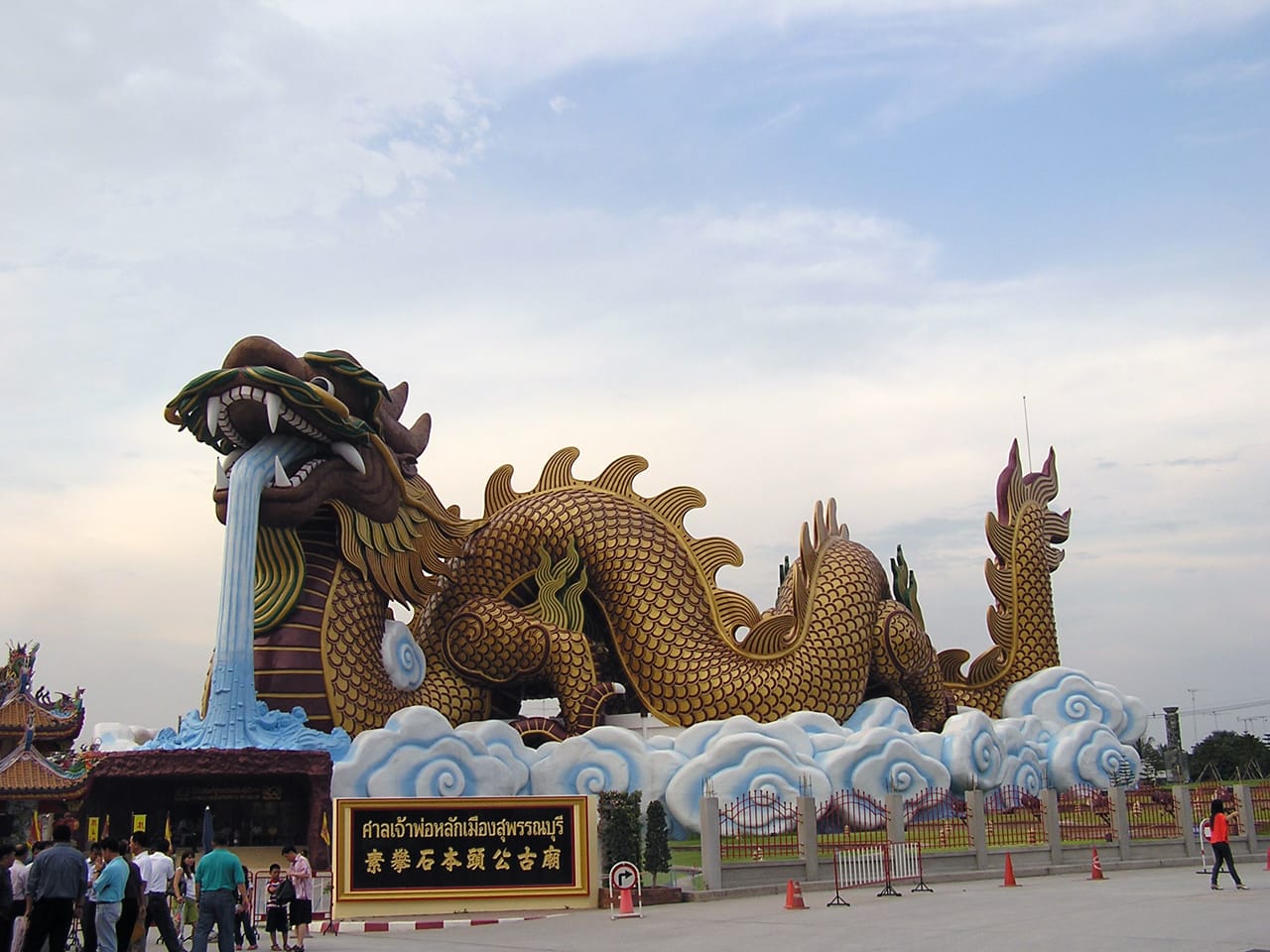
Focus on the town — the National Museum (folk-music room), Wat Pa Lelai, and Dragon Descendants Park can comfortably be done in a single day. Save the Pumpuang shrine for next time.
Overnight, like this plan
2 days and 1 night is just right — the town on day one, out to Song Phi Nong to pay respects at the Pumpuang shrine on day two. No need to rush, and you get both the music and the countryside feel.
Plan more Suphan Buri places to stay and eat
See the Suphan Buri travel guide →