🔄 Updated 21 Jun 2026
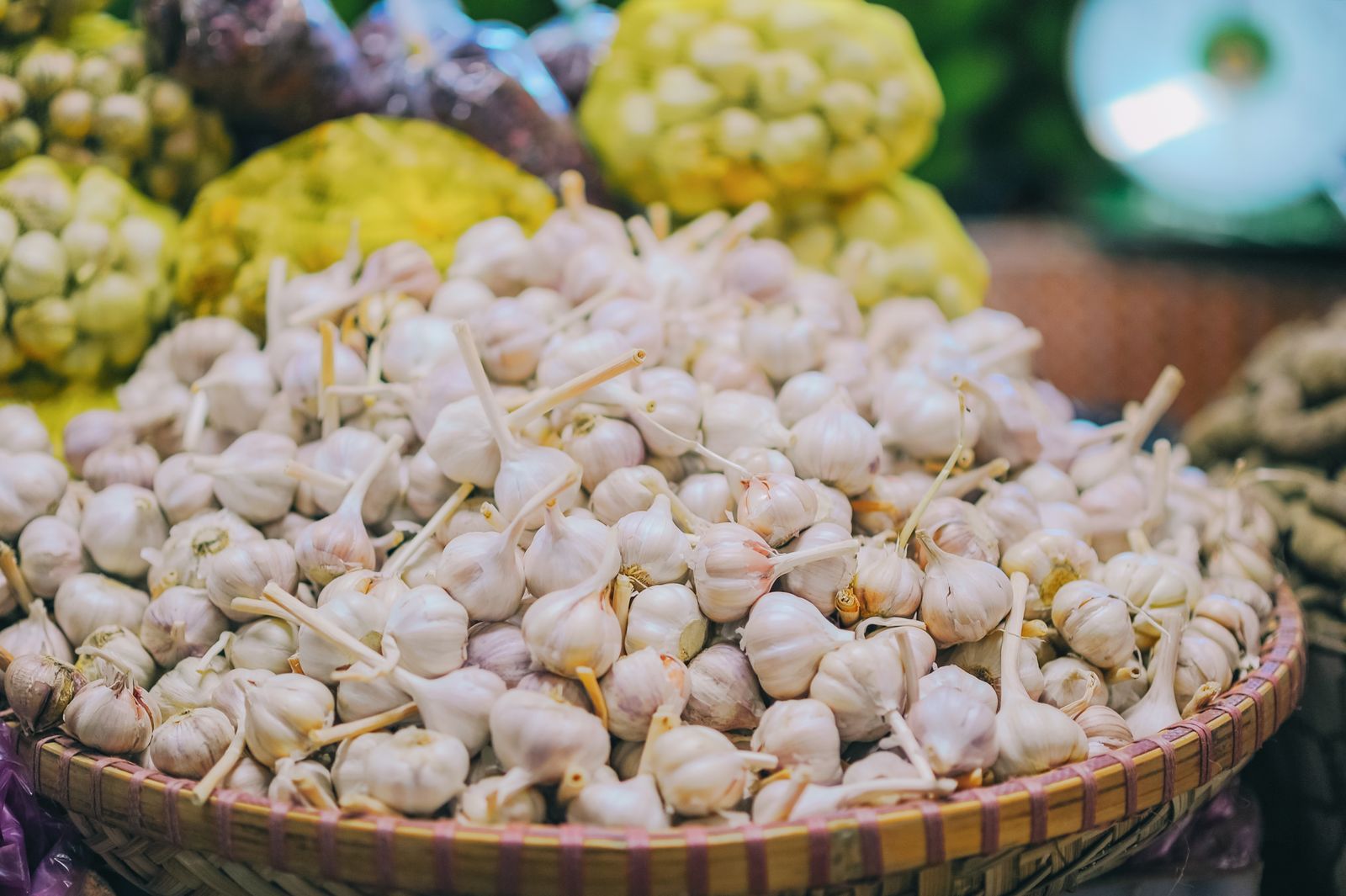
Garlic is grown far more seriously in northern Thailand, where the climate is cooler. But Lower Isan around Surin and Si Sa Ket has its own local garlic that people here have grown for their own kitchens for a long time. The heads are smaller and the cloves are smaller, but the smell and flavor are much sharper. Surin even has a subdistrict literally named Tambon Krathiam (Garlic Subdistrict) in Sangkha District — a sign that this crop has been tied to the area long enough to lend its name to a place.
Why Surin garlic has small cloves but a strong smell
Garlic with small heads and small cloves tends to have more concentrated essential oils and allicin than the big-headed, thick-skinned imported kind. Small cloves mean dense flesh and less water, so when you crush or chop it the aroma hits harder and the heat lingers more on the tip of your tongue. Isan cooks love it for exactly this reason — pound it into a chili dip, mix it into laab, or drop it into tom saep and the smell comes through clearly without needing much.
- Small cloves, thin skins — peel them and you get plenty of flesh, with few shriveled cloves
- Strong smell, sharp flavor — use a little and it's still fragrant; great for chili dips, laab and koi
- Keeps for a long time — if you dry it thoroughly and store it somewhere airy and ventilated, it lasts for months
- Solo garlic (krathiam thon) — a single-bulb garlic with no separate cloves; people believe it's stronger in smell and flavor than regular garlic, and it's popular for pickling
How to pick out good garlic
Squeeze the head to check it's firm, not soft, with dry skins and no mold, and give it a sniff — it should have a clearly pungent smell. If the head is soft or has black spots, it's starting to go off. Garlic tied into pretty bundles looks nice and is easy to carry, but it costs more than buying it loose by the kilo.
Want to taste deeper? Try a Surin food tour or cooking class
Half a day with a local who knows the lanes — or cooking a dish yourself — teaches you more than just eating. Book ahead on Klook or GetYourGuide.
Garlic-family souvenirs worth carrying home
If you'd rather not carry fresh garlic for fear of the smell getting into your bag, there are plenty of processed options. The most popular is pickled solo garlic, found all over Lower Isan in both Surin and neighboring Si Sa Ket. Here are the garlic-family treats people like to buy as gifts.
Honey-pickled solo garlic
Whole solo-garlic bulbs pickled in honey, with a rounded sweet-and-sour taste and a milder garlic smell from the long pickling. People eat it as a snack or for health, and it's the best-selling garlic-family souvenir. Keeps for several months.
Three-flavor pickled solo garlic
Pickled in a sour–sweet–salty recipe, sharper than the honey version; some makers add chili for a little heat. Good eaten with rice porridge or as a side. Packed in clear glass jars, keeps for about 8–10 months.
Fresh garlic in tied bundles
Small-clove local garlic tied into neat bundles, easy to carry and genuinely good for cooking. Cooks love it for its strong smell and sharp flavor — a great gift for anyone who likes to cook.
Crispy fried garlic
Garlic chopped and fried until crisp and fragrant — sprinkle it over rice porridge, noodles, or just snack on it. Made with strong-smelling local garlic, so it's more aromatic than the usual. Packed in a tub that's easy to carry, with no fear of fresh-garlic smell in your bag.
Garlic chili dip / chili jam with garlic
A souvenir that puts local garlic in the starring role — fragrant and sharply flavored, ready to eat with steamed rice or blanched vegetables. Many souvenir shops in town make their own, packed in small jars that are just right to carry.
Flying with it / shipping far
Fresh garlic has a strong smell, so if you're putting it in your luggage, use a double zip-lock bag to keep the smell from spreading. Pickled garlic comes in liquid-filled jars — if you're flying, it has to go in checked baggage, not carry-on, since it exceeds the liquid limit. Wrap it well so it doesn't break.
Where to buy in Surin town
Garlic-family souvenirs are easiest to find at the general souvenir shops in town, which sell kunchiang, mooyor (pork sausage) and other processed goods. For good-value fresh garlic, head to a fresh market instead. Here are the places you can actually stop at.
Kunchiang 5 Dao
Surin's biggest and most famous all-in-one souvenir shop, with kunchiang, mooyor, pork floss and pickled goods including pickled solo garlic. They offer samples before you buy, parking is easy, and it's good for a one-stop visit before you head home.
Surin Municipal Fresh Market
If you want small-clove fresh garlic at local prices, the fresh market in town has vendors selling it by the bundle or by the kilo, and you can pick out the firm heads yourself. Cheaper than the prettily tied bundles.
OTOP shops / community souvenir centers
Processed goods like honey-pickled solo garlic and chili dips are often OTOP products from local women's groups. Look for OTOP shops in town or near tourist spots to get handmade goods straight from the community.
Honestly, not every jar of garlic sold in souvenir shops was grown in Surin. Lower Isan does grow local garlic, but not in the volume northern Thailand does, so some makers use garlic from elsewhere for their pickles. If you want genuine Surin local garlic, just ask the fresh-market vendors straight up whether it's local or imported garlic — they'll tell you.
What can you do with Surin garlic?
- Pound it into chili dips — strong smell, sharp flavor, fragrant even in small amounts; great for nam prik kapi and nam prik pla ra
- Laab, koi, tom saep — adds that familiar aroma to Isan food; local garlic gives a deeper flavor
- Pickle your own — buy fresh solo garlic and pickle it in honey at home; let it sit 1–2 months before eating
- Fry it in oil — make crispy fried garlic to sprinkle over noodles or rice porridge; more fragrant than big-headed garlic
Keeping fresh garlic for longer
Don't store it in the fridge — the humidity makes it grow mold. Keep it in an open basket or mesh bag somewhere airy, dry and out of the sun, and it'll last for weeks to a month or more. Once it starts to sprout it's still edible, but the smell and flavor weaken.
Plan a full eat-shop-souvenir trip in Surin
See the Surin travel guide →