🔄 Updated 21 Jun 2026
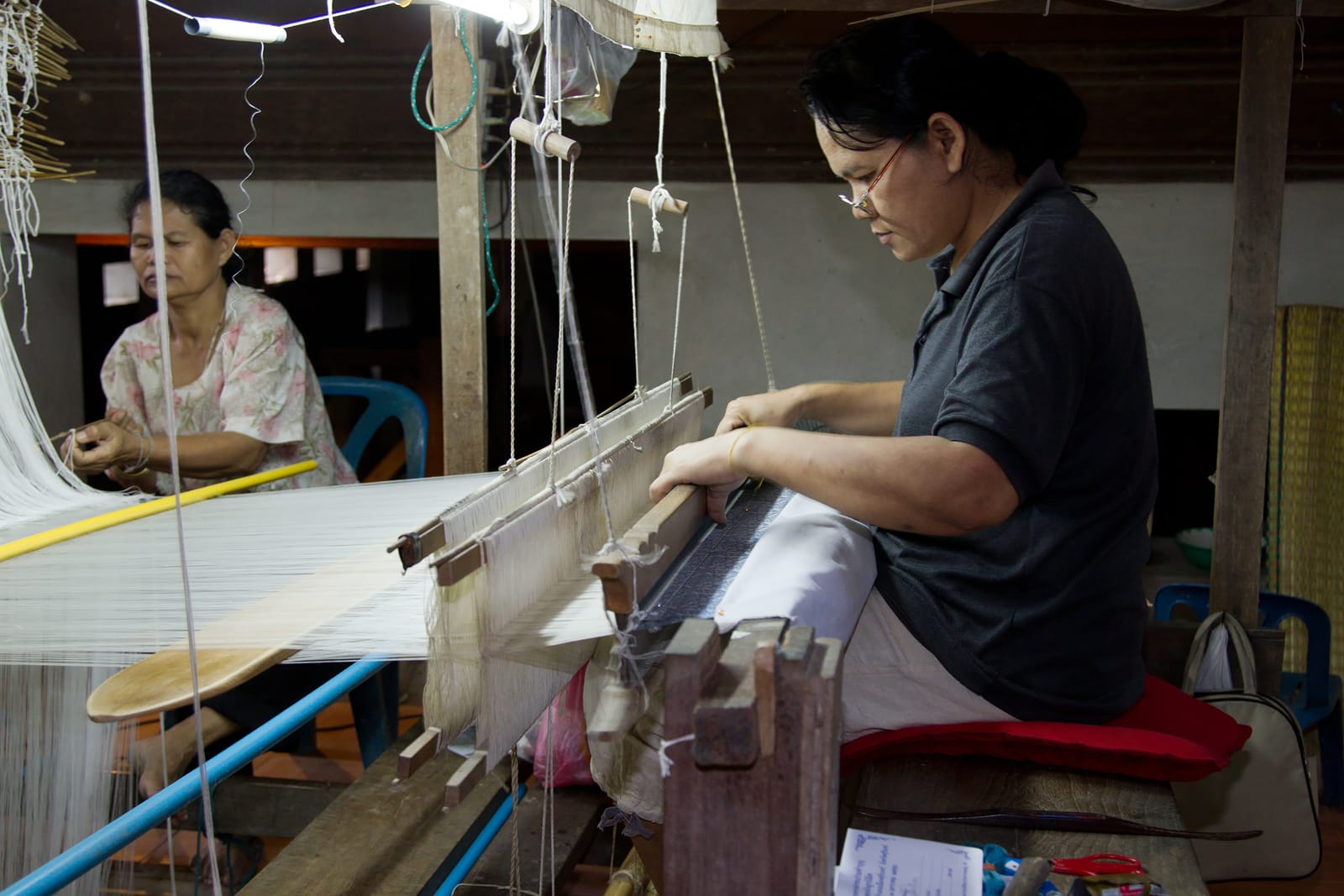
When it comes to Thai silk, Surin is one of the first names serious cloth lovers think of. The weaving here isn't generic — it carries local patterns you won't find elsewhere, and several villages still genuinely dye with bark, leaves, and lac. The charm of a silk-focused trip to Surin is seeing the whole process, from raising silkworms and reeling thread to tying patterns, dyeing, and weaving the finished cloth — then buying it home from the very hands that made it.
One thing up front: every silk village we picked sits in a safe area, nowhere near the border, and you can visit them as normal. Most are within about 20 kilometers of the town center, so you can hit several in a day if you have a car, and almost all are free to enter — these are communities that would rather have people see the real work than charge an entrance fee.
What sets Surin silk apart
What gives Surin silk its identity is the Khmer-Thai and Kuy cultural roots that have been in the area for generations. Many patterns carry Khmer names, and some mudmee (ikat) techniques exist only in Surin in all of Thailand. The two people talk about most are phra hol and amprom — the heart of Surin mudmee, woven here for over a hundred years.
- Phra hol — Surin's signature mudmee pattern, listed as part of the nation's intangible cultural heritage. A diagonal, color-graded line pattern that looks simple but is hard to make, considered the mother pattern of Surin cloth.
- Amprom — mudmee tied on both the warp and the weft, creating tiny grid patterns. This technique exists only in Surin in Thailand; with a lac-dyed red ground it's called amprom khrang.
- Gold brocade (yok thong) — the gold-thread royal-court cloth of Ban Tha Sawang, woven on a large loom with several people working together. The detail is so dense it's become known far and wide.
- Hang krarok (squirrel-tail) — two-tone twisted silk thread that gives the cloth a shimmering sheen. Another pattern Surin does well, and one you can wear on many occasions.
The province has declared seven signature patterns for Surin, including phra hol, amprom, saku, and others that reflect local life. If you get to chat with a weaver, ask the name of the pattern they're working on — each one has its own story and origin, a charm factory cloth simply can't give you.
Want more out of Surin? Book tours & activities
Booking online ahead on Klook or GetYourGuide is usually cheaper than the gate and skips the queue. Pick only the experiences you actually want — prices and availability are shown live on each site.
Natural dyes — bark, lac, indigo, ebony
Another draw of Surin cloth is natural dyeing, still genuinely practiced by many groups — especially the old-style phra hol mudmee makers. Natural colors are softer on the eye, never as loud as chemical dyes, and they shift with the light. The main colors you'll run into all come from local raw materials.
- Red to pink — from lac, an insect that lives on tree branches, giving anything from orange-red to pink depending on concentration.
- Blue to indigo — from the indigo plant fermented in a pot; the more you dye, the deeper it gets. It's a colorfast shade that's gentle on the skin.
- Black to gray — from ebony fruit, which has to be dyed and sun-dried over many rounds before it turns truly black. It takes the most effort and time of all.
- Yellow to brown — from jackfruit heartwood, bark, and maphut fruit, giving warm tones that suit the ancient patterns.
How to tell it's really natural-dyed
Genuinely natural-dyed cloth usually isn't perfectly even across the whole piece — there are slight light-and-dark shades and a faint scent of the raw material. If you find cloth that's loud, perfectly uniform, and oddly cheap, it's usually chemical dye. That's not wrong, just a different grade and price. You can ask the weaver straight out what this piece was dyed with — real weavers can answer everything and are usually proud to tell you.
Surin silk villages you can actually visit right now
Here are the villages and weaving spots that genuinely open for visits, ranked by how worth a stop they are and how varied the work is. Each has a different strength — pick the style you like, or hit several in one trip if you have a car.
Ban Tha Sawang — Jansoma Gold Brocade Silk
Surin's most famous silk village. The Jansoma group revived the weaving of gold-brocade royal-court cloth, and what made the place legendary was weaving the shawls for the spouses of world leaders at the 2003 APEC summit — earning it the nickname 'the APEC weaving village.' The work uses a large loom with several people weaving together; see it once and you understand why gold brocade costs what it does.
Ban Sawai — Phra Hol and Natural-Dyed Cloth
An old Khmer community in Sawai subdistrict, known for phra hol and ancient-pattern mudmee dyed with natural colors, woven under the houses in the traditional way. The subdistrict has hundreds of patterns — elephants, peacocks, naga and more. The feel here is genuinely village, not a shop, and you get to watch the weaving and buy straight from the person who made the cloth.
Khwao Sinrin (Ban Chok) — Silk + Pra-keuam Silver
A small district that has both silk and silverwork in one place, famous for pra-keuam — antique-pattern silver beads made into jewelry, found only here in Thailand. You can buy both cloth and silver to take home, and the Ban Chok learning center is a combined demonstration and sales point.
Ancient Phra Hol Mudmee Group (Ban Na Tang) — All Natural Dyes
A weaving group serious about pattern-tying and dyeing the silk thread entirely with natural colors. This is where you see the full process, from the indigo pot to the finished cloth — ideal if you want to understand just how hard genuine natural-dyed phra hol is to make.
Surin Silk Market — Many Villages in One Place
If you're short on time and can't head out of town, the in-town silk market is a good shortcut. It gathers OTOP weavers from many villages under one roof, so you can compare patterns and prices in one go and buy directly from the weaver or the group's representative. Great for picking up gifts before you leave.
In-town silk shops (Chop Mai / Wattrawan / Nong Ying)
The town has regular silk shops that weave and sell their own work, several with OTOP 5-star certification. Good if you want cloth that's already been curated, with someone to help recommend patterns — some shops also tailor finished outfits. A comfortable option for anyone who doesn't have time to head out to the villages.
Buying cloth straight from the weaver, the smart way
The upside of buying right at the village is getting cloth straight from the weaver, without several layers of middlemen — the price is usually better, and you get to hear about the pattern and dyeing method from the maker's own mouth. But real handwoven silk takes time; a single piece can take days to months, so it isn't cheap. Set your budget and expectations to match before you go and you'll feel best about it.
- Start small if your budget's tight — scarves or small pieces start from a few hundred to low thousands THB, so you get the real thing without a big outlay.
- Ask the pattern name and dye method — real weavers can answer it all: the pattern name, what the colors are dyed from, how many days it took to weave. That info confirms it's genuine work.
- Check for real silk — genuine silk is soft, has a sheen, and shows tiny natural slubs; it isn't perfectly smooth and slippery like synthetic fiber.
- Ask how to care for it — real silk should be hand-washed and kept out of harsh sun; the weaver will tell you how to keep it lasting.
- Don't haggle too hard — the price of handwoven cloth reflects days of someone's labor. Bargain politely, but don't push so low it disrespects the maker.
Rough budget
Silk scarves start from a few hundred to low thousands THB; ordinary mudmee pieces run in the thousands; fine natural-dyed phra hol moves up to the mid-thousands and into the tens of thousands. Large, densely patterned gold brocade from Ban Tha Sawang starts in the tens of thousands, because a single piece takes several people and several months. Don't be startled by the prices — once you understand where they come from, the craftsmanship feels worth it.
A Surin silk-trail itinerary
If you want a full silk-focused trip, here are plans to choose from based on the time you have — a half-day version for a quick stop and a full-day version for hitting several villages. Take them and adjust for your car and schedule.
Silk around town — Tha Sawang + Khwao Sinrin
A deep dive into phra hol and natural dyeing
How to reach the silk villages — is it easy?
Most silk villages are outside town but not far — Ban Tha Sawang is about 10 kilometers, Khwao Sinrin about 18 kilometers. Driving or renting a car from town is the easiest. Without a car, a daily hired car or a motorbike taxi will get you there but limits how many spots you can reach. We'd suggest combining several villages in one day, since they're in different directions but not far apart. And if you're genuinely short on time, walking the silk market and in-town shops still gets you cloth from the weavers.
Catching the right atmosphere at the villages
Go in the morning through early afternoon and you'll find weavers actually at work, more than in the evening. Some groups, like Ban Sawai, open their cloth market on their own rhythm rather than at set times every day. If you're set on watching the weaving or buying from a particular group, call to arrange ahead — that way you don't show up to silence.
Plan your Surin stays and food to round out the trip
See the Surin travel guide →