🔄 Updated 21 Jun 2026
If you had to pick the foods that really represent Tak, you'd have to split them into three towns, because the terrain and the people living there are so different. Tak town, on the eastern side of the mountains, is an old riverside settlement on the Ping, and its food leans central-Thai with a northern touch. Mae Sot and Umphang sit on the other side of the range, right against the border, so their food carries strong notes of Burmese, Shan and Karen cooking. This list runs from the signature town dishes through to snacks and things to take home.
The signature dishes of Tak town
Tak town — once known by its old name "Rahaeng" — is a small place on the Ping River, easy to wander on foot through the old quarter. There are really two things here you shouldn't skip: Tak-style noodles and miang jompon.
Tak-style noodles (thin noodles with dried shrimp)
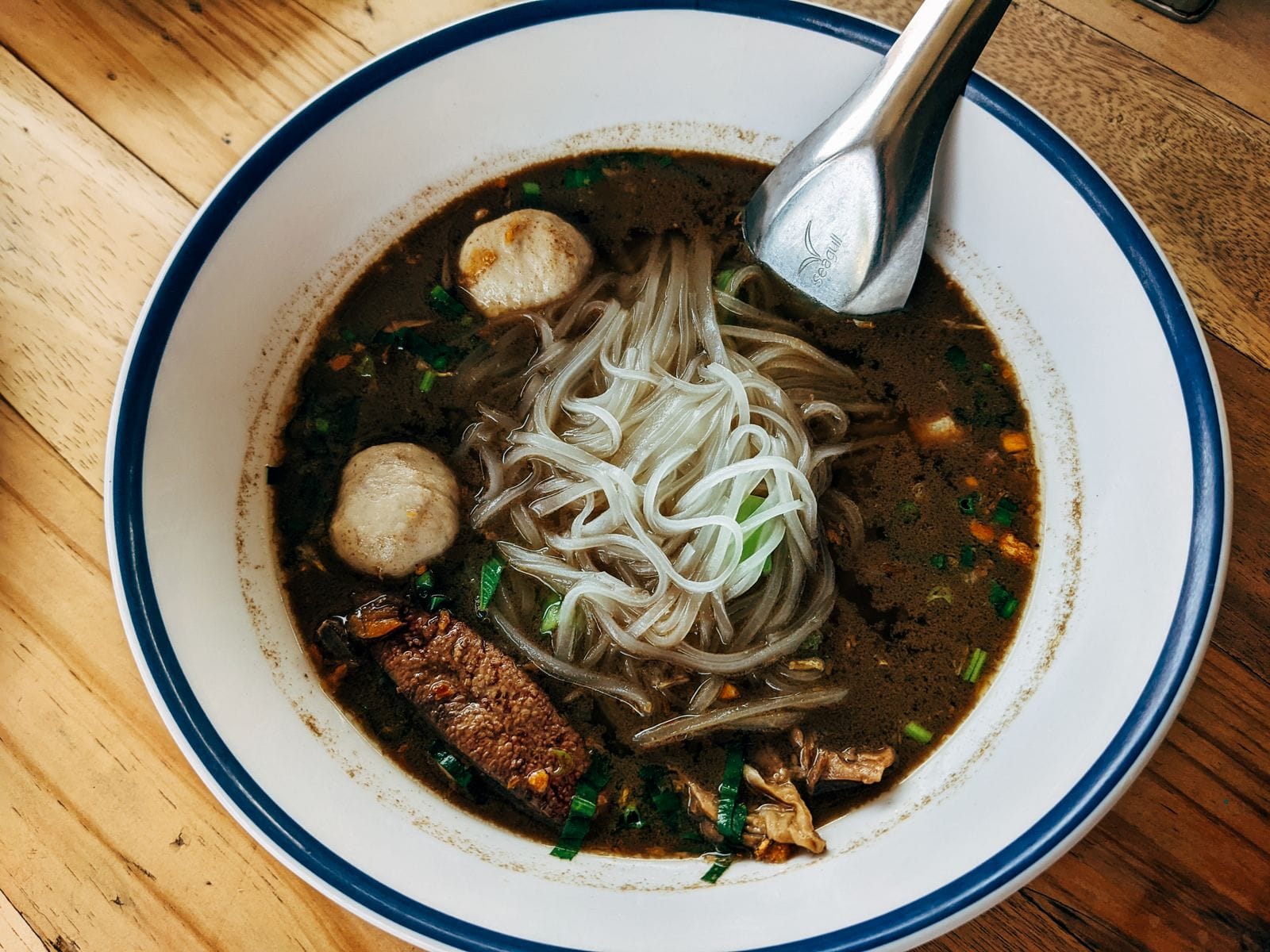
They look like ordinary noodles but taste like nowhere else. Thin rice noodles seasoned with ground dried shrimp, topped with small pieces of crispy pork rind, fried shallots and fried garlic, served either dry or in soup. The flavour is sweet-forward over salty, the Tak way. The old-school shops sit along the riverside around Taksin Road and Jompon Road.
Miang jompon (fermented-soybean miang)
Tak town's best-known snack, wrapped in betel leaf or a rice cracker and filled with ginger, fried sun-dried rice, toasted coconut, peanuts, sliced lemongrass, lime with the peel on, and garlic, then spooned over with fermented-soybean sauce. Sour, salty and rich, all in one bite. The miang kham shops on Jompon have passed the recipe down through several generations.
Tak sun-dried bananas (kluai tak)
So famous that many people assume it's where the province got its name. Nam wa bananas dried in the sun until they turn chewy and deeply sweet — both a snack and one of the most popular things to take home. You can buy them all over town and at any souvenir shop.
A tip
Many of the old Tak noodle shops sell from morning into the late afternoon and often run out before evening. If you're set on one of the well-known spots, going mid-morning before 2pm is the safer bet, and plenty of them take cash only.
Want to taste deeper? Try a Tak food tour or cooking class
Half a day with a local who knows the lanes — or cooking a dish yourself — teaches you more than just eating. Book ahead on Klook or GetYourGuide.
Burmese and Shan food in Mae Sot
Mae Sot sits right on the Myanmar border — cross the first Thai–Myanmar Friendship Bridge and you're in Myawaddy. The food in town is a blend of Thai, Burmese and Shan, with some old Yunnanese-Chinese cooking mixed in too. This is the most fun zone to eat in across the province. The standout Burmese dishes to try run from gaeng oop and mohinga through to fermented tea-leaf salad.
Gaeng oop (Burmese curry)
A slow-braised Burmese-style curry that comes in chicken or pork, simmered with spices and oil until it's rich and fragrant, eaten with hot steamed rice. It's a dish the Burmese restaurants in Mae Sot do well, and it's easy to find.
Mohinga (Burmese fish noodle soup)
Myanmar's popular breakfast: rice noodles in a thick fish broth with banana stem, scattered with crispy fritters and boiled egg, well-rounded with a touch of sourness. You'll find it at Burmese restaurants and at the stalls in Mae Sot's morning market.
Laphet (fermented tea-leaf salad)
A Burmese salad of fermented tea leaves tossed with fried beans, sesame, fried garlic and tomato — sour, slightly astringent and rich, unusual at first but moreish. It works as both a snack and a souvenir, and it captures Mae Sot well.
Shan khao soi / wide Shan noodles
Shan khao soi is different from the Chiang Mai version — no coconut milk, just a clear, well-balanced broth with beef or chicken, eaten with pickled greens. It's a dish of the Shan people living around Mae Sot, found at the border-style eateries.
Mae Sot morning dim sum
Mae Sot has several morning dim sum shops, a legacy of the town's old Chinese community, serving steamed buns, har gow, dumplings and wontons in fragrant broth. A good way to start the day before heading out.
Clay-oven roti (pae-ong roti)
Roti, or naan-style dough, baked in a clay urn-shaped oven — it comes out soft with a slightly crisp edge, eaten with condensed milk or peanut dipping sauce. It's an old Mae Sot breakfast that locals still queue for.
How to enjoy Burmese food
If you're not sure where to start, order gaeng oop with steamed rice as your main, then add laphet or a yum-style salad on the side — you'll get the full range, both rich and fresh. Plenty of shops in Mae Sot have picture menus you can point at, so there's no need to worry about the language.
Rim Moei market — border snacks
Rim Moei market is at the end of Highway 105, right on the Moei River that marks the Thai–Myanmar line. It's a border trading market with wild-harvested goods, dried foods, gemstones and a Burmese food zone you can graze through. It's the one place where you get the full border atmosphere along with some unusual snacks.
- Burmese fritters — fried beans, fried dough drizzled with sweet-and-sour sauce, Burmese-style fried tofu, easy to nibble on as you walk the market
- Miang / betel nut — stalls selling betel nut and Burmese-style miang, an eating tradition shared on both sides of the river
- Dried goods & souvenirs — beans, spices, fermented tea leaves to take home, and prices you can haggle over
- Seasonal fruit — fruit from the Myanmar side and from the local area, at easy prices
Before you go to Rim Moei
Rim Moei is busiest from mid-morning into the afternoon. Bring cash so you can bargain. Some of the goods are border imports, so buy only as much as you'll eat and check the expiry dates first.
Umphang country cooking
Umphang is the district at the very end of the road, reached by driving the sky-high Highway 1090 with its hundreds of bends. The food here is genuinely rural, mixing Karen flavours with riverside wild-harvested ingredients — perfect after coming down from a rafting trip or a visit to Thi Lo Su waterfall.
Northern country & wild-harvested dishes
Fiddlehead-fern salad, stir-fried minced pork larb, nam prik ong, nam prik num with fresh local vegetables — a spread the shops in Umphang town do boldly and properly seasoned.
Fresh river fish
Fish from the Mae Klong river and the local streams, fried, grilled or made into tom yum — the flesh is fresh and sweet, good for dinner after a day of activities.
Restaurants in Umphang town
Umphang town has several restaurants with a nostalgic feel, some with live music in the evenings — good for settling in after a tiring day out.
One thing to know: shops in Umphang close earlier than in town, and it goes quiet at night. If you're planning to eat dinner outside your resort, head out before 8pm, and check with your accommodation about which places stay open late — in the low season some shops take long breaks.
Tak souvenirs worth taking home
- Sun-dried bananas — the province's most famous product, sweet and chewy, keeps well, and a souvenir anyone is happy to get
- Tak miang kham — sold in ready-made packs you can take home and wrap yourself
- Shrimp chilli paste / thua pae-jo — punchy local souvenirs that go well with hot steamed rice
- Fermented tea leaves (laphet) from Mae Sot — a Burmese-flavoured souvenir you'll only find around the border
Want to plan a full eating-and-sightseeing trip across Tak town, Mae Sot and Umphang?
See the Tak travel guide →