🔄 Updated 21 Jun 2026
A lot of people drive through Tak on the way up north and only stop for a petrol-station meal, even though Tak has food that really tells the story of the place. Tak town, sitting on the Ping River, still holds onto the old-school northern flavours, while Mae Sot, right against the Myawaddy border, has become one of the most serious spots for Shan and Burmese food anywhere in Thailand. We've split this into both sides so you can picture each one.
Three northern dishes Tak does well
Before we run through the restaurants, get to know the three dishes at the heart of a northern spread in Tak. All three are easy to find at northern restaurants in town and at the morning markets.
- Nam prik num — roasted young green chillies pounded with garlic and shallots into a smooth, not-too-spicy dip. Eat it with crispy pork crackling (khaep mu), steamed veg, and sticky rice. It's the dish that opens every northern meal.
- Sai ua — minced pork sausage worked through northern curry paste, lemongrass, and kaffir lime leaf, then grilled low and slow until fragrant. Snack on it with sticky rice or have it as a side with drinks. Plenty of shops in Tak sell it to take home, too.
- Gaeng hang lay — a pork belly curry that's sour, sweet, and salty all at once, made with ginger and hang lay spice that traces back to Burmese cooking, simmered until the meat falls apart. It's the dish that shows off Tak's border flavours most clearly.
Order to taste it all
A northern spread is best when you order several things to share. Try pairing nam prik num + sai ua + gaeng hang lay + hot sticky rice and you'll cover mild heat, fragrant spice, and that sour-sweet note all in one meal.
Want to taste deeper? Try a Tak food tour or cooking class
Half a day with a local who knows the lanes — or cooking a dish yourself — teaches you more than just eating. Book ahead on Klook or GetYourGuide.
Where locals eat: northern and border food in Tak
These are pulled from reviews and the names Tak and Mae Sot locals bring up most. We've ordered them to show both the Tak-town side, which leans northern, and the Mae Sot side, which is strong on Shan food. The prices are rough ranges — double-check with the shop before you go, since local opening and closing times can shift.
Khao Soi Son Klin (Soi 21)
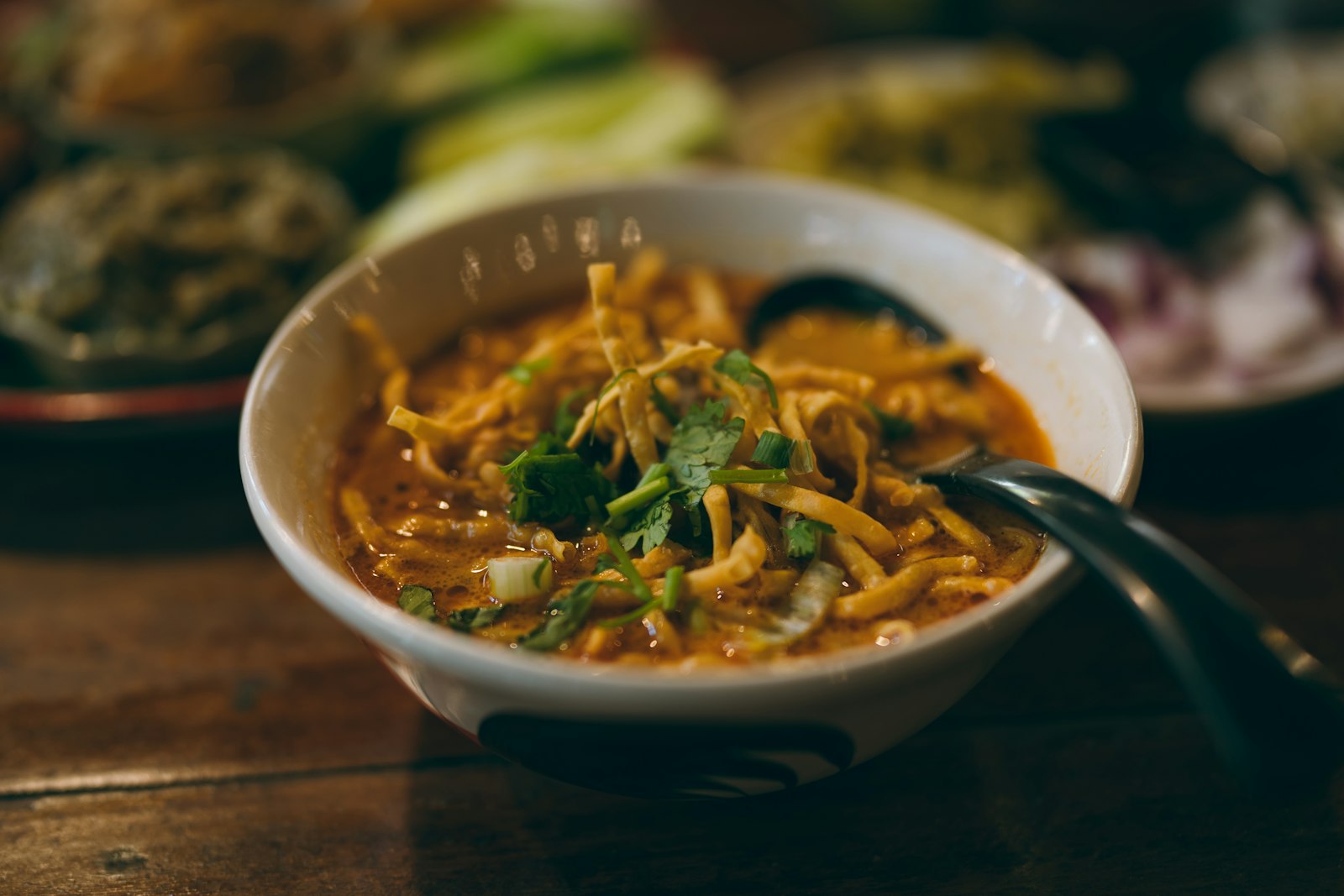
An old khao soi shop in Tak town that's been going for over 40 years, serving both the thick northern-style khao soi and a noodle-khao-soi version, topped with crispy fried noodles and eaten with pickled greens and shallots. It's the first place locals think of when they want khao soi.
Khao Ram Fuen & Shan Khao Soi, Mae Sot
Genuine Shan food that's hard to find outside the area. Khao ram fuen is a 'noodle' made from beans or rice cooked until it sets, then sliced and tossed in a sour-spicy sauce. Shan khao soi is different from the northern version — a clearer broth with no coconut milk, and a punchy border-style flavour.
Pa Ni Pa Thong (in front of Wat Luang, Mae Sot)
A local home-style eatery in front of Wat Luang that Mae Sot folks pass along by word of mouth. It does several Shan and Burmese dishes in one place, so it's great if you want to sample border flavours without hunting across town. Casual, homey atmosphere.
Tui Khao Soi, Mae Sot
A khao soi shop in Mae Sot that locals praise for its distinctive broth — fragrant curry paste, tender chicken. An easy pick for breakfast before you head out to explore the border side.
Bai Bua (Khao Soi Noi), Mae Sot
Known for khao soi noi, a Shan snack that looks like a steamed rice sheet with various toppings, finished with a seasoned dipping sauce. The batter is made fresh and soft — an unusual little bite most Bangkok visitors have never come across.
Pa Hom Chan Shan Noodles, Mae Sot
An old Mae Sot noodle shop whose draw is the generous fried shallots and pork crackling piled on top, over a well-balanced Shan-style broth. Light on the wallet, good for a quick stop.
Good House x Khao Soi (Tak town)
A spot in Tak town doing a milder, not-too-intense khao soi — good if you're new to northern food or travelling with kids. The seating is more comfortable than a market stall.
Tak Morning Market (northern food stalls)
Not a single shop but a whole cluster. Walk the morning market along the Ping and you'll find stalls of nam prik num, sai ua, pork crackling, and bagged northern curries. Buy a few things to eat with sticky rice and you've got a full spread for a handful of baht — the real way locals eat northern food in Tak.
About timing
Most northern and khao soi shops in Tak are morning places, and plenty sell out before the afternoon. If you want the popular ones, go mid-morning and no later than noon. On the Mae Sot side, some Shan dishes are made in limited batches each day — show up late and you risk missing out.
Northern flavour vs. border flavour: what's the difference?
A lot of people lump all Tak food in as 'northern,' but there are really two clearly different streams. Tak town is pure Lanna — mellow, fragrant with curry paste, built around chilli dips and coconut-milk curries like hang lay. Mae Sot, up against the border, picks up Shan and Burmese flavours: sharper sour notes, more heat, more beans and Burmese-style spices. Even the khao soi differs between the two — northern uses thick coconut milk, Shan keeps the broth clear.
The Tak town stream (Lanna)
Nam prik num, sai ua, gaeng hang lay, thick-broth khao soi — mellow and fragrant, good for anyone new to northern food.
The Mae Sot stream (Shan–Burmese)
Khao ram fuen, clear-broth Shan khao soi, khao soi noi — bold border eats that are hard to find outside the area.
A 2-day northern & border eating plan in Tak
If you've got time to stay overnight, here's an eating plan that takes in both sides. Day one stays in Tak town for the Lanna flavours; day two crosses over to Mae Sot for the Shan and border side.
Tak town — the Lanna side
Mae Sot — the Shan & border side
Edible souvenirs from Tak
- Sai ua — buy it at Tak morning market and pack it in a cooler box for the trip home. If you're travelling far, tell the shop it's for takeaway.
- Nam prik num & nam prik ong, in bags or tubs — these keep longer and make easy souvenirs to grab on the way out.
- Border goods from Mae Sot — spices, dried foods, and Shan sweets like halawa, found around the Mae Sot market and Rim Moei.
Plan a full eating-and-sightseeing trip around Tak
See the Tak travel guide →