🔄 Updated 21 Jun 2026
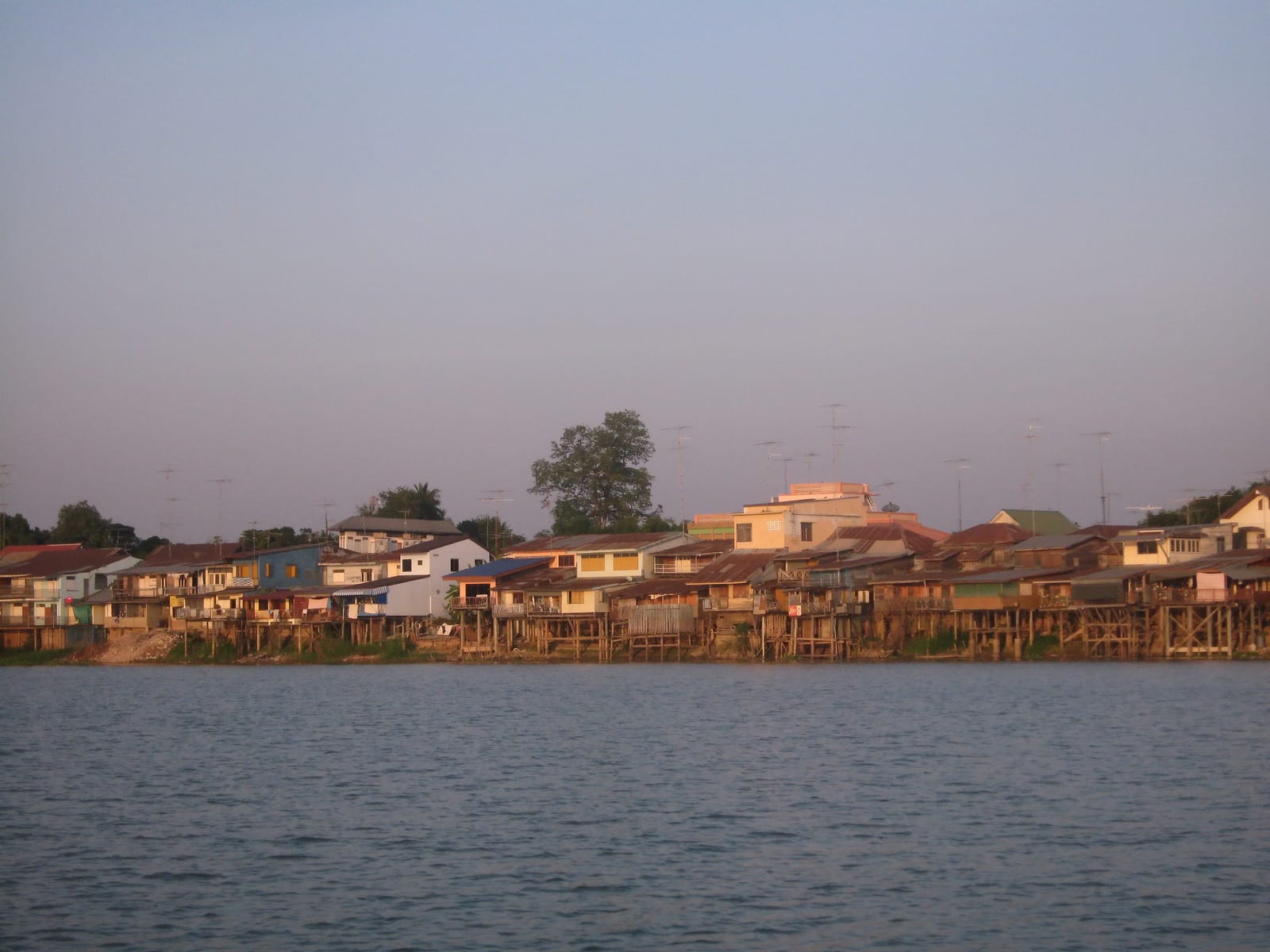
A lot of people see Chai Nat as a pass-through province, but the Manorom district side hides some good stuff along the river. Tha Chanuan and the Khung Samphao neighborhood sit right where the Chao Phraya River meets the Sakae Krang River, creating a two-colored river view. In the old days this was an important trading port for central Thailand, called 'Khung Samphao' because Chinese junks used to dock around here.
These days the old port-town feeling still lingers in the wooden shophouses, the shrines, and the way the riverside locals do business. It's a short walk but the throwback atmosphere is the kind you won't find in a big city. It suits anyone who wants to travel slowly, take photos, eat well, and actually chat with the locals.
Khung Samphao Market — the Chao Phraya riverside walking street
The heart of this area is the Khung Samphao Market walking street, running about 1.5 kilometers along the Chao Phraya River. It starts at the boat pier and ends at the bodhi-tree square in front of the Guan Yu shrine. Restored two-story wooden houses line both sides, so it feels like stepping back fifty years. What's sold leans toward old-style Thai sweets, noodles, and home-cooked local food that the vendors make and sell right in front of their houses.
- Open Saturday–Sunday only, afternoon to evening, roughly 3:00–8:00 PM (on weekdays the market is quiet and most stalls won't be there)
- The walkway is about 1.5 km along the river — easy, flat walking, great for photographing the wooden houses and river views once the sun softens
- The draw is the old-school food — Thai sweets, noodles, fried snacks at real local prices, mostly in the tens to low hundreds of THB
- Cultural market events run periodically — in 2025 the community and Chandrakasem Rajabhat University ran the 'Khung Samphao Shrine Market' with added folk performances on some weekends of the month. Check the community page before you go to be sure.
Which day to go
If you're coming specifically to walk Khung Samphao Market, it has to be a Saturday or Sunday. I'd aim for late afternoon, around 4:00 PM, so you get the softer light, all the stalls open, and the sunset over the river. On weekdays you can only come to see the shrine and the old architecture — almost all the shops will be closed.
Want more out of Chai Nat? Book tours & activities
Booking online ahead on Klook or GetYourGuide is usually cheaper than the gate and skips the queue. Pick only the experiences you actually want — prices and availability are shown live on each site.
Food you have to try in the Khung Samphao area
The charm of a riverside market like this is the handmade food that's been sold for decades — no franchises. You can wander and graze as you go. Here's what locals and visitors alike tend not to miss.
Je Kia Oyster Omelette (charcoal stove)
The old-guard charcoal-stove oyster omelette stall of Khung Samphao Market, going for decades — crisp on the outside, soft inside, with a charcoal aroma that's clearly different from a gas burner. It's the first place people think of when they talk about food in this area.
Traditional Thai sweets out front
All along the walkway, grandmothers and aunties make Thai sweets and sell them in front of their own homes — both classic desserts and steamed or grilled snacks, all easy on the wallet, rotating with whatever ingredients are around that day.
Riverside noodles
A tiny noodle shop in an old wooden building where you eat looking out at the river. It's a simple, filling meal with a nice setting — good for refueling mid-walk.
Rim Chon Manorom Restaurant
A restaurant on the Chao Phraya River in Manorom town, with a relaxed riverside vibe. It's known for river fish and prawns — dishes like tom yum with soft-flesh fish, crispy fried catfish salad, and salt-baked prawns — great for a bigger meal after walking the market.
HOP CHAFE Cafe
A small cafe in the Manorom area, with coffee starting in the low tens of THB so it's easy to drop in. Good for a rest before or after walking the riverside market.
Local produce — Chao Phraya riverside veggies
Along the Chao Phraya banks from Tha Chanuan to Thammun, locals grow seasonal kitchen-garden veggies for sale — chili, eggplant, yardlong beans, sweet corn. You can grab them fresh to take home as a gift.
Straight talk
The stalls at Khung Samphao Market are run by locals selling their own food, so opening and closing times aren't fixed — some sell out fast if it's a busy day. Don't set out expecting to hit every stall. Treat it as a wander and just try whatever you come across — it's more fun that way. And bring cash, because a lot of stalls don't take transfers.
The Guan Yu Shrine and the Golden Junk Boat
At the end of the walking street is the Khung Samphao Guan Yu Shrine, an old Chinese shrine that's been part of the community for a long time — said to be one of the oldest shrines of its kind in Thailand. The shrine has hand-carved woodwork and paintings that are said to have come from old Chinese junks. It's a spot where locals come to pay respects and a spiritual landmark for the community.
Nearby is the Golden Junk Boat, an old wooden boat the community restored and painted gold. It's become a photo landmark and a reminder of the era when this was a trading port. You can get nice shots with the boat and the river view during the soft light.
- Guan Yu Shrine — old carved woodwork and Chinese paintings, open for anyone to come pay respects; dress modestly
- Golden Junk Boat — a restored wooden boat painted gold, a photo spot that reflects the town's port history
- Riverside bodhi-tree square — a rest spot at the end of the market with a wide view of the Chao Phraya
Stop by nearby — Wat Chuan and riverside life
Tha Chanuan also has Wat Chuan, an old temple on the Chao Phraya whose name comes from being the site of the 'chuan' (the governor's residence) of Manorom's ruler in the old days. It's a good place to soak up the town's history and the atmosphere is peaceful — a nice add-on after the market. There are also fields-edge cafes and laid-back riverside spots scattered around Manorom, so if you have time left over, it's worth driving around to find them.
Wat Chuan, Tha Chanuan
An old temple on the Chao Phraya, named after the Manorom governor's residence. Peaceful atmosphere and a good window into the town's history.
Rim Chon Manorom Restaurant
A river-fish spot on the Chao Phraya where you sit back and catch the river breeze — a good way to close out the trip with a bigger meal.
How to visit and getting there
The Khung Samphao–Tha Chanuan area is in Manorom district, not far north of Chai Nat town. Driving is by far the easiest way, and on the route you can swing by other Chai Nat sights like the Chao Phraya Dam and Chai Nat Bird Park. It works easily as a day trip.
Walk Khung Samphao Market (Sat–Sun)
Combine Khung Samphao with Chai Nat sights
What to prepare
There's no convenient public transport in, so I'd drive or rent a car. Wear comfortable walking shoes since the path is 1.5 km long, and bring cash, an umbrella/sun hat, and drinking water. In the rainy season the Chao Phraya runs high and some riverside stretches can get slippery, so watch your step.
Plan a full day in Chai Nat — where to stay, eat, and go
See the Chai Nat travel guide →