🔄 Updated 21 Jun 2026
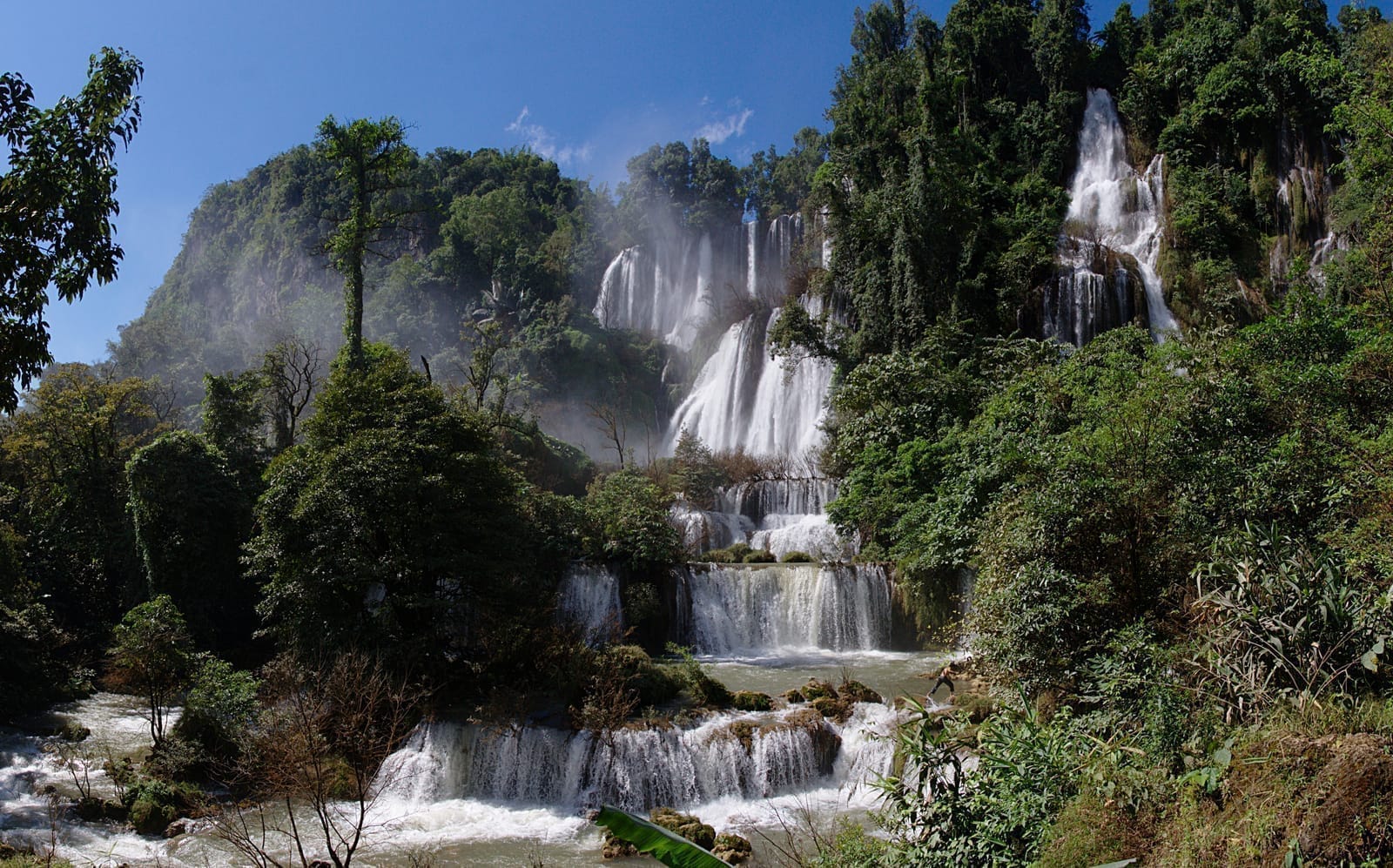
Umphang sits at the far southern tip of Tak province, right on the Myanmar border, and it's one of the hardest districts to reach in all of northern Thailand. Thi Lo Su hides inside the Umphang Wildlife Sanctuary, with the falls sitting around 900 m above sea level, spilling down the cliff face in wide tiers. When the water is high you'll see it sheet across the whole rock face like a curtain; late in the season the flow splits into thin, clear ribbons and you can see the cream-coloured limestone behind it.
One thing a lot of people get wrong is assuming you can drive straight up and park in front of the falls. The reality is you'll cross dirt roads, need a four-wheel drive, and then walk in on foot — and in the rainy season you go in by raft. So the first thing to understand is this: Thi Lo Su opens and closes by season, and you have to get a permit in advance.
Open and Close Season — When the Water Runs High
The Umphang Wildlife Sanctuary closes the road into the falls roughly from 1 June to 30 September every year, to let the forest recover and to keep people safe during heavy rain. It reopens to vehicles around early September–October and stays open until about May. (The exact opening date shifts each year with the state of the forest and the rains, so always check the sanctuary's official page before you go.)
- Late Sept–Nov — the water is at its highest, sheeting across the whole cliff like a curtain, with the forest lush and green. Some days the water runs murky if it has just rained.
- Dec–Jan — cool weather, still high water that's starting to clear up. This is the most popular window, so rooms and entry queues for the falls fill up fast — book several weeks ahead.
- Feb–May — the water drops, the flow splits into clear ribbons and you can see the limestone tiers, and the pools are nice for a swim. Fewer people, though April can bring smoke haze from crop burning.
Pick the window for what you want to see
Want the full curtain of water? Go early season (Oct–Nov). Want clear water for a swim and photos of the limestone tiers? Go late season (Mar–Apr). Want cool weather and the forest at its best? That's Dec–Jan — but you'll be fighting the crowds for a spot.
Want more out of Tak? Book tours & activities
Booking online ahead on Klook or GetYourGuide is usually cheaper than the gate and skips the queue. Pick only the experiences you actually want — prices and availability are shown live on each site.
Getting a Wildlife-Sanctuary Permit
Thi Lo Su isn't a regular national park — it's a wildlife sanctuary, so you have to request permission ahead of time. You can't just drive up and buy a ticket at the gate like at other waterfalls. The standard practice is to submit your request at least about 7 days in advance, especially if you plan to camp overnight inside, since the campsites are limited.
- How to apply — contact the Umphang Wildlife Sanctuary office, or apply through the sanctuary's Facebook page (Umphang Wildlife Sanctuary), giving your entry date, group size, and whether you'll stay overnight.
- Sanctuary entry fee — around 20 THB per person for Thais, about 10 THB for students, around 200 THB for foreigners, and about 30 THB per vehicle (rates may change — confirm at the gate).
- Easiest option — book through a local tour or a resort in Umphang. They handle the paperwork, the permit, a guide, and the 4WD for you — ideal if it's your first visit.
Always confirm before you set off
Opening and closing dates, overnight rules, and queue numbers can change every year. Call the sanctuary office (055-508780) or check the latest post on their page first — don't go by dates in old articles.
Getting There — The Road to Thi Lo Su
The first hurdle is getting to Umphang district itself. Most people start from Mae Sot and take Highway 1090, the Mae Sot–Umphang road that people call the "Sky Road," with 1,219 curves. It's about 146 km, but it's all bends and climbing through the mountains, so figure around 4 hours of driving. The sea-of-mist views on either side are gorgeous, but if you get carsick easily, bring something for it.
- Starting from Umphang — from the district town, take the Umphang–Mae Sot road to around km marker 161, then turn off toward the Delor gate / sanctuary checkpoint.
- Onto the dirt road — from the checkpoint to the sanctuary office it's a dirt road climbing up and down the hills, with washouts in places, about 25–26 km. You need a four-wheel drive — nothing else will do.
- The final stretch on foot — from the sanctuary office, follow the nature trail another 1.5 km or so. It's fairly flat and shaded, and then you reach the falls.
All told, from Umphang town to the sanctuary office is about a 3-hour drive. If you don't have your own 4WD, every resort in Umphang runs tours with drivers who know the road, and I'd recommend using them over driving yourself — the dirt road is slipperier and steeper than you'd expect.
High-Water Season — Why You Raft In
When the dirt road is closed (the rainy season into early season), or during the high-water period a lot of people come for, getting into Thi Lo Su switches to rafting down the Mae Klong river instead. It's a trip highlight that many people enjoy even more than the drive, because you float past cliffs, small waterfalls, and the rainbow falls (Thi Lo Jor), where a rainbow arcs across the spray when the sun hits it.
- You raft down the Mae Klong from around Umphang / Pha Lueat, taking roughly 2 hours through small rapids that aren't intense — kids and adults can both do it.
- Along the way you pass the rainbow falls (Thi Lo Jor), spilling down a cliff at the water's edge. Mid-morning when the sun is out, the rainbow across it is gorgeous.
- After you land, you continue by vehicle and then on foot the rest of the way to Thi Lo Su itself.
Waterproofing
Rafting means you'll get wet, no question. Bring a dry bag or a ziplock to wrap your phone and camera, wear strap-on sandals you don't mind soaking, and pack a dry change of clothes.
The Trek and the Waterfall Itself
The trail from the sanctuary office to the falls is about 1.5 km, a well-kept nature trail that's fairly flat and takes around 30–40 minutes at an easy pace. There are interpretive signs along the way and shade from big trees, and it's not tough for most people. But if you're staying overnight and want to climb up to the viewpoint above the falls, that route is steeper and harder going.
- There are pools to swim in at a few spots by the falls, but don't climb up the waterfall cliff — the limestone is slippery and brittle, and it's genuinely dangerous.
- Carry out every bit of your trash. The wildlife sanctuary is strict about this, and it's basic etiquette for any forest trip.
- There's almost no phone signal inside the sanctuary, so tell people back home in advance that you'll be off the grid all day or overnight.
Is staying overnight inside worth it?
If you camp inside the sanctuary, you get the falls in the early-morning light when there are still few people around — at the cost of limited facilities (shared toilets, no power through the night). People who want more comfort usually stay at a resort in Umphang town and do the falls as a day trip in and out.
Where to Stay in Umphang
Umphang has two main types of accommodation: riverside resorts in the district town, and camping inside the sanctuary. Most people pick a riverside resort because it's close to food and more convenient, then have the resort arrange the trip to the falls. Rooms aren't expensive, but high season (Dec–Jan) fills up very fast, so book ahead.
Theelorsu Riverside
A popular riverside resort with standalone cabins right by the river, and full raft-and-waterfall packages. Good for families and groups.
Tukasu Cottage Resort
Cottages set in forest-and-mountain surroundings, with friendly owners who arrange trips to Thi Lo Su and around Umphang. A long-running place that locals know well.
Siang Sueng Resort
Cabins beside a clear, cool stream, with a restaurant terrace looking out over the water and a calm atmosphere. Raft and waterfall-tour packages available.
Camping inside the sanctuary
Sleep closest to the falls and catch them in the early morning before the crowds — but facilities are limited, you need a permit in advance, and spots are capped.
An Easy 2-Day, 1-Night Plan
Mae Sot → the Sky Road → Umphang
Conquer Thi Lo Su → head home
If you have the time, stretching it to 3 days, 2 nights is the way to go — you can take in the sea of mist at dawn from Doi Hua Mot, explore around Umphang without rushing, and skip the tiring drive home on the same day you tackle the falls.
What to Pack and Prepare
- Strap-on sandals you can soak and a dry change of clothes for after swimming or rafting.
- A waterproof bag for your phone, camera, and valuables — both the rafting and the waterfall spray will get you wet.
- Motion-sickness pills — the 1,219-curve road gets a lot of people, so take them before you set off.
- Insect repellent, sunscreen, and a hat, plus enough drinking water. Phone signal is scarce, so bring enough cash.
- Set your expectations on comfort — facilities inside the sanctuary are minimal. This is real nature travel, not a luxury resort.
The honest take
Thi Lo Su really is beautiful and worth the trip — but it isn't an easy one where you drive up and snap a photo. It's a nature trip with a long journey, planning ahead, and time to spare. Understand that going in and you'll enjoy it to the fullest.
Plan a full trip to Tak and Umphang — see places to stay and things to do around the province.
See the Tak travel guide →