📝 Written 3 Jul 2026 · ✅ Fact-checked 3 Jul 2026 · prices and schedules can change — check with the operator before booking
Narathiwat sits at the southernmost tip of the country along the Gulf of Thailand, a city where Buddhist and Malay Muslim culture live together. The highlight is Phra Phuttha Thaksin Ming Mongkol, the largest outdoor gold-mosaic Buddha image in southern Thailand, on Khao Kong hill; the 300-year-old mosque (Wadi Al-Hussein/Talo Manoh), an old wooden Malay-style mosque built entirely without nails; Thaksin Ratchaniwet Palace on Khao Tanyong overlooking the sea; Narathat Beach with its long pine-lined shore near the city; Ao Manao-Khao Tanyong National Park; Pacho Waterfall in Budo-Su-ngai Padi National Park; and the banks of the Bang Nara River running through the city center.
Below we've picked out the activities and sights that reviewers mention most often, along with the best time to go and what to know before you visit. Narathiwat is a majority-Muslim province, so halal food is easy to find. Visiting the mosques calls for modest dress and avoiding prayer times. The 300-year-old mosque is a working place of worship — ask the local imam before entering the interior. The sea and waterfalls look their best after the rainy season. Sights are spread across several districts, so having a car helps, and you should check the latest travel advisories for the area before you go.
Phra Phuttha Thaksin Ming Mongkol (Khao Kong Buddhist Park / Wat Khao Kong), Narathiwat

Phra Phuttha Thaksin Ming Mongkol is the largest outdoor Buddha image in the First Sermon posture in southern Thailand, enshrined on Khao Kong hill in Tambon Lam Phu, about 9 kilometers southwest of downtown Narathiwat. The image stands roughly 24 meters tall with a lap span of about 17 meters, built from reinforced concrete and covered entirely in gold mosaic tiles. When sunlight hits it, the gold gleams brilliantly against the sky and the green forest around the hill. The design draws inspiration from South Indian art and was built between 1966 and 1969, becoming a symbol of Narathiwat and one of the landmarks that visitors often stop to pay respects at before entering the city.
The area around the Buddha image has been developed into Khao Kong Buddhist Park, with a wide plaza for walking and paying respects comfortably. Nearby stands Sirimahamaya Chedi, a bell-shaped stupa that's another notable feature, making this spot both a working place of Buddhist practice for locals and a popular photo stop for visitors. From the plaza in front, you can take in a wide view of the city and the surrounding mountain range, which makes morning and evening the best times to visit, when the light is softer and the Buddha image casts a long, beautiful shadow. Entry is free, and anyone wishing to make merit or offerings may do so as they choose, making this a good stop for families bringing elders to pay respects as well as travelers wanting to capture the province's signature landmark.
A few practical things worth knowing: this is a religious site, so dress modestly, avoid tank tops and very short shorts, remove your shoes in designated areas, and keep your voice down near the Buddha image. The hill is almost entirely outdoors, and midday sun can be intense, so bring an umbrella or hat and drinking water. The path up has some stairs and ramps — manageable for older visitors, but take it slowly. The site is outside the city and not served directly by public buses, so most visitors drive themselves, rent a car, or hire transport from town. Agree on a round-trip price clearly before setting off, and allow extra time to visit when the sun is softer for a more comfortable walk.
- The largest outdoor Buddha image in southern Thailand, standing about 24 meters tall and covered entirely in gold mosaic — visible from afar and stunning in photos
- Free entry with no admission fee, merit-making by choice, suitable for both the devout and families
- Set on a hilltop with sweeping views of the city and Narathiwat's mountain range, especially lovely in the morning and evening
- Sirimahamaya Chedi is nearby for an easy add-on visit — everything wraps up in one place within a short time
- About 9 km outside the city with no public bus access — you'll need to drive, rent a car, or hire transport
- The plaza and approach are almost entirely outdoors, and midday sun is intense — bring an umbrella and water
- As a religious site, modest dress and respectful behavior are required — not suited to revealing clothing or loud conduct
300-Year-Old Mosque (Wadi Al-Hussein Mosque / Talo Manoh), Ban Talo Manoh, Bacho District

The 300-Year-Old Mosque, officially Wadi Al-Hussein Mosque, is known locally as Talo Manoh Mosque after the village in Bacho District where it stands. It's believed to have been built around 1624, in the early Ayutthaya period, by Wan Hussein Al-Sanawi, a settler who established himself in the area. It's considered one of the oldest wooden mosques in the lower South and in the country. The building is made entirely from takian wood, and what draws the most attention is its mortise-and-tenon joinery secured with wooden pegs instead of nails — carpentry craftsmanship that has kept the structure standing for hundreds of years. The multi-tiered roof blends Thai, Chinese, and Malay design, a clear reflection of the many cultures that have passed through this southernmost tip of Thailand over the centuries.
The key thing to understand before visiting is that this is not a museum but a working religious site where locals still pray and hold worship here today. Visitors can view and photograph the exterior freely with no admission fee, but entering the interior requires permission from the imam or village caretaker, and access isn't always possible, so it's worth being prepared to see only the exterior. The mosque once held a copy of the Quran handwritten by its first imam, though it's now kept at a descendant's home. These stories give a visit here more depth than simply photographing an old wooden building.
The easiest way to get here is to drive or hire a car from downtown Narathiwat along Highway 42, the Narathiwat-Pattani route, about 25 kilometers to Bacho District, then turn into Ban Talo Manoh following the signposts. Without your own vehicle, you can hire a local car or motorbike taxi from the district center, since no public bus reaches the mosque directly. Dress modestly, covering shoulders and knees, and women should bring a headscarf in case they're permitted inside. Speak and photograph respectfully, and avoid prayer times if possible. The site is often included on southern border cultural routes alongside spots like Narathiwat Central Mosque or Narathat Beach, so it's best combined with other stops in a single trip rather than visited on its own.
- A roughly 400-year-old wooden mosque, built entirely from takian wood with mortise-and-tenon joints secured by wooden pegs instead of nails — a rare and ancient piece of southern craftsmanship
- The multi-tiered roof blends Thai-Chinese-Malay design with a distinctive character, great for lovers of architecture and local history
- Free to view and photograph the exterior, with the added bonus of learning about Malay Muslim culture at Thailand's southernmost tip
- Sits along the southern border cultural route, easy to combine with other stops in a single trip
- As a working religious site, entering the interior requires permission from the imam beforehand, and it may not always be granted
- No public bus reaches the mosque directly — you'll need your own vehicle or hired transport/motorbike taxi from the district center
- The mosque's value is mostly historical and religious, with few amenities or shops nearby — best suited to a short visit
Thaksin Ratchaniwet Palace (Khao Tanyong), Narathiwat — a seaside hillside royal residence open to the public

Thaksin Ratchaniwet Palace sits on Khao Tanyong hill in Tambon Kaluwo Nuea, about eight kilometers southeast of downtown Narathiwat. It was built in 1973 as a royal residence for His Majesty King Bhumibol Adulyadej the Great and Her Majesty Queen Sirikit during royal visits to the southern provinces. The palace sits on a hillside facing the sea, surrounded by botanical gardens and shady tree lines. When there's no royal visit scheduled, the palace grounds — its gardens and viewpoints — are open to the public roughly from 8:30 a.m. to 4:30 p.m., making it a destination for those visiting Narathiwat who want to see a historic site tied to royal duties in the southern border region.
What sets this palace apart from those in other regions is its seaside hilltop location — a short walk uphill reveals the coastline and waters of Ao Manao below. The sea air keeps the gardens lush almost year-round. The public areas include flower gardens, ornamental trees, and neatly arranged rest spots. Many visitors spend one to two hours here walking and taking photos at a relaxed pace. The palace also borders Ao Manao-Khao Tanyong National Park, home to sandy beaches and coastal forest, so the two can easily be combined into one trip. Visitors staying in downtown Narathiwat often drive or rent a motorbike out here in the morning or late afternoon when the sun is gentler, then continue on to the beach in the same outing.
A few practical things worth knowing: first, this is royal grounds, so dress should be modest and tidy — no short pants or sleeveless tops — and behavior should be respectful of the site's rules. Second, visiting hours may change or the site may close temporarily when there's a royal schedule or official event, so call ahead or check current information before setting out, especially if you're traveling a long way. Third, some parts of the palace building are not open to the public — the main areas open for viewing are the gardens and viewpoints, so set your expectations accordingly. Fourth, travel in the southern border provinces should follow current safety advisories — plan to travel during daylight hours and allow extra time for checkpoints along the way.
- A seaside hilltop palace with history tied to royal duties in the southern border region, offering a different atmosphere from palaces in other regions
- Lush botanical gardens and viewpoints overlooking the Ao Manao coastline, great for a relaxed 1-2 hour walk and photos
- Free entry to the garden grounds, and only about 8 km from downtown Narathiwat — an easy half-day round trip
- Adjacent to Ao Manao-Khao Tanyong National Park with sandy beaches and coastal forest, easy to combine into one trip
- As royal grounds, modest dress and respectful behavior are required — no short pants or sleeveless tops
- Opening hours may change or close temporarily for scheduled events — call ahead, and some parts of the building aren't open to visitors
- Located in the southern border provinces — follow safety advisories, plan to travel during daylight, and allow extra time for checkpoints along the way
Narathat Beach — a long white-sand beach under a pine grove at the mouth of the Bang Nara River, Mueang Narathiwat District

Narathat Beach is a roughly 5-kilometer stretch of white sand right next to downtown Narathiwat — under ten minutes by car or on foot from the city center brings you to the Gulf of Thailand shore. The beach's charm lies in the row of casuarina pines running the length of the shore, providing shade for a relaxed rest any time of day. The sand is fine enough for a comfortable walk, and the sea breeze stays cool nearly year-round. One end of the beach runs to the mouth of the Bang Nara River, where local fishing boats and colorful kolae boats come and go daily, giving the beach more than just sand and sea — a glimpse of southern seafaring life too. Locals come here to exercise, cycle, or bring the family for an evening picnic, giving the beach a relaxed, community feel rather than the busy resort vibe of the Andaman coast.
The time most often mentioned is late afternoon through sunset, when orange light against the pines and the silhouettes of kolae boats at the river mouth make for a picture many visitors plan around. Seafood restaurants and halal eateries line several points along the beach, serving fresh shrimp, shellfish, crab, and fish caught locally at reasonable prices — since this is a majority-Muslim city, most restaurants here are halal, so Muslim visitors can eat with ease. There's no entrance fee of any kind, and you can come and go freely, making it a great spot for anyone staying downtown who wants to catch the sea breeze without traveling far, or to stop by before heading to other sights in the city like Thaksin Ratchaniwet Palace or the Central Mosque.
A few practical things worth knowing: Narathat Beach is a public beach where upkeep of amenities isn't always thorough — several reviews mention that some pavilions, garden areas, and lawns are run down, and cleanliness around the parking lot and along the beach could use improvement. Weekdays tend to be quiet with fewer visitors, and some spots can feel a bit isolated, so it's best to visit in a group or during busier times like weekend evenings. Wave conditions vary by season — the monsoon period from around November to February brings stronger waves and heavy rain, with some risk of flash flooding, so the dry season is a better time to visit. As this is in the southern border provinces, check the latest situation and travel advisories before setting out each time to plan your timing and route safely.
- Right next to downtown Narathiwat, under ten minutes by foot or car, with free entry and no fee
- A roughly 5 km stretch of sand shaded by casuarina pines with a cool sea breeze, great for walking, cycling, and evening picnics
- A sunset spot with kolae boats at the Bang Nara river mouth that many visitors plan their photos around
- Several fresh seafood and halal restaurants right on the beach at reasonable prices, comfortable for observant Muslim visitors
- Upkeep of amenities isn't thorough everywhere — some pavilions and garden areas are run down, and cleanliness could improve
- Weekdays are quiet with fewer visitors, and some spots feel a bit isolated — best visited in a group or during busier times
- The year-end monsoon brings strong waves, heavy rain, and flash flood risk, and as a southern border area, check the situation before visiting
Ao Manao-Khao Tanyong National Park (clear seawater, white sand and granite boulders, pine forest, and a headland viewpoint)
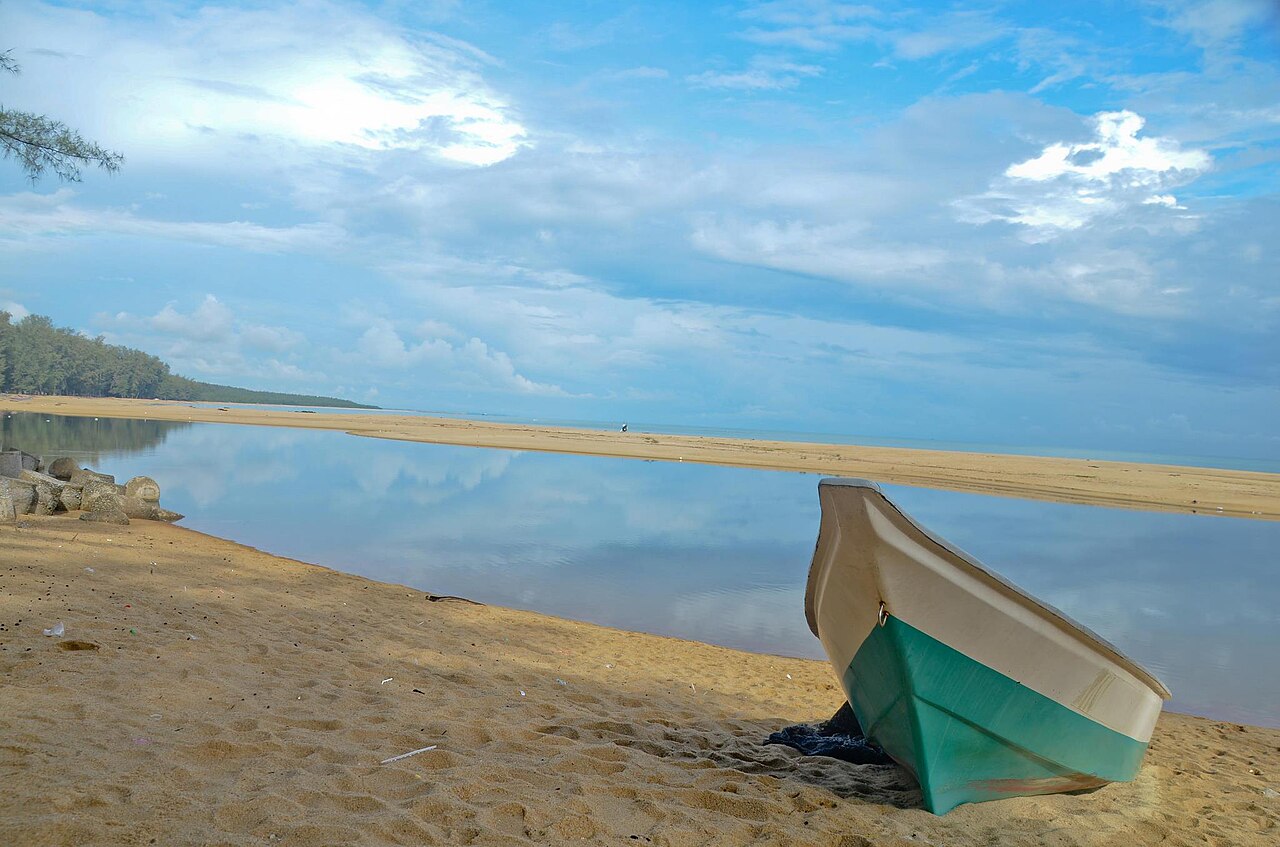
Ao Manao-Khao Tanyong National Park is a roughly 58-square-kilometer coastal park along the sea in Tambon Kaluwo Nuea, Mueang Narathiwat District, about eight kilometers south of downtown, right next to Thaksin Ratchaniwet Palace. Its highlight is a fine white-sand beach studded with large granite boulders arranged into a striking backdrop, with fairly clear water that's swimmable when the waves are calm. Beyond the shoreline lies a grove of casuarina pines that provides shade and a cool breeze, great for walking or laying out a mat for a picnic. The park also includes mangrove forest and a low mountain range, Khao Tanyong, with a trail leading up to a headland viewpoint offering a wide view of the bay and open sea — a scene of southern coastline that hasn't become as crowded as the main tourist beaches of other regions.
The most popular way to visit is by driving or riding a motorbike in, since it's not far from downtown Narathiwat and the roads are easy to access. Pay the fee at the park entrance gate, which is charged at different rates for Thai and foreign visitors per National Parks Department regulations, then choose between a half-day of swimming and walking the pine forest, or an overnight stay camping by the sea. The park has a campground, picnic spots, restrooms, and seasonal food stalls, and those without gear can rent a tent from the park. Early morning and evening are the best times, when the sun is gentler — ideal for walking the shore, photographing the boulders, and climbing Khao Tanyong headland for the breeze and view. If you're planning to swim, check that day's wave conditions first, since this open coastline can have stronger waves than a sheltered bay on some days.
A few things worth keeping in mind: first, seasonality matters — the Narathiwat coast is affected by the northeast monsoon, and the period roughly from November to February often brings heavy rain and strong waves, making the water cloudy and swimming difficult. The clearest water and best weather run roughly from March to September. Second, amenities are typical of a national park — not luxurious — and on some days restaurants and restrooms may not all be open, so bring your own drinking water and food just in case. Third, reaching Narathiwat takes some travel time, and you should follow safety advisories for the southern border area before planning — schedule your visit during daylight and return to your accommodation before dark. Finally, help keep the area clean by taking your trash with you and avoiding trampling young pines or beach plants, so the beach stays clean for those who come after you.
- White sand, granite boulders, and a pine forest give this a quiet southern coastal feel, without the crowds of major tourist beaches
- Multiple activities in one place — swimming, walking the pine forest, picnicking, and climbing Khao Tanyong headland for wide sea views
- Entrance fee is inexpensive for Thai visitors, and it's only about eight kilometers from downtown Narathiwat, easily reached by private vehicle
- A campground and beachside picnic spots make it a good choice for an up-close overnight nature experience
- The monsoon period from roughly November to February brings heavy rain and strong waves, making the water cloudy and swimming difficult — choose your timing carefully
- Amenities are typical of a general national park — restaurants and restrooms may not all be open some days, so bring food and water just in case
- Located in the southern border provinces — the trip here is a long one, so follow safety advisories and plan to visit during daylight
Pacho Waterfall, Budo-Su-ngai Padi National Park

Pacho Waterfall lies within Budo-Su-ngai Padi National Park in Bacho District, a broad cliff-face waterfall that cascades down in several tiers, the first standing about 60 meters high. Viewed from below, the water spreads out across the rock face in a long, wide sheet. What makes this spot special is its setting deep in the still-intact forest of the Budo mountain range — the air is cool and moist, and the sound of the water and forest helps you unwind. It's a short walk from the parking area to the falls, making it a good choice for anyone wanting to experience nature without a strenuous climb, suitable for both children and older visitors. The waterfall is fullest and most impressive during the rainy season, while in the dry season the flow drops and it looks less dramatic — a point many visitors note in their reviews.
What gives the Budo forest and Pacho Waterfall special significance is the 'golden leaf' plant, known in Thai as Bai Mai Si Thong (scientific name Bauhinia aureifolia), a vine with young leaves that shine a glossy copper-gold, resembling gold leaf. This species was first discovered and identified anywhere in the world in the forests of the Budo mountain range in 1988, making the area a botanical landmark that plant enthusiasts want to see for themselves. Although the actual plants grow deep in the forest and aren't easily visible from the main trail, simply standing in the forest where they originate adds a layer of story to a visit here. The park also maintains a nature study trail for exploring the plant life and ecosystem of this tropical rainforest.
Before you go, keep in mind that Pacho Waterfall is located in the three southern border provinces, so check the latest situation and park announcements before setting out — access may occasionally be restricted or closed. The most convenient way to get here is to drive yourself or hire a car, since public transport doesn't reach it easily. The trail past the parking area can be slippery in the rainy season, so wear shoes with good grip and watch for wet rocks. There's a national park entrance fee and a parking fee at posted rates. Amenities in the area are limited, so bring your own food and water, take your trash with you to help preserve the forest, and avoid swimming when it's raining heavily or the water is running high, since the current can be strong and dangerous.
- A broad, multi-tiered cliff-face waterfall with a first tier about 60 meters high, an easy walk from the parking area
- Set deep in the still-intact forest of the Budo mountain range — cool, moist, and quiet, with genuine reviews praising the clean water and air for a relaxing visit
- The origin point of the 'golden leaf' (Bauhinia aureifolia), first identified anywhere in the world in the Budo forest, adding a botanical story to the visit
- Low entrance and parking fees, an easy half-day drive-yourself trip suitable for families and casual hikers
- In the dry season the flow is low and the waterfall looks far less impressive than in the rainy season, as many reviews note
- Located in the three southern border provinces — check the situation and announcements before traveling, and public transport is hard to access
- Amenities in the area are limited, and the trail past the parking area is slippery in the rainy season, so come prepared
Narathiwat Central Mosque
Narathiwat Central Mosque sits along the Bang Nara River in the heart of the city, serving as both the primary place of worship for local Muslims and a landmark that visitors frequently stop to photograph. What draws the most attention is the newer building's round, bulbous dome resembling a pumpkin, and a tall, slender minaret inspired by the Lighthouse of Alexandria, giving the mosque an overall look quite different from typical mosques in Thailand. The building stands prominently by the river, visible from a distance, and it's a short walk or drive from Narathat Beach, making it a common pairing on a half-day tour of Narathiwat city.
What's important to understand before visiting is that this is a working mosque used for daily prayer, not a tourist attraction open for interior tours at all hours. Viewing the exterior grounds and photographing the dome and minaret is free and always possible, but visitors should respect the site's customs — dress modestly, cover shoulders and knees, women should bring a headscarf just in case, remove shoes before entering the building, and avoid disturbing prayer times. If you'd like to go inside, ask staff or locals for permission first. Many non-Muslim visitors are able to enter when they ask politely and follow proper etiquette.
The most comfortable times to visit are morning or late afternoon, when the sun is gentler and the angled light is lovely for photographing the riverside building. Friday is the main day of communal prayer, so expect larger crowds — avoid prayer times if you want a quieter visit and easier photos. From here, you can continue along the Bang Nara River, stop by Narathat Beach, or find food in the city, all within easy reach in a single trip, making it a relaxed way to experience the charm of this southern border city without complicated planning — and a good way to understand the Malay Muslim culture that underpins the city.
- A downtown landmark with free exterior viewing and no admission fee
- Striking architecture — a pumpkin-shaped dome and tall minaret inspired by the Lighthouse of Alexandria — great for photos
- Riverside location along the Bang Nara, an easy continuation on to Narathat Beach and downtown in one trip
- Offers insight into the Malay Muslim culture of this southern border city
- As a working mosque, the interior isn't always open for viewing — permission and proper etiquette are required
- Modest dress, removing shoes, and avoiding prayer times are required, especially on busy Fridays
- More of a viewing and photo stop than an activity — a quick visit covers it, so pair it with nearby sights for a fuller day
Bang Nara riverside promenade & river-mouth viewpoint, Narathiwat

The Bang Nara riverside is a waterfront walkway through downtown Narathiwat that locals genuinely use for relaxing every day. The Bang Nara River flows through the middle of the city before reaching the sea at the river mouth, with shady pine trees along both banks and two bridges — Phra Din Bridge and Weeraphat Bridge — as a backdrop. In the cool evening light, locals come out to walk, jog, cycle, and sit along the riverbank catching the sea breeze that drifts up the river. Along the way you'll see kolae fishing boats and longtail boats moored in rows, reflecting the Muslim fishing communities still tied to this river. The most popular spot is at the river mouth where the river meets the sea, an open, quiet spot for watching the sunset.
The charm here is that there's no admission fee, no reservation needed, and no rush — just walk along the riverside path and take in a southern border city that blends Thai, Malay, and Chinese culture. As evening falls, restaurants and riverside cafés begin to open, some with tables facing the water where you can sit down to khao yam, khao man kai, noodles, or a coffee while watching boats pass by. The Bang Nara River also hosts an annual kolae and longboat race, a major traditional event that draws crowds along both banks. Visiting during the festival gives you a livelier, different atmosphere than an ordinary day. Overall, it's a stop that suits travelers who want to soak in the city's slower pace rather than tick off a checklist.
A few practical things worth knowing: first, the best time is in the evening close to sunset, since daytime heat is intense and much of the path lacks shade — walking at midday is tiring and less atmospheric than in the evening. Second, this is more a local relaxation spot than a fully built-out tourist attraction, so amenities are limited — bring your own drinking water and insect repellent, especially in the early evening when mosquitoes are out along the water. Third, after rain, parts of the path and riverbank can be slippery or hold puddles, so wear comfortable walking shoes and watch for uneven ground. Fourth, Narathiwat is in the southern border provinces, so check the current situation and travel advisories before going, avoid walking in isolated riverside spots late at night, and respect the local Muslim way of life by dressing modestly, especially when passing through communities and mosques along the river.
- Free entry, no reservations needed — an easy riverside stroll suited to anyone wanting the city's slower pace without rushing
- The river-mouth viewpoint is open and quiet, with lovely sunsets and Phra Din Bridge and Weeraphat Bridge as a backdrop
- A genuine taste of southern border city life — kolae fishing boats, riverside pines, and a blend of Thai-Malay-Chinese culture
- Riverside restaurants and cafés open in the evening for affordable local food, plus an annual kolae boat race to watch
- Daytime heat is intense and much of the path lacks shade — visiting in the evening gives the best experience
- More of a local relaxation spot than a fully built tourist attraction — amenities are limited and mosquitoes are common in the early evening, so bring water and repellent
- Located in the southern border provinces — check the current situation and travel advisories before going, and avoid isolated spots late at night
Chalermphrakiat 6th Cycle Birthday Anniversary Park, Narathiwat (downtown public park)

Chalermphrakiat 6th Cycle Birthday Anniversary Park is a large green space in downtown Narathiwat, good for anyone wanting to stretch their legs, walk, or jog without traveling far from the city center. The park has paths and open plazas for a comfortable walk, large shade trees, and rest spots that locals use daily to unwind. Mornings and evenings bring out joggers, walkers, and families bringing children out to play, giving the park a genuinely local feel rather than a staged photo spot designed for tourists.
What makes this park a good fit for a trip itinerary is its central location, easy to reach, making it a good spot to rest your legs between sights in downtown Narathiwat — after walking a market, exploring the riverside district, or visiting a religious site in the city, you can stop here for a rest before moving on. Since it's free and costs nothing, it's a flexible option for families wanting the kids to run around, or couples wanting a light evening walk. Fitness fans can also use it for a morning run before the heat sets in. Allow 1-2 hours if you plan to walk and rest properly, though a quick pass-through takes very little time.
A few practical things worth knowing: this is a park for relaxing and exercising, without rides or flashy activities — if you're expecting a destination full of photo-op check-ins, it may feel a bit plain. Midday sun is fairly strong and hot, so avoid visiting at that time and go in the morning or evening instead for more comfort. Amenities like restrooms or shops may be limited depending on the time of day, so bring your own water and essentials. As this is in the southern border provinces, follow local safety advisories before traveling, visit during hours when the park sees normal foot traffic, and follow posted signs and guidance on-site.
- Free entry with no cost, flexible for families, couples, and budget-conscious travelers
- Centrally located in Narathiwat city, easy to reach, and a good rest stop between downtown sights
- A wide green space with paths, open plazas, and shade trees, great for walking and jogging
- A genuinely local park atmosphere, with residents exercising and relaxing here in the morning and evening
- A relaxation and exercise park with no rides or flashy activities — visitors expecting lots of photo check-in spots may find it plain
- Midday sun is strong and hot — avoid walking at noon, and amenities may be limited depending on the time
- Located in the southern border provinces — follow local safety advisories before traveling
Sungai Kolok border checkpoint + border market (crossing to Rantau Panjang, Kelantan, Malaysia)

Sungai Kolok is the easternmost southern border district of Narathiwat, and home to the province's largest Thailand-Malaysia border crossing. The checkpoint sits along the Kolok River, with a bridge crossing to Rantau Panjang in Kelantan, Malaysia. The appeal here is walking border markets on both sides in a single trip. The Thai side has a market in downtown Sungai Kolok selling food, seasonal fruit, clothing, and general goods, while the Malaysian side is the Bebas Cukai duty-free zone, packed with shops selling bags, clothing, kitchenware, blankets, toys, and inexpensive souvenirs. Many visitors cross over to walk Pasar Rantau Panjang, also known locally as the "City Fatimah" market, which brings a wide range of goods together under one roof. The atmosphere is a genuine border town, with Thai, Malay, and bilingual signage mixed together throughout.
What sets this apart from an ordinary market is the experience of crossing between two countries — people from both sides move back and forth as a matter of daily life, and many goods sold on the Malaysian side actually originate from Thailand. Prices depend on your bargaining skill, and those good at negotiating tend to get noticeably lower prices according to reviews. Beyond shopping, many visitors also enjoy soaking up the atmosphere, photographing the bridge over the Kolok River, and collecting a passport stamp as a memento of reaching this southeastern tip of the country. Walking the market and visiting the checkpoint costs nothing — you only pay when shopping or eating. It's worth bringing cash in both baht and ringgit, since many shops on the Malaysian side deal mainly in ringgit.
A few practical things worth knowing: this is an active international border crossing, so opening hours, crossing procedures, and required documents can change depending on the time and situation. Always check the checkpoint's operating hours and the latest travel advisories from official sources before setting out. If you plan to cross into Malaysia, bring a passport that hasn't expired. During long holidays and school breaks, crowds are heavier and immigration queues run longer than usual, while on some weekdays the market can be quiet with shops not all open. Compare prices across several shops before buying, since prices for the same item can vary considerably, and keep an eye on your valuables in the crowds typical of a border market.
- Walk border markets on both sides in one trip — the market in downtown Sungai Kolok and the Rantau Panjang duty-free zone on the Malaysian side
- Goods are sold at affordable prices, including bags, clothing, kitchenware, toys, and souvenirs — skilled negotiators get better prices, per reviews
- Free to visit the checkpoint and walk the market — you only pay when shopping or eating, good for a lower-budget trip
- A genuine Thailand-Malaysia border town atmosphere, with photos of the Kolok River bridge and a passport stamp to keep as a souvenir
- An active international border crossing where opening hours and crossing procedures can change — check the latest official information before going
- Some reviews note the market could still be developed further, and it's quiet on some weekdays with not all shops open
- Long holidays bring heavy crowds and long immigration queues, and valuables should be watched carefully in the crowds
Where to stay in Narathiwat?
Choose accommodation in downtown Narathiwat near Narathat Beach and the Bang Nara riverside for easy access to the sights. Compare prices across 3 sites before booking
Search hotels on AgodaBook activities & tickets in advance
Narathiwat's sights are spread across several districts — booking a car or a local guide in advance makes getting around much easier
💡 Know before you go to Narathiwat
Phra Phuttha Thaksin Ming Mongkol at Wat Khao Kong, about 9 km from the city, is the largest outdoor Buddha image in southern Thailand, gleaming gold visible from afar. Dress modestly, go in the morning or evening to avoid the sun, and Sirimahamaya Chedi is nearby
The 300-year-old mosque (Talo Manoh) in Bacho District is an old wooden Malay-style mosque still used for prayer. View the exterior respectfully; entering the interior requires permission from the imam/caretaker beforehand, along with modest dress and avoiding prayer times
Thaksin Ratchaniwet Palace on Khao Tanyong is open for visits roughly from 8:30 a.m. to 4:30 p.m., set within seaside gardens next to Ao Manao-Khao Tanyong National Park. Dress modestly and tidily per the site's rules
Narathiwat is a majority-Muslim province with halal food as the mainstay and easy to find, from khao yam and roti to morning dim sum. Sights are spread out, so plan for a car in advance and check the latest situation and travel advisories for the area before going
How to plan a worthwhile Narathiwat trip
Two days covers Narathiwat well. Day one, stay in the city and along the coast: pay respects at Phra Phuttha Thaksin Ming Mongkol on Khao Kong in the morning, visit Narathiwat Central Mosque, tour Thaksin Ratchaniwet Palace and Ao Manao-Khao Tanyong National Park, then walk Narathat Beach and the Bang Nara riverside for sunset and halal food in the evening. Day two, head out of the city to see the 300-year-old mosque in Bacho, then on to Pacho Waterfall in the Budo forest to see the golden leaf plant. If you have time, stop by the Sungai Kolok border market. Narathiwat pairs well with a trip to Pattani-Yala (Betong).
Ready to visit Narathiwat? Start by choosing where to stay in the city
See Narathiwat hotels →