📝 Written 3 Jul 2026 · ✅ Fact-checked 3 Jul 2026 · prices and schedules can change — check with the operator before booking
Phichit sits in Thailand's lower north, a town on the Nan River with a long history predating the Sukhothai era. Highlights include Bueng Si Fai, a large freshwater lake, and the giant Chalawan crocodile statue from the Krai Thong folk legend (a sculptural symbol of the town), Luang Pho Phet at Wat Tha Luang, the town's beloved Buddha image, Luang Pho Ngern at Wat Bang Khlan, a pilgrimage site for the faithful, the Phichit Old Town historical park inside the ancient city walls, and the Ayutthaya-era Wat Pho Prathap Chang.
Below we've picked out the activities and sights that come up most often in reviews, along with the best time to visit each and what to know before you go. Most spots are temples and public parks with free entry. Bueng Si Fai and Sirikit Park can be visited year-round, with migratory waterbirds in the cool season, while Khlong Tron waterfall is at its best in the rainy season. Many spots are scattered outside town, so having a car helps.
Bueng Si Fai + Chalawan Statue (Bueng Si Fai & Chalawan Statue)

Bueng Si Fai is a large freshwater lake in the lower north and Phichit town's signature landmark, a place locals come to unwind on a regular basis. The lakeside grounds have lawns, walking paths, and a cycling lane running along the water, perfect for a leisurely walk or ride with a view. The spot most people stop to photograph is the Chalawan statue, a giant concrete crocodile roughly 38 meters long, built after the local folk legend of Krai Thong and Chalawan. The statue's mouth opens so you can walk inside — it's a cultural symbol of the town, not a real animal, so it's a fun spot to bring kids and tell them the legend. The park grounds are free to enter, with no admission fee.
The most popular time to visit is in the evening before sunset, when the air cools down, the light softens, and the wide water reflects the sky for a great photo backdrop. Come in the evening and you'll find locals out jogging, cycling, and bringing their families to relax by the lake. Some spots rent out bicycles or pedal boats cheaply for anyone who wants to ride around the lake or splash around lightly in the water. Restaurants and snack stalls line the area, so you can pick up something to eat without much planning at all. It's an easy trip to reach, close to downtown Phichit, easy to drive or ride to, and with ample parking.
To be upfront about what to expect: Bueng Si Fai is an open-air public park, so the midday sun can be quite strong with limited shade, meaning it's best to come in the morning or evening and bring a hat and water. Some parts of the lake and walkway have been recently renovated, while others still look worn, with seasonal weeds in the water. Anyone expecting a fully manicured garden may find it more of a simple, natural lake instead. There's also a crocodile pond on the grounds with live animals, a separate area from the statue and park. Anyone uncomfortable with captive animals can skip that section and just enjoy walking and photographing the Chalawan statue by the lake instead. The best value activity here is walking, cycling, and capturing the sunset by the water — all completely free.
- Free entry to the park and photos with the Chalawan statue, no fees, great for families and kids
- The wide lake and lakeside path are perfect for walking, cycling, and watching the evening sunset
- Close to downtown Phichit, easy to reach, plenty of parking, plus restaurants and snacks around the lake
- The giant Chalawan statue is a cultural symbol from the Krai Thong legend — walk inside it and tell the story to kids
- It's an open-air park with strong midday sun and little shade, so come in the morning or evening
- Some parts still look worn with seasonal weeds in the water; anyone expecting a fully manicured garden may find it plain
- There's a separate crocodile pond with live animals on-site; anyone uncomfortable with captive animals should avoid that section
Wat Tha Luang (Luang Pho Phet) on the Nan River, Phichit — a Royal Temple with Deep Roots in the Town

Wat Tha Luang is a royal temple in the center of Phichit town, sitting on the Nan River along Busaba Road. It's a temple that people from Phichit and nearby provinces regard as a spiritual heart of the town, because inside its ordination hall enshrines Luang Pho Phet, a bronze Buddha image in the Maravijaya pose in Chiang Saen style, long considered a treasured image of the town. The image has the graceful, elegant features typical of Chiang Saen art, with a broad lap, revered by those who come to pay their respects and ask for blessings. The temple grounds are split into two sides by a road running through the middle — one side is the Buddhist monastic area with the ordination hall, the other the monks' quarters — making it easy to walk through in an orderly way. The surroundings are shaded by large trees, with views of the Nan River flowing past the front of the temple. It's a temple you can visit comfortably in a short time, whether you're passing through or visiting Phichit specifically.
The main draw for most visitors is paying respects to Luang Pho Phet in the ordination hall, open for worship daily from around 6:30 am to 6 pm. Besides bowing to the principal image, many visitors also like to offer flowers, incense, and candles, apply gold leaf, and pray for career success and good fortune. Some evenings the temple holds chanting sessions that visitors can join, according to reviews from past visitors. Entry is free, as a matter of merit-making rather than an admission fee, making it suitable for the devout who come specifically to pay respects, families bringing elders to make merit, and travelers driving through Phichit who want to stop at an important site in the province. On review platforms like Tripadvisor, Wat Tha Luang holds an average rating of around 4.4 out of 5 and ranks number one among things to do in Phichit. Most reviews praise the temple's beauty, its gilded roof, and the sanctity of Luang Pho Phet as the town's treasured Buddha image.
A few honest things to know before you go. First, dress code: since this is a sacred site and a royal temple, dress modestly — avoid tank tops or shorts when entering the ordination hall, and women should bring a shawl just in case. Second, timing: if you come during a festival or an important religious day, expect crowds and harder parking. For a peaceful visit, avoid long holiday weekends or come in the early morning when it's less busy. Third, the temple focuses mainly on worship and architecture, without the activities or amenities of a large tourist attraction — you can walk through it fairly quickly, so it works best paired with other stops on a Phichit trip rather than as a full-day destination on its own. And finally, bring small cash and coins, since the donation boxes and offering points inside the temple are set up mainly for cash.
- Enshrines Luang Pho Phet, a bronze Buddha image in Chiang Saen style and Phichit's treasured principal image, sacred and deeply revered locally
- Free entry, no admission fee, open for worship daily around 06:30–18:00, easy to reach in the town center on the Nan River
- A royal temple regarded by people in Phichit and nearby provinces as a spiritual center; you can tour the architecture and riverside in a short time
- Real Tripadvisor reviews average around 4.4 out of 5 and rank it #1 among things to do in Phichit; many praise the temple's beauty
- As a sacred site and royal temple, modest dress is required — avoid tank tops and shorts when entering the ordination hall
- During festivals or important religious days, expect crowds and harder parking; avoid long holidays for a peaceful visit
- The temple focuses on worship and architecture rather than activities or amenities of a large attraction; you can tour it fairly quickly
Wat Bang Khlan (Hiranyaram) — Pay Respects to Luang Pho Ngern and See the Two-Story Mondop Museum

Wat Bang Khlan, officially known as Wat Hiranyaram, sits on the old Nan River in Pho Thale District, about 40 km south of downtown Phichit. It's a temple that both locals and visitors from other provinces come specifically to visit in order to pay respects to Luang Pho Ngern Phutthaoh, a legendary monk revered for blessings of charm and prosperous trade. The main draw is a life-size image of Luang Pho Ngern enshrined in a two-story mondop styled like a museum — the upper floor for paying respects, the lower floor displaying antiquities and old household items that tell the story of the temple and this riverside community. The surroundings are a shaded riverside temple with a wide courtyard for walking and photo spots amid well-maintained Thai architecture.
The temple is well known among the spiritually inclined for prayers about wealth and career, thanks to the auspicious-sounding name "Luang Pho Ngern" ("Ngern" meaning money). Visitors come continuously to make vows and give thanks when those vows are fulfilled. Many come to rent sacred amulets and commemorative coins from the temple as keepsakes. A market and souvenir shops surround the temple, selling local food, snacks, and monk's offering sets. Entry is free and open for worship all day, but bring cash for merit-making, alms-giving, and shopping, since most shops here still deal mainly in cash. Long holiday weekends and festivals bring especially large crowds — for a peaceful visit, come on a weekday morning.
The most convenient way to get here is by private car or rental, since the temple sits outside town and public transport doesn't run often. The drive from downtown Phichit takes about an hour, with the final stretch a two-lane road through rice fields and riverside communities with genuinely scenic natural views. If you're coming from Nakhon Sawan or Phitsanulok, it's an easy stop along the same route. On arrival there's a spacious parking area. Dress modestly when entering the religious grounds — no tank tops or shorts above the knee — remove your shoes before entering the mondop, and help keep the peace, since this is a place where people come to genuinely practice their faith. Anyone interested in history and antiques will enjoy browsing the ground-floor exhibits, while those coming purely to make merit can be in and out in no time.
- Free entry, no admission fee, open all day for paying respects to Luang Pho Ngern, great for a quick stop along the way
- A life-size image of Luang Pho Ngern housed in a two-story mondop, plus antiquities on display on the ground floor
- A pilgrimage site for the devout who pray for wealth and prosperous trade, with sacred amulets to rent and a souvenir market out front
- A shaded riverside setting with a wide courtyard, comfortable for touring and photographing the Thai architecture
- About 40 km outside town with infrequent public transport; most convenient with a private car or rental
- Very crowded on long holidays and festivals; parking and worship queues may require some waiting
- Most shops and offering points deal mainly in cash, so bring enough cash with you
Muang Kao Historical Park (Phichit Old Town) — the Old City, Walls and Moat, Wat Mahathat Chedi, Inside an Arboretum

Muang Kao Historical Park sits on the site of old Phichit town, believed to have been built during the reign of Phraya Khot Bong around 1058 CE. It's located in Mueang Kao Subdistrict, about 7 km from present-day downtown Phichit. The whole site was a rectangular ancient city with walls and a moat enclosing roughly 400 rai, on the eastern bank of the old Nan River. Inside, you can still see the earthen ramparts, moat, and traces of the old city scattered among large trees. The spot most visitors stop at is Wat Mahathat, in the middle of the old town, a brick historical site with a Lanka-style chedi that the Fine Arts Department registered back in 1935. Further along there's a city pillar shrine housing an image of Phraya Khot Bong, and Chalawan Cave, tied to the Krai Thong-Chalawan legend closely associated with Phichit.
The charm of this site lies in its shade, since the Royal Forest Department established the Kanchanakuman Arboretum over the old town grounds in 1977, filling the whole area with large trees that provide cover. You can walk or cycle past the historical sites comfortably even under a strong sun, making it a good fit for anyone wanting a quiet, uncrowded destination — good for exercise, historical photos, and resting under the shade. The highlight is free entry, no fees, parking on-site, and proximity to the main road, making it a great rest stop for anyone driving through Phichit, or those who've already visited Bueng Si Fai and the temples downtown and want to continue with a bit of history.
To be upfront about what to expect: this isn't a massive historical park like Sukhothai or Ayutthaya. Many of the historical sites are reduced to brick ruins and earthen mounds, with limited signage, some overgrown with grass. Anyone hoping for a grand, fully intact chedi may find it more modest than expected. Reading up on the history beforehand, or finding a local guide to explain it, makes the visit much more enjoyable. In the rainy season, some ground may be muddy and mosquitoes can be plentiful in the open forest along the moat, so bring mosquito repellent and comfortable walking shoes. In the dry season, midday heat can be strong, though it's still bearable under the trees. It's best to come in the morning or late afternoon when the light is softer and better for photos, and bring your own water since there aren't many shops in the area.
- Free entry, no fees, with parking on-site, a great rest stop for a change of pace while passing through Phichit
- Shaded by the large trees of the Kanchanakuman Arboretum, comfortable for walking or cycling even under a strong sun
- See a genuine ancient city, including the walls and moat, the Lanka-style Wat Mahathat chedi, and the city pillar shrine all in one place
- Quiet and uncrowded, a good fit for history buffs, families, and anyone who enjoys photographing an old-world atmosphere
- Not a massive historical park; many sites are reduced to brick ruins and earthen mounds with limited signage
- In the rainy season, some ground gets muddy and mosquitoes are plentiful in the open forest along the moat — bring repellent
- Few shops or amenities in the area — bring your own water and snacks
Wat Pho Prathap Chang (Birthplace of King Suriyenthrathibodi · Late Ayutthaya-Era Historical Site)
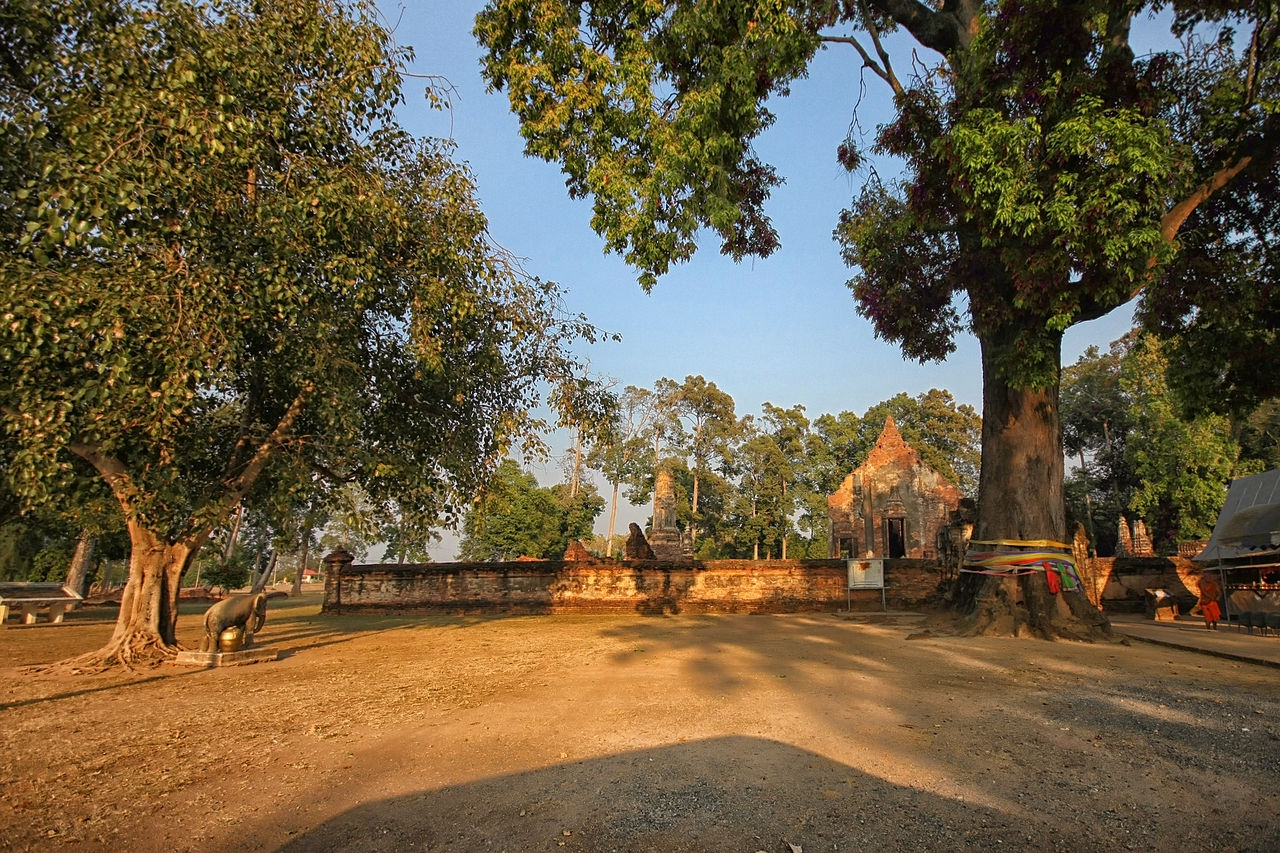
Wat Pho Prathap Chang sits in Pho Prathap Chang District, about twenty kilometers southwest of downtown Phichit, on the old Nan River. It's an ancient royal temple documented in the Royal Chronicles of Ayutthaya, built around 1699–1701 CE in the late Ayutthaya period, during the reign of King Suriyenthrathibodi, more commonly known as King Suea. Legend holds that this is where he was born — when King Narai the Great's royal procession passed through, a lady of the court went into labor and gave birth right on the grounds between a bodhi tree and a fig tree. Later, King Suea had a temple built at his birthplace, giving the temple both historical and dynastic significance tied to the late Ayutthaya period.
The main draw is a large brick-and-stucco ordination hall that still retains the outline of late Ayutthaya architecture, surrounded by two layers of boundary walls. Inside the temple grounds are also a chedi and ruins of an old prang to explore. The overall atmosphere is that of an old temple that has been restored and is still used for religious activities — monks from a neighboring temple come to look after it and hold blessing ceremonies, giving the site both the aura of a historical relic and the vitality of a temple still in active use. On one side is the King Suea shrine, housing an image for the faithful to pay their respects, along with an image of Phan Thai Norasing. Locals and worshippers alike like to stop and pray here. When historical dramas about King Suea grew popular, the temple saw a resurgence of wider recognition. On Tripadvisor, the temple holds an average rating of around 4.6 out of 5 from a small number of reviews, and ranks number one among things to do in Pho Prathap Chang District.
A few honest things to know before you go. First, this temple emphasizes historical value and atmosphere over ornate artistry — some reviews note that the building has little in the way of murals, carvings, or old decorative items to view. Anyone expecting a grand historical site may find it simpler than expected. Second, it sits fairly far outside downtown Phichit, with limited public transport access — a private car or rental will get you there much more easily. Third, weekends and religious holidays draw larger crowds, diminishing the peaceful atmosphere that is the temple's main charm — for full tranquility, go on a weekday morning. And since this is both a sacred site and historical monument, dress modestly, don't climb on or touch the old structures, and help keep the place clean so it can be preserved for future generations.
- A late Ayutthaya-era historical site over 300 years old, tied to the birthplace of King Suea, with genuine historical value
- Free entry, no admission fee, with bilingual signage around the grounds helping both Thai and international visitors understand the history
- A quiet, evocative atmosphere; the temple has been restored and is still tended by monks who hold ceremonies, making it both a historical site and a living temple
- Real Tripadvisor reviews average around 4.6 out of 5 and rank it #1 among things to do in Pho Prathap Chang District
- Emphasizes historical value and atmosphere over ornate artistry; the building has little in the way of murals, carvings, or decoration to view
- About 20 km outside downtown Phichit with inconvenient public transport access; a private car or rental is recommended
- Weekends and religious holidays draw larger crowds, diminishing the peaceful atmosphere that is its main charm; go on a weekday morning instead
Wat Nakhon Chum (Wat Yai), Phichit Old Town — a Sukhothai-Era Principal Image from the Water Oath Ceremony

Wat Nakhon Chum, known colloquially by locals as Wat Yai, is an ancient temple in the old-town district of Phichit, dating back to the late Sukhothai to early Ayutthaya period. The temple sits within the Muang Kao Historical Park grounds, about 7-8 km west of downtown Phichit. This area was once an old riverside community along the original Nan River; the name "Nakhon Chum" translates roughly to "gathering place of people." What gives this temple its historical significance is its principal Buddha image in Sukhothai style, which local records state was once used as the presiding image in the water oath of allegiance ceremony for Phichit's provincial officials — a rite in which officials and nobles drank consecrated water as a pledge of loyalty to the kingdom. The temple is thus closely tied to the history of ancient Phichit's administration.
The spot most visitors to Wat Nakhon Chum don't miss is the old ordination hall on the eastern side of the temple, built in brick and stucco in the traditional craftsman style. The roof structure uses wooden pegs instead of iron nails, and has a rare feature — vent openings carved into the walls instead of the windows typical of most temples — letting the interior stay airy with light filtering in rhythmically. Inside, you can still find traces of murals and old Buddha images for worship. Besides the principal image, the vihara also holds Buddha images revered by locals in Phichit, who stop to pray for good fortune. Touring the old architecture and Buddhist artistry is the main charm here, more than any flashy new construction.
Wat Nakhon Chum is an easy visit, free to enter and open for worship during the day every day, making it a good addition to a Phichit Old Town trip, which is close to the historical park, the ancient city walls and moat, and the legend of Chalawan Cave. You can link them all together comfortably in half a day. As this is a temple still home to resident monks and used for religious activities, visitors should dress modestly, behave respectfully, remove shoes before entering the ordination hall or vihara, and avoid making loud noise. The best light for photographing the old ordination hall is in the morning and late afternoon when the sun isn't too strong. If you're bringing elderly visitors, the walking paths inside the temple are fairly flat and easy to navigate.
- A Sukhothai-style principal Buddha image tied to the history of the water oath of allegiance ceremony in ancient Phichit, with genuine historical value
- The old brick-and-stucco ordination hall uses wooden pegs instead of nails for the roof structure and wall vents instead of windows, a rare feat of old craftsmanship
- Free entry, open every day during the daytime, an easy and cost-free visit
- Located within Phichit Old Town, easy to pair with the historical park, city walls and moat, and Chalawan Cave in a single trip
- About 7-8 km outside downtown Phichit with no convenient public transport; a private car or rental is recommended
- As a historical/heritage temple, the main draw is old craftsmanship and worship, without much in the way of visitor amenities
- Requires modest dress and respectful behavior since it's still an active place of worship; may not suit those looking for flashy photo spots
Somdet Phra Srinagarindra Park, Phichit (a Public Park by Bueng Si Fai)

Somdet Phra Srinagarindra Park, Phichit, is a public park spanning roughly 170 rai, sitting alongside Bueng Si Fai, the large freshwater lake in the middle of Phichit town. The park runs along the water's edge, with wide lawns, large shade trees, and walking and cycling paths stretching along the lakeside. Its charm lies in being an open green space where townspeople come to walk, jog, or simply relax without paying an entry fee. In the morning and evening, you'll see locals exercising, bringing kids to run around, or sitting to take in the riverside atmosphere on a regular basis. Being in town makes it easy to stop by and reach, a good fit for anyone passing through Phichit who wants a quiet hour or two to stretch their legs.
What sets this park apart from a typical park is how neatly it pairs with Bueng Si Fai. Step out of the park and you're greeted with a wide view of the water, with a bridge and viewpoints for photos. Nearby is the giant Chalawan crocodile statue, a signature symbol of Phichit town from the Krai Thong-Chalawan legend, so many visitors walk the park, continue along the lakeside, and stop for photos with the giant crocodile all in one trip. During the cool season, roughly November through February, a number of migratory waterbirds come to feed and rest at Bueng Si Fai, so birdwatchers and nature lovers get to see flocks of waterbirds adding color to the lake. Restaurants and cafes around the lake let you stop and linger, making the visit flexible depending on how much time you have.
A few honest things to know before you go. First, this is a public park for relaxation and exercise, not an attraction with flashy activities or rides — anyone expecting excitement may find it a bit plain, since its real draw is tranquility and green space. Second, the midday sun can be quite strong and hot, especially in the hot season, so avoid midday and come in the morning or evening when it's cooler and the light is better. Third, the water level in the lake and the number of birds depend on the season — sometimes water is low or birds haven't arrived yet, so the view may differ from a postcard image. If you're specifically hoping to see waterbirds, come in the cool season. Finally, some amenities may not be maintained as thoroughly in certain spots, so bring your own water, a hat, and sun protection, and set your expectations to match a simple, relaxing visit.
- Free entry, no fees, easy to reach within Phichit town, great for walking, jogging, or relaxing
- A wide green space of about 170 rai with lawns, large shade trees, and a quiet lakeside path along Bueng Si Fai
- Pairs neatly with Bueng Si Fai and the Chalawan crocodile statue, the town's signature symbol — walk the park, view the lake, and take photos all in one trip
- In the cool season, migratory waterbirds arrive at the lake, adding extra appeal for birdwatchers and nature lovers
- A relaxation and exercise park without flashy activities or rides; anyone expecting excitement may find it plain
- Midday sun can be strong and hot, especially in the hot season — come in the morning or evening, and bring water, a hat, and sun protection
- Water level and bird numbers depend on the season; sometimes water is low or birds haven't arrived, so the view may differ from a postcard image
Wat Phra Phutthabat Khao Ruak (Replica Buddha Footprint + Giant Rosewood Drum + Viewpoint), Taphan Hin District, Phichit

Wat Phra Phutthabat Khao Ruak sits on a low hill in Wang Lum Subdistrict, Taphan Hin District — a temple where Luang Pu Ngon Sorayo, a revered monk in Phichit and nearby provinces, once resided and helped establish. The spot most visitors climb up to pay respects at is a replica Buddha footprint at the summit, modeled after the footprint at Wat Phra Phutthabat in Saraburi Province. You need to climb a staircase from the grounds below up to the mondop housing the footprint, with pavilions and rest stops along the way. Once at the top, you'll see the rice fields and homes of Taphan Hin District spread out wide below — a quiet viewpoint that locals like to visit in the morning and evening when the sun isn't too strong.
Another thing that makes this temple memorable is a giant drum made from an entire rosewood trunk, given the long name Klong Nanthaphesri Rachrukkho, which the temple describes as a rare, oversized rosewood drum. There's also a statue of Luang Pu Ngon for paying respects, and a laterite hermit statue that the temple says is quite old. All of these are within the same temple grounds, easy to tour in a single visit. The temple is free to enter with no admission fee — anyone wishing to make merit can put a donation in the box or offer alms as they wish. The overall atmosphere is a quiet, uncrowded provincial temple, a good fit for anyone seeking tranquility over spectacle.
A few honest things to know before you go. The temple sits outside town, and the most convenient way to get here is with a private car or rental, since public transport doesn't reach it easily. The climb to the summit is via stairs that require a fair bit of effort — anyone with bad knees or bringing elderly visitors should allow extra time and rest along the way. Midday sun can be quite strong with little shade at the summit, so avoid midday and come in the morning or near evening instead, bringing water, a hat, and an umbrella. Dress modestly since this is a sacred site, and remove your shoes when entering the mondop or pavilions as signposted. Shops and restaurants around the temple are limited, so it's a good idea to bring food from Taphan Hin town or downtown Phichit and treat this temple as one stop on a broader Phichit trip.
- Free entry, no admission fee, a great stop for making merit along a Phichit itinerary
- Plenty to see in one temple — the replica Buddha footprint, giant rosewood drum, statue of Luang Pu Ngon, and laterite hermit statue
- The summit offers a wide viewpoint over the Taphan Hin rice fields and homes, in a quiet, uncrowded setting
- A temple where the revered monk Luang Pu Ngon Sorayo once resided, giving it meaningful significance for locals and his followers
- Outside town with inconvenient public transport, nearly requiring a private car or rental
- The climb to the summit is via stairs requiring real effort, not ideal for those with bad knees or elderly visitors with mobility issues
- Little shade at the summit with strong midday sun, and few shops or restaurants around the temple grounds
Wat Khao Rup Chang (Wat Khao Rup Chang) — a Lanna-Style Chedi Atop Elephant-Shaped Hill, Dong Pa Kham Subdistrict
Wat Khao Rup Chang is an old temple on a low hill in Dong Pa Kham Subdistrict, about 18 km south of downtown Phichit. The temple's name comes from a stack of white stones on the hilltop that resembles a crouching elephant, which locals have long called "Khao Rup Chang" (Elephant-Shaped Hill). The temple's history stretches back to the Ayutthaya era around 1701 CE, and a later era saw a chedi built to enshrine Buddha relics on the summit. The main draw here is a golden Lanna-style chedi on the hill, visible from far away, and a spiritual landmark for locals in the Dong Pa Kham area for generations. The overall atmosphere is peaceful, not crowded like the famous temples in big cities, making it a good fit for anyone seeking a quiet place to make merit while passing through Phichit.
The main activity here is climbing the stairs to pay respects at the relics and Buddha images on the summit. The distance is short and the incline gentle, an easy climb of roughly ten to fifteen minutes. Once at the top, you'll see the sweeping rice fields and plains of Phichit stretching out — a photo spot many visitors love, especially in the morning and evening when the sun isn't too strong. Pavilions and rest stops line the way up, so elderly visitors who walk slower can still make their way up gradually. The temple is open daily from morning until evening with no admission fee — anyone wishing to make merit can put a donation in the box or offer alms as they wish. Around the temple there's a parking area, and usually small shops selling snacks and drinks to pick up before the climb.
A few honest things to know before you go: this is a medium-sized local temple, not a major attraction with full amenities. Online reviews are still few, and the rating comes from a small number of visitors, so it's best viewed as a supplementary stop rather than the main destination of a trip. Midday sun can be quite strong, and the staircase up the hill has no shade along the way, so bring a hat, water, and comfortable walking shoes. If you're bringing elderly visitors or young children, allow extra time for the climb up and down and rest along the way, since it's an incline, not a flat path. International visitors without a private car may find it hard to reach, since it's outside town with little public transport — the most convenient way is to rent a car or hire one from downtown Phichit, and it's a good idea to dress modestly when entering the temple grounds, as is customary.
- Free entry, no admission fee, merit-making as you like, a good supplementary stop while passing through Phichit
- A gentle climb up a low hill, only about 10-15 minutes to the summit, with pavilions to rest along the way
- Wide views of the rice fields and plains from the summit make for great photos, especially in the morning and evening
- A peaceful, uncrowded atmosphere, good for the devout and families bringing elders to pay respects
- A medium-sized local temple with few online reviews and limited amenities; best viewed as a supplementary stop
- The staircase up the hill has no shade along the way and midday sun can be strong; bring a hat and water
- Outside town with little public transport; those without a private car need to hire one from downtown
Khlong Tron National Park — Khlong Tron Waterfall (a Multi-Tiered Waterfall in Headwater Forest)

Khlong Tron waterfall sits in the headwater forest of Khlong Tron National Park, now officially renamed Ton Sak Yai National Park, covering an area of roughly 518 square kilometers straddling the border between Phichit and Uttaradit provinces. To be upfront: even though the name is often associated with Phichit in many people's minds, the park headquarters and the main entrance actually used in practice are on the Nam Pat District side of Uttaradit Province. Anyone planning a trip from the Phichit side should double-check the route, since access is more convenient from the Uttaradit side. Khlong Tron waterfall itself is formed by the Khlong Tron stream, split into two main sections — the first a series of low tiers totaling roughly 20 meters, and another section about 1.5 km further, roughly 30 meters tall. Counting all the smaller tiers along the way, there are multiple levels to climb in a single trip.
One key thing to know beforehand: there's no road leading directly to the waterfall itself — you have to park and walk in along a forest trail. The distance and steepness depend on whether you go all the way to the top tier or stop at the lower ones. Trekking enthusiasts will enjoy the dense forest and mixed deciduous forest along the way, but anyone hoping to park right next to the waterfall may need to adjust their expectations. Besides the waterfall, the park has several other well-known features nearby, including the giant teak trees that gave the park its new name, other waterfalls, and a group of caves such as Tham Chan and Tham Chedi — so with enough time, you can plan a full day of connected sightseeing.
The best time to see the waterfall at its most beautiful and powerful is during and after the rainy season, roughly June through November, when the stream runs full. In the dry season, water levels drop, leaving some tiers with almost no flow at all. The trade-off in the rainy season is a slippery trail and hard-to-grip rocks around the waterfall, so wear shoes with good traction and take extra care. If you can choose, late rainy season into early cool season tends to be the sweet spot — strong water flow but drier trails and comfortably cool weather for walking. Costs are limited to the standard national park entrance fee, since this isn't a commercially developed attraction requiring a tour purchase — making it a good fit for anyone wanting a quiet forest waterfall rather than a crowded, popular spot.
- A multi-tiered waterfall in quiet, uncrowded headwater forest, great for anyone wanting to escape crowded, popular attractions
- Part of a large park that also includes giant teak trees, other waterfalls, and a group of caves like Tham Chan and Tham Chedi — see them all in a single day
- Low cost, limited to the national park entrance fee, no tour required if you drive yourself and walk in to the waterfall
- The dense and mixed deciduous forest along the trail gives a genuine sense of connection with nature, great for trekkers
- No road leads directly to the waterfall — you must park and walk in, not ideal for those who can't manage a longer walk
- Despite the Phichit association in name, the headquarters and main entrance are on the Uttaradit side, so those starting from Phichit need to plan the route carefully
- In the dry season, water levels drop so much that some tiers have almost no flow, while in the rainy season the water is strong but trails are slippery and rocks hard to grip — timing your visit matters
Visiting Phichit — Where to Stay?
Choose a hotel in Phichit town near Bueng Si Fai and the train station, for easy access to the temples. Compare prices across 3 sites before booking.
Search hotels on AgodaBook Activities & Tickets in Advance
Phichit's attractions are spread across several districts — booking a car or package in advance makes visiting the temples and lake much easier.
💡 Know Before You Go to Phichit
Bueng Si Fai is a large freshwater lake in the town center, with the giant Chalawan crocodile statue (a sculpture from the Krai Thong legend), lawns, walking and cycling paths, and beautiful evening light. Free entry, great for a family visit.
Wat Bang Khlan (Hiranyaram), home to Luang Pho Ngern, is in Pho Thale District, about 40 km from downtown. It's a popular pilgrimage and spiritual site, so allow travel time and dress modestly.
Wat Tha Luang on the Nan River in the town center enshrines Luang Pho Phet, a bronze Chiang Saen-style Buddha image treasured by the town. Open for worship daily, easy to visit while touring downtown.
Khlong Tron National Park straddles the Phichit-Uttaradit border, with its main entrance on the Uttaradit side. The waterfall is at its most beautiful and powerful during the rainy season (June–November). There's a park entrance fee — check the route before you go.
How to Plan a Phichit Trip That's Worth It
A 1–2 day trip to Phichit is just right. On day one, tour the town: pay respects to Luang Pho Phet at Wat Tha Luang in the morning, walk through the Old Town historical park and Wat Nakhon Chum, then relax at Bueng Si Fai and Sirikit Park in the evening to see the Chalawan statue and sunset. On day two, head out of town to pay respects to Luang Pho Ngern at Wat Bang Khlan (Pho Thale District), stop by Wat Pho Prathap Chang, or visit Wat Phra Phutthabat Khao Ruak in Taphan Hin. Phichit pairs well with a trip through Phitsanulok-Nakhon Sawan.
Ready to visit Phichit? Start by picking a place to stay in town.
See Phichit Hotels →